
God The Father, God The Son, God The Holy Spirit Order Printed Copy
- Author:
- Size: 477KB | 22 pages
- |
Others like god the father, god the son, god the holy spirit Features >>
Father, Son, And Holy Spirit (Relationships, Roles, And Relevance)
The Sons Of God, The Flood, The Tower Of Babel
The Authority Of The Bible And The Rise Of The Modern World
The Gospel Of The Kingdom: Scriptural Studies In The Kingdom Of God
Good Or God: Why Good Without God Isn't Enough
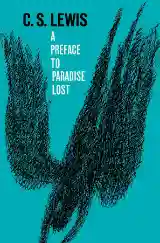
A Preface To Paradise Lost
Genesis 1-4 (A Linguistic, Literary, And Theological Commentary)
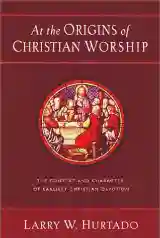
At The Origins Of Christian Worship
Ethics Of Hope
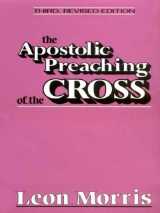
Apostolic Preaching Of The Cross
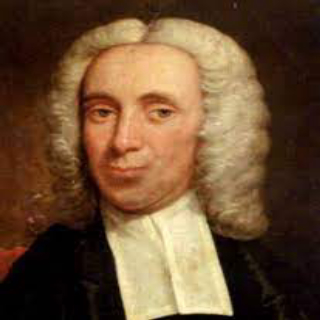
Isaac Watts
"Joy to the world, the Lord is come / Let earth receive her King / Let every heart, prepare him room / And heaven and nature sing."
In his later years, Isaac Watts once complained about hymn singing in church: "To see the dull indifference, the negligent and thoughtless air that sits upon the faces of a whole assembly, while the psalm is upon their lips, might even tempt a charitable observer to suspect the fervency of their inward religion."
He had been bemoaning such since his late teens. His father, tired of his complaints, challenged him to write something better. The following week, the adolescent Isaac presented his first hymn to the church, "Behold the Glories of the Lamb," which received an enthusiastic response. The career of the "Father of English Hymnody" had begun.
Head of a genius
At Isaac's birth in 1674, his father was in prison for his Nonconformist sympathies (that is, he would not embrace the established Church of England). His father was eventually freed (and fathered seven more children), but Isaac respected his courage and remembered his mother's tales of nursing her children on the jail steps.
Young Isaac showed genius early. He was learning Latin by age 4, Greek at 9, French (which he took up to converse with his refugee neighbors) at 11, and Hebrew at 13. Several wealthy townspeople offered to pay for his university education at Oxford or Cambridge, which would have led him into Anglican ministry. Isaac refused and at 16 went to London to study at a leading Nonconformist academy. Upon graduation, he spent five years as a private tutor.
His illness and unsightly appearance took its toll on his personal life. His five-foot, pale, skinny frame was topped by a disproportionately oversized head. Almost every portrait of him depicts him in a large gown with large folds—an apparent attempt by the artists to disguise his homeliness. This was probably the reason for Elizabeth Singer's rejection of his marriage proposal. As one biographer noted, "Though she loved the jewel, she could not admire the casket [case] which contained it."
Though German Lutherans had been singing hymns for 100 years, John Calvin had urged his followers to sing only metrical psalms; English Protestants had followed Calvin's lead.
Watts's 1707 publication of Hymns and Spiritual Songs technically wasn't a collection of hymns or metrical psalms, but it was a collection of consequence. In fact, it contained what would become some of the most popular English hymns of all time, such as "When I Survey the Wondrous Cross."
Watts didn't reject metrical psalms; he simply wanted to see them more impassioned. "They ought to be translated in such a manner as we have reason to believe David would have composed them if he had lived in our day," he wrote. Psalms of David Imitated in the Language of the New Testament followed in 1719.
Many of his English colleagues couldn't recognize these translations. How could "Joy to the World" really be Psalm 98? Or "Jesus Shall Reign Where'er the Sun" be Psalm 72>, or "O God Our Help in Ages Past" be Psalm 90?
Watts was unapologetic, arguing that he deliberately omitted several psalms and large parts of others, keeping portions "as might easily and naturally be accommodated to the various occasions of Christian life, or at least might afford us some beautiful allusions to Christian affairs." Furthermore, where the psalmist fought with personal enemies, Watts turned the biblical invective against spiritual adversaries: sin, Satan, and temptation. Finally, he said, "Where the flights of his faith and love are sublime, I have often sunk the expressions within the reach of an ordinary Christian."
Such looseness brought criticism. "Christian congregations have shut out divinely inspired psalms and taken in Watts's flights of fancy," protested one detractor. Others dubbed the new songs "Watts's whims."
But after church splits, pastor firings, and other arguments, Watts's paraphrases won out. "He was the first who taught the Dissenters to write and speak like other men, by showing them that elegance might consist with piety," wrote the famed lexicographer (and Watts's contemporary) Samuel Johnson.
More than a poet, however, Watts was also a scholar of wide reputation, especially in his later years. He wrote nearly 30 theological treatises; essays on psychology, astronomy, and philosophy; three volumes of sermons; the first children's hymnal; and a textbook on logic that served as a standard work on the subject for generations.
But his poetry remains his lasting legacy and earned him acclaim on both sides of the Atlantic. Benjamin Franklin published his hymnal, Cotton Mather maintained a long correspondence, and John Wesley acknowledged him as a genius—though Watts maintained that Charles Wesley's "Wrestling Jacob" was worth all of his own hymns.
Finding Financial Freedom
The smartest thing we can do financially is to make God’s kingdom and His righteousness our top priority. Since true financial freedom is based largely on the condition of our heart and attitude, we must consciously embrace truth not fear, contentment not greed, humility not pride, gratitude not resentment, righteousness not deceit, generosity not selfishness. The following suggestions are financial strategies that have helped many people. Look at the list, pray over it, and apply what will benefit you and your family with the goal of changing bad habits, reducing stress, and gaining financial freedom. Make a Plan Everything starts with a plan. After you do that, you’re ready to move forward with it. Set specific goals, short-term and long-term. Write them down and refer to them regularly. This will give clarity. Create a budget. This brings freedom. Seek accountability. This will provide encouragement. Give regularly. This will break the grip of selfishness. Eliminate personal debt. This will set you free. Fund an emergency account, save, invest. This will help you have margin. Change your withholding if you get tax refunds. This will boost cash flow. Celebrate milestones with gratitude. This will keep you motivated. Reduce Expenses You can take action now to reduce your expenses. Here are several actions. Keep track of all expenses for at least 30 days to learn your spending habits. Use extra money (tax refunds, raises, gifts) wisely. Become frugal. Live like you’re poor. Buy only what you need. Cancel cable and subscriptions. Limit or drop TV and social media. Find free entertainment. Read more books — use the library. Eat out only for special occasions. Recruit a couple or family to join you on this journey. Challenge yourself to eat the pantry. The smartest thing we can do financially is to make God’s kingdom and His righteousness our top priority. Chuck Bentley in Finding Financial Freedom This Year Go on a “Spending Fast.” Use cash when possible to limit credit card debt. Change your lifestyle. Move, drive cheaper cars, and so on. Reduce utility costs. Avoid “window shopping.” Assess your friendships. Plan ahead for holidays. Grocery shop with a list. Cook large meals, freeze leftovers, and take meals from home to work Say no to impulse purchases. Use coupons or buy what is on sale. Shop consignment or thrift shops. Drop gym memberships. Make coffee at home. Skip soft drinks and bottled water. Find a mobile discount plan. Trade skills with a friend (cooking, yard care, haircuts, and so on). Avoid financing cars and loans. Don’t gamble. Increase Income By taking just a few deliberate actions, you can increase your income. Work hard and ask for a raise. Improve your job skills. Obtain certifications and online training. Take on a part-time job. Sell what you don’t need. Think outside the box. Find creative solutions to problems. Improve Your Health Your health impacts your finances in several ways, including the cost of insurance, your ability to work, your energy level, your ability to sleep, and your state of mind. Sleep a minimum of seven hours. God designed you to function best when rested. Drink more water, much more than you think you need. Eat healthily. Grow food if you can. Exercise daily and spend time in nature. Sunshine is an essential part of your health. Eliminate stress and guard your mental health. Limit prescription drug use. Research natural remedies. Plan for the Future By taking just a few deliberate actions, you can increase your income. Organize your finances and emergency information. Gather documents to prepare taxes. Make a will and plan burial options. Carry adequate insurance: life, health, car, home, or rental. Plan education costs for children. Begin funding retirement accounts. Diversify your investments. Principles and best practices are of no value if we only know them intellectually. Knowing and doing is the key to experiencing God’s promises. Living accordingly will help you to thrive.