


Others like god's medicine Features >>

God In The Manger

Comfort In Times Of Trouble

All Gods Promises

7 Days Behind The Veil: Throne Room Meditations

Knowing The Heart Of God - A Year Of Daily Readings

Streams In The Desert: Morning And Evening. 365 Devotions

Loneliness - How To Be Alone But Not Lonely

A Grief Observed

Wisdom From Rick Joyner

Mountains Of Spices
About the Book
"God's Medicine" by Uebert Angel discusses the power of faith and prayer in receiving healing and miracles from God. The book emphasizes the importance of belief in the supernatural healing abilities of God and provides practical steps for tapping into this divine source of healing. Angel encourages readers to have faith, speak positive affirmations, and trust in God's ability to bring about physical and spiritual healing in their lives.
William Still
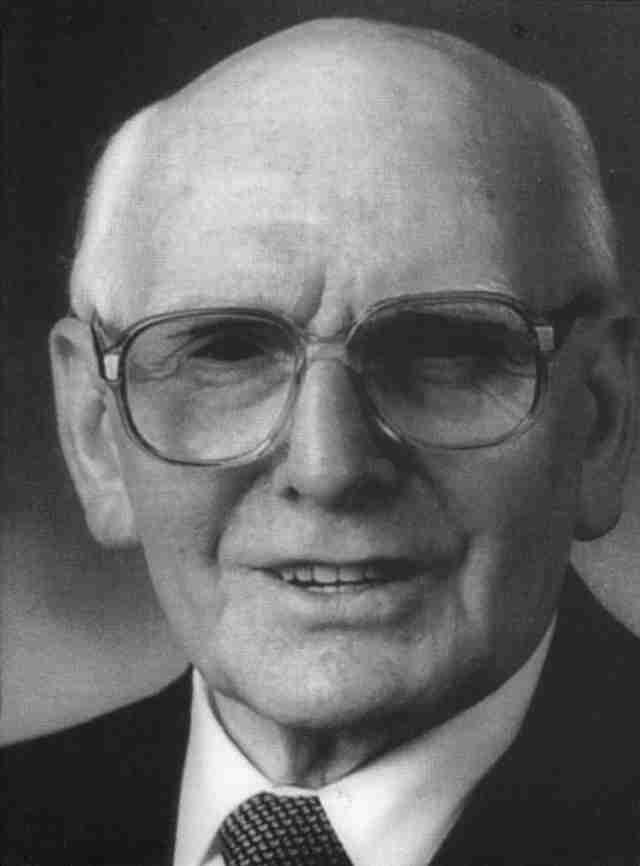 I recently read Dying to Live (Christian Focus, 1991), the autobiography of Scottish pastor William Still. I became interested in Still after reading his book The Work of the Pastor earlier this year.
The first half of Dying to Live tells about Still’s early years into young adulthood and his beginning in pastoral ministry. Still had an unsettled childhood. His parents were separated in his early years, and his father was an alcoholic. He was a sickly child who took refuge in music and became an accomplished pianist. He was part of the Salvation Army as a young man but then entered ministry in the Church of Scotland and served at the Gilcomston Church in his hometown of Aberdeen from 1945-1997.
The second half of the book deals with various aspects of Still’s pastoral ministry. Still was an evangelical. In his early ministry he worked with Billy Graham, Alan Redpath, and others in evangelistic events. With time, however, he moved away from what he came to call “evangelisticism” to develop a solid expositional ministry.
Still faced his fair share of hardships during the course of his ministry. When he moved away from pragmatic evangelistic methods, for example, more than two hundred people stopped attending his church almost overnight. In the preface, he references Martin Luther’s observation that there are three things which make a minister: study, prayer, and afflictions. He observes, “He who is not prepared to make enemies for Christ’s sake by the faithful preaching of the Word will never make lasting friends for Christ, either” (p. 93).
He describes one particularly difficult controversy early in his ministry when he confronted a group of disgruntled elders. At the end of one Sunday service, he read a statement confronting these men, which ended, “There you sit, with your heads down, guilty men. What would you say if I named you before the whole congregation? You stand condemned before God for your contempt of the Word and of his folk.” He adds, “The moment I had finished, I walked out of the pulpit. There was no last hymn—no benediction. I went right home. It was the hardest and most shocking thing I ever had to do in Gilcomston” (p. 124). That same week seven of his elders resigned and Still was called twice before his Presbytery to answer for the controversy. Yet, he endured.
Still maintains that in light of the unpleasantness one will face in the ministry that the minister of the Word must possess one quality in particular: “…I would say that this quality is courage: guts, sheer lion-hearted bravery, clarity of mind and purpose, grit. Weaklings are no use here. They have a place in the economy of God if they are not deliberate weaklings and stunted adults as Paul writes of both to the Romans and to the Corinthians. But weaklings are no use to go out and speak prophetically to men from God and declare with all compassion, as well as with faithfulness, the truth: the divine Word that cuts across all men’s worldly plans for their lives” (p. 140).
Still was a pioneer in several areas. First, he developed a pattern of preaching and teaching systematically through books of the Bible at a time when this was rarely done. He began a ministry of “consecutive Bible teaching” starting with the book of Galatians in 1947, calling this transition from “evangelisticism to systematic exposition … probably the most significant decision in my life” (p. 191).
He was also a pioneer in simplifying and integrating the ministry of the church. After noting how youth in the church were drifting away, even after extensive involvement in the church’s children’s ministry, Still writes, “I conceived the idea of ceasing all Sunday School after beginners and Primary age (seven years) and invited parents to have their children sit with them in the family pew from the age of eight” (p. 171). He laments “the disastrous dispersion of congregations by the common practice of segregating the church family into every conceivable category of division of ages, sexes, etc.” (p. 173).
Dying to Live is a helpful and encouraging work about the life and work of the minister and is to be commended to all engaged in the call of gospel ministry. As the title indicates, Still’s essential thesis is that in order to be effective in ministry the minister must suffer a series of deaths to himself (cf. John 12:24). On this he writes:
The deaths one dies before ministry can be of long duration—it can be hours and days before we minister, before the resurrection experience of anointed preaching. And then there is another death afterwards, sometimes worse than the death before. From the moment that you stand there dead in Christ and dead to everything you are and have and ever shall be and have, every breath you breathe thereafter, every thought you think, every word you say and deed you do, must be done over the top of your own corpse or reaching over it in your preaching to others. Then it can only be Jesus that comes over and no one else. And I believe that every preacher must bear the mark of that death. Your life must be signed by the Cross, not just Christ’s cross (and there is really no other) but your cross in his Cross, your particular and unique cross that no one ever died—the cross that no one ever could die but you and you alone: your death in Christ’s death (p. 136).
I recently read Dying to Live (Christian Focus, 1991), the autobiography of Scottish pastor William Still. I became interested in Still after reading his book The Work of the Pastor earlier this year.
The first half of Dying to Live tells about Still’s early years into young adulthood and his beginning in pastoral ministry. Still had an unsettled childhood. His parents were separated in his early years, and his father was an alcoholic. He was a sickly child who took refuge in music and became an accomplished pianist. He was part of the Salvation Army as a young man but then entered ministry in the Church of Scotland and served at the Gilcomston Church in his hometown of Aberdeen from 1945-1997.
The second half of the book deals with various aspects of Still’s pastoral ministry. Still was an evangelical. In his early ministry he worked with Billy Graham, Alan Redpath, and others in evangelistic events. With time, however, he moved away from what he came to call “evangelisticism” to develop a solid expositional ministry.
Still faced his fair share of hardships during the course of his ministry. When he moved away from pragmatic evangelistic methods, for example, more than two hundred people stopped attending his church almost overnight. In the preface, he references Martin Luther’s observation that there are three things which make a minister: study, prayer, and afflictions. He observes, “He who is not prepared to make enemies for Christ’s sake by the faithful preaching of the Word will never make lasting friends for Christ, either” (p. 93).
He describes one particularly difficult controversy early in his ministry when he confronted a group of disgruntled elders. At the end of one Sunday service, he read a statement confronting these men, which ended, “There you sit, with your heads down, guilty men. What would you say if I named you before the whole congregation? You stand condemned before God for your contempt of the Word and of his folk.” He adds, “The moment I had finished, I walked out of the pulpit. There was no last hymn—no benediction. I went right home. It was the hardest and most shocking thing I ever had to do in Gilcomston” (p. 124). That same week seven of his elders resigned and Still was called twice before his Presbytery to answer for the controversy. Yet, he endured.
Still maintains that in light of the unpleasantness one will face in the ministry that the minister of the Word must possess one quality in particular: “…I would say that this quality is courage: guts, sheer lion-hearted bravery, clarity of mind and purpose, grit. Weaklings are no use here. They have a place in the economy of God if they are not deliberate weaklings and stunted adults as Paul writes of both to the Romans and to the Corinthians. But weaklings are no use to go out and speak prophetically to men from God and declare with all compassion, as well as with faithfulness, the truth: the divine Word that cuts across all men’s worldly plans for their lives” (p. 140).
Still was a pioneer in several areas. First, he developed a pattern of preaching and teaching systematically through books of the Bible at a time when this was rarely done. He began a ministry of “consecutive Bible teaching” starting with the book of Galatians in 1947, calling this transition from “evangelisticism to systematic exposition … probably the most significant decision in my life” (p. 191).
He was also a pioneer in simplifying and integrating the ministry of the church. After noting how youth in the church were drifting away, even after extensive involvement in the church’s children’s ministry, Still writes, “I conceived the idea of ceasing all Sunday School after beginners and Primary age (seven years) and invited parents to have their children sit with them in the family pew from the age of eight” (p. 171). He laments “the disastrous dispersion of congregations by the common practice of segregating the church family into every conceivable category of division of ages, sexes, etc.” (p. 173).
Dying to Live is a helpful and encouraging work about the life and work of the minister and is to be commended to all engaged in the call of gospel ministry. As the title indicates, Still’s essential thesis is that in order to be effective in ministry the minister must suffer a series of deaths to himself (cf. John 12:24). On this he writes:
The deaths one dies before ministry can be of long duration—it can be hours and days before we minister, before the resurrection experience of anointed preaching. And then there is another death afterwards, sometimes worse than the death before. From the moment that you stand there dead in Christ and dead to everything you are and have and ever shall be and have, every breath you breathe thereafter, every thought you think, every word you say and deed you do, must be done over the top of your own corpse or reaching over it in your preaching to others. Then it can only be Jesus that comes over and no one else. And I believe that every preacher must bear the mark of that death. Your life must be signed by the Cross, not just Christ’s cross (and there is really no other) but your cross in his Cross, your particular and unique cross that no one ever died—the cross that no one ever could die but you and you alone: your death in Christ’s death (p. 136).
Secret Allies in the Human Heart - The Advantage We Have in Evangelism
One warm, dusty midday, Jesus sat alone near Jacob’s well outside the Samaritan town of Sychar. His disciples had gone into town to buy food, but he had planned a different meal for himself (John 4:34). Soon a solitary woman arrived at the well with a large clay jar and began to draw water. Jesus asked her for a drink. So began one of the most famous evangelistic conversations in history. And this conversation is remarkably relevant to us twenty-first-century Christians. Because in it, Jesus demonstrates that hidden in the human heart are secret evangelistic allies, as Scottish preacher James Stewart once observed (Heralds of God, 53). These secret allies are deep-seated intuitions and longings that can help a person recognize the truth of the gospel. And like Jesus, if we listen carefully and prayerfully, both to the person and the Holy Spirit, we can engage these allies in the pursuit of that person’s ultimate joy. Obstacles to Evangelism In numerous ways, this woman would have appeared to most of us as an unlikely candidate for conversion. “Hidden in the human heart are secret evangelistic allies.” First, she was a Samaritan, which meant she was viewed and hated by most Jews as a member of a heretical, idolatrous religion. We would have assumed she reciprocated the hatred. She was a woman, which meant (according to ancient Near Eastern social norms) that she would have been reticent to enter into such a conversation alone with a strange man. And given the odd, hot time of day she chose to fetch water, we might have intuited some social estrangement from her own townspeople. In other words, there were layers of complex awkwardness about the whole situation — the kind of awkwardness most of us want to avoid, the kind we tend to assume will make fruitfulness unlikely. But Jesus, alert to the Holy Spirit and lovingly eager for this woman to experience grace and forgiveness and liberation and joy, stepped into the awkwardness. And notice how he navigated this conversation, engaging several secret allies along the way. Secret Allies in an Unlikely Convert It began with a mundane-sounding yet provocative request: “Give me a drink” (John 4:7). This simple question caught the woman off guard. Not only was a man addressing an unaccompanied woman, but a Jew was addressing a Samaritan. In doing so, however, Jesus acknowledged her as an image-bearer of God, according her the dignity due such a creation. Her deep, intuitive knowledge of the rightness of this became one secret ally in helping prepare her to receive the grace and mercy he offers. Then, given the immediate context of their conversation, Jesus used the metaphor of thirst to raise the issue of the woman’s deep, inconsolable longing for lasting hope, joy, meaning, and love — a longing she shared with all fallen humanity (John 4:10–15). He wasn’t put off by her skepticism and derogatory comments. He was after her joy, not defending himself. What he did was engage her soul-thirst as a secret gospel ally for her highest good. Then he gently stepped into another very awkward place: the woman’s sinful, painful past littered with the ruins of broken relational cisterns that had only left her more parched (Jeremiah 2:13; John 4:16–18). And he offered her the only water that could quench her thirst: the gracious, merciful love of God. Her pain proved to be the pivotal gospel ally in her heart (John 4:39), because she had an undeniable desire and need for God’s forgiveness, reconciliation, and redemption. But there was one more massive issue to deal with: What about the deep, bitter, complex, hostile, centuries-old ethno-religious disagreements between the Jews and the Samaritans (John 4:19–22)? Notice where in the conversation Jesus chose to address this (he ignored the controversy in verse 9). Jesus discerned that this woman needed to taste God’s care and kindness toward her before she would be open to hearing that she and her ancestors had worshiped in ignorance (John 4:22). So, he did deploy the ally of the truth she already knew from Jewish Scriptures, but not until he had developed some initial trust first. Having glimpsed the Great Well and tasted the living water (John 4:23–24), this woman forgot her jar by Jacob’s well and ran back to town to share the good news she had received (John 4:28–30). And her testimony resonated with the secret allies in the hearts of many of her neighbors in Sychar. Common Secret Allies This evangelistic conversation is admittedly exceptional because Jesus is exceptional. We rarely receive such supernatural insight into someone else’s life — though such gifts sometimes are given to believers by the Holy Spirit (1 Corinthians 14:24–25). But we can still learn from how Jesus engaged secret evangelistic allies in the hearts of his hearers. And while we may not be able to discern all he discerned as the God-man, we can still ask good questions, listen carefully, and pray for the Spirit to help us identify allies in each conversation. Certain allies are specific to particular people, like the Samaritan woman’s painful past. But there are allies that God has implanted in the hearts of every person. Here are some of them: We all instinctively recognize design in creation (Romans 1:19–20). We all are irresistibly drawn to transcendent glory (Psalm 8:1–4). We all have an intuitive knowledge of providence — that there is a purposeful intent to the created world, the events in it, and our own lives (Acts 17:22–31). We all know deep down that nihilism (ultimate meaninglessness implicit in metaphysical naturalism) is not true (Ecclesiastes 3:1–14). We all know we must have hope to keep going (Psalm 43:5; Lamentations 3:20–24; Romans 15:13). We all have an irrepressible longing for joy (Psalm 16:11; 43:4; Ecclesiastes 3:12; John 15:11; 1 Peter 1:8). We all intuitively recognize the moral law (Romans 2:14–15). We all know that we have transgressed the moral law and to some degree long to be free from guilt (Romans 3:23–26). We all at various times experience an undeniable desire for justice to prevail (Deuteronomy 16:19–20; Job 19:7–11; Proverbs 17:23; Micah 6:8; Matthew 12:18–21). We all have a sense of eternity in our hearts — we instinctively know death is not our ultimate end (Ecclesiastes 3:11). We all recognize the supreme beauty of love (Matthew 22:36–40; John 15:13; 1 Corinthians 13:13; 1 John 4:7–8). In claiming that we all know these things, I don’t mean that we all admit them, recognize them to the same degree, or explain them in the same way, but they are all part of the universal human experience. And the fact that we continually discuss and debate them is evidence of their presence. They are internal witnesses and pointers to the existence and nature of God, and in that way they become allies in our evangelism. Take Them to the Well On that warm, dusty day, on the slope of Mount Gerizim, the Lord himself became one massive, momentous fulfillment of the words of the old prophet: How beautiful upon the mountains are the feet of him who brings good news, who publishes peace, who brings good news of happiness, who publishes salvation, who says to Zion, “Your God reigns.” (Isaiah 52:7) “We all have eternity in our hearts — we instinctively know death is not our ultimate end.” He employed gospel allies already residing secretly in the heart of an unlikely convert to lead her to the living water she so desperately needed and longed for. Isn’t that essentially our story too? When it comes to evangelism, we can be too easily intimidated, especially when someone looks unlikely to respond well. It can appear to us like the ground isn’t level, like we occupy the less defendable ground because our hearer is likely to judge our gospel as foolish or weak (1 Corinthians 1:22–25). In truth, the ground is often not level, but not in the way we might fear. Often, we have the advantage because, as with Jesus that day outside Sychar, we have unseen gospel allies residing in the hearts of our hearers. And if we listen carefully and prayerfully to our hearers, the Holy Spirit can show us how to employ them. Because when it comes to the power of God in evangelism (1 Corinthians 1:18), “the foolishness of God is wiser than men, and the weakness of God is stronger than men” (1 Corinthians 1:25). We don’t need to be experts in apologetics or trained theologians to share the good news with others, even with the most resistant and entrenched. Often, we simply need to care more about helping them find the living water they so desperately need than about protecting our reputation or demonstrating how right we are. And if we do, we will find that we have secret allies in the pursuit of that person’s highest joy. Article by Jon Bloom Staff writer, desiringGod.org

-480.webp)