
Others like genetic of words Features >>
-160.webp)
The Law Of Recognition (The Laws Of Life Series)

Christ The Sum Of All Spiritual Things
-160.webp)
Leading On Empty (Refilling Your Tank And Renewing Your Passion)

Recreating Your World

Stand: A Call For The Endurance Of The Saints
-160.webp)
Unchurching (Christianity Without Churchianity)
-160.webp)
Move (What 1,000 Churches Reveal About Spiritual Growth)

Consciousness Unfolding

Not I But Christ

There Were Two Trees In The Garden
About the Book
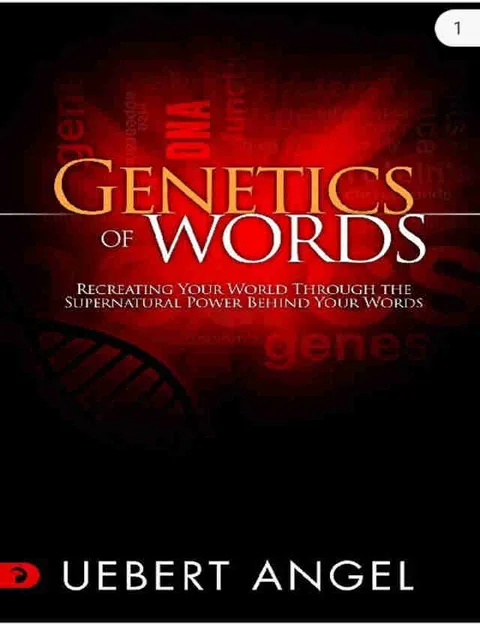
"GENETICS OF WORDS" by Uebert Angel explores the power of words and the impact they have on our lives. The book delves into how the words we speak can shape our destinies and influence our circumstances. Through biblical teachings and personal anecdotes, Angel emphasizes the importance of speaking positive words and the transformational effects they can have on our lives.
John G. Lake
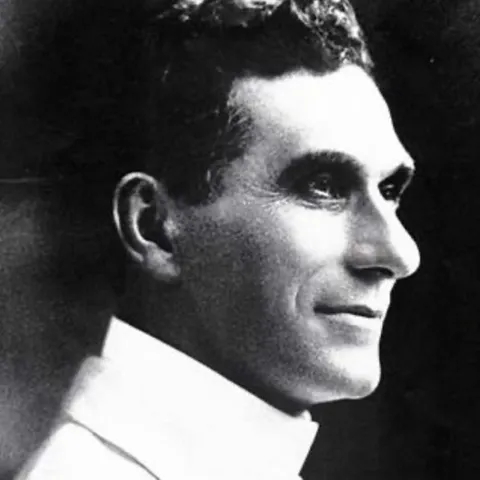 John G. Lake was born in Ontario, Canada on March 18th, 1870. He was a family man, person of integrity, honor, a savvy businessman and a good father. If you knew him you wouldn’t otherwise know that he would soon become one of the greatest men of God the world would ever know. He had a genuine love for the Lord Jesus and was known by his friends as a man who dedicated himself to intimacy with The Lord. It was out of this place that he loved his wife, was a man of integrity and built a very successful business career. To give you perspective, by 1905 John G Lake was making $50,000 per year this sum would be like upwards of 1.3 million dollars per year annually today. John grew up in a family environment which was plagued with sickness and death, it is said that his earliest memories were of sickness, death and funerals. Lake was from a large family, he had 16 siblings, 8 of which tragically died of various diseases. It is no coincidence that “the man of healing” was tormented from a young age with death and disease. The enemy will often oppose destinies with radical circumstances through a distortion of the very thing that we are called to walk in. Lake Was exposed to dramatic healing when he visited John Alexander Dowie’s ministry and was, in prayer, instantly healed of a rheumatism which had caused his legs to grow incorrectly. Just two short years into their marriage, Jennie Lake was diagnosed with tuberculosis and heart disease. Over the next couple of years, the condition worsened and the doctors resigned to the fact that it was only a matter of time before she would die. John allowed this situation to provoke him into faith, after being exposed to such death and disease from a young age he had a hatred for such things. When he would read the word of God he saw that his Christian experience was less than the promised “power of the Holy Spirit”. As Jennie was on her deathbed and perhaps taking her final breaths Lake was overcome with anger over sickness and threw his bible against the fireplace mantle! When he went to pick up his bible it was opened to Acts chapter 10:38 which says: "God anointed Jesus of Nazareth with the Holy Ghost and with power: who went about doing good, and healing all that were oppressed of the devil; for God was with him.” Lake had a surge of faith in that moment and sent a telegram to Dowie asking him to pray. Within an hour of Dowie praying she was fully healed! Not long after Jennie was healed, God began to speak to Lake about going into full time ministry. After some time of contemplation and seeking the Lord, God confirmed to John and Jennie separately that they were to move to South Africa to begin their life of ministry. John and Jennie then gave away all that they had, John forsook his mega-salary and they went on their way alongside some of their friends as ministry partners.
When they arrived in South Africa, they had no money. The problem was, that they needed at least $125 in order to clear customs. they nervously waited for their turn in line, rehearsing what they would say to the immigration officer They were in desperate need of a miracle, as the law read that they would be subject to deportation as quickly as they arrived in South Africa. Just as they were about the get to the front of the line, John felt a tap on his shoulder… A man was standing behind John and said “excuse me sir, can I have a word with you?” John nervously steps out of line at the man’s request and the man said “when I saw you and your family in line, the Lord told me to give you $200 cash”. The Lord provided just enough money for John and his family to enter the country. But their needs didn’t stop there. The Lakes and their crew had no ministry contact in Johannesburg. Soon after they cleared customs, a woman approached John’s friends and asked how many people are in their family, when they told her, she responded “no, not you” and went over to John and asked the same question. John replied “9” and she said “you’re the ones!” She went on to tell John that the Lord had spoken to her last night that she was to give her home to a family of 9 people who are coming from America to do God’s work. John, Jennie and their crew rejoiced in the dramatic provision of the Lord. Their time in South Africa was marked with waves of revival, there were multitudes saved, healed and delivered over the course of their 5 year ministry tour in South Africa.
By far my favorite story from this season of Revival takes place shortly after the Lake family and their team arrived in South Africa. A mighty plague was sweeping through the nation, the death count was climbing dramatically. So much so that there was a surplus of corpses who were victims of the plague and there was no one to bury the dead; if someone was to come in contact with a dead body they would most certainly become infected and their death sentence would immediately begin. John G. Lake astounded the medical officials because he, without any gloves or protective clothing began burying the dead. Physicians in a panic approached John and rebuked him for coming in contact with the dead, John boldly responded "when the disease comes in contact with my skin, you can watch it die". The doctors thought he was insane, so he challenged them to put a drop of the plague on his skin and watch it under a microscope. When they did so, John was right! The plague cells literally burned up the second they came in contact with his skin!
It is tough to understand what would happen towards the end of the Lake’s missionary journey in Africa. One day while John was away on a ministry trip, his wife Jennie suddenly passed away. The cause of her death was malnutrition and exhaustion. It wasn’t uncommon for the sick and broken to line the lawn of John G Lake’s home and Jennie, as an act of sacrifice, gave away all their food and any resources she could to the broken which frequented their house.
Although John and Jennie’s faith and sacrifice is commendable we must learn from this fatal mistake. John’s priorities clearly became altered as the demand for ministry raged on. He failed to guard and keep the very precious gift that God had given him, he allowed the demands of ministry to distract him from the needs of his family unto the tragic and preventable death of his wife. In the wake of Jennie’s death their children became bitter with John and subsequently God. Some of his children left the faith and the most recent accounts of them suggest that they died not following Christ. To this day some of John’s great grandchildren do not follow the Lord. John’s failure to obey the basic command of scripture for “husbands to love their wives as Christ loves the church” and his preoccupation with the demands of ministry opened up the door for the enemy to ravage his family. After Jennie’s death John moved back to the United States and remarried. He would then pioneer his famous healing ministry based out of Spokane Washington. Unfortunately John did not learn his lesson the first time, in the midst of more flames of revival he continued to be a poor father, emotionally disconnected from his children.
John G. Lake was born in Ontario, Canada on March 18th, 1870. He was a family man, person of integrity, honor, a savvy businessman and a good father. If you knew him you wouldn’t otherwise know that he would soon become one of the greatest men of God the world would ever know. He had a genuine love for the Lord Jesus and was known by his friends as a man who dedicated himself to intimacy with The Lord. It was out of this place that he loved his wife, was a man of integrity and built a very successful business career. To give you perspective, by 1905 John G Lake was making $50,000 per year this sum would be like upwards of 1.3 million dollars per year annually today. John grew up in a family environment which was plagued with sickness and death, it is said that his earliest memories were of sickness, death and funerals. Lake was from a large family, he had 16 siblings, 8 of which tragically died of various diseases. It is no coincidence that “the man of healing” was tormented from a young age with death and disease. The enemy will often oppose destinies with radical circumstances through a distortion of the very thing that we are called to walk in. Lake Was exposed to dramatic healing when he visited John Alexander Dowie’s ministry and was, in prayer, instantly healed of a rheumatism which had caused his legs to grow incorrectly. Just two short years into their marriage, Jennie Lake was diagnosed with tuberculosis and heart disease. Over the next couple of years, the condition worsened and the doctors resigned to the fact that it was only a matter of time before she would die. John allowed this situation to provoke him into faith, after being exposed to such death and disease from a young age he had a hatred for such things. When he would read the word of God he saw that his Christian experience was less than the promised “power of the Holy Spirit”. As Jennie was on her deathbed and perhaps taking her final breaths Lake was overcome with anger over sickness and threw his bible against the fireplace mantle! When he went to pick up his bible it was opened to Acts chapter 10:38 which says: "God anointed Jesus of Nazareth with the Holy Ghost and with power: who went about doing good, and healing all that were oppressed of the devil; for God was with him.” Lake had a surge of faith in that moment and sent a telegram to Dowie asking him to pray. Within an hour of Dowie praying she was fully healed! Not long after Jennie was healed, God began to speak to Lake about going into full time ministry. After some time of contemplation and seeking the Lord, God confirmed to John and Jennie separately that they were to move to South Africa to begin their life of ministry. John and Jennie then gave away all that they had, John forsook his mega-salary and they went on their way alongside some of their friends as ministry partners.
When they arrived in South Africa, they had no money. The problem was, that they needed at least $125 in order to clear customs. they nervously waited for their turn in line, rehearsing what they would say to the immigration officer They were in desperate need of a miracle, as the law read that they would be subject to deportation as quickly as they arrived in South Africa. Just as they were about the get to the front of the line, John felt a tap on his shoulder… A man was standing behind John and said “excuse me sir, can I have a word with you?” John nervously steps out of line at the man’s request and the man said “when I saw you and your family in line, the Lord told me to give you $200 cash”. The Lord provided just enough money for John and his family to enter the country. But their needs didn’t stop there. The Lakes and their crew had no ministry contact in Johannesburg. Soon after they cleared customs, a woman approached John’s friends and asked how many people are in their family, when they told her, she responded “no, not you” and went over to John and asked the same question. John replied “9” and she said “you’re the ones!” She went on to tell John that the Lord had spoken to her last night that she was to give her home to a family of 9 people who are coming from America to do God’s work. John, Jennie and their crew rejoiced in the dramatic provision of the Lord. Their time in South Africa was marked with waves of revival, there were multitudes saved, healed and delivered over the course of their 5 year ministry tour in South Africa.
By far my favorite story from this season of Revival takes place shortly after the Lake family and their team arrived in South Africa. A mighty plague was sweeping through the nation, the death count was climbing dramatically. So much so that there was a surplus of corpses who were victims of the plague and there was no one to bury the dead; if someone was to come in contact with a dead body they would most certainly become infected and their death sentence would immediately begin. John G. Lake astounded the medical officials because he, without any gloves or protective clothing began burying the dead. Physicians in a panic approached John and rebuked him for coming in contact with the dead, John boldly responded "when the disease comes in contact with my skin, you can watch it die". The doctors thought he was insane, so he challenged them to put a drop of the plague on his skin and watch it under a microscope. When they did so, John was right! The plague cells literally burned up the second they came in contact with his skin!
It is tough to understand what would happen towards the end of the Lake’s missionary journey in Africa. One day while John was away on a ministry trip, his wife Jennie suddenly passed away. The cause of her death was malnutrition and exhaustion. It wasn’t uncommon for the sick and broken to line the lawn of John G Lake’s home and Jennie, as an act of sacrifice, gave away all their food and any resources she could to the broken which frequented their house.
Although John and Jennie’s faith and sacrifice is commendable we must learn from this fatal mistake. John’s priorities clearly became altered as the demand for ministry raged on. He failed to guard and keep the very precious gift that God had given him, he allowed the demands of ministry to distract him from the needs of his family unto the tragic and preventable death of his wife. In the wake of Jennie’s death their children became bitter with John and subsequently God. Some of his children left the faith and the most recent accounts of them suggest that they died not following Christ. To this day some of John’s great grandchildren do not follow the Lord. John’s failure to obey the basic command of scripture for “husbands to love their wives as Christ loves the church” and his preoccupation with the demands of ministry opened up the door for the enemy to ravage his family. After Jennie’s death John moved back to the United States and remarried. He would then pioneer his famous healing ministry based out of Spokane Washington. Unfortunately John did not learn his lesson the first time, in the midst of more flames of revival he continued to be a poor father, emotionally disconnected from his children.
Be Content with What You Have
Contentment is not simply about settling for what we have, but trusting in what God has said. Both anxiety and greed rise in our hearts as God’s words fall. When the author of Hebrews wanted to teach his readers about contentment, he told them an old story with a familiar refrain. He quieted their fears and quenched their greed by reminding them what God had said . “Keep your life free from love of money, and be content with what you have, for he has said , ‘I will never leave you nor forsake you’” (Hebrews 13:5). Which prompted Charles Spurgeon to ask, Will not the distresses of life and the pangs of death, will not the internal corruptions and the external snares, will not the trials from above and the temptations from beneath all seem but light afflictions when we can hide ourselves beneath the bulwark of “he has said”? The seed of unnecessary fear in the heart of a Christian is forgetfulness — an inability to remember and trust what the God of the universe has said and done. No one has ever had any grounds to accuse God of not following through on his word. Not even one phrase in any sentence in any statement he has ever made has failed (Joshua 21:45). We will only be truly content with what we have when we know that we have him. And we will remember that we have him when we hear and believe his voice. God Has Said When God said, “I will never leave you nor forsake you,” he was speaking to Joshua before little Israel went up to take the whole land of Canaan by force. A nation of nomads was about to invade a land filled with enemies bigger and stronger than themselves. Not one army, but many (Joshua 3:10) — and not our turf, but theirs. Israel’s only confidence was that God had told them to go. He had said . What did he say? The foreign land you are about to enter is already yours (Joshua 1:3). No enemy, no matter how many or how strong, will be able to defeat you (Joshua 1:5). And most promising of all: “I will not leave you or forsake you.” ‘I Will Never Leave You’ “Both anxiety and greed rise in our hearts as God’s words fall.” This great promise will fall flat if we think mainly in terms of geography and not fidelity. Of course God will never leave us because he’s everywhere all the time. “If I ascend to heaven, you are there! If I make my bed in Sheol, you are there!” (Psalms 139:8). But we see God’s fidelity in the very next verse, “If I take the wings of the morning and dwell in the uttermost parts of the sea, even there your hand shall lead me, and your right hand shall hold me” (Psalms 139:9–10). If you are his, he will not leave you; he will lead and protect you. When Joshua stared out into impossible circumstances and enormous opposition, God said, “I will not leave you or forsake you. . . . Be strong and courageous. Do not be frightened, and do not be dismayed, for the Lord your God is with you wherever you go.” (Joshua 1:5, 9) When the author of Hebrews saw what followers of Jesus would face, and how they would be tempted to wander, he went back to those same words (the only time this promise is quoted in the New Testament), “He has said, ‘I will never leave you nor forsake you’” (Hebrews 13:5). You will never be alone. No matter how desperate and alone you feel, no matter how much opposition you face, no matter how precarious your circumstances become, he has said, I will be with you. His presence can calm any fear — if we don’t forget that he’s there, he’s near, and he’s attentive. What You Don’t Have The author of Hebrews, however, wasn’t warning about Canaanites, Hittites, Hivites, Perizzites, Girgashites, Amorites, and Jebusites. His readers, who were Jewish converts, were facing intense persecution, but from within their own nation — from their own communities, even their own families. And as the scorching friendly fire fell, an even more threatening enemy emerged within their hearts: their own cravings and desires. He says, “Keep your life free from love of money, and be content with what you have, for he has said, ‘I will never leave you nor forsake you’” (Hebrews 13:5). When Western Christians today read, “Be content with what you have,” we might assume the Christian has enough. We may hear, “Don’t long for more than you need.” But many of these young converts were being thrown out of their families, cut off from all provision and protection. To follow Jesus was to embrace abandonment and accept poverty. So, many of them were being called to be content with what they did not have. “The seed of unnecessary fear in the heart of a Christian is forgetfulness.” Discontentment suddenly doesn’t seem so unreasonable. Some of them went without food — for Christ. Some of them had only the clothes on their back — for Christ. Some of them lost their homes — for Christ. Some of them “joyfully accepted the plundering of [their] property, since [they] knew that [they themselves] had a better possession and an abiding one” (Hebrews 10:34). If they could be content with what they had, and didn’t have, how can we not learn to be content with what we have? Grace Enough Be content with what you have. Are there six more terrifying words in a culture like ours? They certainly land on me like six sharp cannon blasts. Don’t let your heart endlessly pine for what you might have one day, but cultivate satisfaction in what God has given you for today. The word for content is the same word in 2 Corinthians 12:9, when Jesus says to the apostle Paul, “My grace is sufficient for you, for my power is made perfect in weakness.” Paul responds, “Therefore I will boast all the more gladly of my weaknesses, so that the power of Christ may rest upon me. For the sake of Christ, then, I am content with weaknesses, insults, hardships, persecutions, and calamities. For when I am weak, then I am strong” (2 Corinthians 12:9–10). Paul’s message is not like so many contentment gospels: If the Lord gives you less, make lemonade. Rather, he says, If Christ gives you less, boast in your less, because you get to see more of him in your less. His grace is sufficient to cover any deficiency in us. If God is that big, and grace that sweet, then we are able to say what the vast majority cannot say: “If we have food and clothing, with these we will be content” (1 Timothy 6:8). We will not be simply appeased, but pleased, because our deepest joy does not rise and fall with what we have (Philippians 4:11). How Silver Kills a Man If we want to be content with what we have, however, we have to be free from the love of money. As Paul warns, “The love of money is a root of all kinds of evils. It is through this craving that some have wandered away from the faith and pierced themselves with many pangs” (1 Timothy 6:10). And through this craving, many have forfeited contentment and forgotten what God has said. Intimacy with God loses its value as we fall deeper in love with our currency (and all it buys for us). “We will only be truly content with what we have when we know that we have him.” If we keep flirting with money, we will make ourselves sons of Judas, who traded God himself for thirty pitiful pieces of silver (Matthew 26:15). But even before he died, Judas knew he had been had (Matthew 27:3). He had grossly overestimated money and misjudged the love that no amount of silver could buy: “I will never leave you nor forsake you.” Could he not see how murderously unhappy the Pharisees were (Luke 16:14)? Still he couldn’t shake his cravings for more, even if they cost him everything. If we could feel the horrible realization he felt after trading Jesus away for money, would we not race to give away every possession necessary to have God? Would we not gladly have however little in this life to gain him in the next and forever? Content and Courageous What does contentment sound like? True contentment does not sound cheap, shy, or docile because it often requires profound strength and lionhearted courage. Hebrews continues, “He has said, ‘I will never leave you nor forsake you.’ So we can confidently say , ‘The Lord is my helper; I will not fear; what can man do to me?’” (Hebrews 13:5–6). As he looks out on this small army of Jesus-followers, facing want and need and worse, he turns from Joshua 1 to Psalm 118, which goes on to say, It is better to take refuge in the Lord than to trust in man. It is better to take refuge in the Lord than to trust in princes. (Psalm 118:8–9) Courage ties Psalm 118 to the promise from Joshua 1 because God says to Joshua three times, “Be strong and courageous” (Joshua 1:6–7, 9). And before Joshua heard those four words, Moses had said to him, “Be strong and courageous. Do not fear or be in dread of them, for it is the Lord your God who goes with you. He will not leave you or forsake you” (Deuteronomy 31:6). When you are tempted to worry about how much you have, set your mind on what he has said . If the true God is your God, he goes with you. He knows what you need (Matthew 6:32). And knowing all you need, and all you will face, he will never leave you nor forsake you. Therefore, we can be courageous wherever his hand leads us, flee the shiny promises of silver, and rejoice in what we have. Most of all, we can rejoice that we have him.