
Others like eyes and wings Features >>

Eyes That See

God's Law Of Attraction

In The Zone
%20-%20Patricia%20King-160.webp)
Activating Your God-Given Power To Create Realms And Atmospheres (Create Your World)

Ears That Hear

Right And Wrong Thinking
Understanding The Anointing

Good And Angry - Redeeming Anger, Irritation, Complaining, And Bitterness
Standing Strong - How To Resist The Enemy Of Your Soul
-160.webp)
God Is Watching You: How The Fear Of God Makes Us Human
About the Book
"Eyes and Wings" by Patricia King is a spiritual guide that explores the concept of having spiritual eyes and wings to help readers experience God's presence and guidance in their lives. The book offers practical insights and exercises to develop these spiritual senses, leading to a deeper connection with God and a greater understanding of His plans for individuals.
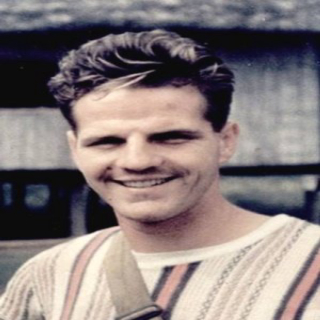
Jim Elliot
 EARLY LIFE
Jim Elliot began his life in Portland, Oregon in the USA. His mother, Clara, was a chiropractor and his father, Fred, was a minister. They married and settled in Seattle, WA where they welcomed their first son, Robert in 1921.
Later they relocated the family to Portland where Herbert arrived in 1924, Jim in 1927, and Jane in 1932.
Jim knew Christ from an early age and was never afraid to speak about Him to his friends. At age six Jim told his mother, “Now, mama, the Lord Jesus can come whenever He wants. He could take our whole family because I’m saved now, and Jane is too young to know Him yet.”
THE YEARS THAT CEMENTED HIS DESIRE TO SERVE THE LORD IN MISSIONS
Jim entered Benson Polytechnic High School in 1941. He carried a small Bible with him and, an excellent speaker; he was often found speaking out for Christ. He and his friends were not afraid to step out and find adventure. One thing Jim didn’t have time for in those early years were girls. He was once quoted as telling a friend, “Domesticated males aren’t much use for adventure.”
In 1945 Jim traveled to Wheaton, IL to attend Wheaton College. His main goal while there was to devote himself to God. He recognized the importance of discipline in pursuing this goal. He would start each morning with prayer and Bible study. In his journal he wrote, “None of it gets to be ‘old stuff’ for it is Christ in print, the Living Word. We wouldn’t think of rising in the morning without a face-wash, but we often neglect the purgative cleansing of the Word of the Lord. It wakes us up to our responsibility.”
Jim’s desire to serve God by taking His gospel to unreached people of the world began to grow while at Wheaton. The summer of 1947 found him in Mexico and that time influenced his decision to minister in Central America after he finished college.
Jim met Elisabeth Howard during his third year at Wheaton. He did ask her for a date which she accepted and then later cancelled. They spent the next years as friends and after she finished at Wheaton they continued to correspond. As they came to know each other there was an attraction, but Jim felt he needed to unencumbered by worldly concerns in order to devote himself completely to God.
In addition to his hope to one day travel to a foreign country to share Christ with the unchurched of the world, he also felt the need to share with people in the United States. On Sundays while at Wheaton he would often ride the train into Chicago and talk to people in the train station about Christ. He often felt ineffective in his work as the times of knowingly leading people to Christ were few. He once wrote, “No fruit yet. Why is that I’m so unproductive? I cannot recall leading more than one or two into the kingdom. Surely this is not the manifestation of the power of the Resurrection. I feel as Rachel, ‘Give me children, or else I die.’”
After college with no clear answer as to working for the Lord in a foreign country, Jim returned home to Portland. He continued his disciplined Bible study as well as correspondence with Elisabeth Howard whom he called Betty.
They both felt a strong attraction to each other during this time, but also felt that the Lord may have been calling them to be unmarried as they served Him.
In June of 1950 he travelled to Oklahoma to attend the Summer Institute of Linguistics. There he learned how to study unwritten languages. He was able to work with a missionary to the Quichuas of the Ecuadorian jungle. Because of these lessons he began to pray for guidance about going to Ecuador and later felt compelled to answer the call there.
Elisabeth Elliot wrote in Shadow of the Almighty:
“The breadth of Jim’s vision is suggested in this entry from the journal:
August 9. “God just now gave me faith to ask for another young man to go, perhaps not this fall, but soon, to join the ranks in the lowlands of eastern Ecuador. There we must learn: 1) Spanish and Quichua, 2) each other, 3) the jungle and independence, and 4) God and God’s way of approach to the highland Quichua. From thence, by His great hand, we must move to the Ecuadorian highlands with several young Indians each, and begin work among the 800,000 highlanders. If God tarries, the natives must be taught to spread southward with the message of the reigning Christ, establishing New Testament groups as they go. Thence the Word must go south into Peru and Bolivia. The Quichuas must be reached for God! Enough for policy. Now for prayer and practice.
THE ECUADOR YEARS
In February 1952 Jim finally left America to travel to Ecuador with Pete Fleming. In May Elisabeth moved to Quito and though they didn’t feel the need to get engaged she and Jim did begin a courtship.
In August Jim left Elisabeth in Quito and travelled with Pete to Shell Mera. At the Mission Aviation Fellowship headquarters in Shell Mera, Jim and Pete learned more about the Acua Indians, a people group that was largely unreached and very savage.
Leaving Shell Mera, Pete and Jim moved on to Shandia where Jim was captivated by the Quichua. He felt very strongly that this was exactly where God intended for him to work to spread the Gospel.
While Jim was in Shandia, Elisabeth was working to learn more about the Colorado Indians near Santa Domingo. In January of 1953 he went to Quito and she met him there and they were finally engaged. They married in October of that year and their only child Valerie was born in 1955.
They settled in Shandia and continued their work with the Quichua Indians. It was Jim’s desire to be able to reach the Waodoni tribe that lived deep in the jungles and had little contact with the outside world. A Waodoni woman who had left the tribe was taken in by the missionaries and helped them to learn the language.
Jim, along with Pete, Ed McCully, Roger Youderian, and their pilot Nate Saint began to search by plane in hopes of finding a way to contact the Waodoni. The found a sandbar in the middle of the Curaray River that worked as a landing strip for the plane and it was there that they first made contact with the Waodoni. They were elated to be able to finally be able to attempt to share the love of Christ with this people group.
After their first meeting, one of the tribe, a man they called George lied to the tribe about the men’s intentions. This lie led the Waodoni warriors to plan an attack for when the missionaries returned. The men did return on January 8, 1956 and were surprised by ten members of the tribe who massacred the missionaries.
Jim’s short life that was filled with the desire to share God’s love can be summed up by a quote that is attributed to him. “He is no fool who gives that which he cannot keep, to gain what he cannot lose.”
EARLY LIFE
Jim Elliot began his life in Portland, Oregon in the USA. His mother, Clara, was a chiropractor and his father, Fred, was a minister. They married and settled in Seattle, WA where they welcomed their first son, Robert in 1921.
Later they relocated the family to Portland where Herbert arrived in 1924, Jim in 1927, and Jane in 1932.
Jim knew Christ from an early age and was never afraid to speak about Him to his friends. At age six Jim told his mother, “Now, mama, the Lord Jesus can come whenever He wants. He could take our whole family because I’m saved now, and Jane is too young to know Him yet.”
THE YEARS THAT CEMENTED HIS DESIRE TO SERVE THE LORD IN MISSIONS
Jim entered Benson Polytechnic High School in 1941. He carried a small Bible with him and, an excellent speaker; he was often found speaking out for Christ. He and his friends were not afraid to step out and find adventure. One thing Jim didn’t have time for in those early years were girls. He was once quoted as telling a friend, “Domesticated males aren’t much use for adventure.”
In 1945 Jim traveled to Wheaton, IL to attend Wheaton College. His main goal while there was to devote himself to God. He recognized the importance of discipline in pursuing this goal. He would start each morning with prayer and Bible study. In his journal he wrote, “None of it gets to be ‘old stuff’ for it is Christ in print, the Living Word. We wouldn’t think of rising in the morning without a face-wash, but we often neglect the purgative cleansing of the Word of the Lord. It wakes us up to our responsibility.”
Jim’s desire to serve God by taking His gospel to unreached people of the world began to grow while at Wheaton. The summer of 1947 found him in Mexico and that time influenced his decision to minister in Central America after he finished college.
Jim met Elisabeth Howard during his third year at Wheaton. He did ask her for a date which she accepted and then later cancelled. They spent the next years as friends and after she finished at Wheaton they continued to correspond. As they came to know each other there was an attraction, but Jim felt he needed to unencumbered by worldly concerns in order to devote himself completely to God.
In addition to his hope to one day travel to a foreign country to share Christ with the unchurched of the world, he also felt the need to share with people in the United States. On Sundays while at Wheaton he would often ride the train into Chicago and talk to people in the train station about Christ. He often felt ineffective in his work as the times of knowingly leading people to Christ were few. He once wrote, “No fruit yet. Why is that I’m so unproductive? I cannot recall leading more than one or two into the kingdom. Surely this is not the manifestation of the power of the Resurrection. I feel as Rachel, ‘Give me children, or else I die.’”
After college with no clear answer as to working for the Lord in a foreign country, Jim returned home to Portland. He continued his disciplined Bible study as well as correspondence with Elisabeth Howard whom he called Betty.
They both felt a strong attraction to each other during this time, but also felt that the Lord may have been calling them to be unmarried as they served Him.
In June of 1950 he travelled to Oklahoma to attend the Summer Institute of Linguistics. There he learned how to study unwritten languages. He was able to work with a missionary to the Quichuas of the Ecuadorian jungle. Because of these lessons he began to pray for guidance about going to Ecuador and later felt compelled to answer the call there.
Elisabeth Elliot wrote in Shadow of the Almighty:
“The breadth of Jim’s vision is suggested in this entry from the journal:
August 9. “God just now gave me faith to ask for another young man to go, perhaps not this fall, but soon, to join the ranks in the lowlands of eastern Ecuador. There we must learn: 1) Spanish and Quichua, 2) each other, 3) the jungle and independence, and 4) God and God’s way of approach to the highland Quichua. From thence, by His great hand, we must move to the Ecuadorian highlands with several young Indians each, and begin work among the 800,000 highlanders. If God tarries, the natives must be taught to spread southward with the message of the reigning Christ, establishing New Testament groups as they go. Thence the Word must go south into Peru and Bolivia. The Quichuas must be reached for God! Enough for policy. Now for prayer and practice.
THE ECUADOR YEARS
In February 1952 Jim finally left America to travel to Ecuador with Pete Fleming. In May Elisabeth moved to Quito and though they didn’t feel the need to get engaged she and Jim did begin a courtship.
In August Jim left Elisabeth in Quito and travelled with Pete to Shell Mera. At the Mission Aviation Fellowship headquarters in Shell Mera, Jim and Pete learned more about the Acua Indians, a people group that was largely unreached and very savage.
Leaving Shell Mera, Pete and Jim moved on to Shandia where Jim was captivated by the Quichua. He felt very strongly that this was exactly where God intended for him to work to spread the Gospel.
While Jim was in Shandia, Elisabeth was working to learn more about the Colorado Indians near Santa Domingo. In January of 1953 he went to Quito and she met him there and they were finally engaged. They married in October of that year and their only child Valerie was born in 1955.
They settled in Shandia and continued their work with the Quichua Indians. It was Jim’s desire to be able to reach the Waodoni tribe that lived deep in the jungles and had little contact with the outside world. A Waodoni woman who had left the tribe was taken in by the missionaries and helped them to learn the language.
Jim, along with Pete, Ed McCully, Roger Youderian, and their pilot Nate Saint began to search by plane in hopes of finding a way to contact the Waodoni. The found a sandbar in the middle of the Curaray River that worked as a landing strip for the plane and it was there that they first made contact with the Waodoni. They were elated to be able to finally be able to attempt to share the love of Christ with this people group.
After their first meeting, one of the tribe, a man they called George lied to the tribe about the men’s intentions. This lie led the Waodoni warriors to plan an attack for when the missionaries returned. The men did return on January 8, 1956 and were surprised by ten members of the tribe who massacred the missionaries.
Jim’s short life that was filled with the desire to share God’s love can be summed up by a quote that is attributed to him. “He is no fool who gives that which he cannot keep, to gain what he cannot lose.”
satan: his work and destiny
Two errors regarding Satan are current and since he alone is advantaged by them it is reasonable to conclude that he is the author of them. 1. Many believe that Satan does not really exist and that the supposed person of Satan is no more than an evil principle, or influence, which is in man and in the world. This conception is proved to be wrong by the fact that there is the same abundant evidence that Satan is a person as there is that Christ is a person. The Scriptures, which alone are authoritative on these matters, treat one to be a person as much as the other, and if the personality of Christ is accepted on the testimony of the Bible, the personality of Satan must also be accepted on the same testimony. 2. Likewise, others believe that Satan is the direct cause of sin in every person. This impression is not true (1) because Satan is not aiming to promote sin in the world. He did not purpose to be a fiend, but rather to be "like the most High" (Isa. 14:14); he is not aiming to destroy, so much as he is to construct, and to realize his own ambition for authority over this world system, which system proposes culture, morality, and religion (2 Cor. 11:13-15). The impression that Satan is the direct cause of sin is not true (2) because human sin is said to come directly from the fallen human heart (Mark 7:18-23; Jas. 1:13-16; Gen. 6:5). I. The Work of Satan The following are only a few of the many passages bearing on the work of Satan: Isaiah 14:12-17. This passage reveals Satan's original and supreme purpose. He would ascend into Heaven, exalt his throne above the stars of God, and be like the most High. To this end he will use his unmeasured wisdom and power; he will weaken the nations, make the earth to tremble, make the world as a wilderness, destroy the cities thereof, and refuse to release his prisoners. Though every phrase of this passage is a startling disclosure, two in particular may be noted: 1. "I will he like the most High." As recorded in the Scriptures, the activities of Satan following his moral fall can be traced only in the line of this supreme motive. It was this purpose which in all seriousness he recommended to Adam and Eve (Gen. 3:5), and they, by adopting Satan's ideal, became self-centered, self-sufficient, and independent of God. This attitude on the part of Adam and Eve became their very nature and has been transmitted to all their posterity to the extent that their posterity are called the "children of wrath" (Eph. 2:3; 5:6; Rom. 1:18), they must be born again (John 3:3), and, when saved, have a struggle to be yielded wholly to the will of God. Again, Satan's desire to be "like the most High" is seen in his passion to be worshiped by Christ (Luke 4:5-7). When the Man of Sin enters the holy place and is worshiped as God (2 Thess. 2:3, 4; Dan. 9:27; Matt. 24:15; Rev. 13:4-8), for a brief moment, Satan's supreme desire will be realized under the permissive will of God. 2. He "opened not the house of his prisoners." The entire prophecy from which this phrase is taken is concerning the work of Satan as it will have been completed in the days of his final judgment. Doubtless there is a larger fulfillment yet future; however, we know that Satan is now doing all in his power to keep the unsaved from being delivered from the power of darkness and translated into the kingdom of God's dear Son (Col. 1:13). Satan is the one who energizes the children of disobedience (Eph. 2:2), blinds the minds of the unsaved lest the light of the Gospel shall reach them (2 Cor. 4:3, 4), and holds the unconscious world in his arms (1 John 5:19, R.V.). It is also revealed that Satan in his warfare will counterfeit the things of God, which undertaking will likewise be in accord with his purpose to be "like the most High." He will promote extensive religious systems (1 Tim. 4:1-3; 2 Cor. 11:13-15). In this connection, it should be observed that Satan can promote forms of religion which are based on selected Bible texts, which elevate Christ as the leader, and which incorporate every phase of the Christian faith excepting one — the doctrine of salvation by grace alone on the ground of the shed blood of Christ. Such satanic delusions are now in the world and multitudes are being deceived by them. Such false systems are always to be tested by the attitude they take toward the saving grace of God through the efficacious blood of Christ (Rev. 12:11). Satan's enmity is evidently against God alone. He is in no way at enmity with the unsaved, and when he aims his "fiery darts" at the children of God, he attacks them only because of the fact that they are indwelt by the divine nature, and through them he is enabled to secure a thrust at God. Likewise, the attack against the children of God is not in the sphere of "flesh and blood," but in the sphere of their heavenly association with Christ. That is, the believer may not be drawn away into immorality, but he may utterly fail in prayer, in testimony and in spiritual victory. Such failure, it should be seen, is as much defeat and dishonor in the sight of God as those sins which are freely condemned by the world. II. The Destiny of Satan As the Word of God is explicit regarding the origin of Satan, so it is explicit regarding his career and destiny. Five progressive judgments of Satan are to be distinguished: 1. Satan's Moral Fall. Though the time in the dateless past is not disclosed, Satan's moral fall, with its necessary separation from God, is clearly indicated (Ezek. 28:15; 1 Tim. 3:6). It is evident, however, that he did not lose his heavenly position, the larger portion of his power, or his access to God. 2. Satan's Judgment through the Cross. Through the cross a perfect judgment has been secured (John 12:31; 16:11; Col. 2:14, 15), but the execution of that sentence is yet future. This sentence with its execution was predicted in the Garden of Eden (Gen. 3:15). 3. Satan will be cast out of Heaven. In the midst of the coming Tribulation and as a result of a war in Heaven, Satan will be cast out of Heaven and be limited to the earth. He will then act in great wrath knowing that he has but a short time to continue (Rev. 12:7-12. Note, also, Isa. 14:12; Luke 10:18). 4. Satan will be confined, to the Abyss. For the thousand-year reign of Christ upon the earth, Satan will be sealed in the abyss, after which he must be loosed for a "little season" (Rev. 20:1-3, 7). 5. Satan's Final Doom. Having promoted an open rebellion against God during the "little season," Satan is then cast into the lake of fire to be tormented day and night for ever and ever (Rev. 20:10). From Major Bible Themes... by Lewis Sperry Chafer. Chicago: The Bible Institute Colportage, 1937, ©1926.