
Others like effortless change Features >>
About the Book
"Effortless Change" focuses on how individuals can overcome negative patterns and habits by relying on God's grace and understanding their true identity in Christ. It teaches readers how to renew their minds and experience lasting transformation without relying solely on their own efforts. The book emphasizes the power of God's love and grace to bring about effortless change in people's lives.
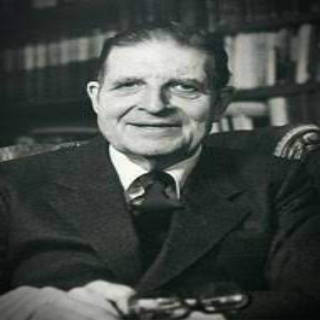
George Eldon Ladd
Ever used the phrase âAlready / Not Yetâ to describe the timing of Godâs kingdom? If so, youâre indebted to George Eldon Ladd, longtime professor at Fuller Seminary and one of the most influential evangelical scholars of the 1900âs.
Ladd broke through the sterile debates about whether the kingdom of God was a present, spiritual reality or a future, earthly reality. He popularized a view of the kingdom as having two dimensions: âalready/not yet.â Ladd was also one of the first solid evangelical scholars to go outside the fundamentalist camp in order to interact with liberal scholars in the academy, men like Rudolph Bultmann.
For a biographical overview of Laddâs life and work, I suggest A Place at the Table: George Eldon Ladd and the Rehabilitation of Evangelical Scholarship in America. See my review of this book here:
A Place at the Table is much more than a biographical sketch of Laddâs life. DâElia cautiously enters into the theological discussion he describes in order to spotlight Laddâs contributions to evangelical scholarship and his interactions with scholars from outside the evangelical world. Those who read DâEliaâs book will receive an education, not merely regarding the historical aspects of Laddâs interesting life, but also regarding the theological debates of the time.
Iâve also interviewed Laddâs biographer, John DâElia, about his work and his legacy:
Laddâs legacy within evangelical scholarship is hard to overstate. I argue in the book that he carved out a place for evangelicals in what was then the threatening and bewildering world of critical biblical scholarship. By demystifying the methods of critical scholarship, Ladd made them available to evangelicals who wanted to use them in their study of the Scriptures. Historic premillennialism, then, is really an incidental part of Laddâs story. The real achievement in Laddâs career can be found in the wide range of biblical scholars who sat at his feet and then went on to make their own mark. Those scholars are as diverse as John Piper and Robert Mounce on the
one side, and Eldon Epp and Charles Carlston on the other.
If youâre going to start reading Ladd, let me suggest his book, The Gospel of the Kingdom: Scriptural Studies in the Kingdom of God. Check out my review here:
The Gospel of the Kingdom is illuminating, clarifying and (thankfully) brief. It is amazing that Ladd manages to fit all of this great theological teaching into 140 pages.
There is a reason this book is still in print. It is unmatched in its clarification of what the kingdom of God is, and how the kingdom of God can be already present but not yet here in its fullness.
Iâll close this post with Ladd himself. Here are two ways Ladd defined âthe gospel,â one personal and the other in light of Godâs kingdom:
âI can only bear witness at this point to what Heilsgeschichte means to me. My sense of Godâs love and acceptance is grounded not only in the resurrected Christ but also in the Jesus of history. He taught something about God that was utterly novel to his Jewish auditors: that God is not only gracious and forgiving to the repentant sinner but is also a seeking God who, in Jesusâ person and mission, has come to seek and to save the lostâŚ
God has shown me that he loves me in that while I was yet a sinner, Christ died for me (Rom. 5:8). This is not faith in history; it is not faith in the kerygma; it is not faith in the Bible. It is faith in God who has revealed himself to me in the historical event of the person, works and words of Jesus of Nazareth who continues to speak to me though the prophetic word of the Bible.â
â George Eldon Ladd, âThe Search for Perspective,â Interpretation 25 (Jan. 1971), 56 and 57.
âThis is the good news about the kingdom of God. How men need this gospel! Everywhere one goes he finds the gaping graves swallowing up the dying. Tears of loss, of separation, of final departure stain every face. Every table sooner or later has an empty chair, every fireside its vacant place. Death is the great leveller. Wealth or poverty, fame or oblivion, power or futility, success or failure, race, creed or culture â all our human distinctions mean nothing before the ultimate irresistible sweep of the scythe of death which cuts us all down. And whether the mausoleum is a fabulous Taj Mahal, a massive pyramid, an unmarked spot of ragged grass or the unplotted depths of the sea one fact stands: death reigns.
âApart from the gospel of the kingdom, death is the mighty conqueror before whom we are all helpless. We can only beat our fists in utter futility against this unyielding and unresponding tomb. But the good news is this: death has been defeated; our conqueror has been conquered. In the face of the power of the kingdom of God in Christ, death was helpless. It could not hold him, death has been defeated; life and immortality have been brought to life. An empty tomb in Jerusalem is proof of it. This is the gospel of the kingdom.â
â from The Gospel of the Kingdom
Will Hell Really Last Forever
I am almost ashamed to admit that such a tiny bird should have been used to frighten a grown man. But in this case, I was right to tremble. The image in my mindâs eye of that little bird descending from above, flitting back and forth, hopping up and down upon the immensity of sand. What a horror to see it flap away with so little a grain only to expect its return so many lifetimes later. All to remember that it would be all irrelevant anyways. Thomas Watson gave the illustration, preaching on the fate of those who worshiped the beast in Revelation 14:11, which says, âThe smoke of their torment goes up forever and ever, and they have no rest, day or night. . .â It cannot be forgotten: Oh eternity! If all the body of earth and sea were turned to sand, and all the air up to the starry heaven were nothing but sand, and a little bird should come every thousand years, and fetch away in her bill but the tenth part of a grain of all that heap of sand, what numberless years would be spent before that vast heap of sand would be fetched away! Yet, if at the end of all that time, the sinner might come out of hell, there would be some hope; but that word âEverâ breaks the heart. âThe smoke of their torment ascendeth up for ever and ever.â After coming and going every thousand years, carrying away one of the smallest grains of the innumerable amount of sand, this hour glass would finally drain and the banished would be no closer to the end than when they first began. That word which should make the most apathetic among the unforgiven weep, the strongest sweat blood, the youngest curl into the fetal position, the oldest break into madness to hear its footsteps so near, shook me. Who can rightly fathom it? Forever. Ghosts Reading over Shoulders But is it true? Do those in hell suffer eternal conscious punishment? The church throughout its two-thousand-year history has thought so, but many today do not. And we shouldnât wonder why: this is personal to us. I write keenly aware that the memories of deceased loved ones who departed in apparent unbelief hover over shoulders reading along. What of him? What of her? we wonder. Although he was one of the first notable evangelicals of the previous generation to contradict the historic conception of hell, we must all adopt the final question John Stott considers, I find the concept [of eternal conscious punishment in hell] intolerable and do not understand how people can live with it without either cauterizing their feelings or cracking under the strain. But our emotions are a fluctuating, unreliable guide to truth and must not be exalted to the place of supreme authority in determining it. As a committed Evangelical, my question must be â and is â not what does my heart tell me, but what does Godâs word say? So what does Godâs word say? Nothing different from what the church has overwhelmingly held over its two millennia. Three Objections Of all topics that feel crude to abridge, this must be atop the list. Much has been written on this topic that fly past the scope of this article. Resources I found helpful include Hell Under Fire, Grudemâs Systematic Theology, and chapters in Gagging of God (13) and Let the Nations Be Glad (4). That said, I would like to give brief answers to common challenges to those who believe those in hell will ultimately be annihilated. 1. Does âEternalâ Mean Forever? Conditionalists (those who believe the wicked will eventually cease to be, based on the fact that the soul is not inherently immortal but becomes so as they meet certain conditions, and in particular through union with Christ) and annihilationists (those who believe the wicked will cease to be because, although the soul would have otherwise prolonged, God finally annihilates them in judgement) both believe that hell is not endless punishment for the wicked. In proving this, they both point out that âeternalâ does not always mean everlasting. They argue that both in the Hebrew and Greek, the corresponding words we often translate âeternalâ have elasticity to mean âforeverâ as well as other things, such as âage to come,â which they argue could last forever or not. One of the strongest reasons this is unpersuasive (without going text by text) is that some of the biblical passages in question speak in the same breath of both the eternality of the righteous (which we donât question) and the eternality of the unrighteous (which some do). In other words, the life that the righteous enjoy is parallel to the punishment the wicked suffer. Hell lasts as long as heaven. For example, Daniel speaks of those who will awake from death: âMany of those who sleep in the dust of the earth shall awake, some to everlasting life, and some to shame and everlasting contemptâ (Daniel 12:2). This idea is carried through into the New Testament by Jesus in Matthew 25 (which many think is, by itself, decisive on the matter) when he teaches the parallel fates of the righteous and the unrighteous: âThese will go away into eternal punishment, but the righteous into eternal lifeâ (Matthew 25:46). Furthermore, the book of Revelation displays the same thing, utilizing the most emphatic language afforded in Greek to mean forever: âfor ever and everâ (eis aiĹnas aiĹnĹn), as in the text already cited with the little bird: If anyone worships the beast and its image and receives a mark on his forehead or on his hand, he also will drink the wine of Godâs wrath, poured full strength into the cup of his anger, and he will be tormented with fire and sulfur in the presence of the holy angels and in the presence of the Lamb. And the smoke of their torment goes up forever and ever, and they have no rest, day or night, these worshipers of the beast and its image, and whoever receives the mark of its name. (Revelation 14:9â11) The same description is employed to describe the everlasting suffering of Satan and his demons: âThe devil who had deceived them was thrown into the lake of fire and sulfur where the beast and the false prophet were, and they will be tormented day and night forever and everâ (Revelation 20:10). And this, again, is parallel to the righteousâ fate later in the book: âThey will need no light of lamp or sun, for the Lord God will be their light, and they will reign forever and everâ (Revelation 22:5). Heaven and hell will cease together. 2. Will the Wicked Cease to Exist? Scripture often employs terms such as âdestructionâ (Matthew 10:18), âperishingâ (John 3:16), and âdeathâ (Revelation 20:14) to describe the judgment of God on those in hell. These terms, some argue, entail complete annihilation, not continuing anguish. As Stott memorably put it, âIt would seem strange . . . if people who are said to suffer destruction are in fact not destroyed; and as you put it, it is difficult to imagine a perpetually inconclusive process of perishing.â In response, D.A. Carson replies, âStottâs conclusion (âIt would seem strange . . . if people who are said to suffer destruction are in fact not destroyedâ) is memorable, but useless as an argument, because it is merely tautologous: of course those who suffer destruction are destroyed. But it does not follow that those who suffer destruction cease to exist. Stott has assumed his definition of âdestructionâ in his epigraph.â So what does it mean then? I have a family member whose car recently started on fire and was completely destroyed. It was totaled and rendered useless. They sent me a picture of it â its frame, and doors, still were intact though completely black. The mirror hung limp. The front mirror was incinerated. The hood melted and the wires and engine exposed. It was ruined, but did not cease to be. But arenât the wicked described as being thrown into fire â something that utterly consumes? No, for âthey will have no rest day or nightâ (Revelation 14:11). The devil, his demons, and the âchildren of wrathâ who followed him, will, like the burning bush and hellâs worm that does not die, burn yet not be consumed. They will beg any who will listen to give but a drop of water on their tongue to relieve their anguish from the flames (Luke 16:24), their âplace of tormentâ (Luke 16:28). âIn that place there will be weeping and gnashing of teethâ (Matthew 13:50), not silence or the mere roaring of a fire. 3. Does the Punishment Fit the Crime? Another critique, more philosophically argued, is that it is unjust to earn an infinite duration of punishment for finite sins. The punishment doesnât match such a crime, it is alleged. To this, we may respond as follows. Crimes Against the Infinite God A man can commit such gross crimes against his fellow humans that he could earn ten life sentences for ten minutes of mayhem. And these are but sins against men. Can the idea of sinning against God â and not only in a moment but for oneâs whole lifetime â not merit eternal damnation when one sin justly plunged the world into death and darkness? Edwards is often cited as arguing this. John Piper summarizes, âThe essential thing is that degrees of blameworthiness come not from how long you offend dignity, but from how high the dignity is that you offendâ (Let the Nations Be Glad, 127). We sin against a God infinitely worthy of obedience, infinite in glory, infinite in purity. No dignity is higher and no transgression viler. It reveals much that we see more problems with the punishment than the crime. Eternal Sins? Another reason this is righteous is that there is good reason to understand sins as being eternal, in at least two senses. First, Jesus spoke of an eternal (not finite) sin (Mark 3:29), a sin that âwill not be forgiven, either in this age or in the age to comeâ (Matthew 12:32). And sins not explicitly named as this eternal sin, result in eternal destruction (2 Thessalonians 1:9), eternal judgment (Hebrews 6:2), eternal punishment (Matthew 25:46), and eternal fire (Matthew 25:41) which undermines our finite categories. Second, sins of the damned can be eternal in that sinners continue to sin throughout eternity. John Stott admitted that eternal conscious punishment would be much more sensible to him if âperhaps (as has been argued) the impenitence of the lost also continues throughout eternity.â Two texts seem to indicate this. The first, Revelation 22:10â11: âLet him who does wrong continue to do wrong; let him who is vile continue to be vile; let him who does right continue to do right; and let him who is holy continue to be holy.â If the holy practice holiness in anticipation of continuing in perfect holiness, will not the ungodly continue to spiral in evil throughout eternity? Will they suddenly love God with all their souls in hell? The answer is clear enough in Revelation 16:8â11, where people under Godâs judgment âgnawed their tongues in anguish and cursed the God of heaven for their pain and sores. They did not repent of their deeds.â Should They Not Go Free? More on the offensive, Carson asks the necessary question, âOne might reasonably wonder why, if people pay for their sins in hell before they are annihilated, they cannot be released into heaven, turning hell into purgatory. Alternatively, if the sins have not yet been paid for, why should they be annihilated?â King Who Emptied the Desert A bird could not, by the painstaking removal of a world full of sand, move us one step closer to eternity with God. Time will not amend all wounds, nor stop Godâs righteous punishment. Nor will death hide the wicked, though they seek annihilation, calling on the mountains to crush them to hide them from Christâs wrath (Revelation 6:15â17). But what a little bird could not accomplish, a Lamb has. At the pinnacle of his anguish, he cried, âMy God, my God why have you forsaken meâ so that those who repent and believe in him might not âsuffer the punishment of eternal destruction, away from the presence of the Lord and from the glory of his mightâ (2 Thessalonians 1:9). Here alone can the cup of eternal judgment be drained on behalf of sinners. There is an escape from eternal punishment. Although we rightfully feel unceasing anguish and great sorrow for those who never hide beneath the cross on this side of eternity (Romans 9:1â3), even this anguish will not last. We shall celebrate Godâs eternal triumph over evil forever: âOnce more they cried out, âHallelujah! The smoke from her goes up forever and everââ (Revelation 19:3). Christ Jesus our Savior is worthy of eternal praise because he endured, for us, the righteous judgment that would have been ours for eternity. Article by Greg Morse