

Others like don’t follow your heart Features >>
-160.webp)
Know Your Enemy: How To Combat And Overcome Demonic Forces

Suffering And The Sovereignty Of God
Putting On The Mind Of Christ
Holiness, Truth And The Presence Of God

Overcoming Compulsive Desires
-160.webp)
The Gift Of Prophecy

The Results Of Neglect

Angelic Visitations And Supernatural Encounters

Endurance
The Spirit Of Python
About the Book
"Don’t Follow Your Heart" by Jon Bloom explores the dangers of relying solely on emotions and urges as guides for decision-making. Instead, the author argues for following God's wisdom and understanding, using biblical principles to make choices that align with God's will for our lives. Through personal anecdotes and analyses of biblical stories, Bloom challenges readers to seek God's truth rather than follow their own hearts.
David Livingstone
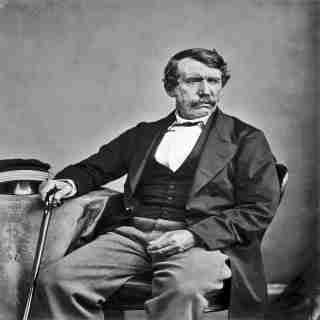 "[I am] serving Christ when shooting a buffalo for my men or taking an observation, [even if some] will consider it not sufficiently or even at all missionary."
With four theatrical words, "Dr. Livingstone, I presume?"—words journalist Henry Morton Stanley rehearsed in advance—David Livingstone became immortal. Stanley stayed with Livingstone for five months and then went off to England to write his bestseller, How I Found Livingstone. Livingstone, in the meantime, got lost again—in a swamp literally up to his neck. Within a year and a half, he died in a mud hut, kneeling beside his cot in prayer.
Berlin Congress spurs African independent churches
The whole civilized world wept. They gave him a 21-gun salute and a hero's funeral among the saints in Westminster Abbey. "Brought by faithful hands over land and sea," his tombstone reads, "David Livingstone: missionary, traveler, philanthropist. For 30 years his life was spent in an unwearied effort to evangelize the native races, to explore the undiscovered secrets, and to abolish the slave trade." He was Mother Teresa, Neil Armstrong, and Abraham Lincoln rolled into one.
Highway man
At age 25, after a childhood spent working 14 hours a day in a cotton mill, followed by learning in class and on his own, Livingstone was captivated by an appeal for medical missionaries to China. As he trained, however, the door to China was slammed shut by the Opium War. Within six months, he met Robert Moffat, a veteran missionary of southern Africa, who enchanted him with tales of his remote station, glowing in the morning sun with "the smoke of a thousand villages where no missionary had been before."
For ten years, Livingstone tried to be a conventional missionary in southern Africa. He opened a string of stations in "the regions beyond," where he settled down to station life, teaching school and superintending the garden. After four years of bachelor life, he married his "boss's" daughter, Mary Moffat.
From the beginning, Livingstone showed signs of restlessness. After his only convert decided to return to polygamy, Livingstone felt more called than ever to explore. During his first term in South Africa, Livingstone made some of the most prodigious—and most dangerous—explorations of the nineteenth century. His object was to open a "Missionary Road"—"God's Highway," he also called it—1,500 miles north into the interior to bring "Christianity and civilization" to unreached peoples.
Explorer for Christ
On these early journeys, Livingstone's interpersonal quirks were already apparent. He had the singular inability to get along with other Westerners. He fought with missionaries, fellow explorers, assistants, and (later) his brother Charles. He held grudges for years. He had the temperament of a book-reading loner, emotionally inarticulate except when he exploded with Scottish rage. He held little patience for the attitudes of missionaries with "miserably contracted minds" who had absorbed "the colonial mentality" regarding the natives. When Livingstone spoke out against racial intolerance, white Afrikaners tried to drive him out, burning his station and stealing his animals.
He also had problems with the London Missionary Society, who felt that his explorations were distracting him from his missionary work. Throughout his life, however, Livingstone always thought of himself as primarily a missionary, "not a dumpy sort of person with a Bible under his arms, [but someone] serving Christ when shooting a buffalo for my men or taking an observation, [even if some] will consider it not sufficiently or even at all missionary."
Though alienated from the whites, the natives loved his common touch, his rough paternalism, and his curiosity. They also thought he might protect them or supply them with guns. More than most Europeans, Livingstone talked to them with respect, Scottish laird to African chief. Some explorers took as many as 150 porters when they traveled; Livingstone traveled with 30 or fewer.
On an epic, three-year trip from the Atlantic Ocean to the Indian Ocean (reputedly the first by a European) Livingstone was introduced to the 1,700-mile-long Zambezi. The river was also home to Victoria Falls, Livingstone's most awe-inspiring discovery. The scene was "so lovely," he later wrote, that it "must have been gazed upon by angels in their flight."
Despite its beauty, the Zambezi was a river of human misery. It linked the Portuguese colonies of Angola and Mozambique, the main suppliers of slaves for Brazil, who in turn sold to Cuba and the United States. Though Livingstone was partially driven by a desire to create a British colony, his primary ambition was to expose the slave trade and cut it off at the source. The strongest weapon in this task, he believed, was Christian commercial civilization. He hoped to replace the "inefficient" slave economy with a capitalist economy: buying and selling goods instead of people.
The ill-fated Zambezi expedition
After a brief heroic return to England, Livingstone returned to Africa, this time to navigate 1,000 miles up the Zambezi in a brass-and-mahogany steamboat to establish a mission near Victoria Falls. The boat was state-of-the-art technology but proved too frail for the expedition. It leaked horribly after repeatedly running aground on sandbars.
Livingstone pushed his men beyond human endurance. When they reached a 30-foot waterfall, he waved his hand, as if to wish it away, and said, "That's not supposed to be there." His wife, who had just given birth to her sixth child, died in 1862 beside the river, only one of several lives claimed on the voyage. Two years later, the British government, which had no interest in "forcing steamers up cataracts," recalled Livingstone and his mission party.
A year later, he was on his way back to Africa again, this time leading an expedition sponsored by the Royal Geographical Society and wealthy friends. "I would not consent to go simply as a geographer," he emphasized, but as biographer Tim Jeal wrote, "It would be hard to judge whether the search for the Nile's source or his desire to expose the slave trade was his dominant motive." The source of the Nile was the great geographical puzzle of the day. But more important to Livingstone was the possibility of proving that the Bible was true by tracing the African roots of Judaism and Christianity.
For two years he simply disappeared, without a letter or scrap of information. He reported later that he had been so ill he could not even lift a pen, but he was able to read the Bible straight through four times. Livingstone's disappearance fascinated the public as much as Amelia Earhart's a few generations later.
When American journalist Henry Stanley found Livingstone, the news exploded in England and America. Papers carried special editions devoted to the famous meeting. In August 1872, in precarious health, Livingstone shook Stanley's hand and set out on his final journey.
When Livingstone had arrived in Africa in 1841, it was as exotic as outer space, called the "Dark Continent" and the "White Man's Graveyard." although the Portuguese, Dutch, and English were pushing into the interior, African maps had blank unexplored areas—no roads, no countries, no landmarks. Livingstone helped redraw the maps, exploring what are now a dozen countries, including South Africa, Rwanda, Angola, and the Republic of the Congo (formerly Zaire). And he made the West aware of the continuing evil of African slavery, which led to its being eventually outlawed.
"[I am] serving Christ when shooting a buffalo for my men or taking an observation, [even if some] will consider it not sufficiently or even at all missionary."
With four theatrical words, "Dr. Livingstone, I presume?"—words journalist Henry Morton Stanley rehearsed in advance—David Livingstone became immortal. Stanley stayed with Livingstone for five months and then went off to England to write his bestseller, How I Found Livingstone. Livingstone, in the meantime, got lost again—in a swamp literally up to his neck. Within a year and a half, he died in a mud hut, kneeling beside his cot in prayer.
Berlin Congress spurs African independent churches
The whole civilized world wept. They gave him a 21-gun salute and a hero's funeral among the saints in Westminster Abbey. "Brought by faithful hands over land and sea," his tombstone reads, "David Livingstone: missionary, traveler, philanthropist. For 30 years his life was spent in an unwearied effort to evangelize the native races, to explore the undiscovered secrets, and to abolish the slave trade." He was Mother Teresa, Neil Armstrong, and Abraham Lincoln rolled into one.
Highway man
At age 25, after a childhood spent working 14 hours a day in a cotton mill, followed by learning in class and on his own, Livingstone was captivated by an appeal for medical missionaries to China. As he trained, however, the door to China was slammed shut by the Opium War. Within six months, he met Robert Moffat, a veteran missionary of southern Africa, who enchanted him with tales of his remote station, glowing in the morning sun with "the smoke of a thousand villages where no missionary had been before."
For ten years, Livingstone tried to be a conventional missionary in southern Africa. He opened a string of stations in "the regions beyond," where he settled down to station life, teaching school and superintending the garden. After four years of bachelor life, he married his "boss's" daughter, Mary Moffat.
From the beginning, Livingstone showed signs of restlessness. After his only convert decided to return to polygamy, Livingstone felt more called than ever to explore. During his first term in South Africa, Livingstone made some of the most prodigious—and most dangerous—explorations of the nineteenth century. His object was to open a "Missionary Road"—"God's Highway," he also called it—1,500 miles north into the interior to bring "Christianity and civilization" to unreached peoples.
Explorer for Christ
On these early journeys, Livingstone's interpersonal quirks were already apparent. He had the singular inability to get along with other Westerners. He fought with missionaries, fellow explorers, assistants, and (later) his brother Charles. He held grudges for years. He had the temperament of a book-reading loner, emotionally inarticulate except when he exploded with Scottish rage. He held little patience for the attitudes of missionaries with "miserably contracted minds" who had absorbed "the colonial mentality" regarding the natives. When Livingstone spoke out against racial intolerance, white Afrikaners tried to drive him out, burning his station and stealing his animals.
He also had problems with the London Missionary Society, who felt that his explorations were distracting him from his missionary work. Throughout his life, however, Livingstone always thought of himself as primarily a missionary, "not a dumpy sort of person with a Bible under his arms, [but someone] serving Christ when shooting a buffalo for my men or taking an observation, [even if some] will consider it not sufficiently or even at all missionary."
Though alienated from the whites, the natives loved his common touch, his rough paternalism, and his curiosity. They also thought he might protect them or supply them with guns. More than most Europeans, Livingstone talked to them with respect, Scottish laird to African chief. Some explorers took as many as 150 porters when they traveled; Livingstone traveled with 30 or fewer.
On an epic, three-year trip from the Atlantic Ocean to the Indian Ocean (reputedly the first by a European) Livingstone was introduced to the 1,700-mile-long Zambezi. The river was also home to Victoria Falls, Livingstone's most awe-inspiring discovery. The scene was "so lovely," he later wrote, that it "must have been gazed upon by angels in their flight."
Despite its beauty, the Zambezi was a river of human misery. It linked the Portuguese colonies of Angola and Mozambique, the main suppliers of slaves for Brazil, who in turn sold to Cuba and the United States. Though Livingstone was partially driven by a desire to create a British colony, his primary ambition was to expose the slave trade and cut it off at the source. The strongest weapon in this task, he believed, was Christian commercial civilization. He hoped to replace the "inefficient" slave economy with a capitalist economy: buying and selling goods instead of people.
The ill-fated Zambezi expedition
After a brief heroic return to England, Livingstone returned to Africa, this time to navigate 1,000 miles up the Zambezi in a brass-and-mahogany steamboat to establish a mission near Victoria Falls. The boat was state-of-the-art technology but proved too frail for the expedition. It leaked horribly after repeatedly running aground on sandbars.
Livingstone pushed his men beyond human endurance. When they reached a 30-foot waterfall, he waved his hand, as if to wish it away, and said, "That's not supposed to be there." His wife, who had just given birth to her sixth child, died in 1862 beside the river, only one of several lives claimed on the voyage. Two years later, the British government, which had no interest in "forcing steamers up cataracts," recalled Livingstone and his mission party.
A year later, he was on his way back to Africa again, this time leading an expedition sponsored by the Royal Geographical Society and wealthy friends. "I would not consent to go simply as a geographer," he emphasized, but as biographer Tim Jeal wrote, "It would be hard to judge whether the search for the Nile's source or his desire to expose the slave trade was his dominant motive." The source of the Nile was the great geographical puzzle of the day. But more important to Livingstone was the possibility of proving that the Bible was true by tracing the African roots of Judaism and Christianity.
For two years he simply disappeared, without a letter or scrap of information. He reported later that he had been so ill he could not even lift a pen, but he was able to read the Bible straight through four times. Livingstone's disappearance fascinated the public as much as Amelia Earhart's a few generations later.
When American journalist Henry Stanley found Livingstone, the news exploded in England and America. Papers carried special editions devoted to the famous meeting. In August 1872, in precarious health, Livingstone shook Stanley's hand and set out on his final journey.
When Livingstone had arrived in Africa in 1841, it was as exotic as outer space, called the "Dark Continent" and the "White Man's Graveyard." although the Portuguese, Dutch, and English were pushing into the interior, African maps had blank unexplored areas—no roads, no countries, no landmarks. Livingstone helped redraw the maps, exploring what are now a dozen countries, including South Africa, Rwanda, Angola, and the Republic of the Congo (formerly Zaire). And he made the West aware of the continuing evil of African slavery, which led to its being eventually outlawed.
Closeness Comes Through Fire - How Suffering Conforms Us to Christ
Ignatius of Loyola (1491–1556) believed the cannonball that broke his leg was essential to his spiritual awakening. For Martin Luther, it was the threat of lightning. What unites them is that they are part of a common Christian tradition that teaches an uncomfortable lesson: suffering sanctifies. The stories can be found throughout Scripture and in every church on almost any day. We might wish that faith grew especially during prosperity, but the voice of faith says, “Jesus, help!” And those words come most naturally when we are weak and unable to manage on our own. Growth can be judged, in part, by the number of words we speak to our Lord, and we tend to speak more words when we are at the end of ourselves. Suffering sanctifies. God tests us in order to refine us. This is true, and knowing this might help us face the inconveniences and challenges of everyday life. But this knowledge feels less satisfying in the face of the death of a child, betrayal by a loved one, or victimization that leaves you undone. Then the nexus between trouble and God’s sanctifying goodness can gradually give way to a relationship in which you and God seem to live in the same house, but you rarely acknowledge him. We expect some types of sanctifying suffering, but not those sufferings that border on the unspeakable. When these come, the idea that they sanctify us may feel unhelpful. Though we might say to a friend who had a flat tire, “How is God growing you through that?” we know that we should never ask such a question to someone when “the waters have come up to my neck” (Psalm 69:1). The basic principle is true — God sanctifies us through suffering — but there are more elegant and personal ways to talk about it. Sanctification Is Closeness A more helpful approach first refreshes our understanding of sanctification. Let’s begin with a common definition: sanctification is growth in obedience. The problem is when this definition drifts from its intensely personal moorings. As it does, suffering becomes God’s plan to make us better people — stronger, seasoned soldiers who don’t retreat after a mere flesh wound. All of this, of course, sounds suspiciously like a father who is preparing his children to move out and become independent, which is the exact opposite of what God desires for us. Left in this form, the principle that “suffering sanctifies” will erode faith. Sanctification, of course, is much more intimate. “Christ also suffered once for sins, the righteous for the unrighteous, that he might bring us to God” (1 Peter 3:18). Jesus died to draw us near to God, and our obedience serves that closeness. From this perspective, sin and any form of uncleanness distance us from God. Holiness, or sanctification, brings us closer. Progressive Nearness Think of the Old Testament tabernacle. The unclean, which included the foreign nations and those contaminated by the sins of others, were farthest from the place of God’s presence in the Most Holy Place. The clean were closer. They camped around God’s house and could freely come near to worship and offer sacrifices. The priests, however — the ones made holy — were closer still. They were invited daily, in turn, into the Holy Place, and, once a year, on the Day of Atonement, the high priest dared to enter the Most Holy Place. The high priest offers a picture of humanity as God intended — purified and close to him. For us, we have been sanctified once for all by the obedience of Jesus Christ (Hebrews 10:10) and our faith in him. We now are holy ones. From that place, in the Most Holy Place, God invites us closer still, and our obedience and love for him are means by which we draw nearer. In his book on Leviticus, Michael Morales helpfully suggests progressive nearness as an alternative to progressive sanctification (Who Shall Ascend the Mountain of the Lord?, 18). This heavenly pattern of nearness through obedience overflows into the very fabric of marriage: a married couple has been brought near in their declarations of commitment to each other, and then, for the rest of their lives, they draw nearer still through their growth in covenant love. Sovereignty Has Mysteries With sanctification understood more personally, we turn to our understanding of God’s sovereignty. “Suffering sanctifies” suggests that God purposely brings suffering into our lives. He ordains every detail. This is true, but some ways of talking about God’s sovereignty can be misleading and miss the emphasis of Scripture. “God’s sovereignty invites us to trust in our Father who will make everything right, even in creation itself.” God’s sovereignty is not an invitation to make perfect sense of how his power and love coexist with every detail of our suffering. Instead, his sovereignty reminds us to approach him as children who trust their Father and his love. A child understands love, and God’s love is, indeed, a fathomless expanse that he welcomes us to explore. He gives help and wisdom as we consider, “He who did not spare his own Son but gave him up for us all, how will he not also with him graciously give us all things?” (Romans 8:32). The most shameful abuse will not separate us from God, which is certainly counterintuitive when we feel like an outcast who is among the unclean. When we see him face-to-face, we will rest in (and even rejoice in) his righteous judgement against oppressors, and we will be thoroughly cleansed from the wicked acts done against us. In other words, God’s sovereignty invites us to trust in our Father who will make everything right, even in creation itself. How Suffering Draws Us So, how does suffering sanctify? How does God sanctify us in the midst of suffering? In this way: with boundless compassion, God rushes to us. He comes close and enters into our burdens. He hears the cries of his people, which means that he will take action (Psalm 10:14). This is all true. Satan would have you think otherwise, but this is true. “I am the suffering servant. Talk to me.” The Spirit invites you to see and hear Jesus, the suffering servant. The misery of a mysterious servant in Isaiah 52–53 foretells his story. The last week of Jesus’s life in John 10–21 reveals him most fully. In Jesus, you find a kindred spirit who knows your experience through his own. He understands you without you explaining the details. As you watch him, you will notice how the list of abuses against him gathered momentum every day. Perhaps you will be stunned by his universal rejection and shame. “In Jesus, you find a kindred spirit who knows your experience through his own.” Next, there is an unexpected turn. “He was pierced for our transgressions” (Isaiah 53:5), which is to say, for your transgressions. What does your sin have to do with your suffering? When Jesus took your sin, he assured you that nothing can separate you from the love of God, and he breached the wall of pain in which Satan, death, shame, sin, and misery dwelt. To this stronghold, Jesus announced their demise. Then Jesus makes all this even more personal. He brings you closer. He invites you to speak to him. “Pour out your heart” (Psalm 62:8), he says. Prayer, of course, can be much more difficult than it sounds, so he gives you words to replace those unspeakable silences. When you read the Psalms, you can almost overhear Jesus ask you, “Is this how you feel?” His request that you speak to him is a sincere request, and he patiently waits for your words. In response, you break your silence. Perhaps your words jar you, not because of their honesty but simply because your recent words to him have been so few. “But how could evil have been given such liberty in my life? Why did you hide your face from me? How could you have allowed . . .” With these words, he has drawn you closer. They are expressions of your faith in God. You are being sanctified. You have listened to him. Unbelief turns away or simply rages; faith responds to God, presses in, and inquires, with words shaped by Scripture. Jesus himself has asked these very questions to his Father. After more words back-and-forth, God invites you to grow as his child. “I am your God and Father. You can trust me.” He has given you evidence that he is trustworthy. He certainly will not forget you or the acts done against you (Isaiah 49:16). Do you believe? This is the truth. He says, “Come closer, as my child, and trust me.” You respond, “Yes, I believe; help my unbelief. I trust you, but please give me more faith.” This is one way suffering sanctifies: it brings us closer to God. Article by Ed Welch Counselor, CCEF