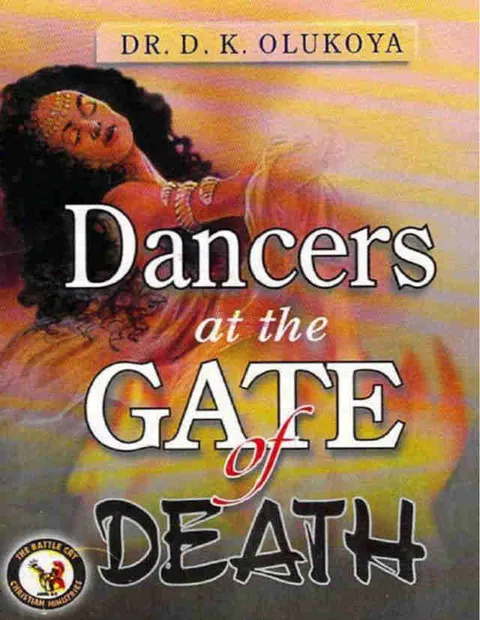

Others like dancers at the gate of death Features >>
Possessing The Gates Of The Enemy
Opening The Gates Of Heaven

Discerning The Voice Of God

Holy Spirit, Your Helper

The Power Of A Praying Woman

Prayer Warrior
101 Weapons Of Spiritual Warfare

High Level Warfare
-160.webp)
Rebuilding The Tabernacle Of David: Back To The Future
The Beginner's Guide To Intercessory Prayer
About the Book
"Dancers at the Gate of Death" by D. K. Olukoya is a spiritual warfare guide that explores the dangers of occult practices and the influence of evil forces in the world. It discusses the power of prayer, faith, and spiritual warfare in overcoming these dark influences and urges readers to seek salvation and protection through God. The book offers practical advice for living a victorious and spiritually fulfilling life.
James Petigru Boyce
God Knows
At the end of Exodus 2, Moses is a fugitive in Midian, hiding from Pharaoh and the people of Israel are groaning in Egypt, crying out for deliverance from the oppressive, abusive death grip of slavery. And the chapter ends with these words: “God saw the people of Israel — and God knew” (Exodus 2:25). Those words, “God knew,” are pregnant with hope. God Knew God knew. God was aware of each person’s suffering. He understood what was happening to them and how it was affecting them. God knew the dehumanizing degradation and routine rapine that is part and parcel of a slave’s experience. He knew the premature breakdown of bodies ruthlessly subjected daily to exhausting manual labor (Exodus 1:11). He knew the bitter erosion of hope that occurs when all labor only benefits ungrateful abusers (Exodus 1:14). God knew the horror and trauma of legalized, enforced infanticide (Exodus 1:16). And he knew the resentment and anger that is on constant simmer in a culture of hopelessness, sometimes boiling over into vengeful violence against oppressors (Exodus 2:11–12), and other times into tragic violence within the oppressed community (Exodus 2:13). God knew and he was preparing to take action in a way that would leave a permanent, indelible imprint upon the collective memory of the human race. God Foreknew But God didn’t only know this when it all happened. He knew it was going to happen long before it even looked remotely possible that it could happen. Centuries earlier God had told Abram (later Abraham), the founder of the Israelite nation, Know for certain that your offspring will be sojourners in a land that is not theirs and will be servants there, and they will be afflicted for four hundred years. But I will bring judgment on the nation that they serve, and afterward they shall come out with great possessions. (Genesis 15:13–14, italics mine) The nature and implications of God’s foreknowledge — what he foreknows and how certain this foreknowledge is — have been debated for millennia. Admittedly, this is deep water for human intellects to swim in. But in this text we have a direct quote from God himself on the subject. And he says it so plainly a child could not mistake it: “Know for certain that your offspring will be [enslaved] and will be afflicted for four hundred years.” This was not a qualified expert making an educated guess about the future decisions of free moral agents on the basis of probabilities. This was clear, specific, certain foresight. God certainly foreknew that the Israelites would experience desperate suffering. And his revealed foresight also clearly revealed a divine purpose in this horrible experience, a purpose whose scope extended way beyond just Israel. God Knew What He Was Doing Two verses later in Genesis 15, God tells Abram, “And [your descendants] shall come back here [to Canaan] in the fourth generation, for the iniquity of the Amorites is not yet complete” (Genesis 15:16, italics mine). This statement about the Amorites is a multi-layered gift for the saints of God. To unpack its implications would require a book. In it is a world of God’s precise patience, justice, judgment, and more. But with regard to Israel’s suffering, we see in the Amorite allusion a rare jewel of God’s rationale for his timeline. The enslaved Israelite’s prayers must have sounded much like their future royal kinsman’s: “How long, O LORD? Will you forget me forever? . . . How long shall my enemy be exalted over me?” (Psalm 13:1–2). God rarely provides an answer to such a question. But here he provides an answer before the question was ever raised. How long, O LORD? Four hundred years. Why so long? Because my purposes involve far more than just Israel and Egypt. They also involve the sin of and my righteous judgment on the peoples of Canaan. When the time is ripe for me to fulfill my covenant to Abraham, it will also be ripe for me to judge the wickedness of the Amorites. In the bloody, sweaty, tearful, agonizing experience of slavery, it would have looked like God had forgotten. He had not. He knew. He had foreknown. And he knew just what he was doing. God Knows The reality expressed in the words “God knows” is a well of profound comfort and peace for us in our afflictions. Yes, there remain unanswered questions. No, they do not themselves remove our pain. But in Exodus 2:25 and Genesis 15:13–14 we see why these words are pregnant with hope. Your affliction has a purpose. You likely don’t know what it is yet, but someday you will. And your affliction has a timeline. You likely don’t know what it is yet, and likely it already seems too long. But someday you will understand. And you will understand that the purposes for both your affliction and how long you were required to endure it extended far beyond the range of your perception. And then it will make sense. Jesus Christ has guaranteed your exodus. And it is a far greater exodus than the mere escape from your affliction. There is coming an end to your sojourning in this foreign land (Hebrews 11:13). There is a Promised Land far greater than Canaan. And when you reach it, no matter what you suffered in this veil of tears, you will have no regrets. God will have worked it all for such good that you will wonder that you ever questioned his judgment or goodness (Romans 8:28). In your affliction, cry out to God for help (Exodus 2:23). He hears. And when the time is right, God will answer you. For God sees you — and he knows. Article by Jon Bloom