
Others like daddy loves his girls Features >>

%20by%20Derek%20Prince-160.webp)

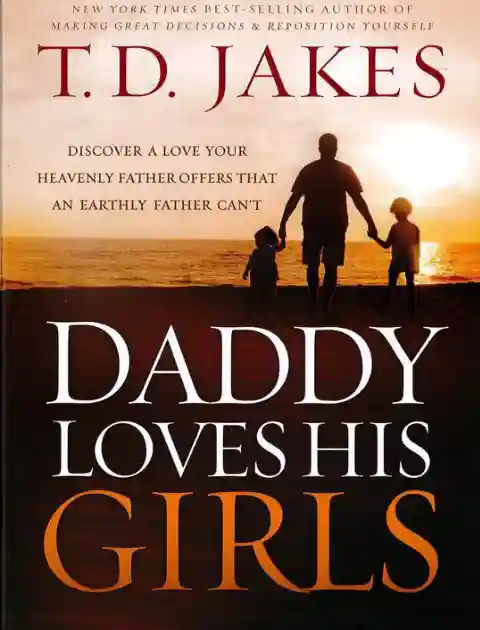
About the Book
"Daddy Loves His Girls" by T.D. Jakes is a heartwarming and inspirational collection of personal stories and advice from the author, a prominent pastor and father of five daughters. Through anecdotes and reflections, Jakes emphasizes the importance of fatherly love, support, and guidance in shaping young women into confident, empowered individuals. The book offers valuable insights and guidance for fathers looking to strengthen their relationships with their daughters and help them navigate the challenges of growing up.
C.S. Lewis
 C.S. Lewis was a prolific Irish writer and scholar best known for his 'Chronicles of Narnia' fantasy series and his pro-Christian texts.
Who Was C.S. Lewis?
Writer and scholar C.S. Lewis taught at Oxford University and became a renowned Christian apologist writer, using logic and philosophy to support the tenets of his faith. He is also known throughout the world as the author of The Chronicles of Narnia fantasy series, which have been adapted into various films for the big and small screens.
Early Life
Clive Staples Lewis was born in Belfast, Ireland, on November 29, 1898, to Flora August Hamilton Lewis and Albert J. Lewis. As a toddler, Clive declared that his name was Jack, which is what he was called by family and friends. He was close to his older brother Warren and the two spent much time together as children.
Lewis was enraptured by fantastic animals and tales of gallantry, and hence the brothers created the imaginary land of Boxen, complete with an intricate history that served them for years. Lewis' mother died when he was 10, and he went on to receive his pre-college education at boarding schools and from a tutor. During WWI, he served with the British army and was sent home after being wounded by shrapnel. He then chose to live as a surrogate son with Janie Moore, the mother of a friend of Lewis' who was killed in the war.
Teaching Career at Oxford and Wartime Broadcasts
Lewis graduated from Oxford University with a focus on literature and classic philosophy, and in 1925 he was awarded a fellowship teaching position at Magdalen College, which was part of the university. There, he also joined the group known as The Inklings, an informal collective of writers and intellectuals who counted among their members Lewis' brother Warren and J.R.R. Tolkien. It was through conversations with group members that Lewis found himself re-embracing Christianity after having become disillusioned with the faith as a youth. He would go on to become renowned for his rich apologist texts, in which he explained his spiritual beliefs via platforms of logic and philosophy.
Lewis began publishing work including Spirits in Bondage in 1919 and the satirical Dymer in 1926. After penning other titles — including The Allegory of Love (1936), for which he won the Hawthornden Prize — he released in 1938 his first sci-fi work, Out of the Silent Planet, the first of a space trilogy which dealt sub-textually with concepts of sin and desire. Later, during WWII, Lewis gave highly popular radio broadcasts on Christianity which won many converts; his speeches were collected in the work Mere Christianity.
Books and Film Legacy
Lewis was a prolific author of fiction and nonfiction who wrote dozens of books over the course of his career. His faith-based arguments as seen in texts like The Great Divorce (1946) and Miracles (1947) are held in high regard by many theologians, scholars and general readers. His satirical fiction novel The Screwtape Letters (1942) is also a beloved classic. Lewis also continued his love affair with classic mythology and narratives during his later years: His book Till We Have Faces: A Myth Retold (1956) featured the story of Psyche and Cupid. He also penned an autobiography, Surprised by Joy: The Shape of My Early Life (1955).
Lewis' landmark series, The Chronicles of Narnia, has seen a number of on-screen iterations, including a cartoon version of The Lion, The Witch and the Wardrobe that was released in 1979 and a 1989 film series. Additionally, in 2005, a big-screen adaptation of The Lion, The Witch and the Wardrobe hit movie theaters, starring Tilda Swinton as the witch Jadis and Liam Neeson as the voice of Aslan. Two more Narnia films were brought to theaters as well: Prince Caspian (2008) and The Voyage of the Dawn Treader (2010). A movie version of The Silver Chair was slated to hit theaters in the near future, with filming starting in the winter of 2018.
Lewis' relationship with his wife, Joy, has also been depicted in Shadowlands, presented as a play and two films; one of the film versions was directed by Richard Attenborough and starred Anthony Hopkins as Lewis.
'The Chronicles of Narnia'
During the 1940s, Lewis began writing the seven books that would comprise The Chronicles of Narnia children's series, with The Lion, The Witch and the Wardrobe (1950) being the first release. The story focused on four siblings who, during wartime, walk through an armoire to enter the magical world of Narnia, a land resplendent with mythical creatures and talking animals. Throughout the series, a variety of Biblical themes are presented; one prominent character is Aslan, a lion and the ruler of Narnia, who has been interpreted as a Jesus Christ figure. (Lewis would assert that his Narnia stories weren't a direct allegory to the real world.)
Though the book received some negative reviews, it was generally well-received by readers, and the series retained its international popularity over the following decades.
Marriage
In 1954, Lewis joined the faculty of Cambridge University as a literature professor, and in 1956 he married an American English teacher, Joy Gresham, with whom he had been in correspondence. Lewis was full of happiness during the years of their marriage, though Gresham died of cancer in 1960. Lewis grieved deeply for his wife and shared his thoughts in the book A Grief Observed, using a pen name.
Death
In 1963, Lewis resigned from his Cambridge position after experiencing heart trouble. He died on November 22, 1963, in Headington, Oxford.
C.S. Lewis was a prolific Irish writer and scholar best known for his 'Chronicles of Narnia' fantasy series and his pro-Christian texts.
Who Was C.S. Lewis?
Writer and scholar C.S. Lewis taught at Oxford University and became a renowned Christian apologist writer, using logic and philosophy to support the tenets of his faith. He is also known throughout the world as the author of The Chronicles of Narnia fantasy series, which have been adapted into various films for the big and small screens.
Early Life
Clive Staples Lewis was born in Belfast, Ireland, on November 29, 1898, to Flora August Hamilton Lewis and Albert J. Lewis. As a toddler, Clive declared that his name was Jack, which is what he was called by family and friends. He was close to his older brother Warren and the two spent much time together as children.
Lewis was enraptured by fantastic animals and tales of gallantry, and hence the brothers created the imaginary land of Boxen, complete with an intricate history that served them for years. Lewis' mother died when he was 10, and he went on to receive his pre-college education at boarding schools and from a tutor. During WWI, he served with the British army and was sent home after being wounded by shrapnel. He then chose to live as a surrogate son with Janie Moore, the mother of a friend of Lewis' who was killed in the war.
Teaching Career at Oxford and Wartime Broadcasts
Lewis graduated from Oxford University with a focus on literature and classic philosophy, and in 1925 he was awarded a fellowship teaching position at Magdalen College, which was part of the university. There, he also joined the group known as The Inklings, an informal collective of writers and intellectuals who counted among their members Lewis' brother Warren and J.R.R. Tolkien. It was through conversations with group members that Lewis found himself re-embracing Christianity after having become disillusioned with the faith as a youth. He would go on to become renowned for his rich apologist texts, in which he explained his spiritual beliefs via platforms of logic and philosophy.
Lewis began publishing work including Spirits in Bondage in 1919 and the satirical Dymer in 1926. After penning other titles — including The Allegory of Love (1936), for which he won the Hawthornden Prize — he released in 1938 his first sci-fi work, Out of the Silent Planet, the first of a space trilogy which dealt sub-textually with concepts of sin and desire. Later, during WWII, Lewis gave highly popular radio broadcasts on Christianity which won many converts; his speeches were collected in the work Mere Christianity.
Books and Film Legacy
Lewis was a prolific author of fiction and nonfiction who wrote dozens of books over the course of his career. His faith-based arguments as seen in texts like The Great Divorce (1946) and Miracles (1947) are held in high regard by many theologians, scholars and general readers. His satirical fiction novel The Screwtape Letters (1942) is also a beloved classic. Lewis also continued his love affair with classic mythology and narratives during his later years: His book Till We Have Faces: A Myth Retold (1956) featured the story of Psyche and Cupid. He also penned an autobiography, Surprised by Joy: The Shape of My Early Life (1955).
Lewis' landmark series, The Chronicles of Narnia, has seen a number of on-screen iterations, including a cartoon version of The Lion, The Witch and the Wardrobe that was released in 1979 and a 1989 film series. Additionally, in 2005, a big-screen adaptation of The Lion, The Witch and the Wardrobe hit movie theaters, starring Tilda Swinton as the witch Jadis and Liam Neeson as the voice of Aslan. Two more Narnia films were brought to theaters as well: Prince Caspian (2008) and The Voyage of the Dawn Treader (2010). A movie version of The Silver Chair was slated to hit theaters in the near future, with filming starting in the winter of 2018.
Lewis' relationship with his wife, Joy, has also been depicted in Shadowlands, presented as a play and two films; one of the film versions was directed by Richard Attenborough and starred Anthony Hopkins as Lewis.
'The Chronicles of Narnia'
During the 1940s, Lewis began writing the seven books that would comprise The Chronicles of Narnia children's series, with The Lion, The Witch and the Wardrobe (1950) being the first release. The story focused on four siblings who, during wartime, walk through an armoire to enter the magical world of Narnia, a land resplendent with mythical creatures and talking animals. Throughout the series, a variety of Biblical themes are presented; one prominent character is Aslan, a lion and the ruler of Narnia, who has been interpreted as a Jesus Christ figure. (Lewis would assert that his Narnia stories weren't a direct allegory to the real world.)
Though the book received some negative reviews, it was generally well-received by readers, and the series retained its international popularity over the following decades.
Marriage
In 1954, Lewis joined the faculty of Cambridge University as a literature professor, and in 1956 he married an American English teacher, Joy Gresham, with whom he had been in correspondence. Lewis was full of happiness during the years of their marriage, though Gresham died of cancer in 1960. Lewis grieved deeply for his wife and shared his thoughts in the book A Grief Observed, using a pen name.
Death
In 1963, Lewis resigned from his Cambridge position after experiencing heart trouble. He died on November 22, 1963, in Headington, Oxford.
your letter to your future spouse
I vividly remember the first time I saw the movie Titanic . The passionate love between Jack and Rose awakened something fierce in my little preteen heart. I thought little of marriage before that movie. Now it consumed my thoughts and dreams. For my friends and me, riding off into the sunset with our respective Jack Dawsons became the ultimate goal in life. We quickly believed the lie that a committed, romantic relationship was all we needed to be okay. Marriage became a savior. As Rose said at the end of the movie, “There was a man named Jack Dawson, and he saved me — in every way a person can be saved.” Though Titanic is now twenty years old, the same romance-as-savior theme is still present in our culture. But surprisingly, many churches don’t reject this lie. They Christianize it. Marriage Idolatry Youth leaders, aware of their teens’ lust for romance and sexual intimacy, are eager to steer students away from poor decisions, and rightly so. But instead of pointing to a present Christ as the promised prize in the fight against lust, far too many point to a future spouse. This strategy may succeed in preserving the virginity of young Christian teens, but the “think about your future spouse” approach misses the heart of the Bible’s message that Jesus alone can satisfy. One specific manifestation of this is the practice of writing notes to a future spouse. There are dozens of Christian articles on how and why to write to a future husband or wife. Though many people believe in this practice and encourage it, it keeps our focus in the wrong place. It subtly (or overtly) puts our hope for happiness in someone other than Christ. Undoubtedly, marriage is a treasured gift many Christians will receive. Instituted by God before the fall, and intended to showcase the beauty of the gospel, marriage ought to be highly regarded by God’s people. But marriage is no savior. It cannot rescue, redeem, or ultimately fulfill us. It has no final power to save us from our loneliness, emptiness, or purposelessness. Believing marriage can do the work of God himself is to serve an idol. So, in the interests of putting marriage in its proper place, here are four reasons to set your hope in a present Christ rather than a future husband or wife. 1. God doesn’t promise marriage. God gives many promises for those in Christ, but none of them includes a spouse. Yes, marriage is a wonderful gift and one worth praying for, but God doesn’t guarantee we will marry. Even for those who are given this gift, it is not promised for a lifetime, as many young widows can attest. This is a shocking reality to many, likely due to a misapplication of Psalm 37:4, “Delight yourself in the Lord, and he will give you the desires of your heart.” “If I desire marriage,” we reason, “God said I need only delight myself in him, and he will grant it!” But God does not specify how and when he will grant those desires. For example, other desires often sit underneath the desire for marriage — desires for intimacy, belonging, wholeness, and companionship. But these are all desires God promises to meet in himself, whether we get married or not. He does not need marriage to satisfy the ache in our hearts; he only needs himself. God will give us the desires of our hearts — but in such a way that we’re singing praises to Jesus, not to a spouse. Don’t hope in a promise that God has not given. Instead, put your hope somewhere secure: on the rock of Christ. 2. Marriage can’t handle the pressure. Channeling all of our longings into marriage will crush it. No one person can handle the weight of our desires. The idea of a perfect mate can haunt us when we’re living side by side with another sinner. When we write romantic and idealistic letters to a future husband or wife, we set our hearts in the wrong place and build unrealistic expectations. The more we pour into the letters, the further our future husband or wife will fall short of our standards. Despairing disillusionment is common in Christian marriages likely because the partners have put too much hope in the marriage itself. Marriage is a terrible savior. But if we keep Jesus as our source of hope and joy, he will sustain us through every change in our relational status, and all the ups and downs of married life. 3. Singleness is not a subpar alternative. Eagerly hoping in a future spouse can be a way to avoid the sting of prolonged, unwanted singleness. But God doesn’t see singleness as a curse — he sees it as a gift! The Bible calls singleness the greater alternative, one that promotes undistracted devotion to Jesus (1 Corinthians 7:32–35). Although it’s true that most people will marry, that doesn’t prove that marriage satisfies. There are just as many unhappy married people as there are unhappy single people. Both groups face the same daily battle: Will I fight to find my joy in Jesus today? The longing for marriage does expose one truth: eternal life is found in intimacy, in knowing and being known. But the intimacy we were made for is not intimacy with a fellow sinner, but intimacy with God through Jesus: “This is eternal life, that they know you, the only true God, and Jesus Christ whom you have sent” (John 17:3). 4. God is supremely valuable. Banking our joy on a future spouse assumes we cannot be satisfied and whole without marriage. But marriage is not the grand prize of life — God is. He is the treasure in the field worth selling all we have to own. In Christ, our access to intimacy with God is certain. To know God through Christ is to find abundant life. Though it may be hard to believe on the days our prayers seem to bounce off the ceiling, the Psalms witness to this reality all over: “Whom have I in heaven but you? And there is nothing on earth that I desire besides you” (Psalm 73:25). “A day in your courts is better than a thousand elsewhere” (Psalm 84:10). “In your presence there is fullness of joy; at your right hand are pleasures forevermore” (Psalm 16:11). Though we cannot see, touch, and hear God like we can a fellow human, he is more real and more enjoyable than human intimacy ever can be. Draw near to him and he will draw near to you (James 4:8)! Take the energy you might put toward meditating on a future spouse and instead meditate on God, who has revealed himself to us in the pages of the Bible. The Marriage We Are Promised The end of Titanic pictures a heavenly reunion of all those who died in the 1912 tragedy. A youthful Rose walks through the crowd and approaches her one true love, the one who saved her. Finally, she is united with Jack. Forever and ever, amen. Christian, do you recognize this narrative? It is a shadow of the happy ending awaiting us. One day, we will be reunited with believing friends and family members, and we will finally see our One True Love face-to-face, the One who saved us in every way a person can be saved. But it will not be our spouse, but Jesus. His love saves us, satisfies us, and sustains us. Married or single, he alone should be the central figure in our lives. Don’t lay the weight of your desires, hopes, and dreams on an earthly marriage, but on Christ. Only his love is strong enough to sustain you.