
Others like commanding angels Features >>



About the Book
"Commanding Angels" is a spiritual guide that explores the role of angels in the lives of believers and offers practical advice on how to connect with and communicate with these celestial beings. It delves into various aspects of angelic presence, protection, and guidance, encouraging readers to cultivate a closer relationship with angels for spiritual growth and peace.
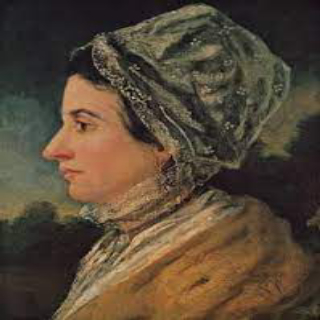
Susannah Wesley
The Brave Stunt That Brought Down Slavery
Have you ever heard about the extraordinary effect that the life of David Livingstone (1813–1873) had on the East African slave trade? It received only a passing sentence in an article I wrote two years ago. Then that summer, another world opened to me. I read Jay Milbrandt’s The Daring Heart of David Livingstone: Exile, African Slavery, and the Publicity Stunt That Saved Millions. I would like to give you a window into that world. Milbrandt’s subtitle is not only provocative; it prepares you for what’s coming. “Exile” refers to the long stretches of time Livingstone spent in the eastern interior of Africa, cut off from his homeland — sending, in one season, over forty letters, only to have one get through. “African Slavery” refers to “the devilish traffic in human flesh” feeding not the American plantations from West Africa, but the plantations of Arabia, Persia, and India, especially via the routes through the island of Zanzibar off the eastern coast of today’s Tanzania. “The Publicity Stunt” refers to Livingstone’s internationally hyped expedition to find the headwaters of the Nile. Milbrandt calls it a “stunt” because Livingstone’s deeper motive was not the Nile. “Livingstone was no longer mounting a Nile expedition, but a grand publicity stunt. The Nile quest provided the platform he needed to campaign against the slave trade” (118). The final phrase of the subtitle, “That Saved Millions,” carries more than one meaning. Not only was slavery declared illegal in colonial East Africa 36 days after Livingstone’s death, but his larger dream to see a “Christian Africa” was in one sense realized 140 years later, because “as of 2012, a Pew Foundation study reported 63% of Sub-Saharan Africa as identifiably Christian” (247). Missionary, Doctor, Advocate David Livingstone did not set out to be a global voice for the healing of the “open sore of the world” — the East African slave trade. He set out to heal the disease of sin with the gospel, and the diseases of the body with medical training — all the while believing the Africans were not subhuman. As a young man, he heard Robert Moffat, a missionary to South Africa, say, “I had sometimes seen in the morning sun the smoke of a thousand villages where no missionary had ever been.” This image captured him. God’s call emerged as Moffat’s testimony mingled with Livingstone’s confidence that the word of God would do its saving work: The Word written shall find its own mysterious tortuous way into every region, dialect, and language of the earth; and men shall be convinced of sin, as well as taught their need of a Saviour by its life-giving power. It shall whisper peace to the agitated conscience, and tell of the love of a Father reconciling the world to himself by the blood of his Son. (Dr. Livingstone’s Cambridge Lectures, 179) Then two more pieces of Livingstone’s calling were put in place. One was his conviction that medical training was crucial. Waiting to be sent by the London Missionary Society, Livingstone studied medicine at the Charing Cross Hospital Medical School. He said, My great object was to be like Him, to imitate Him as far as He could be imitated. We have not the power of working miracles, but we can do a little in the way of healing the sick, and I sought medical education in order that I might be like Him. (Daring Heart, 21) The other piece of his calling was the conviction that Africans were fully human — as he would discover, to his horror, the slave traders did not believe, with murderous results. In answer to objectors, we would say, Were not the ancient Egyptians true Negroes? They were masters of the civilization of the world. When Greece was just emerging from the shades of barbarism, and before the name of Rome was known, the negro-land of Mizraim was proficient in science and art, and Thebes, the wonder city of the world. Solon, Plato, and a host of our Greek and Roman intellectual masters confess their obligation to the stupendous “learning of the Egyptians” in which Moses was so apt and able a scholar; notwithstanding, too often does the white man of the present day undervalue the humble descendant of that giant who helped to make him what he is! (Dr. Livingstone’s Cambridge Lectures, 124) The seeds were all sown for the fury and perseverance Livingstone would repeatedly experience in the years to come, as he came closer and closer to “the open sore of the world.” ‘Establishing Trade, Destroying Slavery’ At first, he was optimistic that legitimate commerce with East Africa would dry up the need for slave capturing and trading. “I believe we can by legitimate commerce, in the course of a few years, put an entire stop to the traffic of slaves over a large extent of territory” (Daring Heart, 23). He believed this would even have profound effects on West African slave trading with America: England has, unfortunately, been compelled to obtain cotton and other raw material from the slave States, and has thus been the mainstay and support of slavery in America. Surely, then, it follows that if we can succeed in obtaining the raw material from other sources than from the slave States of America, we should strike a heavy blow at the system of slavery itself. (36) Over time, Livingstone came to see that “establishing trade and destroying slavery,” though connected, would not be achieved without working to turn the hearts of the entire British establishment, at home and in the colonies, against a trade that they were almost totally ignorant of. Hence his “stunt.” Picking Up His Pen At great cost to himself, Livingstone probed deeper and deeper into the darkness of the Arab and Portuguese slave trade, with indirect British support. On humanitarian grounds, the expedition had also uncovered the immense and devastating Arab slave trade and its routes through the Nyassa region to Zanzibar. These findings were new, informing the world and the British foreign office of unresolved horrors. (104) In 1864, he returned to England and took up his pen. In his earlier book Missionary Travels, he had written cautiously about the slave trade. But in recent years, in his travels along the Zambezi River, he had seen unspeakable cruelty. So in the preface to A Narrative of an Expedition to the Zambezi and Its Tributaries, he wrote, “It has been my object . . . to bring before my countrymen, and all others interested in the cause of humanity, the misery entailed by the slave-trade in its inland phases” (110). He had set his face to return to Africa and press on with his explorations and his exposure of the “gigantic evil” of the slave trade. “I am going out again. . . . It is only by holding on bulldog fashion one can succeed in doing anything against that gigantic evil, the slave trade” (121). ‘Sick of Human Blood’ What he saw as the years went by got worse. He describes one experience in which four hundred villagers — men and women — were gunned down. A slave trader named Dugumbe wanted complete control of the area without competing traders. One village was complicit in trading with others. Violence broke out. As the assailants continued their indiscriminate slaughter in the marketplace, an armed party near the Creek opened fire on those dashing toward the water. Even as the villagers, mostly unarmed women, attempted to flee across the nearby river, the attackers continued to fire on them. Aiming for their exposed heads, they shot those trying to swim to safety. . . . Dugumbe’s men had gunned down 400 men and women, all unarmed, and even killed two of their own. Then they followed the people back to their homes. The warfare continued. Livingstone counted 12 burning villages. (174) Livingstone wrote with great heaviness, “The prospects of getting slaves overpowers all else, and blood flows in horrid streams. I am heartsore, and sick of human blood” (172). Seeking the Nile, Finding a Mouth In a letter to his brother, Livingstone reasserted the terms of the “stunt”: If the good Lord permits me to put a stop to the enormous evils of the inland slave-trade, I shall not grudge my hunger and toils. I shall bless His name with all my heart. The Nile sources are valuable to me only as a means of enabling me to open my mouth with power among men. (210) In fact, the “stunt” worked. Both in England and America, Livingstone’s “mouth” — that is, his correspondence — was being heard with power. The famous Henry Stanley (“Dr. Livingstone, I presume”) had been sent by the American newspaper the New York Herald to find Livingstone after six years of being out of touch. He found him in November 1871, spent four months with him, came to love and admire him, and gave him a global voice by publishing his letters about the slave trade. On July 2, 1872, Livingstone wrote in the Herald, If my disclosures regarding the terrible Ujijian slavery should lead to the suppression of the east coast slave trade, I shall regard that as a greater matter by far than the discovery of all the Nile sources together. (201) Stanley’s book How I Found Livingstone was very popular both in America and England. It made Livingstone not just a British hero, but a transatlantic one. In another letter to the Herald, he repeated his life priorities: It would be better to lessen this great human woe than to discover the sources of the Nile. . . . May Heaven’s rich blessing come down on everyone, American, English, or Turk, who will help to heal this open sore of the world. (207) The Awakening of Parliament The effect of Livingstone’s communications in Britain was more than popular. It was political. Livingstone was informed by the head of the Royal Geographic Society, H.C. Rawlinson, that British intervention in Zanzibar was imminent: You will no doubt have heard of Sir Bartle Frere’s deputation to Zanzibar long before you receive this, and you will have learned with heartfelt satisfaction that there is now a definite prospect of the infamous East African slave-trade being suppressed. For this great end, if it be achieved, we shall be mainly indebted to your recent letters, which have had a powerful effect on the public mind in England, and have thus stimulated the action of the government. (214) The sultan of Zanzibar was given an ultimatum: “Consent immediately to the terms of the slave-trade-suppressing treaty, or face a blockade by British naval forces” (215). A little over a month after Livingstone’s death, the Zanzibar slave market closed forever. Queen Victoria announced the success to parliament: “Treaties have been concluded with the Sultan of Zanzibar . . . which provide means for the more effectual repression of the slave trade on the east coast of Africa” (221). Entering Glory on His Knees On May 1, 1873, David Livingstone was found dead, kneeling beside his bed with his face in his hands on the pillow. His longtime African servants and friends removed his vital organs in preparing the body for preservation and return to England. They buried his heart in a tin flour box under a mvula tree. Jacob Wainwright read Scripture and carved Livingstone’s name into the tree (217). After nine harrowing months of an extraordinary labor of love, Livingstone’s body reached the coast of Africa. It arrived in England on April 15, 1874, to a national day of mourning. The April 18 funeral was paid for by the British government. Amid huge crowds, his body was laid to rest in Westminster Abbey. His epitaph reads, in part, For 30 years his life was spent in an unwearied effort to evangelize the native races, to explore the undiscovered secrets, to abolish the desolating slave trade . . . this open sore of the world. Punch, a London magazine, muted its satire to bid farewell to David Livingstone: He knew not that the trumpet he had blown Out of the darkness of that dismal land Had reached and roused an army of its own To strike the chains from the slaves fettered hand. . . . He needs no epitaph to guard a name Which men shall prize while worthy work is known He lived and died for good be that his fame Let marble crumble this is Living stone. (228) Article by John Piper