
Others like believing god day by day Features >>
Holiness Day By Day
His Glory Revealed
The Beloved Disciple

Trusting God In Times Of Adversity

2 Minute Wisdom, Volume 4

The Pursuit Of God

Letters Of Samuel Rutherford - With A Sketch Of His Life
Jesus, The One And Only

Take Time To Be Holy: 365 Daily Inspirations To Bring You Closer To God

On The Anvil
About the Book
"Believing God Day By Day" by Beth Moore is a devotional book that encourages readers to trust in God's promises and live out their faith on a daily basis. With scripture readings, reflections, and prayers, Moore provides practical guidance for growing in faith and experiencing God's presence in everyday life.
William Carey
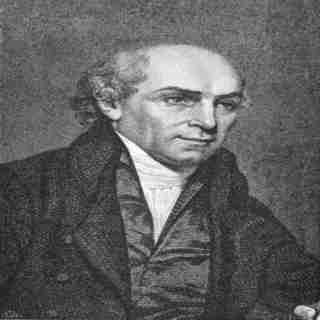 "Expect great things; attempt great things."
At a meeting of Baptist leaders in the late 1700s, a newly ordained minister stood to argue for the value of overseas missions. He was abruptly interrupted by an older minister who said, "Young man, sit down! You are an enthusiast. When God pleases to convert the heathen, he'll do it without consulting you or me."
That such an attitude is inconceivable today is largely due to the subsequent efforts of that young man, William Carey.
Plodder Carey was raised in the obscure, rural village of Paulerpury, in the middle of England. He apprenticed in a local cobbler's shop, where the nominal Anglican was converted. He enthusiastically took up the faith, and though little educated, the young convert borrowed a Greek grammar and proceeded to teach himself New Testament Greek.
When his master died, he took up shoemaking in nearby Hackleton, where he met and married Dorothy Plackett, who soon gave birth to a daughter. But the apprentice cobbler's life was hard—the child died at age 2—and his pay was insufficient. Carey's family sunk into poverty and stayed there even after he took over the business.
"I can plod," he wrote later, "I can persevere to any definite pursuit." All the while, he continued his language studies, adding Hebrew and Latin, and became a preacher with the Particular Baptists. He also continued pursuing his lifelong interest in international affairs, especially the religious life of other cultures.
Carey was impressed with early Moravian missionaries and was increasingly dismayed at his fellow Protestants' lack of missions interest. In response, he penned An Enquiry into the Obligations of Christians to Use Means for the Conversion of the Heathens. He argued that Jesus' Great Commission applied to all Christians of all times, and he castigated fellow believers of his day for ignoring it: "Multitudes sit at ease and give themselves no concern about the far greater part of their fellow sinners, who to this day, are lost in ignorance and idolatry."
Carey didn't stop there: in 1792 he organized a missionary society, and at its inaugural meeting preached a sermon with the call, "Expect great things from God; attempt great things for God!" Within a year, Carey, John Thomas (a former surgeon), and Carey's family (which now included three boys, and another child on the way) were on a ship headed for India.
Stranger in a strange land
Thomas and Carey had grossly underestimated what it would cost to live in India, and Carey's early years there were miserable. When Thomas deserted the enterprise, Carey was forced to move his family repeatedly as he sought employment that could sustain them. Illness racked the family, and loneliness and regret set it: "I am in a strange land," he wrote, "no Christian friend, a large family, and nothing to supply their wants." But he also retained hope: "Well, I have God, and his word is sure."
He learned Bengali with the help of a pundit, and in a few weeks began translating the Bible into Bengali and preaching to small gatherings.
When Carey himself contracted malaria, and then his 5-year-old Peter died of dysentery, it became too much for his wife, Dorothy, whose mental health deteriorated rapidly. She suffered delusions, accusing Carey of adultery and threatening him with a knife. She eventually had to be confined to a room and physically restrained.
"This is indeed the valley of the shadow of death to me," Carey wrote, though characteristically added, "But I rejoice that I am here notwithstanding; and God is here."
Gift of tongues
In October 1799, things finally turned. He was invited to locate in a Danish settlement in Serampore, near Calcutta. He was now under the protection of the Danes, who permitted him to preach legally (in the British-controlled areas of India, all of Carey's missionary work had been illegal).
Carey was joined by William Ward, a printer, and Joshua and Hanna Marshman, teachers. Mission finances increased considerably as Ward began securing government printing contracts, the Marshmans opened schools for children, and Carey began teaching at Fort William College in Calcutta.
In December 1800, after seven years of missionary labor, Carey baptized his first convert, Krishna Pal, and two months later, he published his first Bengali New Testament. With this and subsequent editions, Carey and his colleagues laid the foundation for the study of modern Bengali, which up to this time had been an "unsettled dialect."
Carey continued to expect great things; over the next 28 years, he and his pundits translated the entire Bible into India's major languages: Bengali, Oriya, Marathi, Hindi, Assamese, and Sanskrit and parts of 209 other languages and dialects.
He also sought social reform in India, including the abolition of infanticide, widow burning (sati), and assisted suicide. He and the Marshmans founded Serampore College in 1818, a divinity school for Indians, which today offers theological and liberal arts education for some 2,500 students.
By the time Carey died, he had spent 41 years in India without a furlough. His mission could count only some 700 converts in a nation of millions, but he had laid an impressive foundation of Bible translations, education, and social reform.
His greatest legacy was in the worldwide missionary movement of the nineteenth century that he inspired. Missionaries like Adoniram Judson, Hudson Taylor, and David Livingstone, among thousands of others, were impressed not only by Carey's example, but by his words "Expect great things; attempt great things." The history of nineteenth-century Protestant missions is in many ways an extended commentary on the phrase.
"Expect great things; attempt great things."
At a meeting of Baptist leaders in the late 1700s, a newly ordained minister stood to argue for the value of overseas missions. He was abruptly interrupted by an older minister who said, "Young man, sit down! You are an enthusiast. When God pleases to convert the heathen, he'll do it without consulting you or me."
That such an attitude is inconceivable today is largely due to the subsequent efforts of that young man, William Carey.
Plodder Carey was raised in the obscure, rural village of Paulerpury, in the middle of England. He apprenticed in a local cobbler's shop, where the nominal Anglican was converted. He enthusiastically took up the faith, and though little educated, the young convert borrowed a Greek grammar and proceeded to teach himself New Testament Greek.
When his master died, he took up shoemaking in nearby Hackleton, where he met and married Dorothy Plackett, who soon gave birth to a daughter. But the apprentice cobbler's life was hard—the child died at age 2—and his pay was insufficient. Carey's family sunk into poverty and stayed there even after he took over the business.
"I can plod," he wrote later, "I can persevere to any definite pursuit." All the while, he continued his language studies, adding Hebrew and Latin, and became a preacher with the Particular Baptists. He also continued pursuing his lifelong interest in international affairs, especially the religious life of other cultures.
Carey was impressed with early Moravian missionaries and was increasingly dismayed at his fellow Protestants' lack of missions interest. In response, he penned An Enquiry into the Obligations of Christians to Use Means for the Conversion of the Heathens. He argued that Jesus' Great Commission applied to all Christians of all times, and he castigated fellow believers of his day for ignoring it: "Multitudes sit at ease and give themselves no concern about the far greater part of their fellow sinners, who to this day, are lost in ignorance and idolatry."
Carey didn't stop there: in 1792 he organized a missionary society, and at its inaugural meeting preached a sermon with the call, "Expect great things from God; attempt great things for God!" Within a year, Carey, John Thomas (a former surgeon), and Carey's family (which now included three boys, and another child on the way) were on a ship headed for India.
Stranger in a strange land
Thomas and Carey had grossly underestimated what it would cost to live in India, and Carey's early years there were miserable. When Thomas deserted the enterprise, Carey was forced to move his family repeatedly as he sought employment that could sustain them. Illness racked the family, and loneliness and regret set it: "I am in a strange land," he wrote, "no Christian friend, a large family, and nothing to supply their wants." But he also retained hope: "Well, I have God, and his word is sure."
He learned Bengali with the help of a pundit, and in a few weeks began translating the Bible into Bengali and preaching to small gatherings.
When Carey himself contracted malaria, and then his 5-year-old Peter died of dysentery, it became too much for his wife, Dorothy, whose mental health deteriorated rapidly. She suffered delusions, accusing Carey of adultery and threatening him with a knife. She eventually had to be confined to a room and physically restrained.
"This is indeed the valley of the shadow of death to me," Carey wrote, though characteristically added, "But I rejoice that I am here notwithstanding; and God is here."
Gift of tongues
In October 1799, things finally turned. He was invited to locate in a Danish settlement in Serampore, near Calcutta. He was now under the protection of the Danes, who permitted him to preach legally (in the British-controlled areas of India, all of Carey's missionary work had been illegal).
Carey was joined by William Ward, a printer, and Joshua and Hanna Marshman, teachers. Mission finances increased considerably as Ward began securing government printing contracts, the Marshmans opened schools for children, and Carey began teaching at Fort William College in Calcutta.
In December 1800, after seven years of missionary labor, Carey baptized his first convert, Krishna Pal, and two months later, he published his first Bengali New Testament. With this and subsequent editions, Carey and his colleagues laid the foundation for the study of modern Bengali, which up to this time had been an "unsettled dialect."
Carey continued to expect great things; over the next 28 years, he and his pundits translated the entire Bible into India's major languages: Bengali, Oriya, Marathi, Hindi, Assamese, and Sanskrit and parts of 209 other languages and dialects.
He also sought social reform in India, including the abolition of infanticide, widow burning (sati), and assisted suicide. He and the Marshmans founded Serampore College in 1818, a divinity school for Indians, which today offers theological and liberal arts education for some 2,500 students.
By the time Carey died, he had spent 41 years in India without a furlough. His mission could count only some 700 converts in a nation of millions, but he had laid an impressive foundation of Bible translations, education, and social reform.
His greatest legacy was in the worldwide missionary movement of the nineteenth century that he inspired. Missionaries like Adoniram Judson, Hudson Taylor, and David Livingstone, among thousands of others, were impressed not only by Carey's example, but by his words "Expect great things; attempt great things." The history of nineteenth-century Protestant missions is in many ways an extended commentary on the phrase.
The Ordinary People God Chose - Learning to Love the Local Church
I’m not athletic. I’m not competitive. I don’t like to sweat. I have trouble remembering the rules of games. The only organized sport on my life’s résumé is two years of collegiate synchronized swimming — a singular exception that only proves the rule. But for someone who doesn’t like sporting events, I end up watching a lot of them. I’ve shivered on wooden bleachers during snowy college football games. I’ve sunburned in the outfield at minor (and major) league baseball games. I’ve covered my ears during deafening basketball games. I’ve flinched and winced at ice hockey games. I’ve arrived early for batting practice, and I’ve stayed late for the fireworks. And I don’t just watch. I wear the team colors. I sing the team song. I bite my fingernails in the bottom of the ninth. When we win, I rejoice. When we lose, I’m genuinely disappointed. My surprising conduct has an explanation: I love people who love sports. The people in my family delight in goals and strikes and penalty shots, and so, over time, I’ve learned to take pleasure in those things too. What they love, I want to love. At times, the local church can seem to us like a sporting event to a non-athlete, or a baking show to a microwave cook, or a book club to someone who doesn’t like to read. It can seem like a big fuss over something insignificant and lots of work with unimpressive results. Week after week, the unremarkable people of our local congregations gather to do the same things in the same way, followed by stale coffee served at plastic tables in a damp basement. We may wonder, Why bother? The answer requires us to look beyond our own experiences and inclinations — it requires us to look to God himself. Having been redeemed by the blood of Christ and changed by the work of the Spirit, we love God. What God loves, we therefore want to love. And God loves the church. Our First Love We didn’t always love God, of course. To begin with, we hated him. The Bible describes us as enemies (Romans 5:10), strangers (Ephesians 2:12), rebels (Ezekiel 20:38), and haters (Romans 1:30); impure (Ephesians 5:5), disobedient (Ephesians 2:2), hopeless (Ephesians 2:12), and ignorant (Romans 10:3). Our sins justly placed us under his wrath and displeasure (Ephesians 2:3). We rejected God, despised his authority, and ignored his good law. We were neither lovely nor loving. But he loved us. In the counsels of eternity, he set his love on us, and in time, he sent his beloved Son to die for us so that we might enter into a loving relationship with him. He brought us out of slavery into the joyful circle of his family and made us his privileged children. Because he loved us, we now love him. Our love for God is comprehensive: involving heart, soul, mind, and strength (Mark 12:30). It controls us (2 Corinthians 5:14), and it compels us (John 14:15). Our days and hours and minutes are taken up with this love. Like the psalmist, we look around us and proclaim that there is nothing in all the earth we desire apart from God (Psalm 73:25). He is our first love, and he is our great love. God’s Great Love It’s appropriate, then, that we would ask ourselves, What does God love? For anyone who has ever sat in the creaking pews — or folding chairs — of a local congregation on Sunday morning, the answer might be surprising: God loves the church. Listen to what Paul tells the Ephesians: Christ loved the church and gave himself up for her, that he might sanctify her, having cleansed her by the washing of water with the word, so that he might present the church to himself in splendor, without spot or wrinkle or any such thing, that she might be holy and without blemish. (Ephesians 5:25–27) The glorious purpose of God’s eternal plan of redemption is the gathering and perfecting of his people. Jesus came for the sake of the church. More than thirty times in the New Testament, the church is called “beloved.” This is not because the ordinary and sometimes awkward people who gather on Sundays are themselves lovely, but because they are bound to someone who is. Christ is the one whom the Father “loved . . . before the foundation of the world” (John 17:24). He is the beloved Son. And as people who were created in him, redeemed by him, united to him, and given to him, we find our identity in him. Christ is the beloved, and in him, the church is beloved too. Loving the People God Loves Of all the games I watch, the sporting events where I have the greatest investment are the ones where my own kids are playing. When I’m in the bleachers at their basketball games or beside the dugout at their baseball games, I can’t take my eyes off the action. It might be Saturday morning T-ball, but it’s always the big game to me. When someone I love is on the team, I’m all in. Likewise, if the one our soul loves has committed himself to the church, it changes everything about our own commitment. “Beloved,” writes John, “if God so loved us, we also ought to love one another” (1 John 4:11). This means that we will seek to make God’s great love for the church our own. We begin on Sunday by regularly showing up to worship together (Hebrews 10:24). It’s our highest privilege to gather with the people of God before the face of God. In the church, we also work to promote one another’s holiness, to show affection for one another, to bear one another’s needs, to encourage one another’s gifts, and to join in the cause of the gospel together. The people of our church are often outwardly unremarkable, but in the mutual love of the local church, we affirm the love that God has for us. Thankfully, we don’t have to muster up love for the church on our own strength. Before he went to the cross to redeem his people, Christ prayed for the church. He petitioned the Father “that the love with which you have loved me may be in them, and I in them” (John 17:26). Surrounded by the ordinary and yet extraordinary, sinful and yet holy, weak and yet ultimately triumphant people of God, we look for the Father’s gracious answer to the Son’s request. And when the God who is love (1 John 4:8) dwells in us by his Spirit, we have everything we need to love the church. Article by Megan Hill