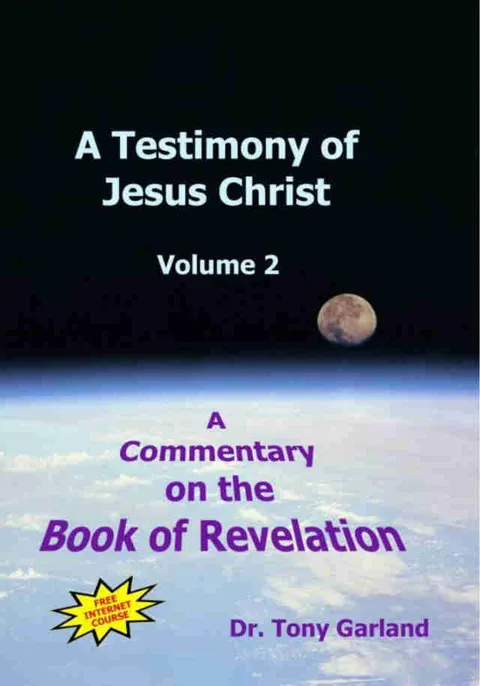

A Testimony Of Jesus Christ: A Commentary On The Book Of Revelation, Vol. 2 Order Printed Copy
- Author: Tony Garland
- Size: 7.82MB | 594 pages
- |
Others like a testimony of jesus christ: a commentary on the book of revelation, vol. 2 Features >>
A Testimony Of Jesus Christ: A Commentary On The Book Of Revelation, Vol. 1
%20(Library%20of%20Christian%20Classics)%20by%20John%20Calvin-160.webp)
Library Of Christian Classics
An Outline Of The Christian Faith
At The Origins Of Christian Worship
Supremacy Of Christ In A Post Modern World
Hebrews For Everyone
The Case For A Creator

Deep Exegesis - The Mystery Of Reading Scripture
The Ministers' Handbook Of Ceremonies
Did God Create Darkness And Evil
About the Book
"A Testimony of Jesus Christ: A Commentary on the Book of Revelation, Vol. 2" by Tony Garland is a detailed and comprehensive analysis of the Book of Revelation. Garland provides insights into the symbolism, prophecy, and theological themes found in the book, helping readers gain a deeper understanding of its message. This volume focuses on chapters 12-22, exploring topics such as the battle between good and evil, the judgment of the wicked, and the ultimate triumph of Christ. Overall, the book serves as a valuable resource for those seeking to study the Book of Revelation in depth.
Gordon Lindsay
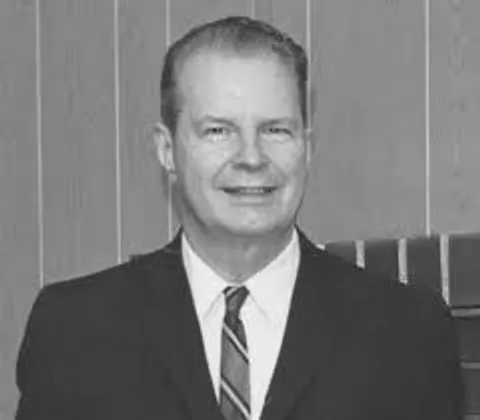 Gordon Lindsay’s Early life
Gordon Lindsay’s parents were members of J. A. Dowie’s Zion City, Illinois when he was born. The city’s financial difficulties forced the family west in 1904, where they temporarily joined another Christian-based community led by Finis Yoakum at Pisgah Grande, California. When similar problems emerged the family moved to Oregon after only a few months. From here the family moved to Portland, Oregon where Lindsay attended high school and was converted during a Charles F. Parham evangelistic campaign.
During his youth he came under the influence of John G. Lake, former resident of Zion City, missionary to South Africa, and founder of the Divine Healing missions in Spokane, Washington, and Portland, Oregon in 1920. Lindsay joined the healing and evangelistic campaigns of Lake, traveling throughout California and the southern states.
Lindsay began his own ministry in California as pastor of small churches in Avenal and San Fernando and for the next eighteen years, he travelled acros s the country holding revivals in full gospel churches. This period of travel prepared him as perhaps no other man in the nation to establish communication among a variety of Pentecostals.
When World War II began, Lindsay felt compelled to give up his evangelistic ministry because its rigorous lifestyle was taking its toll on his young family. He accepted a call to pastor a church in Ashland, Oregon.
William Branham enters Gordon Lindsay’s life
By 1947 he had witnessed the extraordinary ministry of William Branham and responded to the invitation to become Branham’s manager. His managerial skills were soon obvious in the Branham campaigns, and in April 1948, he furthered the cause of the of the revival when he produced the first issue of The Voice of Healing, specifically to promote Branham’s ministry. To Lindsay’s great surprise Branham announced that he “would not continue on the field more than a few weeks more.”
At great financial cost Lindsay decided to continue the publication of the new magazine in cooperation with his long-time friends, Jack Moore and his talented daughter Anna Jeanne Moore. He broadened the scope of the magazine by including more of the lesser known healing evangelists who were beginning to hold campaigns and were drawing large audiences.
One such evangelist was William Freeman who had been holding meetings in small churches. Lindsay visited one of his campaigns and immediately felt it was the will of God to team up with him and organise a series of meetings through 1948. The Voice of Healing featured the miracles of the Freeman campaigns.
Voice of Healing Conventions
By March 1949 The Voice of Healing circulation had grown to nearly 30,000 per month and had clearly become the voice of the healing movement. It’s pages successfully spread the message of the Salvation-Deliverance-Healing revival across the world.
In December 1949, Lindsay arranged the first convention of healing revivalists in Dallas, Texas. The assembly was addressed by Branham, Lindsay, Moore, old-timers such as F. F. Bosworth and Raymond T. Richey, and a number of rising revivalists including O. L. Jaggers, Gayle Jackson, Velmer Gardner, and Clifton Erickson. This historic conference symbolized the vitality and cohesion of the revival.
The following year, the convention, now about 1,000 strong, met in Kansas City, with virtually every important revivalist in the nation, with the notable exceptions of William Branham and Oral Roberts. Lindsay exercised great skill and wisdom exposing several points of danger and tension in the movement proposed guidelines for the future. Lindsay understood the fears of the older Pentecostal denominations and leaders and tried his utmost to deal with the offending issues.
In an article announcing “the purpose, plan and policy of the Voice of Healing Convention,” he denounced “free-lancers who violently and indiscriminately attack organization in general,” and he urged avoidance of “novel prophetic interpretations, dogmatic doctrinal assertions, sectarian predilections, theological hair-splitting.”
The Voice of Healing Association
The 1950 meeting made the Voice of Healing convention into a loose association of healing revivalists. The evangelists officially associated with The Voice of Healing magazine held “family meetings” at the conventions, at the same time maintaining their desire to “prove to the world that those associated with The Voice of Healing have no intention to organize another movement.” Through the decade the Voice of Healing conventions were showcases for healing revivalism.
The conference programs were workshops on the problems of healing evangelists. Typical topics were “prayer and fasting,” “preparation for a campaign,” “the follow-up work after a campaign,” “the system of cards for the prayer tent and the healing line” and the delicate issue of finances. As the association grew in importance in the 1950s, the program was frequently headed by Roberts or Branham; though every new revivalist aspired to be a speaker on the program.
The Voice of Healing family of evangelists flowered in the early 1950s. Lindsay continued to publicize Branham’s work, although he was not formally associated with the organization; the nucleus of the fellowship was an influential clique which included O. L. Jaggers, William Freeman, Jack Coe, T. L. Osborn, A. A. Allen, and Velmer Gardner.
Gradually major ministries began their own magazines and had no further need for Voice of Healing promotion. Nevertheless, by 1954 the “associate editors and evangelists” listed in The Voice of Healing numbered nearly fifty.
Though Lindsay became personally involved with healing evangelism from 1949, especially with other revivalists such as T. L. Osborn, he confined his best work to organization and management of the Voice of Healing magazine. By 1956 the expenses of the Voice of Healing were running $1,000 a day. In addition to the national and regional conventions sponsored by his organization, Lindsay also began to sponsor missions and a radio program.
“Lindsay was more than an advisor during the first decade of the healing revival; he was much like the director of an unruly orchestra. He tried desperately to control the proliferation of ministries in an effort to keep the revival respectable. He repeatedly advised, “It is better for one to go slow. Get your ministry on a solid foundation. . . . By all means avoid Hollywood press agent stuff.”
Many of the new leaders of the early 1950s owed their early success to the literary support of Gordon Lindsay through the Voice of Healing, but by 1958, many of the revivalists believed that Lindsay’s work was over.
An evolving ministry
Lindsay’s efforts to consolidate and coordinate the healing movement and its ministries became an impossible task. The increasing independence of ministries and the burgeoning charismatic movement caused Lindsay to reconsider his goals. He took the example of T. L. Osborn and concentrated on missionary endeavours. He remained the historian and theologian of the healing movement but began to produce teaching and evangelistic materials which were sent across the world.
The Voice of Healing ultimately became Christ for the Nations. Native church programs, literature, teaching tapes and funds were distributed to hundreds of locations. The organization had changed from one of healing revivalists into an important missionary society.
His ministry was always to those involved in the healing revival, independents and mainline Pentecostals, but the new charismatics – Lutherans, Methodists and Baptists – became his new audience. His encouragement of, and involvement with, the Full Gospel Businessmen’s Fellowship was designed to provide teaching and wisdom for charismatic leaders, many of whom held Lindsay in high regard.
His death on April 1st 1971
Suddenly, on April 1, 1973, Gordon Lindsay died. His wife, Freda, stepped into the breach and was able to stabilize and advance the ministry of Christ for the Nations. Lindsay’s death brought unparalleled financial support paying off all debts and expanding most of its programs.
David Harrel summarises the life of Gordon Lindsay perfectly: ‘The death of Gordon Lindsay closed a major chapter in the charismatic revival. No single man knew the revival and its leaders so well. No man understood its origins, its changes, and its diversity as did Lindsay. A shrewd manager and financier, Lindsay had been as nearly the coordinator of the healing revival as any man could be.
When the revival began to wane, Lindsay was faced with a crisis more severe than those of most of the evangelists themselves. Never a dynamic preacher, he found himself virtually abandoned by his most successful protégés. But Lindsay proved able to adapt. Always a balanced person, Lindsay built a balanced and enduring ministry.’
Tony Cauchi
Gordon Lindsay’s Early life
Gordon Lindsay’s parents were members of J. A. Dowie’s Zion City, Illinois when he was born. The city’s financial difficulties forced the family west in 1904, where they temporarily joined another Christian-based community led by Finis Yoakum at Pisgah Grande, California. When similar problems emerged the family moved to Oregon after only a few months. From here the family moved to Portland, Oregon where Lindsay attended high school and was converted during a Charles F. Parham evangelistic campaign.
During his youth he came under the influence of John G. Lake, former resident of Zion City, missionary to South Africa, and founder of the Divine Healing missions in Spokane, Washington, and Portland, Oregon in 1920. Lindsay joined the healing and evangelistic campaigns of Lake, traveling throughout California and the southern states.
Lindsay began his own ministry in California as pastor of small churches in Avenal and San Fernando and for the next eighteen years, he travelled acros s the country holding revivals in full gospel churches. This period of travel prepared him as perhaps no other man in the nation to establish communication among a variety of Pentecostals.
When World War II began, Lindsay felt compelled to give up his evangelistic ministry because its rigorous lifestyle was taking its toll on his young family. He accepted a call to pastor a church in Ashland, Oregon.
William Branham enters Gordon Lindsay’s life
By 1947 he had witnessed the extraordinary ministry of William Branham and responded to the invitation to become Branham’s manager. His managerial skills were soon obvious in the Branham campaigns, and in April 1948, he furthered the cause of the of the revival when he produced the first issue of The Voice of Healing, specifically to promote Branham’s ministry. To Lindsay’s great surprise Branham announced that he “would not continue on the field more than a few weeks more.”
At great financial cost Lindsay decided to continue the publication of the new magazine in cooperation with his long-time friends, Jack Moore and his talented daughter Anna Jeanne Moore. He broadened the scope of the magazine by including more of the lesser known healing evangelists who were beginning to hold campaigns and were drawing large audiences.
One such evangelist was William Freeman who had been holding meetings in small churches. Lindsay visited one of his campaigns and immediately felt it was the will of God to team up with him and organise a series of meetings through 1948. The Voice of Healing featured the miracles of the Freeman campaigns.
Voice of Healing Conventions
By March 1949 The Voice of Healing circulation had grown to nearly 30,000 per month and had clearly become the voice of the healing movement. It’s pages successfully spread the message of the Salvation-Deliverance-Healing revival across the world.
In December 1949, Lindsay arranged the first convention of healing revivalists in Dallas, Texas. The assembly was addressed by Branham, Lindsay, Moore, old-timers such as F. F. Bosworth and Raymond T. Richey, and a number of rising revivalists including O. L. Jaggers, Gayle Jackson, Velmer Gardner, and Clifton Erickson. This historic conference symbolized the vitality and cohesion of the revival.
The following year, the convention, now about 1,000 strong, met in Kansas City, with virtually every important revivalist in the nation, with the notable exceptions of William Branham and Oral Roberts. Lindsay exercised great skill and wisdom exposing several points of danger and tension in the movement proposed guidelines for the future. Lindsay understood the fears of the older Pentecostal denominations and leaders and tried his utmost to deal with the offending issues.
In an article announcing “the purpose, plan and policy of the Voice of Healing Convention,” he denounced “free-lancers who violently and indiscriminately attack organization in general,” and he urged avoidance of “novel prophetic interpretations, dogmatic doctrinal assertions, sectarian predilections, theological hair-splitting.”
The Voice of Healing Association
The 1950 meeting made the Voice of Healing convention into a loose association of healing revivalists. The evangelists officially associated with The Voice of Healing magazine held “family meetings” at the conventions, at the same time maintaining their desire to “prove to the world that those associated with The Voice of Healing have no intention to organize another movement.” Through the decade the Voice of Healing conventions were showcases for healing revivalism.
The conference programs were workshops on the problems of healing evangelists. Typical topics were “prayer and fasting,” “preparation for a campaign,” “the follow-up work after a campaign,” “the system of cards for the prayer tent and the healing line” and the delicate issue of finances. As the association grew in importance in the 1950s, the program was frequently headed by Roberts or Branham; though every new revivalist aspired to be a speaker on the program.
The Voice of Healing family of evangelists flowered in the early 1950s. Lindsay continued to publicize Branham’s work, although he was not formally associated with the organization; the nucleus of the fellowship was an influential clique which included O. L. Jaggers, William Freeman, Jack Coe, T. L. Osborn, A. A. Allen, and Velmer Gardner.
Gradually major ministries began their own magazines and had no further need for Voice of Healing promotion. Nevertheless, by 1954 the “associate editors and evangelists” listed in The Voice of Healing numbered nearly fifty.
Though Lindsay became personally involved with healing evangelism from 1949, especially with other revivalists such as T. L. Osborn, he confined his best work to organization and management of the Voice of Healing magazine. By 1956 the expenses of the Voice of Healing were running $1,000 a day. In addition to the national and regional conventions sponsored by his organization, Lindsay also began to sponsor missions and a radio program.
“Lindsay was more than an advisor during the first decade of the healing revival; he was much like the director of an unruly orchestra. He tried desperately to control the proliferation of ministries in an effort to keep the revival respectable. He repeatedly advised, “It is better for one to go slow. Get your ministry on a solid foundation. . . . By all means avoid Hollywood press agent stuff.”
Many of the new leaders of the early 1950s owed their early success to the literary support of Gordon Lindsay through the Voice of Healing, but by 1958, many of the revivalists believed that Lindsay’s work was over.
An evolving ministry
Lindsay’s efforts to consolidate and coordinate the healing movement and its ministries became an impossible task. The increasing independence of ministries and the burgeoning charismatic movement caused Lindsay to reconsider his goals. He took the example of T. L. Osborn and concentrated on missionary endeavours. He remained the historian and theologian of the healing movement but began to produce teaching and evangelistic materials which were sent across the world.
The Voice of Healing ultimately became Christ for the Nations. Native church programs, literature, teaching tapes and funds were distributed to hundreds of locations. The organization had changed from one of healing revivalists into an important missionary society.
His ministry was always to those involved in the healing revival, independents and mainline Pentecostals, but the new charismatics – Lutherans, Methodists and Baptists – became his new audience. His encouragement of, and involvement with, the Full Gospel Businessmen’s Fellowship was designed to provide teaching and wisdom for charismatic leaders, many of whom held Lindsay in high regard.
His death on April 1st 1971
Suddenly, on April 1, 1973, Gordon Lindsay died. His wife, Freda, stepped into the breach and was able to stabilize and advance the ministry of Christ for the Nations. Lindsay’s death brought unparalleled financial support paying off all debts and expanding most of its programs.
David Harrel summarises the life of Gordon Lindsay perfectly: ‘The death of Gordon Lindsay closed a major chapter in the charismatic revival. No single man knew the revival and its leaders so well. No man understood its origins, its changes, and its diversity as did Lindsay. A shrewd manager and financier, Lindsay had been as nearly the coordinator of the healing revival as any man could be.
When the revival began to wane, Lindsay was faced with a crisis more severe than those of most of the evangelists themselves. Never a dynamic preacher, he found himself virtually abandoned by his most successful protégés. But Lindsay proved able to adapt. Always a balanced person, Lindsay built a balanced and enduring ministry.’
Tony Cauchi
the dating games - an online war against true love
A war is being waged against true love. As we celebrate another Valentine’s Day, I wonder if you will be another civilian casualty. If the current trends continue, what will the pursuit of marriage be like in twenty years? One new study reports, “Apps are the new norm in dating. . . . By 2040, 70% of people are expected to meet through dating apps.” Why does that cause any concern? Well, because despite all the new and innovative ways to find love, “People are lonelier than ever. . . . One study found that over half of dating app users reported feeling lonely after swiping.” They have called it “the gamification of courtship.” The fierce irony is that the “game” wounds and devastates so many. Dating websites and apps have ridden in on digital horseback, bearing a dozen roses and declaring their fidelity, but their first love is in your pocket — and they’re jealous lovers. They play the sympathetic matchmaker up front, but they’re more like the Gamemaker in Hunger Games — pulling whatever levers necessary, at whatever cost to you, to get what they really want. Online dating may have wed its thousands, but it’s wounded its tens of thousands. If you’re wandering out into the crossfire in your own search for marriage, are you awake to the pitfalls? Who Will Deliver Us? For all its many weaknesses and perils, old-fashioned courtship did prevent the pursuit of marriage from becoming a playground for digital likes, swipes, and winks. Real-world structure and boundaries meant, for the most part, that pursuing a woman required intentionality, clear communication, patience, and risk. It felt more like buying your first home than renting a movie on iTunes. Wi-Fi, one of the greatest achievements in communications technology, should have made romance so much easier — more people, less driving, more access. Instead, it seems to have blurred the lines we needed, leaving us even more lonely and less likely to find wedded bliss. The websites and apps have manifestly facilitated random sex and superficial flirtation, but they seem to have done far less to help us find love. Far from solving our problems, they have often multiplied and complicated them, leaving many feeling like we’re driving blindfolded — until the inevitable crash into greater heartache and deeper loneliness. Who will deliver us from the gamification of our hearts — from this dating scene of death? “Thanks be to God through Jesus Christ our Lord!” (Romans 7:25). Because of him, in the midst of all of the confusion and heartache, we have an anchor and a refuge. We’re no longer condemned by the sins we’ve committed in relationships in the past — by the ways we have wittingly or unwittingly followed the course of this world (Ephesians 2:2) — and we’re not captive to the broken and prevailing dating trends of our day. Five Reasons to Quit Playing While the world plays games with sex, romance, and “commitment,” Christ frees us to quit playing and start dating differently — with selflessness and humility, with clarity and intentionality, with patience and sobriety, even if we choose to meet someone online. If you have been wounded by the romantic carelessness of others, or you’re tired of suffering from all the ambiguity, or you simply want to avoid the dangers of dating today, here are five big reasons to beware online. 1. Humility, not vanity, prepares us to love a spouse. The overwhelmingly popular swipe feature, which allows you to impulsively like or reject people based on their appearance, can poison anyone with pride. The flick of a thumb, so seemingly harmless, threatens to cheapen the image of God. What does God feel when we flippantly swipe a real man or woman, someone he himself wove together, into the trash bin of our phones? When there were no apps between us, the dynamic was more palpable. You had to reject people to their face (or at least with your voice over the phone), where you were confronted with them as a person, not just as pixels. We don’t have to like or date every man or woman who likes us; we do need to treat them as eternally valuable made ones. Online dating has made it so much easier to treat them as virtually nothing. The yay-or-nay culture in online dating not only diminishes the value of a person; it also fortifies our walls of pride. The apps and profiles pretend to give us the power to decide what is better or worse, ugly or beautiful in a human being. Instead of leading us to marital bliss, that kind of vanity ruins us for marriage, for the kind of the crucified love that requires Christlike humility at every single turn. Fill your phone and life with habits that expose vanity and cultivate humility. If you want to love a woman (or man) well, you will need to be relentlessly vulnerable about your own faults and tenaciously patient and compassionate toward hers (or his). 2. Money, not wisdom, fuels online dating. If you seriously want to be informed, you won’t have to read long to realize that money, not love, drives these companies. They don’t go to sleep at night dreaming about how to get you married. They go to sleep, wake up in the morning, and work extremely hard to make money — from you or anyone else. It’s not personal, but it is incredibly professional. People have undoubtedly always made money from people who want to marry, but never at this scale and never this pervasively. By some reports, $2.5 billion every year (and growing). After food, shelter, and water, there is no demand higher than love, and Silicon Valley has quickly learned how to turn the demand into millions and millions of dollars. Even if you don’t pay, they’re selling your “free” clicks and likes and connections for advertising. This does not mean that dating websites or apps are inherently bad, or that godly people may not find their godly spouse through them, but it does mean dating online is inherently dangerous. The apostle Paul warns, “The love of money is a root of all kinds of evils” (1 Timothy 6:10). If your priorities and desires are shaped by Christ, then I’m sure dating websites and apps can be one good way to meet your future spouse — like a pirate ship in the hands of a just captain. I fear, however, that too many Christians have instead reluctantly climbed aboard with Jack Sparrow, expecting to find a stowaway among the crew to marry, while blindly riding into whatever trouble the ship takes them. 3. Perfection is an illusion, not an expectation. The apps allow you to create the illusion of perfection — and to buy that same illusion from others. No one creates a profile looking for opportunities to highlight their weaknesses and expose their flaws. The whole system is built to make us look (and feel) too good about ourselves — to indulge in (and entice others with) an illusion of ourselves. Paul says, “By the grace given to me I say to everyone among you not to think of himself more highly than he ought to think, but to think with sober judgment, each according to the measure of faith that God has assigned” (Romans 12:3). Can we really think honestly and soberly about ourselves while we’re busy making ourselves look as good as possible? Many of us need to be reminded that God’s perfect person for us isn’t all that perfect. Every person who marries is a sinner, so the search for a spouse isn’t a pursuit of perfection, but a mutually flawed pursuit of Jesus. We are not only looking for an almost-perfect husband or wife; we are looking for a man or woman secure enough in Christ to boast in their weaknesses (2 Corinthians 12:9). Regardless of the believer you marry (and how well their profile scored), you will likely find out soon that you do not feel as “compatible” as you once did, but hopefully you will marvel more at God’s love for you in Jesus and the amazing privilege it is to live out that love together, especially in light of the ways you consistently disappoint and fail each other. 4. Romance has the power to ruin lives and souls. Gamification . I wrote this article because of that word — because the word was so grossly (and personally) familiar, and because it was so deeply offensive. I have seen the destruction careless dating can cause because I have been the naïve, reckless, and selfish destroyer. I flirted without any serious intention of pursuing. I let girls wonder if I was leading them on. I played hide-and-seek with the blood-bought hearts of my sisters in Christ. I treated physical intimacy like a hobby. Game may describe how some of us have treated love, but what we leave behind often looks and feels more like a house leveled by a tornado. We all want to pretend dating is fun and harmless until we’re the ones harmed while someone else has their fun. But even before we get hurt, we know how much is at stake. We know the springs of life flow from the heart (Proverbs 4:23). We know she was formed by God in her mother’s womb (Psalm 139:13), and given a soul that will last forever. We know the passions of the flesh wage war against us (1 Peter 2:11). We know that we are lured and enticed by our desires into sin, which leads to death (James 1:14). Romance has as much power as anything to ruin lives and betray souls. When you’re tempted to treat it more like Candy Crush, remember the eternities that are affected by romantic intimacy. 5. Jesus demands (and offers) more. You cannot avoid this war altogether. Even if you left all the websites and traded in your smartphone, pursuing love will mean being vulnerable to potential heartbreak. The world of online dating simply makes it easier to get hurt. I want you to be wide awake to Satan’s schemes against you. I want you to be prepared for the fiery arrows that will fall on your path to marriage. I also want you to know how people are wounded so that you can love them well in dating, even if you never marry them. Jesus will demand more of you. Dating how he wants us to will not be convenient, easy, or cheap. It will require extraordinary patience, self-control, and sacrifice — far more than most expect from us online, and far more than we can muster without his moment-by-moment help. The love he demands won’t have the thrill of flirtation, or the mystique of ambiguity, or the adrenaline rush of sexual immorality, but for the first time, it will feel real. Because it will be real. Because it will be filled with him.