Francis Schaeffer
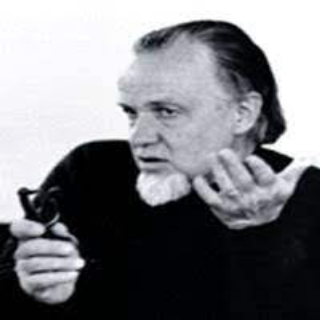 Francis Schaeffer was a pioneer in the field of apologetics and the development of a Christian response to the anti-supernaturalism which dominated western thought in the 20th century. He worked out a biblical and evangelical philosophy which proved to be a challenging alternative to emptiness and despair which characterised secular Europe at that time. Schaeffer also understood that the cultural shift was especially reflected in the arts and was able to help a number of us who were trying to develop a Christian approach to creativity in these influential areas of life. Here, Ray Evans, of Grace Community Church, Bedford, provides us with a brief overview of Schaeffer's contribution to Christian thought and action.
Francis Schaeffer became one of the most influential Christian leaders of the twentieth century. He came from a humble working-class background in Philadelphia, studied under Gresham Machen at Westminster Seminary for a while, was the pastor of some small churches in the USA, and then spent most of his life in Europe, to which he had come at the end of World War 2 as a missionary. Never seeking 'fame' or 'a name', God used him to help his church at a time when she faced, and still faces, the massive challenges brought about wherever western culture and 'worldview' have spread.
Married to Edith, and blessed with four children of their own, the Schaeffers settled in total obscurity in Switzerland. Initially they lived at Champéry, but the Roman Catholic officials of that canton requested they leave and they moved to what became their home for many years, the tiny village of Huémoz in the canton of Vaud. The thrilling story of how God opened the way for them to move there and start the distinctive ministry called 'L'Abri' (French for 'Shelter') is told in a book of that name. It is a 'must read' book!
They were determined to demonstrate several things in the ministry of L'Abri. First there was to be a true outworking of trust and dependence on God in all circumstances - a demonstration that the unseen supernatural world really exists. So, for example, they committed themselves to prayer, asking that God would send the individuals to them that would find their ministry helpful, and that God would provide all necessary resources of money, housing personnel and so on. They saw, and the work continues to see, real and powerful answers because, as he would often say, 'God is there'. Francis' book 'True Spirituality' (again another superbly helpful book) was born out of the desire to show what really living a Christian life looks like when we 'moment by moment rely on the ministry of the Holy Spirit, who is given to us because of the finished work of Christ on the cross'.
Then they wanted to demonstrate that Christianity has true and reasonable answers to the questions of the human heart. He, Edith and the growing family of children (which in time included sons-in-law such as the author Ranald Macaulay) found themselves inundated with young people that 'God sent'; people with dark confusion in their minds and deep hurts and problems in their souls.
Too often Schaeffer was written off because others caricatured him as 'an intellectual' and not 'earthed' in real life. Perhaps this was because some of his earliest books that were released to the general public ('The God Who is There', 'Escape from Reason', and 'He is There and He is not Silent') grappled with the 'big ideas' that hugely affect modern Western life. These ideas were not couched in conventional religious terms, or they were ideas that most pastors would avoid. Yet young people in large numbers found someone who could talk their language and could demonstrate that the Bible had answers that made sense, and which met our deepest spiritual needs.
He wrote several books and preached many messages (these are still available through the L'Abri tape ministry), that are great examples of Biblical exposition. One of my favourites is 'Joshua and the Flow of Biblical History' which gives a flavour of what it must have been like to sit under his clear thinking mind and pastorally warm heart. The answers that he showed the Bible gives have stood several generations of evangelical Christians in good stead as they in turn seek to help modern people understand the gospel and feel its power.
The Schaeffers also wanted to show that Christianity is not 'dehumanising' but makes us what we should be - 'whole' people in true 'community' with one another. This community life will never be perfect (he used to say "If it's perfection or nothing, it will always be nothing in this life"), but there can be real and substantial 'healing' - in our innermost being, in our relationships with one another, with the wider world, and with the environment. L'Abri and each local church/community of Christians should be like a 'pilot plant' which shows what life could be like when the primary relationship - that with our Maker - is restored on the basis of 'the finished work of Christ plus nothing'. Too often the church has ended up being nothing more than a conventional institution where religiosity, and not vibrant Christianity, is dominant. His was a clarion call to true reformation and genuine spirituality.
Later in life, Schaeffer turned in his speaking and writing to some of the big moral challenges of our age. Years before others woke up to the problems, he could see where dominant secularism was taking whole cultures: to the devaluing of human life both at its beginning and at its end; to a proud and defiant declaration of 'autonomy' in our sexuality; to a creeping compromise in the church about God's authoritative and trustworthy revelation (what he called 'true truth' [true in all that it affirms about history and science and not just in the 'spiritual ideas']); and to a general malaise in the population as a whole where the majority would settle for 'personal peace and affluence'.
He predicted that most would put up with any amount of moral change and evil as long as it was 'Not In My Back Yard' and as long as there was ongoing material prosperity to keep filling the dull ache of the soul. The 'Christian base' which for so long had informed Western thinking and public life would become only a folk memory as secularism gradually became dominant. The ruling elites, who are in place in all areas of the culture - politics and the bureaucracy of the modern state, the judiciary, the universities, the arts and media - have their thinking and action informed by a 'worldview' where the God of the Bible and our Lord and Saviour are relegated to 'personal prejudice only'. He is not allowed to influence anything significant according to this outlook. Indeed that 'tolerance of a belief in God' can soon become an antipathy to any mention of his claims on us, and that can get enshrined in public law and attitudes. All this sounds familiar now doesn't it, but it was almost unthinkable when he spoke about it in the 60s and 70s.
Tragically we are now living with many of the consequences he so powerfully preached and wrote about. Though some of his writings now feel a bit dated (he used lots of contemporary illustrations to show his main points were anchored in 'real life'), many of them are still enormously helpful. They are biblical, sane, wise and insightful. They are passionate, heartfelt and godly. They are full of lament at sin, and sorrow at 'lostness'; they are deeply imbued with love for God and Christ, and tender towards needy people. They are still a timely and necessary cry we should listen to. Too many others who have written on similar 'cultural analysis themes' lack Schaeffer's all round spiritual credibility. In a short life where one cannot hope to 'read everything' that Francis and Edith have written would repay the one who takes the trouble to delve into them handsomely.
God greatly blessed this 'man and wife team', and they have put many of us in their debt as they shared those blessings in a life of gracious Christian self-giving. May you go on to prove that in your experience too as you learn from these faithful servants of their risen Lord.
From Grace Maggazine,
Francis Schaeffer was a pioneer in the field of apologetics and the development of a Christian response to the anti-supernaturalism which dominated western thought in the 20th century. He worked out a biblical and evangelical philosophy which proved to be a challenging alternative to emptiness and despair which characterised secular Europe at that time. Schaeffer also understood that the cultural shift was especially reflected in the arts and was able to help a number of us who were trying to develop a Christian approach to creativity in these influential areas of life. Here, Ray Evans, of Grace Community Church, Bedford, provides us with a brief overview of Schaeffer's contribution to Christian thought and action.
Francis Schaeffer became one of the most influential Christian leaders of the twentieth century. He came from a humble working-class background in Philadelphia, studied under Gresham Machen at Westminster Seminary for a while, was the pastor of some small churches in the USA, and then spent most of his life in Europe, to which he had come at the end of World War 2 as a missionary. Never seeking 'fame' or 'a name', God used him to help his church at a time when she faced, and still faces, the massive challenges brought about wherever western culture and 'worldview' have spread.
Married to Edith, and blessed with four children of their own, the Schaeffers settled in total obscurity in Switzerland. Initially they lived at Champéry, but the Roman Catholic officials of that canton requested they leave and they moved to what became their home for many years, the tiny village of Huémoz in the canton of Vaud. The thrilling story of how God opened the way for them to move there and start the distinctive ministry called 'L'Abri' (French for 'Shelter') is told in a book of that name. It is a 'must read' book!
They were determined to demonstrate several things in the ministry of L'Abri. First there was to be a true outworking of trust and dependence on God in all circumstances - a demonstration that the unseen supernatural world really exists. So, for example, they committed themselves to prayer, asking that God would send the individuals to them that would find their ministry helpful, and that God would provide all necessary resources of money, housing personnel and so on. They saw, and the work continues to see, real and powerful answers because, as he would often say, 'God is there'. Francis' book 'True Spirituality' (again another superbly helpful book) was born out of the desire to show what really living a Christian life looks like when we 'moment by moment rely on the ministry of the Holy Spirit, who is given to us because of the finished work of Christ on the cross'.
Then they wanted to demonstrate that Christianity has true and reasonable answers to the questions of the human heart. He, Edith and the growing family of children (which in time included sons-in-law such as the author Ranald Macaulay) found themselves inundated with young people that 'God sent'; people with dark confusion in their minds and deep hurts and problems in their souls.
Too often Schaeffer was written off because others caricatured him as 'an intellectual' and not 'earthed' in real life. Perhaps this was because some of his earliest books that were released to the general public ('The God Who is There', 'Escape from Reason', and 'He is There and He is not Silent') grappled with the 'big ideas' that hugely affect modern Western life. These ideas were not couched in conventional religious terms, or they were ideas that most pastors would avoid. Yet young people in large numbers found someone who could talk their language and could demonstrate that the Bible had answers that made sense, and which met our deepest spiritual needs.
He wrote several books and preached many messages (these are still available through the L'Abri tape ministry), that are great examples of Biblical exposition. One of my favourites is 'Joshua and the Flow of Biblical History' which gives a flavour of what it must have been like to sit under his clear thinking mind and pastorally warm heart. The answers that he showed the Bible gives have stood several generations of evangelical Christians in good stead as they in turn seek to help modern people understand the gospel and feel its power.
The Schaeffers also wanted to show that Christianity is not 'dehumanising' but makes us what we should be - 'whole' people in true 'community' with one another. This community life will never be perfect (he used to say "If it's perfection or nothing, it will always be nothing in this life"), but there can be real and substantial 'healing' - in our innermost being, in our relationships with one another, with the wider world, and with the environment. L'Abri and each local church/community of Christians should be like a 'pilot plant' which shows what life could be like when the primary relationship - that with our Maker - is restored on the basis of 'the finished work of Christ plus nothing'. Too often the church has ended up being nothing more than a conventional institution where religiosity, and not vibrant Christianity, is dominant. His was a clarion call to true reformation and genuine spirituality.
Later in life, Schaeffer turned in his speaking and writing to some of the big moral challenges of our age. Years before others woke up to the problems, he could see where dominant secularism was taking whole cultures: to the devaluing of human life both at its beginning and at its end; to a proud and defiant declaration of 'autonomy' in our sexuality; to a creeping compromise in the church about God's authoritative and trustworthy revelation (what he called 'true truth' [true in all that it affirms about history and science and not just in the 'spiritual ideas']); and to a general malaise in the population as a whole where the majority would settle for 'personal peace and affluence'.
He predicted that most would put up with any amount of moral change and evil as long as it was 'Not In My Back Yard' and as long as there was ongoing material prosperity to keep filling the dull ache of the soul. The 'Christian base' which for so long had informed Western thinking and public life would become only a folk memory as secularism gradually became dominant. The ruling elites, who are in place in all areas of the culture - politics and the bureaucracy of the modern state, the judiciary, the universities, the arts and media - have their thinking and action informed by a 'worldview' where the God of the Bible and our Lord and Saviour are relegated to 'personal prejudice only'. He is not allowed to influence anything significant according to this outlook. Indeed that 'tolerance of a belief in God' can soon become an antipathy to any mention of his claims on us, and that can get enshrined in public law and attitudes. All this sounds familiar now doesn't it, but it was almost unthinkable when he spoke about it in the 60s and 70s.
Tragically we are now living with many of the consequences he so powerfully preached and wrote about. Though some of his writings now feel a bit dated (he used lots of contemporary illustrations to show his main points were anchored in 'real life'), many of them are still enormously helpful. They are biblical, sane, wise and insightful. They are passionate, heartfelt and godly. They are full of lament at sin, and sorrow at 'lostness'; they are deeply imbued with love for God and Christ, and tender towards needy people. They are still a timely and necessary cry we should listen to. Too many others who have written on similar 'cultural analysis themes' lack Schaeffer's all round spiritual credibility. In a short life where one cannot hope to 'read everything' that Francis and Edith have written would repay the one who takes the trouble to delve into them handsomely.
God greatly blessed this 'man and wife team', and they have put many of us in their debt as they shared those blessings in a life of gracious Christian self-giving. May you go on to prove that in your experience too as you learn from these faithful servants of their risen Lord.
From Grace Maggazine,