
Others like a preface to paradise lost Features >>
Supremacy Of Christ In A Post Modern World

Deep Exegesis - The Mystery Of Reading Scripture
The Murder Of Jesus
Apostolic Preaching Of The Cross
The Truth War
An Outline Of The Christian Faith

The Fundamentals - A Testimony To The Truth Volume 3
At The Origins Of Christian Worship
The Babylonian Captivity Of The Church, 1520
The Preacher And His Preaching
About the Book
"A Preface to Paradise Lost" by C.S. Lewis is a critical analysis and introduction to John Milton's epic poem "Paradise Lost." In the book, Lewis examines Milton's writing style, themes, characters, and the historical context in which the poem was written. He explores the theological and philosophical ideas presented in "Paradise Lost" and offers insights into its lasting impact on literature and culture. Lewis provides a deep and thought-provoking examination of Milton's masterpiece, making this book a valuable resource for both scholars and general readers interested in understanding "Paradise Lost" and its significance in literary history.
Gordon Lindsay
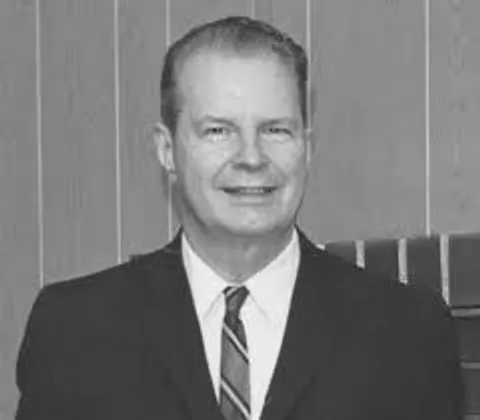 Gordon Lindsay’s Early life
Gordon Lindsay’s parents were members of J. A. Dowie’s Zion City, Illinois when he was born. The city’s financial difficulties forced the family west in 1904, where they temporarily joined another Christian-based community led by Finis Yoakum at Pisgah Grande, California. When similar problems emerged the family moved to Oregon after only a few months. From here the family moved to Portland, Oregon where Lindsay attended high school and was converted during a Charles F. Parham evangelistic campaign.
During his youth he came under the influence of John G. Lake, former resident of Zion City, missionary to South Africa, and founder of the Divine Healing missions in Spokane, Washington, and Portland, Oregon in 1920. Lindsay joined the healing and evangelistic campaigns of Lake, traveling throughout California and the southern states.
Lindsay began his own ministry in California as pastor of small churches in Avenal and San Fernando and for the next eighteen years, he travelled acros s the country holding revivals in full gospel churches. This period of travel prepared him as perhaps no other man in the nation to establish communication among a variety of Pentecostals.
When World War II began, Lindsay felt compelled to give up his evangelistic ministry because its rigorous lifestyle was taking its toll on his young family. He accepted a call to pastor a church in Ashland, Oregon.
William Branham enters Gordon Lindsay’s life
By 1947 he had witnessed the extraordinary ministry of William Branham and responded to the invitation to become Branham’s manager. His managerial skills were soon obvious in the Branham campaigns, and in April 1948, he furthered the cause of the of the revival when he produced the first issue of The Voice of Healing, specifically to promote Branham’s ministry. To Lindsay’s great surprise Branham announced that he “would not continue on the field more than a few weeks more.”
At great financial cost Lindsay decided to continue the publication of the new magazine in cooperation with his long-time friends, Jack Moore and his talented daughter Anna Jeanne Moore. He broadened the scope of the magazine by including more of the lesser known healing evangelists who were beginning to hold campaigns and were drawing large audiences.
One such evangelist was William Freeman who had been holding meetings in small churches. Lindsay visited one of his campaigns and immediately felt it was the will of God to team up with him and organise a series of meetings through 1948. The Voice of Healing featured the miracles of the Freeman campaigns.
Voice of Healing Conventions
By March 1949 The Voice of Healing circulation had grown to nearly 30,000 per month and had clearly become the voice of the healing movement. It’s pages successfully spread the message of the Salvation-Deliverance-Healing revival across the world.
In December 1949, Lindsay arranged the first convention of healing revivalists in Dallas, Texas. The assembly was addressed by Branham, Lindsay, Moore, old-timers such as F. F. Bosworth and Raymond T. Richey, and a number of rising revivalists including O. L. Jaggers, Gayle Jackson, Velmer Gardner, and Clifton Erickson. This historic conference symbolized the vitality and cohesion of the revival.
The following year, the convention, now about 1,000 strong, met in Kansas City, with virtually every important revivalist in the nation, with the notable exceptions of William Branham and Oral Roberts. Lindsay exercised great skill and wisdom exposing several points of danger and tension in the movement proposed guidelines for the future. Lindsay understood the fears of the older Pentecostal denominations and leaders and tried his utmost to deal with the offending issues.
In an article announcing “the purpose, plan and policy of the Voice of Healing Convention,” he denounced “free-lancers who violently and indiscriminately attack organization in general,” and he urged avoidance of “novel prophetic interpretations, dogmatic doctrinal assertions, sectarian predilections, theological hair-splitting.”
The Voice of Healing Association
The 1950 meeting made the Voice of Healing convention into a loose association of healing revivalists. The evangelists officially associated with The Voice of Healing magazine held “family meetings” at the conventions, at the same time maintaining their desire to “prove to the world that those associated with The Voice of Healing have no intention to organize another movement.” Through the decade the Voice of Healing conventions were showcases for healing revivalism.
The conference programs were workshops on the problems of healing evangelists. Typical topics were “prayer and fasting,” “preparation for a campaign,” “the follow-up work after a campaign,” “the system of cards for the prayer tent and the healing line” and the delicate issue of finances. As the association grew in importance in the 1950s, the program was frequently headed by Roberts or Branham; though every new revivalist aspired to be a speaker on the program.
The Voice of Healing family of evangelists flowered in the early 1950s. Lindsay continued to publicize Branham’s work, although he was not formally associated with the organization; the nucleus of the fellowship was an influential clique which included O. L. Jaggers, William Freeman, Jack Coe, T. L. Osborn, A. A. Allen, and Velmer Gardner.
Gradually major ministries began their own magazines and had no further need for Voice of Healing promotion. Nevertheless, by 1954 the “associate editors and evangelists” listed in The Voice of Healing numbered nearly fifty.
Though Lindsay became personally involved with healing evangelism from 1949, especially with other revivalists such as T. L. Osborn, he confined his best work to organization and management of the Voice of Healing magazine. By 1956 the expenses of the Voice of Healing were running $1,000 a day. In addition to the national and regional conventions sponsored by his organization, Lindsay also began to sponsor missions and a radio program.
“Lindsay was more than an advisor during the first decade of the healing revival; he was much like the director of an unruly orchestra. He tried desperately to control the proliferation of ministries in an effort to keep the revival respectable. He repeatedly advised, “It is better for one to go slow. Get your ministry on a solid foundation. . . . By all means avoid Hollywood press agent stuff.”
Many of the new leaders of the early 1950s owed their early success to the literary support of Gordon Lindsay through the Voice of Healing, but by 1958, many of the revivalists believed that Lindsay’s work was over.
An evolving ministry
Lindsay’s efforts to consolidate and coordinate the healing movement and its ministries became an impossible task. The increasing independence of ministries and the burgeoning charismatic movement caused Lindsay to reconsider his goals. He took the example of T. L. Osborn and concentrated on missionary endeavours. He remained the historian and theologian of the healing movement but began to produce teaching and evangelistic materials which were sent across the world.
The Voice of Healing ultimately became Christ for the Nations. Native church programs, literature, teaching tapes and funds were distributed to hundreds of locations. The organization had changed from one of healing revivalists into an important missionary society.
His ministry was always to those involved in the healing revival, independents and mainline Pentecostals, but the new charismatics – Lutherans, Methodists and Baptists – became his new audience. His encouragement of, and involvement with, the Full Gospel Businessmen’s Fellowship was designed to provide teaching and wisdom for charismatic leaders, many of whom held Lindsay in high regard.
His death on April 1st 1971
Suddenly, on April 1, 1973, Gordon Lindsay died. His wife, Freda, stepped into the breach and was able to stabilize and advance the ministry of Christ for the Nations. Lindsay’s death brought unparalleled financial support paying off all debts and expanding most of its programs.
David Harrel summarises the life of Gordon Lindsay perfectly: ‘The death of Gordon Lindsay closed a major chapter in the charismatic revival. No single man knew the revival and its leaders so well. No man understood its origins, its changes, and its diversity as did Lindsay. A shrewd manager and financier, Lindsay had been as nearly the coordinator of the healing revival as any man could be.
When the revival began to wane, Lindsay was faced with a crisis more severe than those of most of the evangelists themselves. Never a dynamic preacher, he found himself virtually abandoned by his most successful protégés. But Lindsay proved able to adapt. Always a balanced person, Lindsay built a balanced and enduring ministry.’
Tony Cauchi
Gordon Lindsay’s Early life
Gordon Lindsay’s parents were members of J. A. Dowie’s Zion City, Illinois when he was born. The city’s financial difficulties forced the family west in 1904, where they temporarily joined another Christian-based community led by Finis Yoakum at Pisgah Grande, California. When similar problems emerged the family moved to Oregon after only a few months. From here the family moved to Portland, Oregon where Lindsay attended high school and was converted during a Charles F. Parham evangelistic campaign.
During his youth he came under the influence of John G. Lake, former resident of Zion City, missionary to South Africa, and founder of the Divine Healing missions in Spokane, Washington, and Portland, Oregon in 1920. Lindsay joined the healing and evangelistic campaigns of Lake, traveling throughout California and the southern states.
Lindsay began his own ministry in California as pastor of small churches in Avenal and San Fernando and for the next eighteen years, he travelled acros s the country holding revivals in full gospel churches. This period of travel prepared him as perhaps no other man in the nation to establish communication among a variety of Pentecostals.
When World War II began, Lindsay felt compelled to give up his evangelistic ministry because its rigorous lifestyle was taking its toll on his young family. He accepted a call to pastor a church in Ashland, Oregon.
William Branham enters Gordon Lindsay’s life
By 1947 he had witnessed the extraordinary ministry of William Branham and responded to the invitation to become Branham’s manager. His managerial skills were soon obvious in the Branham campaigns, and in April 1948, he furthered the cause of the of the revival when he produced the first issue of The Voice of Healing, specifically to promote Branham’s ministry. To Lindsay’s great surprise Branham announced that he “would not continue on the field more than a few weeks more.”
At great financial cost Lindsay decided to continue the publication of the new magazine in cooperation with his long-time friends, Jack Moore and his talented daughter Anna Jeanne Moore. He broadened the scope of the magazine by including more of the lesser known healing evangelists who were beginning to hold campaigns and were drawing large audiences.
One such evangelist was William Freeman who had been holding meetings in small churches. Lindsay visited one of his campaigns and immediately felt it was the will of God to team up with him and organise a series of meetings through 1948. The Voice of Healing featured the miracles of the Freeman campaigns.
Voice of Healing Conventions
By March 1949 The Voice of Healing circulation had grown to nearly 30,000 per month and had clearly become the voice of the healing movement. It’s pages successfully spread the message of the Salvation-Deliverance-Healing revival across the world.
In December 1949, Lindsay arranged the first convention of healing revivalists in Dallas, Texas. The assembly was addressed by Branham, Lindsay, Moore, old-timers such as F. F. Bosworth and Raymond T. Richey, and a number of rising revivalists including O. L. Jaggers, Gayle Jackson, Velmer Gardner, and Clifton Erickson. This historic conference symbolized the vitality and cohesion of the revival.
The following year, the convention, now about 1,000 strong, met in Kansas City, with virtually every important revivalist in the nation, with the notable exceptions of William Branham and Oral Roberts. Lindsay exercised great skill and wisdom exposing several points of danger and tension in the movement proposed guidelines for the future. Lindsay understood the fears of the older Pentecostal denominations and leaders and tried his utmost to deal with the offending issues.
In an article announcing “the purpose, plan and policy of the Voice of Healing Convention,” he denounced “free-lancers who violently and indiscriminately attack organization in general,” and he urged avoidance of “novel prophetic interpretations, dogmatic doctrinal assertions, sectarian predilections, theological hair-splitting.”
The Voice of Healing Association
The 1950 meeting made the Voice of Healing convention into a loose association of healing revivalists. The evangelists officially associated with The Voice of Healing magazine held “family meetings” at the conventions, at the same time maintaining their desire to “prove to the world that those associated with The Voice of Healing have no intention to organize another movement.” Through the decade the Voice of Healing conventions were showcases for healing revivalism.
The conference programs were workshops on the problems of healing evangelists. Typical topics were “prayer and fasting,” “preparation for a campaign,” “the follow-up work after a campaign,” “the system of cards for the prayer tent and the healing line” and the delicate issue of finances. As the association grew in importance in the 1950s, the program was frequently headed by Roberts or Branham; though every new revivalist aspired to be a speaker on the program.
The Voice of Healing family of evangelists flowered in the early 1950s. Lindsay continued to publicize Branham’s work, although he was not formally associated with the organization; the nucleus of the fellowship was an influential clique which included O. L. Jaggers, William Freeman, Jack Coe, T. L. Osborn, A. A. Allen, and Velmer Gardner.
Gradually major ministries began their own magazines and had no further need for Voice of Healing promotion. Nevertheless, by 1954 the “associate editors and evangelists” listed in The Voice of Healing numbered nearly fifty.
Though Lindsay became personally involved with healing evangelism from 1949, especially with other revivalists such as T. L. Osborn, he confined his best work to organization and management of the Voice of Healing magazine. By 1956 the expenses of the Voice of Healing were running $1,000 a day. In addition to the national and regional conventions sponsored by his organization, Lindsay also began to sponsor missions and a radio program.
“Lindsay was more than an advisor during the first decade of the healing revival; he was much like the director of an unruly orchestra. He tried desperately to control the proliferation of ministries in an effort to keep the revival respectable. He repeatedly advised, “It is better for one to go slow. Get your ministry on a solid foundation. . . . By all means avoid Hollywood press agent stuff.”
Many of the new leaders of the early 1950s owed their early success to the literary support of Gordon Lindsay through the Voice of Healing, but by 1958, many of the revivalists believed that Lindsay’s work was over.
An evolving ministry
Lindsay’s efforts to consolidate and coordinate the healing movement and its ministries became an impossible task. The increasing independence of ministries and the burgeoning charismatic movement caused Lindsay to reconsider his goals. He took the example of T. L. Osborn and concentrated on missionary endeavours. He remained the historian and theologian of the healing movement but began to produce teaching and evangelistic materials which were sent across the world.
The Voice of Healing ultimately became Christ for the Nations. Native church programs, literature, teaching tapes and funds were distributed to hundreds of locations. The organization had changed from one of healing revivalists into an important missionary society.
His ministry was always to those involved in the healing revival, independents and mainline Pentecostals, but the new charismatics – Lutherans, Methodists and Baptists – became his new audience. His encouragement of, and involvement with, the Full Gospel Businessmen’s Fellowship was designed to provide teaching and wisdom for charismatic leaders, many of whom held Lindsay in high regard.
His death on April 1st 1971
Suddenly, on April 1, 1973, Gordon Lindsay died. His wife, Freda, stepped into the breach and was able to stabilize and advance the ministry of Christ for the Nations. Lindsay’s death brought unparalleled financial support paying off all debts and expanding most of its programs.
David Harrel summarises the life of Gordon Lindsay perfectly: ‘The death of Gordon Lindsay closed a major chapter in the charismatic revival. No single man knew the revival and its leaders so well. No man understood its origins, its changes, and its diversity as did Lindsay. A shrewd manager and financier, Lindsay had been as nearly the coordinator of the healing revival as any man could be.
When the revival began to wane, Lindsay was faced with a crisis more severe than those of most of the evangelists themselves. Never a dynamic preacher, he found himself virtually abandoned by his most successful protégés. But Lindsay proved able to adapt. Always a balanced person, Lindsay built a balanced and enduring ministry.’
Tony Cauchi
Friend, You Can Be Ready to Die
Years ago I read somewhere that, during the Victorian era, people talked often about death, and sex was the taboo subject. By now we have flipped it. We talk freely about sex, and death is the taboo subject. To me, what’s odd is this: even Christians shy away from talking about death. For crying out loud, we’re going to heaven! Why should we fear anything ? Our Lord died and rose again — for us. Yes, the blunt truth can seem intimidating. Here it is: We don’t need to go looking for it. Sooner or later, something bad will come find us and take us out. But why not accept that, and prepare for it, and rejoice our way through it? Thanks to the risen Jesus, death is no longer a crisis. It is now our release. So, Death, you sorry loser, we will outlive you by an eternity. We will even dance on your grave, when “death shall be no more” (Revelation 21:4). But for now, among the many ways to prepare for death — like buying life insurance, making a proper will, and so forth — here are two truths that can help you prevail when your moment comes. Both insights come from an obscure passage near the end of Deuteronomy. Your Final Obedience First, your death will be your final act of obedience in this world below. Near the end of his earthly life, Moses received a surprising command from God: Go up this mountain . . . and view the land of Canaan, which I am giving to the people of Israel for a possession. And die on the mountain which you go up . . . (Deuteronomy 32:49–50) Moses obeyed the command, by God’s grace. His death, therefore, was not his pathetic, crushing defeat; it was his final, climactic act of obedience. As you can see in the verse, it was even what we call a mountaintop experience. “Your death will be your final act of obedience in this world below.” Sadly, our deaths are usually painful and humiliating. But that’s obvious. Down beneath the surface appearances, the profound reality is this: your death too will be an act of obedience, for you too are God’s servant, like Moses. The Bible says about us all, “ Precious in the sight of the Lord is the death of his saints” (Psalm 116:15). He will not throw you away like a crumpled-up piece of trash. He will receive you as his treasured friend. Your death might be messy here on earth, but it will not be disgusting to God above. It will be, to him, “precious” — that is, valued and honored. It will be you obeying the One who said, “Follow me” (Matthew 4:19). You followed him with a first step, and you will follow him with a last step. And when you’re thinking about it, don’t worry about failing him at that final moment. He who commands you will also carry you. Given the grandeur of a Christian’s death, I have to admit that I have never seen a Christian funeral do justice to the magnitude of the moment. We try, but our services fall short. Only by faith, looking beyond our poor efforts at doing honor, can we truly savor the wonder of a Christian’s crowning glory. Even still, let’s make every Christian funeral as meaningful as it can be by believing and declaring the truth. A blood-bought sinner has just stepped on Satan’s neck and leapt up into eternal happiness, by God’s grace and for his glory. The day of your funeral, this uncomprehending world will stumble along in its oblivious way. But your believing family and friends will understand what’s really going on. And they will rejoice. This being so, why not look forward to dying? Paul was so eager for his day of release, he honestly couldn’t decide whether he’d rather keep serving Jesus here or die and go be with Jesus there: “What shall I choose? I do not know! I am torn between the two” (Philippians 1:22–23 NIV). When our work here is finally complete, why stay one moment longer? Of course, just as God decides our birthday (which we do know), so God also decides our deathday (which we do not know). Let’s bow to his schedule. But right now, by faith, let’s also start sitting on the edge of our seats in eager anticipation. And when he does give the command, “Die,” we then can say, “Yes, Lord! At long last!” And we will die. He will help us obey him even then — especially then. Your Happy Meeting Second, your death will be your happy meeting with the saints in that world above. Not only did God command Moses to die, but he also deepened and enriched Moses’s expectations of his death: Die on the mountain which you go up, and be gathered to your people, as Aaron your brother died in Mount Hor and was gathered to his people. (Deuteronomy 32:50) To be with our Lord in heaven above is the ultimate human experience. But he himself includes in that sacred privilege “the communion of saints,” to quote the Apostles’ Creed. When you die, like Moses, you will be gathered to your people — all the believers in Jesus who have gone before you into the presence of God. Heaven will not be solitary you with Jesus alone. It will be you with countless others, surrounding his throne of grace, all of you glorifying and enjoying him together with explosive enthusiasm (Revelation 7:9–10). Right now, in this world, we are “the church militant,” to use the traditional wording. But even now, we are one with “the church triumphant” above. And when we die, we finally enter into the full experience of the blood-bought communion of saints. Think about it. No church splits, no broken relationships, not even chilly aloofness. We all will be united before Christ in a celebration of his salvation too joyous for any petty smallness to sneak into our hearts. You will like everyone there, and everyone there will like you too. You will be included. You will be understood. You will be safe. No one will kick you out, no one will bully you, no one will slander you — not in the presence of the King. And you will never again, even once, even a little, disappoint anyone else or hurt their feelings or let them down. You will be magnificent, like everyone around you, for Jesus will put his glory upon us all. Facing Death with Calm Confidence Even now, by God’s grace, we have come to the heavenly Jerusalem, and to innumerable angels in festal gathering, and to the assembly of the firstborn who are enrolled in heaven, and to God, the judge of all, and to the spirits of the righteous made perfect, and to Jesus, the mediator of a new covenant. (Hebrews 12:22–24) “Why should we, citizens of the heavenly city, ever fear anything about earthly death?” They all are there, right at this very moment, in the invisible realm. It’s only an inch away. And the instant after your last breath in this dark world, you will awaken to that bright world above, where you will be welcomed in and rejoiced over. Saint Augustine might smile and nod with deep dignity. Martin Luther might give you a warm bear hug. Elisabeth Elliot might gently shake your hand. And maybe for the first time ever, you’ll discover how good it feels to really belong . Here’s my point. Why should we, citizens of the heavenly city, ever fear anything about earthly death? By faith in God’s promises in the gospel, let’s get ready now so that we face it then with calm confidence — and even with bold defiance.