-480.webp)

A New Heaven And A New Earth: Reclaiming Biblical Eschatology Order Printed Copy
- Author: J. Richard Middleton
- Size: 3.96MB | 344 pages
- |
Others like a new heaven and a new earth: reclaiming biblical eschatology Features >>
Between Heaven And Hell
-160.webp)
Proof Of Heaven: A Neurosurgeon's Journey Into The Afterlife
-160.webp)
Heaven Awaits The Bride: A Breathtaking Glimpse Of Eternity

We Saw Heaven: True Stories Of What Awaits You On The Other Side

Eschatology - The High King Of Heaven
-160.webp)
Heavenly Visitation

Satan's Rebellion And Fall
23 Minutes In Hell

Road To Armageddon
Eternity
About the Book
"A New Heaven and a New Earth: Reclaiming Biblical Eschatology" by J. Richard Middleton explores the concept of eschatology in the Bible and argues that it has been misunderstood by many Christians. Middleton suggests that the biblical vision of a new heaven and earth is not about escaping to a disembodied spiritual realm but is instead about the renewal and transformation of this world. He presents a compelling case for a holistic interpretation of eschatology that emphasizes God's plan to restore creation to its original goodness.
Oral Roberts
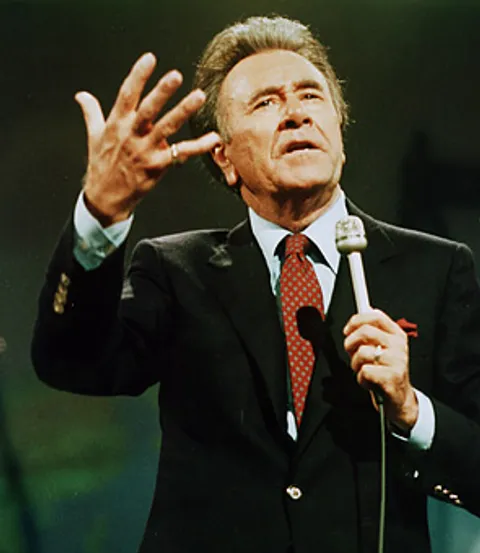 Granville Oral Roberts was born January 24, 1918 in Pontotoc County, near Ada, in Oklahoma. His parents were deeply religious. His father was a farmer who also preached the gospel and established Pentecostal Holiness churches. His mother regularly prayed for the sick and led people to Christ. While she was still pregnant, Robert's mother committed Oral to God's service. Even though Oral had a very strong stutter his mother would tell him that one day God would heal his tongue and he would speak to multitudes.
The Roberts family was desperately poor. When Roberts was 16 he moved away from home, hoping for a better life. He rejected God and his upbringing. He started living a wild life and his health collapsed. Roberts had contracted tuberculosis. He returned home and eventually dropped to 120 pounds. He was a walking skeleton. God spoke to his older sister, Jewel, and told her that He was going to heal Oral. During this same time Oral turned his heart back to God and gave his life to Christ. A traveling healing evangelist named George Moncey came to Ada and held meetings in a tent. Oral's elder brother was touched when he saw friends of his healed in the meeting. He decided that he should get Oral and bring him to be healed. On the way to the meeting God spoke to Oral and said "Son, I'm going to heal you and you are to take my healing power to your generation. You are to build me a University and build it on My authority and the Holy Spirit." Once at the meeting Oral waited until the very end. He was too sick to get up and receive prayer, and so had to wait for Moncey to come to him. At 11:00 at night his parents lifted him so he could stand. When Moncey prayed for him the power of God hit him and he was instantly healed. Not only that but every bit of his stutter was gone!
After Roberts was healed he began to travel the evangelistic circuit. He met and married Evelyn Lutman, a school teacher from the same Holiness Pentecostal background as Roberts. They had their first child Rebecca and then the entire family began traveling as ministers. In 1942 they left the evangelistic field for a while and Roberts became a pastor. He also returned to college to further his education. While a pastor he prayed for a church member whose foot was crushed. The foot was instantly healed. God continued to speak to Roberts about his call to the multitudes. God called him to an unusual fast. Roberts was to read the four gospels and the book of Acts three times consecutively, while on his knees, for thirty days. God began to reveal Jesus as the healer in a new way. God also began to give Roberts dreams where he would see people's needs as God saw them. God called him to hold a healing meeting in his town. A woman was dramatically healed, several people were saved and Roberts' ministry changed overnight.
Roberts resigned his church in 1947 and began an itinerant ministry. Notable healings began to occur. One man tried to shoot Roberts. God used the story to bring him media attention, which expanded his ministry very quickly. Roberts felt called to purchase a tent and take his evangelistic ministry to larger cities. His first tent held 3,000 but he quickly exchanged it for a tent that held 12,000. In July 1948 The Oral Roberts Evangelistic Association was established. Oral began traveling continuously throughout the United States. Like many of his Pentecostal brethren Roberts held inter-racial meetings. This brought him a lot of negative attention from groups who didn't like his stand. He even received death threats for not holding segregated meetings. In 1956 Roberts was invited to Australia. He held meetings in Sydney and Melbourne. In Melbourne there were outright physical attacks and destructive gangs. He was literally driven out of the city for praying for the sick. Often when people discuss the healing revival of the 1950s Oral Roberts and William Branham are listed as the most widely recognized leaders of the movement. Others came along side and many emulated them, but they were the most widely recognized personalities.
Roberts was a man who understood and used the media for his benefit. Roberts began publishing a magazine almost immediately upon starting his ministry. He grasped the power of radio and television. In 1954 Roberts began filming his crusades. He began playing his sermons on radio and then airing the crusade tapes during evening television prime time. Unfortunately there is some evidence that healing meetings were scripted ahead of time, and not all healings were genuine. People began writing to the Ministry headquarters by the thousands. They were accepting Christ as their savior after seeing a person healed on TV. By 1957 the ministry was receiving 1,000 letters a day and he was getting thousands of phone calls. He established a round the clock prayer team to answer calls and pray for people who contacted the ministry. In 1957 Roberts claimed 1,000,000 salvations. Between 1947 and 1968 Roberts conducted over 300 major Crusades. Money was flowing into the organization at an unprecedented rate.
In the late 1950s the healing movement was waning and ministries were under attack for their lack of financial accountability. Roberts began to move on the vision God gave him to build a University. It was chartered in 1963 and became open to students in 1965. Roberts was having a significant national impact in the late 1950s and early 1960s. For several years his named appeared in the Top 100 list of the nation's most respected people. Although Roberts continued to hold healing meetings his focus shifted to the University and the television programs.
The 1970s and 80s brought many crises to the Roberts family. Their daughter Rebecca and son-in-law Marshall were killed in a plane crash. Their son Ronnie struggled with depression after serving in Vietnam and also declaring himself gay. He grew despondent after losing his job and committed suicide. Richard Roberts got a divorce. After Richard remarried he and his wife lost a new born son within two days. Roberts began teaching a doctrine of "seed faith" where he claimed that if you gave to his ministry then God would pay you back in multiplied ways. The television ministry received heavy criticism for the constant requests for money. The Roberts were living an extravagance lifestyle while many of their supporters were not wealthy. Financial questions were raised in how Roberts used University endowment funds to purchase personal homes and cars.
In 1977 Roberts had a vision to build a hospital where people not only received care but received healing prayer. It was to be called City of Faith. Roberts put his heart and soul into the project, believing that God would build it as He had the University. The hospital struggled along and Roberts called his followers to give to the project, believing he had a vision from God to raise the money. Roberts even claimed twice that if money didn't come in that Jesus would "take him home." The hospital was built, but never succeeded financially, and finally closed in 1989. Financial giving was plummeting for both the Oral Roberts Evangelistic Association and Oral Roberts University.
Roberts retired in 1993, at the age of 75. Roberts, with his wife Evelyn, moved to California to live near the coast. Evelyn died in May 2005. Although Roberts influence waned after the problems of the 1970s and 1980s, he was still recognized for his pioneering work on the "sawdust trail", television evangelism, and building a Christian University. He often appeared on religious broadcasting networks as a recognized leader in the healing movement of the last half century. He died December 15, 2009 at the age of 91.
Oral Roberts' legacy is a mixed one. Roberts brought the truth of God's healing to the public in a way that few others accomplished in his lifetime. His financial and personal issues and increasingly extravagant claims eventually brought his ministry into disrepute. The University he established continued to have financial crises under the leadership of his son Richard Roberts. It was only after Richard stepped down in 2009 and new leadership took over the University that it stabilized financially. The University is no longer connected to the Oral Roberts Evangelistic Association.
Granville Oral Roberts was born January 24, 1918 in Pontotoc County, near Ada, in Oklahoma. His parents were deeply religious. His father was a farmer who also preached the gospel and established Pentecostal Holiness churches. His mother regularly prayed for the sick and led people to Christ. While she was still pregnant, Robert's mother committed Oral to God's service. Even though Oral had a very strong stutter his mother would tell him that one day God would heal his tongue and he would speak to multitudes.
The Roberts family was desperately poor. When Roberts was 16 he moved away from home, hoping for a better life. He rejected God and his upbringing. He started living a wild life and his health collapsed. Roberts had contracted tuberculosis. He returned home and eventually dropped to 120 pounds. He was a walking skeleton. God spoke to his older sister, Jewel, and told her that He was going to heal Oral. During this same time Oral turned his heart back to God and gave his life to Christ. A traveling healing evangelist named George Moncey came to Ada and held meetings in a tent. Oral's elder brother was touched when he saw friends of his healed in the meeting. He decided that he should get Oral and bring him to be healed. On the way to the meeting God spoke to Oral and said "Son, I'm going to heal you and you are to take my healing power to your generation. You are to build me a University and build it on My authority and the Holy Spirit." Once at the meeting Oral waited until the very end. He was too sick to get up and receive prayer, and so had to wait for Moncey to come to him. At 11:00 at night his parents lifted him so he could stand. When Moncey prayed for him the power of God hit him and he was instantly healed. Not only that but every bit of his stutter was gone!
After Roberts was healed he began to travel the evangelistic circuit. He met and married Evelyn Lutman, a school teacher from the same Holiness Pentecostal background as Roberts. They had their first child Rebecca and then the entire family began traveling as ministers. In 1942 they left the evangelistic field for a while and Roberts became a pastor. He also returned to college to further his education. While a pastor he prayed for a church member whose foot was crushed. The foot was instantly healed. God continued to speak to Roberts about his call to the multitudes. God called him to an unusual fast. Roberts was to read the four gospels and the book of Acts three times consecutively, while on his knees, for thirty days. God began to reveal Jesus as the healer in a new way. God also began to give Roberts dreams where he would see people's needs as God saw them. God called him to hold a healing meeting in his town. A woman was dramatically healed, several people were saved and Roberts' ministry changed overnight.
Roberts resigned his church in 1947 and began an itinerant ministry. Notable healings began to occur. One man tried to shoot Roberts. God used the story to bring him media attention, which expanded his ministry very quickly. Roberts felt called to purchase a tent and take his evangelistic ministry to larger cities. His first tent held 3,000 but he quickly exchanged it for a tent that held 12,000. In July 1948 The Oral Roberts Evangelistic Association was established. Oral began traveling continuously throughout the United States. Like many of his Pentecostal brethren Roberts held inter-racial meetings. This brought him a lot of negative attention from groups who didn't like his stand. He even received death threats for not holding segregated meetings. In 1956 Roberts was invited to Australia. He held meetings in Sydney and Melbourne. In Melbourne there were outright physical attacks and destructive gangs. He was literally driven out of the city for praying for the sick. Often when people discuss the healing revival of the 1950s Oral Roberts and William Branham are listed as the most widely recognized leaders of the movement. Others came along side and many emulated them, but they were the most widely recognized personalities.
Roberts was a man who understood and used the media for his benefit. Roberts began publishing a magazine almost immediately upon starting his ministry. He grasped the power of radio and television. In 1954 Roberts began filming his crusades. He began playing his sermons on radio and then airing the crusade tapes during evening television prime time. Unfortunately there is some evidence that healing meetings were scripted ahead of time, and not all healings were genuine. People began writing to the Ministry headquarters by the thousands. They were accepting Christ as their savior after seeing a person healed on TV. By 1957 the ministry was receiving 1,000 letters a day and he was getting thousands of phone calls. He established a round the clock prayer team to answer calls and pray for people who contacted the ministry. In 1957 Roberts claimed 1,000,000 salvations. Between 1947 and 1968 Roberts conducted over 300 major Crusades. Money was flowing into the organization at an unprecedented rate.
In the late 1950s the healing movement was waning and ministries were under attack for their lack of financial accountability. Roberts began to move on the vision God gave him to build a University. It was chartered in 1963 and became open to students in 1965. Roberts was having a significant national impact in the late 1950s and early 1960s. For several years his named appeared in the Top 100 list of the nation's most respected people. Although Roberts continued to hold healing meetings his focus shifted to the University and the television programs.
The 1970s and 80s brought many crises to the Roberts family. Their daughter Rebecca and son-in-law Marshall were killed in a plane crash. Their son Ronnie struggled with depression after serving in Vietnam and also declaring himself gay. He grew despondent after losing his job and committed suicide. Richard Roberts got a divorce. After Richard remarried he and his wife lost a new born son within two days. Roberts began teaching a doctrine of "seed faith" where he claimed that if you gave to his ministry then God would pay you back in multiplied ways. The television ministry received heavy criticism for the constant requests for money. The Roberts were living an extravagance lifestyle while many of their supporters were not wealthy. Financial questions were raised in how Roberts used University endowment funds to purchase personal homes and cars.
In 1977 Roberts had a vision to build a hospital where people not only received care but received healing prayer. It was to be called City of Faith. Roberts put his heart and soul into the project, believing that God would build it as He had the University. The hospital struggled along and Roberts called his followers to give to the project, believing he had a vision from God to raise the money. Roberts even claimed twice that if money didn't come in that Jesus would "take him home." The hospital was built, but never succeeded financially, and finally closed in 1989. Financial giving was plummeting for both the Oral Roberts Evangelistic Association and Oral Roberts University.
Roberts retired in 1993, at the age of 75. Roberts, with his wife Evelyn, moved to California to live near the coast. Evelyn died in May 2005. Although Roberts influence waned after the problems of the 1970s and 1980s, he was still recognized for his pioneering work on the "sawdust trail", television evangelism, and building a Christian University. He often appeared on religious broadcasting networks as a recognized leader in the healing movement of the last half century. He died December 15, 2009 at the age of 91.
Oral Roberts' legacy is a mixed one. Roberts brought the truth of God's healing to the public in a way that few others accomplished in his lifetime. His financial and personal issues and increasingly extravagant claims eventually brought his ministry into disrepute. The University he established continued to have financial crises under the leadership of his son Richard Roberts. It was only after Richard stepped down in 2009 and new leadership took over the University that it stabilized financially. The University is no longer connected to the Oral Roberts Evangelistic Association.
‘curse god and die’ - satan’s favorite response to suffering
My Dear Globdrop, Regretfully, I have received your last letter. Centuries serving his Lowliness — lifetimes damning souls and training young devils — and yet you still find ways to surprise me. Are you or are you not but one soul away from active duty, from wearing our legion’s darkest colors on the frontlines? If so, what should I expect to find you consumed with? Trapping? Spoiling? Sabotaging? Or, should I — with so much at stake — expect to find you playing with your food like a human child, giggling girlishly about? You have not tasted any meat pierced with your own spear, yet you trifle with the chase. Whatsoever do you mean? I can hear your simple mind ask. Your man, you report, went in for a routine shoulder surgery where, inexplicably , they pierced his lung. This alone causes you great joy, does it? You take great pride that “the fork pierced the prey.” You leave him unattended to tell me all about the victory. Yes, the doctor’s blade took an unexpected (and delicious) detour, but tell me, has the blade yet punctured his soul? Has the wound brought forth an infection of spirit ? Are you so lazy as to hope that the doctor has done your work for you? You have failed miserably to realize that it is not the surgeon’s miscalculations but your patient’s response that gets at the vital thing, the eternal thing. Pierced spirits, seared consciences, scarred hearts, burnt beliefs — these we bend our dark labors toward. Tantalizing trials and savory sufferings serve as an opportunity for this, the real work. Collapsed lungs — or more commonly: sick children, diseased spouses, faltering friendships, ruined romances, cursed careers, even the occasional dead pet — are mere playthings compared to what they can produce: a collapsed faith. This is to strike at the jugular, to slice the major artery. We love the vermin’s squeals and agonies, but never at the expense of our filled bellies. Unpredictable Flame At the expense? you wonder. Suffering, you should know by now, is most unpredictable. Most assuredly it can harden the heart — pushing out the very possibility of a kind, powerful, all-knowing God. Or (as you better hope is not your case) it can be the very thing used by the Enemy to rob our knives and forks of their roast. Have you not glanced over the apostle’s shoulder lately? Not all suffering ends up advancing our cause. We rejoice in our sufferings, knowing that suffering produces endurance, and endurance produces character, and character produces hope, and hope does not put us to shame, because God’s love has been poured into our hearts through the Holy Spirit who has been given to us. (Romans 5:3–5) Who means for suffering to encourage such a horrid thing as endurance, nephew? Do we mean for suffering to produce in them — and I struggle to even write the word — hope ? The punctured lungs, the groans and pains, at every turn, threaten to terribly backfire. The Enemy knows this well enough, and for all his talk, he is as underhanded as any devil. Often, we think we have set the perfect trap, until we discover (too late) that he had tampered with our afflictions and temptations to fit his designs. Making them squeal is pleasurable, watching them squirm under torments make us howl and snort, but it amounts to a mere play if they escape to the Enemy and further enact his dreadful purposes. This, you must ensure, does not happen with your man. Adding Iniquity to Injury Have done, at once, with your prepubescent squeaks and premature gloating. The game is afoot, and the Enemy means to have him as surely as we do. First, make his suffering personal. The question of “How could a good God allow bad things to happen?” is not nearly as useful a question as “How could God allow this bad thing to happen to me ?” This, of course, is the precise question to ask. The Enemy parades himself as the “personal God” at every turn; well, then, let him give his personal defense to the charges. Where was this personal God during his surgery? Give no cover to the Enemy on this point. Press your man, as we have pressed for centuries: Of all people to face this loss, this pain, this nightmare — why me ? Casually point out to your man that his “loving God,” his “refuge,” plays terrible favorites. None of the Christians he knows is facing such “lifelong complications” from such an improbable miscue. Perish any consideration that the Enemy is attempting, at any rate, to twist our bed of thorns into an eternal crown of glory. Hide the Enemy’s lies that such afflictions are precisely measured for their eternal good or in any way purposeful . Second, attend every stab. Never overlook the power of the small inconveniences and stings of discomfort. You must be always on standby for your patient — ready to nurse every flicker of pain toward self-pity, anger, or delectable despair. When he goes to reply to that email one-handed, or has to ask his wife for help to put on his socks, or feels the residual irritations and distresses that will accompany him to the grave — be ready to sow bitterness and pour salt on the wound. No crack, never forget, is too small to exploit. As you attend to his every moan, understand you will not be alone. The Enemy stands by them, always at their beck and call, like a drooling terrier, ready to remind them of his lies and calm them with his presence. In his embarrassing commitment to his fictions, his Spirit stands by to whisper to them. We can’t overhear most of it, but undoubtedly it has to do with Scripture telling them something like he “lovingly” designs their aches, pains, diseases, and deformities in this world, and to persuade them that he is their true comfort, and that this is not their true home. Fight whisper with whisper to keep the dogs from returning to their vomit. Third, hide Tomorrow from him. Finally, conceal any fictions about a Tomorrow that will make all sufferings “untrue.” Of such a Day that beaten, bruised, and bloodied apostle made consistent (and irritating) appeals to, calling the summation of his manifold (and mouthwatering) sufferings as nothing — nothing! — not even worth comparing to that Day of an “eternal weight of glory” which lies ahead (2 Corinthians 4:17) — a “glory” our Father Below weighed and found greatly wanting. Curse God and Die Affliction, nephew, is an uncertain flame, certainly not one to be trifled with. Job and his most useful wife prove a great illustration. Crushed with the fatal blows to property and household, this “upright” man tried to make our Father the fool, shaming us all by responding to murder, devastation, and destruction in such a servile and groveling way: “Job arose and tore his robe and shaved his head and fell on the ground and worshiped ” (Job 1:20). But not all responded in kind. Job’s wife, whom our Master most mercifully and wisely preserved, responded most excellently: “Do you still hold fast your integrity? Curse God and die” (Job 2:9). Curse God and die — I couldn’t have said it any better. Here lies the battlefield, nephew. Not the inflicting of affliction, but the infecting of the soul. We want each man, woman, and child to renounce such a Poser, to spit upon their former loyalties, and curse him before heaven’s eyes. This, nephew, this , is where your man must be led: To much more than a punctured lung But to a depleted faith and denouncing tongue. To teeth tightly clenched and fists held high In flames to curse his god and die. Damnation, Globdrop, damnation. Nothing less. Your most expectant Uncle, Grimgod
%20_Ellen%20G%20White-480.webp)