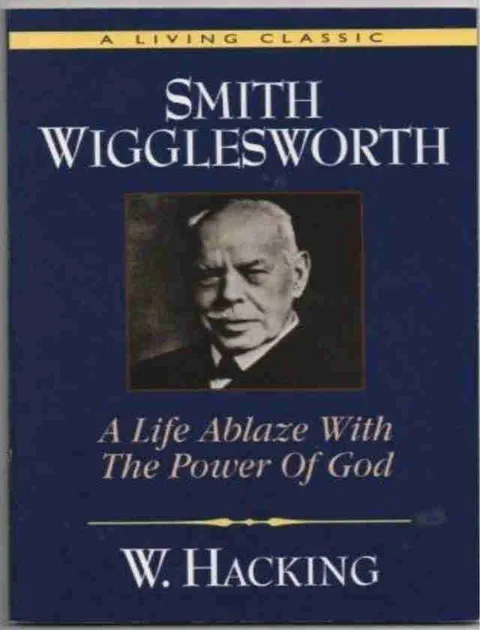

Smith Wigglesworth : A Life Ablaze With The Power Of God Order Printed Copy
- Author: Willie Hacking
- Size: 421KB | 85 pages
- |
Others like smith wigglesworth : a life ablaze with the power of god Features >>
-160.webp)



About the Book
"Smith Wigglesworth: A Life Ablaze With the Power of God" by Willie Hacking is a biography of the renowned Pentecostal preacher and evangelist, Smith Wigglesworth. The book delves into Wigglesworth's life, ministry, and the impact he had on the Christian faith. It highlights his powerful faith, miraculous healings, and his unwavering belief in the power of God. Through Wigglesworth's inspiring story, readers are encouraged to deepen their own faith and experience the transformative power of God in their lives.
A.W. Tozer (Aiden Wilson Tozer)
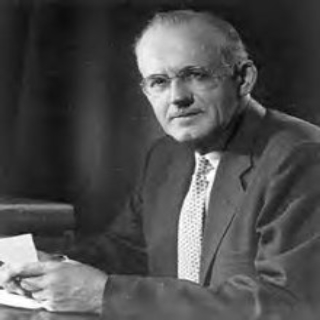 Early life
Tozer hailed from a tiny farming community in western La Jose, Pennsylvania. He was converted to Christianity as a teenager in Akron, Ohio: While on his way home from work at a tire company, he overheard a street preacher say, "If you don't know how to be saved ... just call on God, saying, 'Lord, be merciful to me a sinner.'" Upon returning home, he climbed into the attic and heeded the preacher's advice.
Pastor
In 1919, five years after his conversion and without formal education in Christian theology, Tozer accepted an offer to serve as pastor of his first church. That began 44 years of ministry associated with the Christian and Missionary Alliance (C&MA), a Protestant Evangelical denomination, 33 of them serving as a pastor in several different congregations (his first, a small storefront church in Nutter Fort, West Virginia). Later, he served thirty years (1928 to 1959) as the pastor of Southside Alliance Church in Chicago; the final years of his life he spent as pastor of Avenue Road Church in Toronto, Ontario, Canada. Observing contemporary Christian living, Tozer felt that the church was on a dangerous course toward compromising with "worldly" concerns.
Born into poverty, Tozer was self-educated and taught himself what he missed in high school and university.
Author
Tozer began writing in 1931 for the denominational magazine of the Christian and Missionary Alliance, Alliance Weekly (now Alliance Life), which became the platform from which his writing career emerged. He later wrote the monthly column “There’s Truth in It” (1936–37) and “A Word in Season” (1944–46). In May 1950, he became the editor of the Alliance Weekly, a position he filled until his death in 1963.
At the urging of David W. Fant, publications secretary of the C&MA, Tozer wrote biographies of A. B. Simpson (1943) and Robert A. Jaffray (1947). It was the publication of his third book, The Pursuit of God (1948), that made Tozer a household name among evangelicals. In addition to the 12 books he published in his lifetime, more than 40 other books have been compiled from his magazine features, editorials, and transcribed sermons.
During his lifetime, Tozer’s works were published by Christian Publications, Inc., the denominational press operated by the C&MA. The publishing house declared bankruptcy in 2006 and was purchased by WingSpread Publishers of Camp Hill, Pennsylvania.[8] In November 2013, Moody Publishers acquired Wingspread from parent company Zur Ltd., a transaction that included more than 60 Tozer books and pamphlets. Some of Tozer’s works are now in the public domain and have been issued by multiple publishers.
Personal life
Tozer had seven children, six sons and a daughter. Living a simple and non-materialistic lifestyle, he and his wife, Ada Cecelia Pfautz, never owned a car, preferring bus and train travel. Even after becoming a well-known Christian author, Tozer signed away much of his royalties to those who were in need.
Prayer was of vital personal importance for Tozer. "His preaching as well as his writings were but extensions of his prayer life," comments his biographer, James L. Snyder, in the book In Pursuit of God: The Life Of A.W. Tozer. "He had the ability to make his listeners face themselves in the light of what God was saying to them," writes Snyder.
Death and legacy
Tozer died on May 13, 1963, after suffering a heart attack. He was buried in Chicago, and later the family had his remains reinterred at Ellet Cemetery, Akron, Ohio. A simple marker reads: A. W. Tozer—A Man of God. The Alliance Weekly ran a memorial issue with numerous tributes and excerpts. The same issue also featured “God’s Greatest Gift to Man," a transcription of his final sermon. A few months prior to his death, Tozer had submitted the manuscript to The Christian Book of Mystical Verse, which was released in 1964 as his final book. His official publisher, Christian Publications, released many titles after his death, based on his magazine articles and sermon transcriptions. These continue in print with Moody Publishers. Several other publishers have released his public domain works.
In 2000, The Pursuit of God was named to Christianity Today’s list of 100 “Books of the Century.” In 2006, Knowledge of the Holy was named in “The Top 50 Books That Have Shaped Evangelicals.” Contemporary Christian music artist Lauren Barlow of BarlowGirl later published a compilation of stories told by 59 artists, writers, and leaders about A.W. Tozer’s personal inspiration.
Early life
Tozer hailed from a tiny farming community in western La Jose, Pennsylvania. He was converted to Christianity as a teenager in Akron, Ohio: While on his way home from work at a tire company, he overheard a street preacher say, "If you don't know how to be saved ... just call on God, saying, 'Lord, be merciful to me a sinner.'" Upon returning home, he climbed into the attic and heeded the preacher's advice.
Pastor
In 1919, five years after his conversion and without formal education in Christian theology, Tozer accepted an offer to serve as pastor of his first church. That began 44 years of ministry associated with the Christian and Missionary Alliance (C&MA), a Protestant Evangelical denomination, 33 of them serving as a pastor in several different congregations (his first, a small storefront church in Nutter Fort, West Virginia). Later, he served thirty years (1928 to 1959) as the pastor of Southside Alliance Church in Chicago; the final years of his life he spent as pastor of Avenue Road Church in Toronto, Ontario, Canada. Observing contemporary Christian living, Tozer felt that the church was on a dangerous course toward compromising with "worldly" concerns.
Born into poverty, Tozer was self-educated and taught himself what he missed in high school and university.
Author
Tozer began writing in 1931 for the denominational magazine of the Christian and Missionary Alliance, Alliance Weekly (now Alliance Life), which became the platform from which his writing career emerged. He later wrote the monthly column “There’s Truth in It” (1936–37) and “A Word in Season” (1944–46). In May 1950, he became the editor of the Alliance Weekly, a position he filled until his death in 1963.
At the urging of David W. Fant, publications secretary of the C&MA, Tozer wrote biographies of A. B. Simpson (1943) and Robert A. Jaffray (1947). It was the publication of his third book, The Pursuit of God (1948), that made Tozer a household name among evangelicals. In addition to the 12 books he published in his lifetime, more than 40 other books have been compiled from his magazine features, editorials, and transcribed sermons.
During his lifetime, Tozer’s works were published by Christian Publications, Inc., the denominational press operated by the C&MA. The publishing house declared bankruptcy in 2006 and was purchased by WingSpread Publishers of Camp Hill, Pennsylvania.[8] In November 2013, Moody Publishers acquired Wingspread from parent company Zur Ltd., a transaction that included more than 60 Tozer books and pamphlets. Some of Tozer’s works are now in the public domain and have been issued by multiple publishers.
Personal life
Tozer had seven children, six sons and a daughter. Living a simple and non-materialistic lifestyle, he and his wife, Ada Cecelia Pfautz, never owned a car, preferring bus and train travel. Even after becoming a well-known Christian author, Tozer signed away much of his royalties to those who were in need.
Prayer was of vital personal importance for Tozer. "His preaching as well as his writings were but extensions of his prayer life," comments his biographer, James L. Snyder, in the book In Pursuit of God: The Life Of A.W. Tozer. "He had the ability to make his listeners face themselves in the light of what God was saying to them," writes Snyder.
Death and legacy
Tozer died on May 13, 1963, after suffering a heart attack. He was buried in Chicago, and later the family had his remains reinterred at Ellet Cemetery, Akron, Ohio. A simple marker reads: A. W. Tozer—A Man of God. The Alliance Weekly ran a memorial issue with numerous tributes and excerpts. The same issue also featured “God’s Greatest Gift to Man," a transcription of his final sermon. A few months prior to his death, Tozer had submitted the manuscript to The Christian Book of Mystical Verse, which was released in 1964 as his final book. His official publisher, Christian Publications, released many titles after his death, based on his magazine articles and sermon transcriptions. These continue in print with Moody Publishers. Several other publishers have released his public domain works.
In 2000, The Pursuit of God was named to Christianity Today’s list of 100 “Books of the Century.” In 2006, Knowledge of the Holy was named in “The Top 50 Books That Have Shaped Evangelicals.” Contemporary Christian music artist Lauren Barlow of BarlowGirl later published a compilation of stories told by 59 artists, writers, and leaders about A.W. Tozer’s personal inspiration.
An Excellent New Book on Justification
If a thoughtful layman asked me what he should read to understand the doctrine of justification in relationship to the New Perspective on Paul, I would send him to Stephen Westerholm’s new book, Justification Reconsidered: Rethinking a Pauline Theme (Eerdmans, 2013). I enjoyed this book so much I found it difficult to put down. It is constructive. That is, it builds a clear and positive view of what justification is, rather than simply criticizing other views. For that reason, it provides a good introduction to the doctrine of justification itself for those who may not be clear on what Paul taught. According to the New Perspective But it is obviously written with a view to explaining and criticizing the so-called New Perspective (including Krister Stendahl, E.P. Sanders, J.D.G. Dunn, and N.T. Wright). The gist of that perspective is that the Judaism of Paul’s day was not a religion of legalism but of grace, and so, contrary to the historic view of Paul, legalism can hardly be what Paul found wrong with Judaism. His doctrine of justification must have had a different target. Therefore, the New Perspective says, justification “was not about how sinners could find a gracious God (by grace, not by works), but about the terms by which Gentles could be admitted to the people of God (without circumcision, Jewish food laws, and the like). A new Perspective was born” (26). The problem, Westerholm points out, is that the views of grace in contemporary Judaism did not exclude the merit of works alongside it. E.P. Sanders himself shows that the Rabbis “did not have a doctrine of original sin or of the essential sinfulness of each man in the Christian sense” (33). It follows, Westerholm argues, that “humanity’s predicament must be more desperate than Jews otherwise imagined” (33). Desperate for Grace This means that Paul’s “depiction of humanity’s condition required a much more rigorous dependence on divine grace than did Judaism’s” (34). Therefore, to show that Judaism had a doctrine of grace “is no reason to deny that Paul could have understood justification in terms of an exclusive reliance on grace in a way that was foreign to the thinking of contemporary Jews” (34). Therefore, Paul’s doctrine of justification did target not only a Jewish view, but any human view, that presumes to make good works any part of the ground of our being found righteous before God. “For Paul, God’s gift of salvation [i.e., justification] necessarily excludes any part to be played by God-pleasing ‘works’ since human beings are incapable of doing them” (32). “Paul sees the only righteousness available to sinful human beings to be that given as a gift of God’s grace, ‘apart from works’ (Romans 3:24; 4:2, 6; 5:17) — distinguishing grace from works in a way other Jews felt no need to do” (98). What the Doctrine Means In a statement that summarizes the whole book, Westerholm writes that this historic view of justification, shared by the Reformers and most Protestants, cannot be dismissed by the claim that the ancients were not concerned to find a gracious God (how could they not be, in the face of pending divine judgment?); or that it wrongly casts first-century Jews as legalists (its target is rather the sinfulness of all human beings); or that non-Christian Jews, too, depended on divine grace (of course they did, but without Paul’s need to distinguish grace from works); or that ‘righteousness’ means ‘membership in the covenant’ (never did, never will) and the expression ‘works of the law’ refers to the boundary markers of the Jewish people (it refers to all the ‘righteous’ deeds required by the law as its path to righteousness). (98) And, Westerholm observes, it is, of course, right to “emphasize the social implications of Paul’s doctrine of justification . . . in his own day and . . . draw out its social implications for our own” (98). But we should not identify the meaning of justification with its social implications (for example, table fellowship between Gentiles and Jews in Galatians 2; and multi-ethnic implications today). No. “The doctrine of justification means that God declares sinners righteous, apart from righteous deeds, when they believe in Jesus Christ” (99). Confusing the root with the fruit will, in the long run, kill the tree. Article by John Piper Founder & Teacher, desiringGod.org