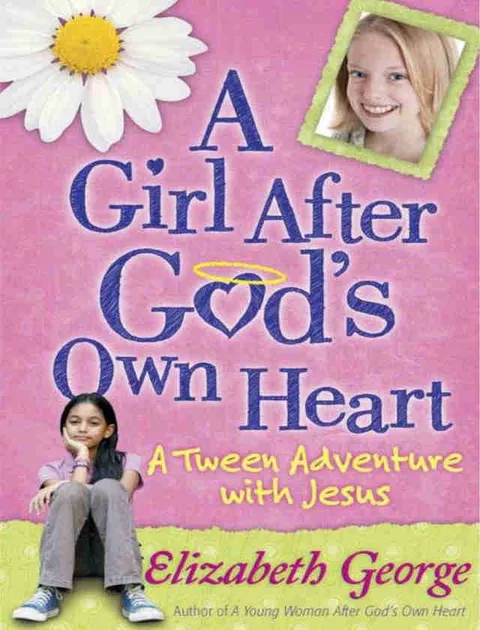

Others like a girl after god's own heart Features >>
-160.webp)








About the Book
"A Girl After God's Own Heart" by Elizabeth George is a guidebook for young girls looking to grow spiritually and develop a closer relationship with God. It offers practical advice on how to live according to God's word and become a positive influence in the world, encouraging girls to prioritize their faith, relationships, and character development.
Jerry Bridges
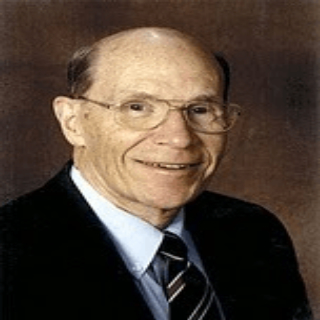 Jerry Bridges entered into the joy of his Master on Sunday evening, March 6, 2016, at Penrose Hospital in Colorado Springs, the day after he suffered cardiac arrest. He was 86 years old.
Childhood
Gerald Dean Bridges was born on December 4, 1929, in a cotton-farming home in Tyler, Texas, to fundamentalist parents, six weeks after the Black Tuesday stock market crash that led to the Great Depression.
Jerry was born with several disabilities: he was cross-eyed, he was deaf in his right ear (which was not fully developed), and he had spine and breastbone deformities. But given his family’s poverty, they were unable to afford medical care for these challenges.
The separatist church in East Texas where the Bridges were members had an altar call after every service. Jerry walked the aisle three times, at the ages of 9, 11, and 13. But he later realized that he had not been born again.
His mother Lillian passed away in 1944 when he was 14.
Conversion
In August of 1948, as an 18-year-old college student right before his sophomore year began, Jerry was home alone one night in bed. He acknowledged to the Lord that he was not truly a Christian, despite growing up in a Christian home and professing faith. He prayed, ”God whatever it takes, I want Christ to be my Savior.”
The next week in his dorm room at the University of Oklahoma he was working on a school assignment and reached for a textbook, when he noticed the little Bible his parents had given him in high school. He figured that since he was now a Christian, he ought to start reading it daily, which he did (and never stopped doing for the rest of his days).
The Navy
After graduating with an engineering degree on a Navy ROTC scholarship, he went on active duty with the Navy, serving as an officer during the Korean conflict (1951-1953). A fellow officer invited him to go to a Navigator Bible study. Jerry went and he was hooked. He had never experienced anything like this before.
When stationed on ship in Japan, he got to know several staff members of the Navigators quite well. One day, after Jerry had been in Japan for six months, a Navy worker asked him why he didn’t just throw in his lot with the Navigators and come to work for them. The very next day, December 26, 1952, Jerry failed a physical exam due to the hearing loss in his right ear, and he was given a medical discharge in July 1953, after being in the Navy for only two years. Jerry was not overly disappointed, surmising that perhaps this was the Lord’s way of steering him to the Navigators.
When he returned to the U.S., he began working for Convair, an airplane manufacturing company in southern California, writing technical papers for shop and flight line personnel. It was there that he learned to write simply and clearly—skills the Lord would later use to instruct and edify thousands of people from his pen.
The Navigators
Jerry was single at the time, living in the home of Navigator Glen Solum, a common practice in the early days of The Navigators. In 1955 Jim invited Jerry to go with him to a staff conference at the headquarters of The Navigators in Glen Eyrie at Colorado Springs. It was there that Jerry sensed a call from the Lord to be involved with vocational ministry. He was resistant to the idea of going on staff, but felt conviction and prayed to the Lord, “Whatever you want.” The following day he met Dawson Trotman, the 49-year-old founder of The Navigators, who wanted to interview Jerry for a position, which he received and accepted. Jerry was put in charge of the correspondence department—answering letters, handling receipts, and mainly the NavLog newsletter to supporters.
When Trotman died in June of 1956 (saving a girl who was drowning), Jim Downing took a position equivalent to a chief operations operator. A Navy man, Jim Downing knew that Jerry had also served in the Navy and tapped him to be his assistant.
Jerry struggled at times in his role, unsure if this was his calling since his position was so different from the typical campus reps. After ten years on staff he told the Lord, “I’m going to do this for the rest of my life. If you want me out of The Navigators you’ll have to let me know.”
Beginning in 1960, Jerry served for three years in Europe as administrative assistant to the Navigators’ Europe Director. In January of 1960, he read a booklet entitled The Doctrine of Election, which he first considered heresy but then embraced the following day.
In October of 1963, at the age of 34, he married his first wife, Eleanor Miller of The Navigators following a long-distance relationship. Two children followed: Kathy in 1966, and Dan in 1967. From 1965 to 1969 Jerry served as office manager for The Navigators’ headquarters office at Glen Eyrie.
From 1969 to 1979 Jerry served as the Secretary-Treasurer for The Navigators. It was during this time that NavPress was founded in 1975. Their first publications began by transcribing and editing audio material from their tape archives and turning them into booklets. They produced one by Jerry on Willpower. Leroy Eims—who started the Collegiate ministry—encouraged Jerry to try his hand at writing new material. Jerry had been teaching at conferences on holiness, so he suggested a book along those lines.
In 1978, NavPress published The Pursuit of Holiness, which has now sold over 1.5 million copies. Jerry assumed it would be his only book. A couple of years later, after reading about putting off the old self and putting on the new self from Ephesians 4, he decided to write The Practice of Godliness—on developing a Christlike character. That book went on to sell over half a million copies, and his 1988 book on Trusting God has sold nearly a million copies.
Jerry served as The Navigators’ Vice President for Corporate Affairs from 1979 to 1994. It was in this season of ministry that Eleanor developed non-Hodgkin’s lymphoma. She went to be with the Lord on November 9, 1988, just three weeks after their 25th wedding anniversary. On November 24, 1989, Jerry married Jane Mallot, who had known the Bridges family since the early ’70s.
Jerry’s final position with The Navigator’s was in the area of staff development with the Collegiate Mission. He saw this ministry as developing people, rather than teaching people how to do ministry. In addition to his work with The Navigators, he also maintained an active writing and teaching ministry, traveling the world to instruct and equip pastors and missionaries and other workers through conferences, seminars, and retreats.
Lessons
In 2014, Jerry published a memoir of his life, tracing the providential hand of God through his own story: God Took Me by the Hand: A Story of God’s Unusual Providence (NavPress, 2014). He closes the work with seven spiritual lessons he learned in his six decades of the Christian life:
The Bible is meant to be applied to specific life situations.
All who trust in Christ as Savior are united to Him in a loving way just as the branches are united to the vine.
The pursuit of holiness and godly character is neither by self-effort nor simply letting Christ “live His life through you.”
The sudden understanding of the doctrine of election was a watershed event for me that significantly affected my entire Christian life.
The representative union of Christ and the believer means that all that Christ did in both His perfect obedience and His death for our sins is credited to us.
The gospel is not just for unbelievers in their coming to Christ.
We are dependent on the Holy Spirit to apply the life of Christ to our lives.
His last book, The Blessing of Humility: Walk within Your Calling, will be published this summer by NavPress.
Legacy
One of the great legacies of Jerry Bridges is that he combined—to borrow some titles from his books—the pursuit of holiness and godliness with an emphasis on transforming grace. He believed that trusting God not only involved believing what he had done for us in the past, but that the gospel empowers daily faith and is transformative for all of life.
In 2009 he explained to interviewer Becky Grosenbach the need for this emphasis within the culture of the ministry he had given his life to:
When I came on staff almost all the leaders had come out of the military and we had pretty much a military culture. We were pretty hard core. We were duty driven. The WWII generation. We believed in hard work. We were motivated by saying “this is what you ought to do.” That’s okay, but it doesn’t serve you over the long haul. And so 30 years ago there was the beginning of a change to emphasize transforming grace, a grace-motivated discipleship.
In the days ahead, many will write tributes of this dear saint (see, e.g., this one from his friend, prayer partner, and sometimes co-author Bob Bevington). I would not be able to improve upon the reflections and remembrances of those who knew him better than I did. But I do know that he received from the Lord the ultimate acclamation as he entered into the joy of his Master and received the words we all long to hear, “Well done, my good and faithful servant.” There was nothing flashy about Jerry Bridges. He was a humble and unassuming man—strong in spirit, if not in voice or frame. And now we can rejoice with him in his full and final healing as he beholds his beloved Savior face to face. Thank you, God, for this man who helped us see and know you more.
Jerry Bridges wrote more than 20 books over the course of nearly 40 years:
The Pursuit of Holiness (NavPress, 1978)
The Practice of Godliness (NavPress, 1983)
True Fellowship (NavPress, 1985) [later published as The Crisis of Caring (P&R, 1992); finally republished with a major revision as True Community (NavPress, 2012)]
Trusting God (NavPress, 1988)
Transforming Grace (NavPress, 1991)
The Discipline of Grace (NavPress, 1994)
The Joy of Fearing God (Waterbrook, 1997)
I Exalt You, O God (Waterbrook, 2000)
I Give You Glory, O God (Waterbrook, 2002)
The Gospel for Real Life (NavPress, 2002)
The Chase (NavPress, 2003) [taken from Pursuit of Holiness]
Growing Your Faith (NavPress, 2004)
Is God Really in Control? (NavPress, 2006)
The Fruitful Life (NavPress, 2006)
Respectable Sins (NavPress, 2007) [student edition, 2013]
The Great Exchange [co-authored with Bob Bevington] (Crossway, 2007)
Holiness Day by Day (NavPress, 2008) [a devotional drawing from his earlier writing on holiness]
The Bookends of the Christian Life [co-authored with Bob Bevington] (Crossway, 2009)
Who Am I? (Cruciform, 2012)
The Transforming Power of the Gospel (NavPress, 2012)
31 Days Toward Trusting God (NavPress, 2013) [abridged from Trusting God]
God Took Me by the Hand (NavPress, 2014)
The Blessing of Humility: Walk within Your Calling (NavPress, 2016)
For an audio library of Jerry Bridges’ talks, go here.
Funeral
Visitation for Jerry Bridges was held on Thursday, March 10, 2016, from 5 to 8 pm, at Shrine of Remembrance (1730 East Fountain Blvd, Colorado Springs, CO 80910).
The memorial service was held on Friday, March 11, 2016, at 2 pm at Village Seven Presbyterian Church (4055 Nonchalant Circle South, Colorado Springs, CO 80917).
Jerry Bridges entered into the joy of his Master on Sunday evening, March 6, 2016, at Penrose Hospital in Colorado Springs, the day after he suffered cardiac arrest. He was 86 years old.
Childhood
Gerald Dean Bridges was born on December 4, 1929, in a cotton-farming home in Tyler, Texas, to fundamentalist parents, six weeks after the Black Tuesday stock market crash that led to the Great Depression.
Jerry was born with several disabilities: he was cross-eyed, he was deaf in his right ear (which was not fully developed), and he had spine and breastbone deformities. But given his family’s poverty, they were unable to afford medical care for these challenges.
The separatist church in East Texas where the Bridges were members had an altar call after every service. Jerry walked the aisle three times, at the ages of 9, 11, and 13. But he later realized that he had not been born again.
His mother Lillian passed away in 1944 when he was 14.
Conversion
In August of 1948, as an 18-year-old college student right before his sophomore year began, Jerry was home alone one night in bed. He acknowledged to the Lord that he was not truly a Christian, despite growing up in a Christian home and professing faith. He prayed, ”God whatever it takes, I want Christ to be my Savior.”
The next week in his dorm room at the University of Oklahoma he was working on a school assignment and reached for a textbook, when he noticed the little Bible his parents had given him in high school. He figured that since he was now a Christian, he ought to start reading it daily, which he did (and never stopped doing for the rest of his days).
The Navy
After graduating with an engineering degree on a Navy ROTC scholarship, he went on active duty with the Navy, serving as an officer during the Korean conflict (1951-1953). A fellow officer invited him to go to a Navigator Bible study. Jerry went and he was hooked. He had never experienced anything like this before.
When stationed on ship in Japan, he got to know several staff members of the Navigators quite well. One day, after Jerry had been in Japan for six months, a Navy worker asked him why he didn’t just throw in his lot with the Navigators and come to work for them. The very next day, December 26, 1952, Jerry failed a physical exam due to the hearing loss in his right ear, and he was given a medical discharge in July 1953, after being in the Navy for only two years. Jerry was not overly disappointed, surmising that perhaps this was the Lord’s way of steering him to the Navigators.
When he returned to the U.S., he began working for Convair, an airplane manufacturing company in southern California, writing technical papers for shop and flight line personnel. It was there that he learned to write simply and clearly—skills the Lord would later use to instruct and edify thousands of people from his pen.
The Navigators
Jerry was single at the time, living in the home of Navigator Glen Solum, a common practice in the early days of The Navigators. In 1955 Jim invited Jerry to go with him to a staff conference at the headquarters of The Navigators in Glen Eyrie at Colorado Springs. It was there that Jerry sensed a call from the Lord to be involved with vocational ministry. He was resistant to the idea of going on staff, but felt conviction and prayed to the Lord, “Whatever you want.” The following day he met Dawson Trotman, the 49-year-old founder of The Navigators, who wanted to interview Jerry for a position, which he received and accepted. Jerry was put in charge of the correspondence department—answering letters, handling receipts, and mainly the NavLog newsletter to supporters.
When Trotman died in June of 1956 (saving a girl who was drowning), Jim Downing took a position equivalent to a chief operations operator. A Navy man, Jim Downing knew that Jerry had also served in the Navy and tapped him to be his assistant.
Jerry struggled at times in his role, unsure if this was his calling since his position was so different from the typical campus reps. After ten years on staff he told the Lord, “I’m going to do this for the rest of my life. If you want me out of The Navigators you’ll have to let me know.”
Beginning in 1960, Jerry served for three years in Europe as administrative assistant to the Navigators’ Europe Director. In January of 1960, he read a booklet entitled The Doctrine of Election, which he first considered heresy but then embraced the following day.
In October of 1963, at the age of 34, he married his first wife, Eleanor Miller of The Navigators following a long-distance relationship. Two children followed: Kathy in 1966, and Dan in 1967. From 1965 to 1969 Jerry served as office manager for The Navigators’ headquarters office at Glen Eyrie.
From 1969 to 1979 Jerry served as the Secretary-Treasurer for The Navigators. It was during this time that NavPress was founded in 1975. Their first publications began by transcribing and editing audio material from their tape archives and turning them into booklets. They produced one by Jerry on Willpower. Leroy Eims—who started the Collegiate ministry—encouraged Jerry to try his hand at writing new material. Jerry had been teaching at conferences on holiness, so he suggested a book along those lines.
In 1978, NavPress published The Pursuit of Holiness, which has now sold over 1.5 million copies. Jerry assumed it would be his only book. A couple of years later, after reading about putting off the old self and putting on the new self from Ephesians 4, he decided to write The Practice of Godliness—on developing a Christlike character. That book went on to sell over half a million copies, and his 1988 book on Trusting God has sold nearly a million copies.
Jerry served as The Navigators’ Vice President for Corporate Affairs from 1979 to 1994. It was in this season of ministry that Eleanor developed non-Hodgkin’s lymphoma. She went to be with the Lord on November 9, 1988, just three weeks after their 25th wedding anniversary. On November 24, 1989, Jerry married Jane Mallot, who had known the Bridges family since the early ’70s.
Jerry’s final position with The Navigator’s was in the area of staff development with the Collegiate Mission. He saw this ministry as developing people, rather than teaching people how to do ministry. In addition to his work with The Navigators, he also maintained an active writing and teaching ministry, traveling the world to instruct and equip pastors and missionaries and other workers through conferences, seminars, and retreats.
Lessons
In 2014, Jerry published a memoir of his life, tracing the providential hand of God through his own story: God Took Me by the Hand: A Story of God’s Unusual Providence (NavPress, 2014). He closes the work with seven spiritual lessons he learned in his six decades of the Christian life:
The Bible is meant to be applied to specific life situations.
All who trust in Christ as Savior are united to Him in a loving way just as the branches are united to the vine.
The pursuit of holiness and godly character is neither by self-effort nor simply letting Christ “live His life through you.”
The sudden understanding of the doctrine of election was a watershed event for me that significantly affected my entire Christian life.
The representative union of Christ and the believer means that all that Christ did in both His perfect obedience and His death for our sins is credited to us.
The gospel is not just for unbelievers in their coming to Christ.
We are dependent on the Holy Spirit to apply the life of Christ to our lives.
His last book, The Blessing of Humility: Walk within Your Calling, will be published this summer by NavPress.
Legacy
One of the great legacies of Jerry Bridges is that he combined—to borrow some titles from his books—the pursuit of holiness and godliness with an emphasis on transforming grace. He believed that trusting God not only involved believing what he had done for us in the past, but that the gospel empowers daily faith and is transformative for all of life.
In 2009 he explained to interviewer Becky Grosenbach the need for this emphasis within the culture of the ministry he had given his life to:
When I came on staff almost all the leaders had come out of the military and we had pretty much a military culture. We were pretty hard core. We were duty driven. The WWII generation. We believed in hard work. We were motivated by saying “this is what you ought to do.” That’s okay, but it doesn’t serve you over the long haul. And so 30 years ago there was the beginning of a change to emphasize transforming grace, a grace-motivated discipleship.
In the days ahead, many will write tributes of this dear saint (see, e.g., this one from his friend, prayer partner, and sometimes co-author Bob Bevington). I would not be able to improve upon the reflections and remembrances of those who knew him better than I did. But I do know that he received from the Lord the ultimate acclamation as he entered into the joy of his Master and received the words we all long to hear, “Well done, my good and faithful servant.” There was nothing flashy about Jerry Bridges. He was a humble and unassuming man—strong in spirit, if not in voice or frame. And now we can rejoice with him in his full and final healing as he beholds his beloved Savior face to face. Thank you, God, for this man who helped us see and know you more.
Jerry Bridges wrote more than 20 books over the course of nearly 40 years:
The Pursuit of Holiness (NavPress, 1978)
The Practice of Godliness (NavPress, 1983)
True Fellowship (NavPress, 1985) [later published as The Crisis of Caring (P&R, 1992); finally republished with a major revision as True Community (NavPress, 2012)]
Trusting God (NavPress, 1988)
Transforming Grace (NavPress, 1991)
The Discipline of Grace (NavPress, 1994)
The Joy of Fearing God (Waterbrook, 1997)
I Exalt You, O God (Waterbrook, 2000)
I Give You Glory, O God (Waterbrook, 2002)
The Gospel for Real Life (NavPress, 2002)
The Chase (NavPress, 2003) [taken from Pursuit of Holiness]
Growing Your Faith (NavPress, 2004)
Is God Really in Control? (NavPress, 2006)
The Fruitful Life (NavPress, 2006)
Respectable Sins (NavPress, 2007) [student edition, 2013]
The Great Exchange [co-authored with Bob Bevington] (Crossway, 2007)
Holiness Day by Day (NavPress, 2008) [a devotional drawing from his earlier writing on holiness]
The Bookends of the Christian Life [co-authored with Bob Bevington] (Crossway, 2009)
Who Am I? (Cruciform, 2012)
The Transforming Power of the Gospel (NavPress, 2012)
31 Days Toward Trusting God (NavPress, 2013) [abridged from Trusting God]
God Took Me by the Hand (NavPress, 2014)
The Blessing of Humility: Walk within Your Calling (NavPress, 2016)
For an audio library of Jerry Bridges’ talks, go here.
Funeral
Visitation for Jerry Bridges was held on Thursday, March 10, 2016, from 5 to 8 pm, at Shrine of Remembrance (1730 East Fountain Blvd, Colorado Springs, CO 80910).
The memorial service was held on Friday, March 11, 2016, at 2 pm at Village Seven Presbyterian Church (4055 Nonchalant Circle South, Colorado Springs, CO 80917).
ye must be born again: a study of the teaching of jesus on the new birth
"There was a man of the Pharisees, named Nicodemus, a ruler of the Jews: The same came to Jesus by night, and said unto him, Rabbi, we know that thou art a teacher come from God: for no man can do these miracles that thou doest, except God be with him. Jesus answered and said unto him, Verily, verily, I say unto thee, Except a man be born again, he cannot see the kingdom of God. Nicodemus saith unto him, How can a man be born when he is old? can he enter the second time into his mother's womb, and be born? Jesus answered, Verily, verily, I say unto thee, Except a man be born of water and of the Spirit, he cannot enter into the kingdom of God. That which is born of the flesh is flesh; and that which is born of the Spirit is spirit. Marvel not that I said unto thee, Ye must be born again." John 3:1-7 YE MUST BE BORN AGAIN. No more significant words were ever spoken by our Lord in all His ministry than this absolute imperative, "Ye MUST be born again." They were spoken, not to a down-and-outer, not to a great sinner, a thief, a robber, an atheist or a murderer, but to a fine, moral, educated, refined, religious leader, a member of the most influential and respected religious order of his day. It was to Nicodemus, a ruler of the Jews that Jesus said, "Ye MUST be born again." In John 3:3 Jesus said, "Except a man be born again, he cannot see the kingdom of God." And then he repeats the same thing again in different words in John 3:5 when He said: "Verily, verily, I say unto thee, Except a man be born of water and of the Spirit, he cannot enter into the kingdom of God." A Universal Imperative These words of the Lord Jesus are in the imperative mood, "Ye MUST be born again." He did not say, "Ye may, or ye should be, or ye ought, or it would be profitable and to your advantage," but He says, "Ye MUST be born again." It applies to every man and woman ever born, or to be born, that, "except a man be born again, he cannot see the kingdom of God." Here then is a truth so important that it can never be over-emphasized or preached too often. George Whitefield It is said of George Whitfield, the great reformer, that half of all his sermons were preached on this subject of the necessity of the new birth. One of his listeners finally asked him, "Mr. Whitefield, why do you preach continuously over and over on the text, 'Ye must be born again?'," and Mr. Whitfield replied, "I preach so often on the text, 'Ye must be born again', because 'Ye must be born again'." That is the best reason in all the world for preaching on it many, many times. But in spite of the importance of the subject, and the absolute impossibility of entering the kingdom of Heaven without the new birth, it is one of the most neglected subjects in many, many pulpits today, a subject which countless church members and Christians do not even understand. For this reason we devote this series of messages to the teaching of Jesus on this all-important subject of the New Birth. Five Questions Answered In discussing the subject of the imperativeness of the new birth, we shall see five questions answered by our Lord Jesus. 1. Who must be born again? 2. What is it to be born again? 3. Why we must be born again? 4. How we may know that we have been born again? 5. What is the result of being born again? Who Must Be Born Again? First of all then, we answer the question, "Who must be born again?" There is an all too common notion among professing Christians that the new birth is only for a certain class of individuals. Since the new birth is a radical, revolutionary experience, it is only for those who have tasted the very depths and dregs of sin, fallen into the depths of corruption and immorality and wickedness. It is admitted that such need a radical revolutionary change in their lives and an experience which we call the new birth. But it is implied by this very statement that others do not need this tremendous experience. If you have been born in a Christian home, they tell us, and have been sprinkled, go to church and Sunday School, have been instructed and confirmed as a member of the church and live a good, religious, moral, clean life, then somehow we are led to believe such people do not need to be born again. You somehow always were a Christian and all you need do is belong to the church, be religious and law-abiding, observe the rituals and subscribe to the doctrines of the church to which you belong, and then you are saved. But my Bible says, "Except a man be born again, he cannot see the kingdom of God." And these words were not spoken to an irreligious, wicked blasphemer, but to the very highest flower of religious perfection in the day of our blessed Lord. Look with me, therefore, at this man, Nicodemus to whom Jesus said, "Ye MUST be born again." His Name The very name, Nicodemus, in itself is exceedingly suggestive. It comes from two other words, "nico" meaning "victory or superiority," and the word, "demos" from which our word, "democracy" comes, meaning "the people" or "the laity." Together they may be translated, "The peopled triumph" or "superior to all the people." From the religious, moral, ethical standpoint, Nicodemus stood like Saul of old, head and shoulders above the rest of the people about him. Now notice some things the Bible has to say about this man with the wonderful name. In John 3:1 we are told that he was a Pharisee. Now, of course, we associate phariseeism with hypocrisy, especially since their treatment of our Lord. But originally, and in Jesus' day, it carried no such connotation. The Pharisees were a religious party to begin with, who originated in the silent years between the close of the Old Testament and the coming of Christ. This party arose as a protest against the growing unbelief and infidelity in the nation of Israel, and was a revival movement first of all, and these people gave themselves to the defense of the Scriptures and the traditions of the fathers. Gradually they rose in power. Their standards of membership were progressively narrowed down until in the days of Jesus, to be a Pharisee meant that one had passed the most rigorous tests both for orthodoxy and education. The people looked to the Pharisees for their teaching of the Scriptures and interpretations of the traditions of the fathers, and to this party Nicodemus belonged, the very flower of religious correctness, and to this man Jesus spake the words, "Ye MUST be born again." The Sanhedrin This Nicodemus was not only a Pharisee belonging to the respected party of religious leadership, but he was, in addition, a member of the Sanhedrin, the ruling party of the nation of Israel of that day. The decision of the Sanhedrin was final in matters of doctrine and conduct among the people. It corresponded very closely to a supreme court in civil government, or a general synod in denominational life, or to the Vatican in its authority of interpretation among Catholics. Its decisions were final. To this ruling party, therefore, Nicodemus belonged, and is called by John, "a ruler of the Jews," and it was to this man that Jesus said, "Ye MUST be born again." A Master of Israel Moreover, Jesus Himself called him "a master of Israel." John 3:10. The title which our Lord gives him, a master of Israel, refers, as the context plainly shows, to his knowledge of the religious code and the teachings and Scriptures of the nation of Israel. He knew the Scriptures, but knew nothing about the new birth and salvation. He had a head knowledge of the Bible, but had never been born again. He went through all the motions and ritual and ceremony of the law and religion, but was devoid of any spiritual life. Outwardly he was the most pious, religious, earnest man in Israel, but he was a lost soul and needed to be born again. Had Nicodemus lived today, he would undoubtedly be one of the greatest theologians of this present generation. He would undoubtedly be honored with the highest office in the religious world, possibly holding the chair of Systematic Theology in one of our great seminaries, for he was a master of Israel, and a ruler of the Jews. He would probably be the author of many scholarly volumes of theological dissertations on the great and weighty doctrines of Scripture, for Jesus said to Nicodemus, "Art thou a master of Israel, and knowest not these things?" John 3:10 Yet, this man, Nicodemus, to whom Jesus said these things, was not saved, and our Saviour said to this man, "Ye MUST be born again." He Was Honest Now Nicodemus was not a hypocrite. He was, in addition to being religious, moral, refined and cultured, also an honest man. He was sincere, but he was sincerely wrong. Now there is nothing wrong with being moral and educated and refined and law-abiding. Every one of us ought to be all of that, above all, Christians. But Nicodemus made the mistake that he thought that these fine moral qualities were sufficient without the new birth. How many there are today who labor under the same delusion and snare of religion without the new birth as a real, definite experience in their life! They too, believe that going to church, saying their prayers, reading their Bibles, even studying the Bible, practicing the golden rule, and trying to keep the law is enough; and eliminate the necessity of the new birth through personal faith in the finished work of Jesus Christ. Our Saviour, however, brushes all this aside when He says to this most moral, religious, law-abiding, Bible-studying, praying, sincere religionist, "Ye MUST be born again." We said Nicodemus was an honest man. We read of him in John 3:2 "The same came to Jesus by night, and said unto him, Rabbi, we know that thou art a teacher come from God: for no man can do these miracles that thou doest, except God be with him." Notice the frankness of this man whom somehow we feel like loving. He comes seeking for truth, and undeniably puts himself immediately in a corner. He says, "We KNOW that thou are a teacher come from God." "Well," says Jesus, ''since you accept my authority and you acknowledge that you know I come from God, and admit that I am a God-sent teacher, then of course you must believe, without any questioning or doubting what I have to say to you, since you have placed your faith in Me, and the first and the most important thing, therefore, which I have to say to you is this: 'Verily, verily, I say unto you, Except a man be born again, he cannot see the kingdom of God'. No use arguing, Nicodemus, no use wasting our time in formal, oriental introductions. Let's come right to the point, the most important matter of all, Nicodemus. Whatever spiritual knowledge you are seeking, you would not be able to understand it until you have first of all been born again. You are spiritually blind in spite of all your education and culture and refinement, and while probably the wisest man in this generation in religious matters and theological thought, you are nevertheless stone-blind in spiritual matters, for 'Except a man be born again, he cannot SEE! He cannot SEE! So the first necessity before we can go any farther, you must have your eyes opened to an experience which I am explaining to you now as the new birth. You must be born again." The Thing is Still True Jesus would spend no time with this scholarly theologian discussing anything of a spiritual nature until his eyes had first of all been opened by the Holy Spirit to spiritual things by the new birth. It would indeed be a waste of time until he could see spiritually and discern spiritual matters. The natural man is blind to spiritual things. Paul tells us, "But the natural man receiveth not the things of the Spirit of God: for they are foolishness unto him: neither can he know them, because they are spiritually discerned." I Cor. 2:14 A man may be a genius in mathematics, in chemistry, in politics, in engineering, and all the sciences the world has ever known, a wizard in religious knowledge, and yet be totally blind to the spiritual truth. The born-again child of God thrills as he reads the Bible, sees its divine stamp of authority on every page, and the harmony of the virgin birth, the deity of Christ, the atonement by blood, the bodily resurrection, salvation by faith, the second coming of Christ, while other men, even more brilliant, more educated, knowing the Hebrew and the Greek, able to quote half the Bible by heart, never see in the Bible anything more than just another book. They admire it for its literary value, but never see its divine inspiration or the deity of Christ or His resurrection or the second coming. Yet from the standpoint of scholarship, education and knowledge, he is far superior to the first man, but in matters spiritual he is undoubtedly as blind as a mole. All because, "Except a man be born again, he cannot see." The simplest child of God who has never seen the inside of a high school but has learned experimentally to know Christ as Saviour knows more about the spiritual content of the Word of God than the most able and educated theologian in the world who has never seen himself as a poor lost sinner, and received Christ as his Saviour. A Covenant Child There is one more thing to be said about Nicodemus. He was a covenant child. He belonged to that favored nation of Israel with whom God had made His covenant, to whom God has given the law, the ritual, the ordinances and through whom the Scriptures had been given, and of whom according to the flesh Christ came; circumcised the eighth day, trained in the best tradition and manner of Israel, a member of the greatest religious assembly of his day, but lost. And to this man Jesus said, "Ye MUST be born again." Oh, my friend, religion cannot save you. Church membership, baptism, being a so-called covenant child, born in a Christian Home, trained in the church, confirmed in the church, all these may be fine, but listen, Nicodemus had all of this and more, but Jesus said to this man, "Ye MUST be born again." There is no other way and no substitute for the blood of Christ. It is imperative. Jesus left no loophole of escape for Nicodemus, and if Nicodemus could not pass with all his excellent qualities, then certainly there is no one else who possibly can. So to our first question, "WHO must be born again" we can only answer, ALL must be born again, and YOU must be born again. My friend, may I ask you frankly, "Have you been born from above?" Not have you been baptized, or joined the church, lived a good life, kept out of jail, observed the sabbath, but "Have you been born again?" Oh, if you must honestly say today, "I don't know," then listen. You probably haven't been born again, for if you really have experienced the grace of God in your heart in the saving of your soul, you ought to know, and you will know. It will not be a hope-so proposition, but a know-so proposition with you, if you have really come as Nicodemus, we believe, truly came. Come to Christ now, this very moment, and by an act of definite faith in His Word, His Promise and His Blood, receive Jesus Christ, and be saved. Chapter Two "There was a man of the Pharisees, named Nicodemus, a ruler of the Jews: The same came to Jesus by night, and said unto him, Rabbi, we know that thou art a teacher come from God: for no man can do these miracles that thou doest, except God be with him. Jesus answered and said unto him, Verily, verily, I say unto thee, Except a man be born again, he cannot see the kingdom of God." John 3:1-3 YE MUST BE BORN AGAIN. Jesus leaves no doubt as to the absolute necessity of the new birth for every single individual if they are ever to see the kingdom of God. Yet plain and simple as the statement of Jesus is, this truth has been more misunderstood than almost any other doctrine in the entire Scriptures. Satan has succeeded in deluding men and women into believing that other things can substitute for the new birth, and that some good, some moral righteousness on the part of man can substitute for the experience of regeneration. It is our prayer and aim in these messages to give you Jesus' own teaching concerning this great imperative, "Ye MUST be born again." Five things Jesus reveals in this interesting dialogue with the self-righteous Nicodemus. These five questions which Christ answers we repeat again because of their tremendous importance. 1. Who it it that must be born again? 2. What does it mean for a man to be born again? 3. Why must an individual be born again? 4. How can we may know that we have been born again? 5. What is the result this tremendous experience, the new birth? In our first message we discussed who must be born again. If Nicodemus, the very flower of religious thought of his day, a moral, educated, refined Bible student, a member of the Sanhedrin, a ruler in Israel, above reproach by every moral, legal, and ethical standard, could not be saved without the new birth, then it follows naturally that we too, all of us, none of whom can measure up to the standard of Nicodemus, also must be born again. It is therefore significant that Jesus chose Nicodemus, the very flower of religious culture and reform and moral rectitude of his day, rather than a publican or a thief to whom to speak the words, "Ye MUST be born again." The What of the New Birth Today we want to set forth the Bible teaching concerning the nature of this new birth. Just what is it to be born again? What is involved? Here indeed is a truth which has been sadly misunderstood, and the misunderstanding has led to all sorts of wild and foolish and fanatical claims and errors on the part of sincere seekers after the truth. Jesus said, "Except a man be born again, he cannot see the kingdom of God." Yet, nobody has ever yet been born again since Jesus spake these words to Nicodemus, and nobody will ever be born again in the future. In fact a man simply cannot be born again. Now allow me to repeat that statement. No one has ever been born again; in fact it is quite impossible for anyone to be born again. Born From Above Moreover, Jesus never said, "Ye MUST be born again" in the original Greek in which He spake. That is the way the translators of our English Bible have rendered it, but this is not the meaning in the original text at all. The word in the original Greek translated "again" is "ANOTHEN" and means not "again" but "from above," so the verse should really read, "Except a man be born from above, he cannot see the kingdom of God." Now this word, "ANOTHEN" occurs only twice in this gospel, once in the third verse and once again in verse 7. The usual word which is used throughout Scripture for "again" is "palin." This word is not used in John 3:3, but instead the word "anothen" so what Jesus really says is "Ye must be born from above." By our first birth we were sinners, born from below, totally corrupt, incapable of any good or righteousness and so hopelessly and incorrigibly lost in sin that even God cannot and will not attempt to make it over again into something better. The new birth then, is not a rebirth of the old man, but a new birth of a new thing from above. Our first birth was a natural birth, our second birth is a spiritual birth, and they are absolutely distinct and separate and contrary the one to the other, and have nothing in common, and, therefore, results in constant conflict. Nicodemus Knew All This Now Nicodemus immediately recognized the impossibility of the old man being born over again. He was an intelligent man, and he knew that after a man had grown up, he could not possibly retrace his life and go back to the beginning and be born over again, and so he immediately answers Jesus with a question, a very intelligent and a very important question, and says, "How can a man be born when he is old? can he enter a second time into his mother's womb, and be born?" Notice very carefully the statement of Nicodemus here. He recognizes the absolute impossibility of a naturally born man to be born over again, to be improved, to be fixed up, to be reformed in any way, shape or manner, Sin left the old man, the Adamic nature, so vile, so corrupt, so evil, so devoid of all good, that it cannot be redeemed. The old nature is so corrupt that God Himself gives up all hope of improving it, or fixing it up or patching it up or making anything whatsoever out of it. If these statements seem extreme, then you will please listen to the Word of God in Psalm 14:2 in which we have stated a truth which Nicodemus certainly understood when he said, "how can a man be born when he is old?" In Psalm 14:2 we read this: "The LORD looked down from heaven upon the children of men, to see if there were any that did understand, and seek God." Now notice, here we have the verdict which God Himself gives in His Word. "They are all gone aside, they are all together become filthy: there is none that doeth good, no, not one." Psalm 14:3 And Paul writing in Romans, quotes part of this statement by David, but elaborates upon it. While David gives us only a portrait of the face of the sinner, Paul gives us a full-length, full-scale portrait of man as he appears in the sight of Almighty God. So Paul tells us in Romans 3, verse 10, beginning with the quotation from Psalm 14. "As it is written, There is none righteous, no, not one: There is none that understandeth, there is none that seeketh after God. They are all gone out of the way, they are together become unprofitable; there is none that doeth good, no, not one. Their throat is an open sepulchre; with their tongues they have used deceit; the poison of asps is under their lips: Whose mouth is full of cursing and bitterness: Their feet are swift to shed blood: Destruction and misery are in their ways: And the way of peace have they not known: There is no fear of God before their eyes." Romans 3:10-18 Now beloved, whatever we may think of this, this is God's photograph of the human heart as he is by his first birth, his Adamic nature. It is God's candid camera shot of human nature in the eyes of a righteous and holy God, and the heart of man by his first birth. The Spirit of God says, "The heart of man is deceitful above all things, and desperately wicked." May Dress It Up Now man may dress up this old corrupt nature with religion, reformation, education, culture and what not, but these only cover man's corrupt heart, and hold in abeyance, by the fear of punishment or judgment of loss of face, the outbreak of man's corruption externally but they cannot change his nature. You may train a lion to jump through a hoop, sit on a stool, turn a somersault, but it will still be a lion and on any occasion may again exhibit its old nature which has never been changed but only trained. You may dress up a sow in silks and in satins, but it still longs for the pig-sty. And your heart, my friend, is as God sees it, not as man does, for Samuel said way back already in the Old Testament, "For man looketh on the outward appearance, but the LORD looketh on the heart." I Sam. 16:7 A New Creation That is why God does not bother to improve the old nature but instead he creates a brand new thing. God does not improve man as he is by his first birth but creates a new man by a second spiritual birth, by His grace and through faith, and places that new nature inside of, and directly alongside of the old nature, so that every saved person is truly "two men, and not one man anymore," the old man and the new man. That is what God says in II Cor. 5:17: "Therefore if any man be in Christ, he is a new [creation]: old things are passed away; behold, all things are become new." II Cor. 5:17 Notice, Paul says that man has become a new creation This new creation is not a re-birth of the old or a fix up or a patching up of the old nature, but a brand new thing, born of God and born from above. By it the Holy Spirit comes in to dwell within the believer and he becomes a partaker of the Divine nature. Peter tells us very definitely in his second epistle, "Whereby are given unto us exceeding great and precious promises: that by these ye might be partakers of the divine nature, having escaped the corruption that is in the world through lust." II Peter 1:4 This then is the meaning of the words of Jesus to Nicodemus, "Except a man be born from above, he cannot see the kingdom of God," and in perfect harmony with this Paul gives us the same revelation concerning the new creation in II Cor. 5:17, and Peter tells us in I Peter 1:23 "Being born again, not of corruptible seed [that is, the natural, human seed of Adam], but of incorruptible by the word of God, which liveth and abideth for ever." I Peter 1:23 There is no mistaking these words. By our first birth we were born of a corruptible seed, Adam's seed, under sentence of death. By our second birth we are born of an incorruptible seed, the Word of God, by which we receive eternal life. And Paul again tells us in Galatians 6:15 "For in Christ Jesus neither circumcision availeth anything, nor uncircumcision, but a new creature" Here then we have the answer to the question, "What is the nature of the new birth? Just what is implied when Jesus said, Ye must be born from above?" Negatively, it is not a re-birth of the old man or any change in the old man whatsoever. God considers the ruin of sin so great that even Almighty God will not attempt to fix it up or to improve it. Our modern theology, which after all is not modern but is as old as sin, seeks to do the very thing that God Himself, the Almighty One, has given up. Modern Theology seeks to fix up that which God has already given up as absolutely incorrigible and impossible. They attempt to make man acceptable to God by religion, by ordinances, by ceremonies, by prayers, by moral conduct and culture, education, and by refinement, but it is all no more than the dressing up of a dead man and the putting on of nice clothes on a corpse or painting the outside of a sinking ship. It is merely an undertaker's job. But Almighty God ignores the old man and creates a new man instead which is the divine nature of God Himself, the nature of deity, sinless, perfect, deathless, and this is the new birth. The old is still there as we shall see in our subsequent messages, but doomed to be ultimately destroyed. The born-again believer, therefore, has two natures, and let no one deceive himself into thinking otherwise; one which is no good, and cannot please God under any circumstances, for "they that are in the flesh cannot please God," and the other nature which the believer has in him is the new nature which cannot sin, CANNOT SIN because it is born of God. It is the very nature of God Himself. As by the first birth we received the nature of our natural father who is under the sentence of death and is dead today, so by the second birth we received the nature from above, the nature of God Himself who lives today, and "ever lives to make intercession for us." Here then the struggle lies. As long as the old and the new natures are together within the believer, there is strife and struggle and opposition, but the victory is absolutely sure, as we shall see in our next message. Chapter Three "There was a man of the Pharisees, named Nicodemus, a ruler of the Jews: The same came to Jesus by night, and said unto him, Rabbi, we know that thou art a teacher come from God: for no man can do these miracles that thou doest, except God be with him... Jesus answered, Verily, verily, I say unto thee, Except a man be born of water and of the Spirit, he cannot enter into the kingdom of God. That which is born of the flesh is flesh; and that which is born of the Spirit is spirit. Marvel not that I said unto thee, Ye must be born again." John 3:1-2, 5-7. The most important question in all the world for every man, woman and child, is, "Have you been born again?" Every other question is insignificant in comparison with this eternal question which determines the destiny of man forever. Jesus leaves not a single loophole for escape for anyone when He says to this religious, moral, law-abiding, respectable ruler of Israel, "Verily, verily, I say unto thee, Except a man be born again, he cannot see the kingdom of God." The new birth is absolutely a MUST. There is no substitute for it in all the world. All MUST be born again, not only the down-and-outer but also the up-and-outer and so Jesus chose to speak these memorable words, not to the adulterous woman in John 4 or to the publican in Luke 5 or to a sinful woman in the Gospel [of] Mark, but He picked this outwardly faultless, religious Pharisee, Nicodemus, in the third chapter of John. Not To the Woman at the Well Let me repeat, therefore, that this is a very significant fact. In the fourth of John, Jesus is in Samaria and meets a sinful woman of doubtful reputation, living in sin and iniquity, but He does not say unto her, "Ye must be born again." She very well knew that she was a sinner, she needed no argument to convince her she needed a change of heart and nature. She knew it all too well; but with Nicodemus it was quite different. He had so much to commend him that he felt he was good enough and needed not to be born again. And so Jesus, not once, not twice, but three times repeats the imperative of salvation to this man, "Except, except you are born again, Nicodemus, all of your fine qualities, all of your religious profession and activity, your respectability and your place in society, the esteem with which you are held by your associates, your place of authority in the religious life of your age, all these without the new birth can avail nothing in saving your poor, self-righteous soul. Nicodemus, Ye MUST be born again." Christ Saves All Someone has very aptly said, "Jesus came to save men and women from two things—sin and religion." You may find fault with this statement but it at least suggests a situation which is all too true, and will be admitted by all who try to win souls for Christ. It is a hundred times easier to lead a drunken bum or a fallen woman to Christ, than a religious, self-righteous hypocrite. That defiled sinner knows he needs something. He knows he is a sinner, but how to win those smug, unregenerated self-righteous church members who have never done any open, overt acts of violence or sin, but hide behind their moral record as a substitute for saving faith, is the problem which vexes every earnest soul winner for the Lord Jesus. There have been times when I could have wished that some of these pious professors would go out and get drunk or fall into some open sin and do something really violent in order that they might be made to see how vile their heart really is and be made to understand that they are sinners in spite of all their profession and need to be born from above. Only For Sinners If you, my friend, do not feel you are a poor, lost sinner in the sight of God, you cannot be saved; in fact, you are not even a candidate for salvation. Listen to the words of the Lord Jesus Himself when speaking in Luke 19:10, "For the Son of man is come to seek and to save that which was lost." Luke 19:10 "I came not to call the righteous, but sinners to repentance." Luke 5:32 "They that are whole need not a physician; but they that are sick." Luke 5:31 And in perfect harmony with the rest of the Word of God, Paul also says in I Timothy 1:15: "This is a faithful saying, and worthy of all acceptation, that Christ Jesus came into the world to save sinners; of whom I am chief." And may we re-emphasize, That if you have never seen yourself as God describes you in Romans 3 as a totally helpless, vile and wretched sinner, devoid of all righteousness and deserving of eternal hell and in need of the grace of God alone, so hopeless that nothing but the death of the Son of God could save you, then you may well question the reality of your salvation and your conversion experience. From Above Because of this utter, incorrigible corruption of the human heart, man needs to be born from above. Not a remaking or a repairing of the old man, but a brand new creation. God imparts His own Spirit to the believer, and places within him a brand new, separate nature, able to overcome, thank God, and gain the victory over the old. Why the New Birth? We come now to the third consideration suggested by our Lord. "Why must a man be born again?" We have tried to answer the question,"Who must be born again?" and "What the new birth consists of." Now just a few words on the "Why" of this experience called the new birth in our text. The answer is given plainly, briefly and conclusively by Jesus in John 3:6: "That which is born of the flesh is flesh; and that which is born of the Spirit is spirit. Marvel not that I said unto thee, Ye must be born again." John 3:6-7 Now there are two births suggested here, one birth of the flesh, the first from our fleshly parents by which we inherited the sinful human nature of Adam. The second birth, Jesus says, is "Being born of the Spirit" or, as John tells is in 1 John 5:1, "Born of God." Now these two births are totally distinct. The natural birth is first; the spiritual is second. But the natural cannot please God, "for they that are in the flesh cannot please God." So to the question, "Why must we be born again?, the answer is simply this. We were born all wrong the first time. We were born of the flesh, and that which is born of the flesh IS flesh, sinful flesh, mortal flesh, flesh under the condemnation of God. By our first birth we inherited a sinful nature, sinful flesh, and that cannot be changed or altered, for Jesus says, "That which is born of the flesh is flesh," and it will never be anything else in all the world but flesh, the sinful flesh of Adam. Like Produces Like This too is in perfect harmony with an inviolably fixed law which God Almighty Himself laid down in the very dawn of creation and recorded in the very first chapter of the Bible. Concerning plants and trees and all vegetation, God says in Genesis 1:11-12: "Let the earth bring forth grass, the herb yielding seed, and the fruit tree yielding fruit AFTER HIS KIND, whose seed is in itself, upon the earth: and it was so. And the earth brought forth grass, and herb yielding seed AFTER HIS KIND, and the tree yielding fruit, whose seed was in itself, AFTER HIS KIND: and God saw that it was good." Genesis 1:11-12 Notice very carefully, three times in these two verses we have the statement "AFTER HIS KIND." Concerning the animals, God said the very same identical thing in Genesis 1:24: "And God said, Let the earth bring forth the living creature AFTER HIS KIND, cattle, and creeping thing, and beast of the earth AFTER HIS KIND: and it was so. And God made the beast of the earth AFTER HIS KIND, and cattle AFTER THEIR KIND, and every thing that creepeth upon the earth AFTER HIS KIND: and God saw that it was good." Genesis 1:24-25 When God here records for us the creation of cattle and creeping things, and the beasts of the earth, He uses the expression "After his kind," not once, not twice, not three different times, but five different times, to emphasize the fact that there will never be any crossing over of the species, no evolution from one kind of animal to another, no transmutation, but that every creature according to the Word of God will always reproduce only after its kind. And everything since then has been reproducing after its kind. In spite of evolution and the claims of so-called science, a violation of this law has never yet been proven. There is no transmutation of species. There is no bridge or crossing over from one kind to another. Not a single shred of evidence has ever yet been produced that vegetation evolved into an animal, that a lizard became a monkey and that a monkey became a man. God's law still stands in spite of all that man may say or try to do. "Let it bring forth after its kind." Like always produces like. Dogs never have kittens, you cannot hatch turkeys from chicken eggs, and you cannot plant beans and get sweet corn. These things simply do not happen because of the inviolable law, "AFTER ITS KIND." Flesh is Flesh This then is the implication of Jesus when He says, "That which is born of the flesh is flesh." Flesh can only beget flesh; it can never beget spirit, and that's why a man needs not to be born again, but needs to become a new creation, for that law stands, immutable and unchangeable, and since we are born the first time of the flesh and receive the nature of Adam, we are all sinners by our first birth, and need to be born from above. It makes no difference what kind of flesh this may be, moral or immoral flesh, religious or irreligious, pagan or cultured, flesh is still flesh and always will be. It makes no difference whether this is Dutch or Irish or English or Japanese or Italian flesh, flesh is still flesh, and they that are in the flesh cannot please God, and because of this, "Ye MUST be born again." Now since we are all the offspring and the seed of Adam, by this very law we are partakers of Adam's nature, and since Adam sinned, we by our first birth are under Adam's condemnation. Consider carefully with me the words of Paul under inspiration in Romans 5, beginning at verse 12. "Wherefore, as by one man sin entered into the world, and death by sin; and so death passed upon all men, for that all have sinned." Romans 5:12 And then Paul, continuing in the 17th verse clinches it once and for all as he says: "For if by one man's offence death reigned by one; much more they which receive abundance of grace and of the gift of righteousness shall reign in life by one, Jesus Christ.) Therefore as by the offence of one judgment came upon all men to condemnation; even so by the righteousness of one the free gift came upon all men unto justification of life. For as by one man's disobedience many were made sinners, so by the obedience of one shall many be made righteous." Romans 5:17-19 Certainly there can be no mistaking of these words spoken by Paul. They seem too plain to be misunderstood by anyone. By the offence of one (Adam) judgment came upon all men unto condemnation, You are then a sinner first of all, not by choice but by your first birth, and not an embryo saint. There is not a little spark of the divine in all of us as men would tell us today, which needs only a little training and education and fanning to develop into a little Christ. The divine light is not dimmed in the sinner; the light has gone completely out. He is in absolute darkness. We hear about the dignity and the nobility of man, in these days, but beloved, read Romans, chapter 3, once again, and see if you can find any dignity or nobility of the unregenerate heart in the sight of Almighty God. Observe the crimes, the atrocities committed each second of the day, the depths of degradation to which man stoops, the greed, the graft, and the corruption in business and politics, under the guise of culture and progress often times; think of the international hatred, the bloody, godless wars which have been fought; the divisions even among those who name themselves by the Name of Christ; think of the bickering among believers, and the backbiting and the gossiping and the fighting, the splitting and the spitting in religious circles; the bigotry and intolerance of man, and the animosity between the classes; the race hatred; and then ask yourself "Where is this dignity and nobility of man?" Brother, the dignity and nobility of man is found in only one single man, only one Man, the man Christ Jesus? who so loved us when we were enemies, lost, undone, defiled, deserving of hell, that He was willing to die on the Cross of Calvary, shed His blood, submit to the scourging and the spitting of a vicious, filthy, bloodthirsty mob, so that we might be born from above and be made the children of God through faith in Him. There you have the dignity, the nobility of man, the nobility and the dignity of the Man, Christ Jesus. Spirit is Spirit But just as truly as flesh is flesh, and never can be anything else, so also spirit is spirit and will always remain spirit. Jesus says in John 3, verse 6: "That which is born of the flesh is flesh; and that which is born of the Spirit is spirit." And while the flesh is so corrupt that it cannot be redeemed, God provides for us a new creation in Christ, gives us by our second birth a new nature and places it within us and we become new creatures in Him. This new nature is called a "new man," in contrast to our old nature which is called the "old man." And when we have been born again, we are to subdue the old man, and enthrone the new man, and ultimately achieve complete victory. This process we call in the believer "sanctification," victory of the new nature over the old. Paul states it this way: "That ye put off concerning the former conversation the old man, which is corrupt according to the deceitful lusts; And be renewed in the spirit of your mind; And that ye put on the new man, which after God is created in righteousness and true holiness." Ephesians 4:22-24 This is the Bible definition of true sanctification. More about this in the following chapters. Chapter Four "Jesus answered, Verily, verily, I say unto thee, Except a man be born of water and of the Spirit, he cannot enter into the kingdom of God. That which is born of the flesh is flesh; and that which is born of the Spirit is spirit." John 3:5-6 "Marvel not that I said unto thee, Ye must be born again." Although the new birth is an indispensable imperative and there is no salvation apart from it, yet multitudes of Christians do not fully understand the new birth and what it really means, and as a result have missed out on the joy and the blessing which is possible for all those who know Jesus Christ through an experience of true saving faith. Yet the teaching is so plain that the only excuse for being ignorant of the glorious implications and the blessings of the new birth, can only be because we have never studied it with sufficient care. With a prayer, therefore, that these messages may cause sinners to see their need of Christ, but also that believers may realize more fully what their position, privilege and inheritance and blessing is through the Lord Jesus, we bring you these expository messages on the new birth. In our former lectures on this subject we have answered three questions thus far. 1. Who must be born again? 2. What does it involve and what does it mean to be born again? 3. Why we must be born again? What is the reason for the experience? How Are We Born Again? We come now to the fourth question, and it is an all-important one, "What is the method by which we are born again?" Nicodemus too wanted to know the answer to this question, for after Jesus' opening statement in John 3:3, "Verily, verily, I say unto thee, Except a man be born again, he cannot see the kingdom of God." Nicodemus comes right back, "How can a man be born when he is old? can he enter a second time into his mothers womb, and be born?" What Nicodemus is really asking is how does this all come about? What is the miracle of it and the mystery of this transaction? Nicodemus of course, realized that a re-birth of the old nature was absolutely impossible. A man could not possibly go back into his mother's womb and be born all over again, for he would still be the same person, no matter how often a re-birth of this kind might be repeated. Nothing, therefore, could be gained by a re-birth of the same old nature. And so Jesus seems to say, "Exactly, Nicodemus, that is exactly the point I am trying to make. The birth which I am talking about is not a rebirth of the same old man, but it is a new creation, a new thing. The first was by the flesh and by human blood. The birth I am speaking of is by the water and the spirit, through the divine blood of the Lord Jesus Christ. Jesus said, "Except a man be born of water and of the Spirit." Water and Spirit Here our Saviour, therefore, explains the method and says, "By water and by the Spirit." Now there are various interpretations and opinions about the meaning of the word, "water" in this passage. Everyone seems to be agreed on the meaning of "the Spirit," but not all theologians and students of the Bible are of one mind and one accord as to the meaning of the word, "water." We shall try and give you the three most common interpretations, and trust the Spirit of God Himself will lead you to see which one of these is the correct one. First, then, there are those who take the word, "water," literally as referring to the waters of baptism, and assert that a man is saved not only by believing, but in addition he must be baptized in literal water. There are several variations of this doctrine. There are those who claim that baptismal regeneration is the result of the sprinkling of an infant by the minister of the church. This is usually referred to as "baptismal regeneration." Personally we fail to find one single shred of Scriptural proof in the entire Bible from Genesis to Revelation for such a doctrine and practice, and we believe it to be a denial of the finished work of the Lord Jesus Christ, by adding something to the grace of God, and is severely condemned by Paul in Galatians 1, and verses 8 and 9. Believe and Be Baptized There are others who reject the doctrine of baptismal regeneration for infants entirely, but teach the same doctrine for adult believers, and tell us that in addition to faith and repentance, water baptism is indispensable and absolutely necessary in order to be saved. We believe, however, that water baptism is the privilege of believers to witness for Christ, and the instructed believer should be baptized, but we certainly dare not add anything to the grace of God, whether it be works or merit or ceremony or ordinances of the law, whether it be infant sprinkling or adult baptism. We sincerely believed that we are saved by grace through faith, wholly apart from anything else, and entirely by the finished work of Jesus Christ. Natural Water Then there is another interpretation which teaches that the water in John 3:5 refers to the fluid in which the child develops in the womb of its mother up until the time of its birth. It is a physiological fact that the unborn child is suspended in water before it is born into this world, and those who hold to this third interpretation therefore, tell us that the water here means the natural first birth, the fluid in which the child is suspended before it sees the light of day. However, it is again our firm conviction that all of these interpretations are without Scriptural foundation, and that the Bible is crystal-clear on the meaning of water here. We feel sure the word "water," refers to the water of the Word of God, and that water here is a symbol of the living "Word of God." Water in Scripture Water in the Bible has three symbolic meanings. 1. When used in large quantities, such as floods and rivers, it speaks of judgment; such as the flood of Noah, as when the Psalmist says, "All thy waves and thy billows have gone over me." 2. When water is used for drinking purposes it refers invariably to the work of the Holy Spirit. 3. When it is used for washing or for laving, as in the case of John, chapter 2, it refers to the living Word of God. Water for cleansing, then, symbolizes the Word of God. In Ephesians 5:26, Paul speaking about Christ and His relationship to the Church, says "That he might sanctify and cleanse it with the washing of the water by the word." Eph. 5:26 Here the Word is the means by which God sanctifies and cleanses believers, through the washing of the water of the Word. This is by itself a very clear statement which throws light upon the meaning of water in the third chapter of John. But there is a great deal more. In John 15, verse 3, Jesus says to His disciples: "Now ye are clean through the word which I have spoken unto you." The Word of God is not only a quickening Word, but a cleansing Word which washes and laves us. Again in Titus 3:5 Paul refers to the new birth and calls it a "washing of regeneration", "Not by works of righteousness which we have done, but according to his mercy he saved us, by the washing of regeneration, and renewing of the Holy Ghost." When we take all these passages together, we begin to see that the regenerative process is called a "washing" and is accomplished by the Word of God. Peter clinches the entire matter when he tells us, "Being born again, not of corruptible seed, but of incorruptible, by the word of God, which liveth and abideth forever." 1 Peter 1:23 This passage settles forever the fact that we are born again by the Word of God. What Jesus, therefore, refers to in our text is undoubtedly the Word of God, and the Spirit of God. To the question, "How is a man born from above?" Jesus therefore, says, "Except a man be born of water and of the Spirit." It may legitimately be, paraphrased "born of the Word of God and by the Spirit of God." The Spirit of God takes the Word and applies it to the heart of the sinner with its resultant conviction and faith in Jesus Christ as Lord and Saviour. This is to be born of the Water and of the Spirit. An Illustration That this is what Jesus meant is quite clear. The new birth chapter in John 3 is preceded and followed by two illustrations which Jesus left us in order to illustrate this truth. In John 2, we have the miracle of the changing of water into wine, the first miracle Jesus ever performed while on the earth. In John 4, we have Jesus at the well of Jacob speaking to the Samaritan woman about drinking water and between these two chapters, John 2 and 4, we have John 3, and the teaching of Christ about the new birth by the water and by the Spirit. The chapter is as it were completely surrounded by water; in the second of John the water that was changed to wine; in the fourth the water which Jesus asks of the Samaritan woman. We have already said that the water for washing refers to the Word of God in the Scripture while water for drinking refers to the Spirit of God. In the miracle at the wedding in Cana of Galilee there were six water pots. These pots were for the purpose of washing. They were there for the guests to wash their feet, before they entered into the house, for we read in John 2: "And there were set there six waterpots of stone, after the manner of the purifying of the Jews." These pots were for bathing purposes, and, therefore, symbolize the Word of God, in harmony with the rest of Scripture. The wine (symbol of the joy of salvation) was at the wedding and the guests were thirsty. The wedding guests are humanity without the wine of salvation; the pots of stone represent the stony hearts of sinful men; there were six in number which is always the number of man in Scripture. And Jesus says. "Fill the pots with water," and when this was done, it was by Jesus own command and power that the water was changed into wine. Now why does this miracle in John 2 immediately precede the teaching of the new birth in John, chapter 3. Undoubtedly because it is an illustration of what He teaches in this third chapter of John to Nicodemus. It was the introduction to this discourse on "Ye MUST be born again." Jesus says to the servants, "Fill the pots with water." Now of course, these servants represent all the children of God. We are to take the Word of God, the water, and to pour it by our preaching into the stony waterpots of man's ears and hearts, and then Jesus by His Spirit changes it Himself, through an act of sovereign grace into the wine of salvation, and men and women are born from above. Notice, therefore, water for washing is poured in (the Word) but water for drinking results (spiritual life). So then the miracle of changing water to wine in John 2 was an illustration introducing Jesus' teaching to Nicodemus in chapter three. The Water of the Spirit In the same way Jesus emphasized the place of water in salvation in the fourth chapter of the gospel of John. Jesus is at the well of Jacob in Samaria. A woman comes to draw water, but this time it is not for washing, but for drinking purposes, for the Lord plainly says to her as she was drawing the water, "Give me to drink." As Jesus explains to her the plan of salvation, He refers to water but in this instance He speaks of the Water of the Spirit, and says to this woman in the course of His conversation: "Whosoever drinketh of this water shall thirst again: But whosoever drinketh of the water that I shall give him shall never thirst; but the water that I shall give him shall be in him a well of water springing up into everlasting life." John 4:13-14 Before we leave this thought, will you please notice that the water in the case of the wedding at Cana of Galilee referred to the Word of God which must be poured into the hearts of men, but the water in the fourth of John refers to the work of the Holy Spirit which is the application of that Word to the heart of man. That this is the clear teaching and the meaning is evident from Jesus' own words in John 7:37, "In the last day, that great day of the feast, Jesus stood and cried, saying, If any man thirst, let him come unto me, and drink. He that believeth on me, as the scripture hath said, out of his belly shall flow rivers of living water. (But this spake he of the Spirit, which they that believe on him should receive: for the Holy Ghost was not yet given; because that Jesus was not yet glorified.) John 7:37-39 Here then is our clear picture. In the changing of water to wine, Jesus teaches the place of the Word in regeneration. In the case of the woman of Samaria, He teaches the work of the Holy Spirit in regeneration, and between these two chapters, we have Jesus saying in John 3:5: "Except a man be born of water and of the Spirit, he cannot enter into the kingdom of God." Now that is just what I have been trying to do, to give out this precious Word of God, the power of God unto salvation, and pour it into the hearts of those of you who listen. I have been trying to pour it into your ears trusting that the Holy Spirit Himself, whose work it is to save, will apply His Word to your hearts, so that you will believe on Him and be saved, and be born of the Water and of the Spirit. Have you believed on the Name of the Lord Jesus Christ? To the question which Nicodemus asked, "How can these things be?", the Lord Jesus Christ answered: "And as Moses lifted up the serpent in the wilderness, even so must the Son of man be lifted up: That whosoever believeth in him should not perish, but have eternal life." John 3:14-15 This new birth is accompanied by a saving faith which itself already is the work of the Spirit. You may KNOW whether you have been born again; there need be no doubt in anyone's mind; no one need be in darkness, for Jesus said: "God so loved the world, that he gave his only begotten Son, that whosoever believeth in him should not perish, but have everlasting life." John 3:16. He that believeth on the Son of God hath life. Ah my friend, believe on Him, trust Him now, and receive the witness of the Holy Spirit and the assurance from His own Word that "Whosoever believeth that Jesus is the Christ is born of God." Chapter Five "Jesus answered, Verily, verily, I say unto thee, Except a man be born of water and of the Spirit, he cannot enter into the kingdom of God. That which is born of the flesh is flesh; and that which is born of the Spirit is spirit. Marvel not that I said unto thee, Ye must be born again." John 3:5-7 Every born-again man is Two Men, the old man and the new man. The old man is of the flesh; the new man is of the Spirit. The old man is corrupt and sinful, incapable of any spiritual good, while the new man is perfect, incapable of sinning, but holy, perfect and sinless. The old man is of the first Adam by our first natural birth; the new man is of the last Adam, Christ, by a second, spiritual birth. The Result Today, in our final message on this subject, we wish to take up the result of this divine transaction. The result is that every believer becomes two men, the old man and the new man, flesh and spirit. By the new birth from above, the old man, the flesh, is neither eradicated nor altered or replaced by the new nature, but remains unchanged within the believer, no better than it ever was before. Instead of repairing it, God creates within that believer a new, holy, sinless nature destined to ultimately reign supreme and alone when, after our journey here is ended, the old sinful flesh shall be forever and finally destroyed. Reason For Our Struggle This presence of two natures in the believer is the reason for the struggle within every honest Christian. The old and the new are diametrically opposed, the one to the other, and forever must be. The old continually tempts us to sin; the new always seeks to please God in everything and at all times. There lives not a believer who knows his own heart who must not be conscious of the presence of the old nature, and must constantly be on guard against it, lest he fall before its onslaught. Even at those times when we live in the closest spiritual relationship with God, when we seem to have complete victory over the old nature with its passions and temptations, we must still be constantly on guard lest the old nature suddenly assert itself and cause us to fall at the very moment when we seem to be most secure. This consciousness of conflict is the normal experience of the believer, and not the abnormal as some would have us believe. It is the sign of spiritual life. Dead people have no conflict, and the spiritually dead live also under a fool's peace, but the moment we accept the Lord Jesus and receive a new nature, all of the forces of evil seem to immediately array themselves against us. We suddenly become conscious that we are at odds with the world in which we live. Then we become conscious of the vileness and the corruptness of our own flesh which tempts us day by day to depart and stray away from God. Then thirdly, when we through faith receive the Lord Jesus Christ, we make an enemy of the Devil, and to our dying day he will seek to hinder and tempt and oppose and try to make us fall. So if you as a Christian wonder why you have such a struggle day by day, and so often fall and fail, and are overcome by temptation at times, remember, the old man is still there. We are never to ignore him. This is one of the most dangerous things we can do. There are those who tell us they are entirely rid of the flesh and the old nature; who claim it has been eradicated root and branch. Yet these same folks are the very ones who are very insistent that they may still fall, and finally and ultimately be lost after once having been saved. We often wonder how, if the old man and the old nature is completely eradicated root and branch, where this temptation to sin can come from. It certainly cannot come from the new nature, which we shall see in just a moment, cannot sin, because it is born of God. Flesh and Spirit So, child of God, if you are conscious of a battle against temptation and sin, remember, it is the very evidence that there is within you that new life which makes you conscious of your sinfulness, your weakness and your unworthiness. If you have no struggle and no temptation, you may well doubt your salvation, for it is the peace of death. The holier one becomes, the nearer one draws to Christ, the closer one walks with Him, the more that person will see his own vileness, unworthiness, and sinfulness, and cry out with the Apostle Paul, "I know that in me, that is in my flesh, there dwelleth no good thing." A man who is truly holy never needs to remind you of it, or to boast of it, or tell you about it. You cannot be in the presence of a truly holy person very long without being conscious of the fact that he is different than most of the people round about you. The Experience of Others Not only does the old man remain in the believer after he is born again and the new man moves in, but the old nature becomes increasingly more corrupt even in the believer. The longer the old man is dead, the more corrupt he becomes. This is the unbroken testimony of the Word of God. When a saint who has walked many years with God finally backslides, he seems to sink deeper than any other would. Think of Noah, and his drunkenness; Solomon and his many strange wives and idolatry at the very end of his life. Paul, too, was conscious of this, and said almost thirty years after he had been saved "For I know that in me (that is, in my flesh,) dwelleth no good thing." Romans 7:18 Please notice that. Paul says, after he had been on the way for thirty long years, that the flesh is still with him and utterly corrupt. That is the great cry of Paul in Romans 7, how to gain the victory over the old nature. Listen to the Apostle Paul writing thirty years after he had been born by the Spirit of God: "For that which I do I allow not: for what I would, that do I not; but what I hate, that do I. If then I do that which I would not, I consent unto the law that it is good. Now then it is no more I that do it, but sin that dwelleth in me. For I know that in me (that is, in my flesh,) dwelleth no good thing: for to will is present with me; but how to perform that which is good I find not. For the good that I would I do not: but the evil which I would not, that I do. Now if I do that I would not, it is no more I that do it, but sin that dwelleth in me. I find then a law, that, when I would do good, evil is present with me. For I delight in the law of God after the inward man: But I see another law in my members, warring against the law of my mind, and bringing me into captivity to the law of sin which is in my members. O wretched man that I am! who shall deliver me from the body of this death?" Romans 7:15-24 Paul did not attempt for one single moment to deny the presence of the old nature within him. He admits very frankly that there is a struggle. He faced the fact, and did not seek for one moment to hide behind a false face or claims of human holiness, And so he cries out in the verse: "O wretched man that I am! who shall deliver me from the body of this death?" Romans 7:24 Paul realized that victory lay only with the Lord Jesus and not in his own strength; and so he thanks God that some day through Christ he shall be delivered, and that now, even now, we can have the victory through Christ, if we will follow His instructions. In Galatians, chapter 5:16, Paul says: "This I say then, Walk in the Spirit, and ye shall not fulfil the lust of the flesh. For the flesh lusteth against the Spirit, and the Spirit against the flesh: and these are contrary the one to the other: so that ye cannot do the things that ye would. But if ye be led of the Spirit, ye are not under the law." Gal. 5:16-18 We Must Recognize This Fact The only remedy, according to the Word of God, lies in facing the facts frankly and then accepting God's remedy and God's way of gaining the victory of the new nature over the old. To illustrate this, there are two passages in 1 John 1 and 3. The first passage is 1 John 1:8: "If we say that we have no sin, we deceive ourselves, and the truth is not in us." 1 John 1:8 "If we say that we have not sinned, we make him a liar, and his word is not in us." 1 John 1:10 Surely here is a plain statement. John is speaking of believers, and includes himself as he says, "If WE say WE have no sin." To claim sinless perfection is according to the Word of God a gross deception. John says, "We deceive ourselves and the truth is not in us." These are strong words and yet they are written so that any child can understand. But worse than that, to claim sinless perfection is to make God a liar, and to be ignorant of His own Word, for John says in the 10th verse: "If we say that we have not sinned, we make him, [that is, God] a liar, and his word is not in us." This truly is a serious charge and we would not dare to repeat it if it were not the plain teaching of the Word of God. The Believer Cannot Sin But there is another verse found in 1st John 3:9 which seems to contradict the verse we have just quoted. "Whosoever is born of God doth not commit sin; for his seed remaineth in him: and he cannot sin, because he is born of God." 1 John 3:9 Now here are two statements which apparently contradict each other. In 1st John 1 we are definitely told that if we deny that we have any sin, we are simply deceived and make God a liar. But in 1st John 3 we read that, "Whosoever is born of God doth not commit sin." Now how is it possible for us to reconcile these two? Both are God's Word and both must be true. There can be no contradiction. Many Bible teachers have tried to explain 1st John 3:9 by saying the word for sinning in this verse is in the continuous tense and means to "practice sin," even Scofield in his Reference Bible thus renders it. But the text says nothing about practicing sin. It says, "he cannot sin." This one whom John is speaking of cannot sin. It is quite impossible for such a one to commit even one sin; that is the language which we have here. "Whosoever is born of God doth not commit sin; or his seed remaineth in him: AND HE CANNOT SIN, because he is born of God." Moreover, the word, "commit," in this verse is a Greek word which means, not, "to practice," but the very opposite, for it is the word for a single act of sin, so that we may read it: "Whosoever is born of God never committeth a single act of sin." The word used in this verse is "POIEO," while the word for practicing sin is "PRASSO." In my concordance I read, under the word "PRASSO," "to practice, to perform repeatedly or habitually," thus differing from "POIEO" the word used in 1 John 3:9, which refers to a single act. I would have those who interpret this verse as "practicing sin" consider this very seriously. The word used in 1 John 3:9 s the word used for a single act of sin and not the word for practicing at all. John actually says "Whosoever is born of God doth never commit a single act of sin." (The word, "poleo" is used here.) The Answer The the explanation is simple and clear. When John says in 1 John 1:8 "If we say that we have no sin, we deceive ourselves," he is talking about the old man, born of the flesh, but when he speaks in 1 John 3:9 he is speaking of the new man, the new nature, the Spirit-born man. This is evident from the structure of the verse, the verse begins with, "Whosoever is born of God." It also ends with those three words, "BORN OF GOD." "Whosoever is born of God doth not commit sin; for his seed remaineth in him: and he cannot sin, because he is born of God." 1 John 3:9 How simple it all becomes when we face it in this light. The old man cannot do anything but sin; the new man, born of God, cannot sin, because, "if any man be in Christ he is a new [creation]; old things are passed away and behold, all things are become new." How Then Gain the Victory? Now one single question remains, "Must we then forever struggle and fight against these things without ever gaining the victory?" Ah, no, my friend, we must fight, but we can also have the victory. Complete victory of the Spirit of God is possible over the flesh, but it all depends upon which nature we coddle and encourage and feed. If we recognize that the old nature is there, and then put up our defense against him, I am sure that we will have no trouble in seeing that God wants us to have the victory. IF we coddle and feed and encourage the old nature, and starve the new nature, there is no question as to where the victory will lie. Sanctification is, after all, a very, very simple thing. Victory in Christ depends upon that on which we feed. If you have two dogs in your home, and you feed the one and starve the other, the one who is well fed will always have the victory, and vice versa. Which nature, my friend, do you feed? What are the things you feed your soul upon, and you will soon know where the victory lies. If you read your Bible more than you do the secular magazines, there will be no question but that you will grow in grace. If you would rather go to prayer meeting on Wednesday night than to an amusement place, you have right there the secret of victory. If you would rather listen to jazz than to the gospel, then do not complain because you lack Christian victory and joy in your life. If you would rather gossip about your fellowmen than to bear testimony for Christ and go out and win souls for Him, then it is easy to know why you have never experienced victory in your life. We might add many, many other questions. How much do you pray? How much do you read your Bible? How much do you witness for Christ? How much do you testify for Him? How much of a sacrifice are you willing to make that others may know the message of the gospel of the grace of God? Someone has said, "A man is what he eats." This may be true in the physical, but it is absolutely true in the Spiritual life. Your spiritual life is just exactly the reflection of the which you feed and feast upon, not only on Sunday when you go to church, but every day in your life. Ah, my friends, Christian victory is an absolute experience which may be had by each one, but it comes only by daily feeding and feasting and studying the Word of God, by constant exercise in prayer, and keeping ourselves busily occupied with those things which edify the soul, and not the things of the world. The Plan of Salvation Before concluding this series on "Ye Must Be Born Again," we want to make it perfectly clear that this experience is possible for all those who are willing to believe on the Lord Jesus Christ. In answer to the question,"How can one be born from above?" there are two different approaches. There are two schools of theological thought in regard to the relationship of the New Birth, and Faith in the matter of regeneration. There are first of all those who tell us that we are born again first, and then we believe after we have been regenerated. They point to the fact that man by nature is dead, and therefore, totally depraved and unable to do anything until he is quickened again by the Spirit of God. Since the Bible teaches total depravity it is impossible for a man to see or to feel or to believe until he has been made alive in spiritual things by the new birth, and so these insist upon the fact that the faith by which we trust the finished work of the Lord Jesus Christ is not the means of our new birth, but is the result of the new birth which has already been experienced. Then there are the others who claim the very opposite and tell us that we are born again by faith in the Lord Jesus Christ. We do the believing and then as a result we are regenerated and become the children of God. Now it is not our purpose to in any way in this discussion decide which of these is the correct one, since it after all makes no difference whatsoever. It is God's Spirit who does the regenerating. It is the individual sinner who must do the believing. Whether you, therefore, believe because you have been born again, or you are born again because you believe, makes absolutely no difference as far as salvation is concerned. The point is this: You must believe. And then when we get to glory and find out the one or the other, it will make very little difference what we have believed as to the theological implications down here. And so the most important and the most pressing question that we can close with is this: Have you believed on the Name of the Lord Jesus Christ? In answer to the question of Nicodemus, "How can a man be born when he is old?" the Lord Jesus Christ gives us the balance of the discourse in John 3, and in verse 14 He tell us: "And as Moses lifted up the serpent in the wilderness, even so must the Son of man be lifted up: That whosoever believeth in him should not perish, but have eternal life. For God so loved the world, that he gave his only begotten Son, that whosoever BELIEVETH in him should not perish, but have everlasting life." John 3:14-16 The Lord does the regenerating, but the sinner must do the believing. And so we close with this question, "Have you believed on the Son of God?" If you have not, then you have never been born again. If you do believe on Him, then you too have been made a new creation in Him, for we read in 1 John 5:1: "Whosoever believeth that Jesus is the Christ is born of God." 1 John 5:1 "Believe on the Lord Jesus Christ, and thou shalt be saved. Acts 16:31 From Ye Must Be Born Again: A Study of the Teaching of Jesus on the New Birth. Five Radio Sermons by M. R. DeHaan. [Grand Rapids, Mich.: Radio Bible Class, 194-?]