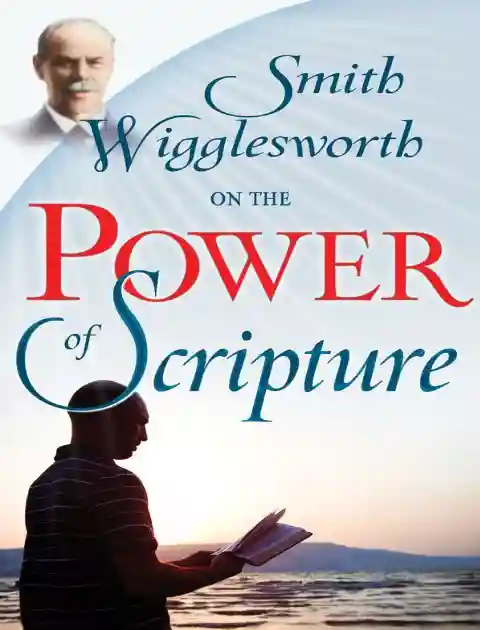

Smith Wigglesworth On The Power Of Scripture Order Printed Copy
- Author: Smith Wigglesworth
- Size: 1.18MB | 445 pages
- |
Others like smith wigglesworth on the power of scripture Features >>
About the Book
"Smith Wigglesworth on the Power of Scripture" is a collection of teachings and sermons by the renowned Pentecostal evangelist, Smith Wigglesworth. In these powerful messages, Wigglesworth emphasizes the importance of engaging with and believing in the power of God's Word. He shares insights and practical guidance on how to apply Scripture to our lives in order to experience miracles, healing, and spiritual breakthroughs. This book serves as an inspirational and faith-building resource for Christians seeking to deepen their relationship with God through the study of the Bible.
Billy Graham
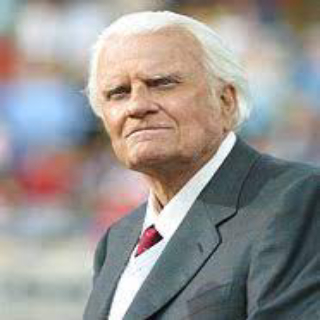
Billy Graham (born November 7, 1918, Charlotte, North Carolina, U.S.âdied February 21, 2018, Montreat, North Carolina), American evangelist whose large-scale preaching missions, known as crusades, and friendship with numerous U.S. presidents brought him to international prominence.
Conversion and early career
The son of a prosperous dairy farmer, Billy Graham grew up in rural North Carolina. In 1934, while attending a revival meeting led by the evangelist Mordecai Ham, he underwent a religious experience and professed his âdecision for Christ.â In 1936 he left his fatherâs dairy farm to attend Bob Jones College (now Bob Jones University), then located in Cleveland, Tennessee, but stayed for only a semester because of the extreme fundamentalism of the institution. He transferred to Florida Bible Institute (now Trinity College), near Tampa, graduated in 1940, and was ordained a minister by the Southern Baptist Convention. Convinced that his education was deficient, however, Graham enrolled at Wheaton College in Illinois. While at Wheaton, he met and married (1943) Ruth Bell, daughter of L. Nelson Bell, a missionary to China.
By the time Graham graduated from Wheaton in 1943, he had developed the preaching style for which he would become famousâa simple, direct message of sin and salvation that he delivered energetically and without condescension. âSincerity,â he observed many years later, âis the biggest part of selling anything, including the Christian plan of salvation.â After a brief and undistinguished stint as pastor of Western Springs Baptist Church in the western suburbs of Chicago, Graham decided to become an itinerant evangelist. He joined the staff of a new organization called Youth for Christ in 1945 and in 1947 served as president of Northwestern Bible College in Minneapolis, Minnesota.
Evangelism
Grahamâs emergence as an evangelist came at a propitious moment for 20th-century Protestants. Protestantism in the United States was deeply divided as a result of controversies in the 1920s between fundamentalism and modernism (a movement that applied scholarly methods of textual and historical criticism to the study of the Bible). The public image of fundamentalists was damaged by the Scopes Trial of 1925, which concerned the teaching of Charles Darwinâs theory of evolution in public schools in Tennessee; in his writings about the trial, the journalist and social critic H.L. Mencken successfully portrayed all fundamentalists as uneducated country bumpkins. In response to these controversies, most fundamentalists withdrew from the established Protestant denominations, which they regarded as hopelessly liberal, and retreated from the larger society, which they viewed as both corrupt and corrupting. Although Graham remained theologically conservative, he refused to be sectarian like other fundamentalists. Seeking to dissociate himself from the image of the stodgy fundamentalist preacher, he seized on the opportunity presented by new media technologies, especially radio and television, to spread the message of the gospel.
In the late 1940s Grahamâs fellow evangelist in Youth for Christ, Charles Templeton, challenged Graham to attend seminary with him so that both preachers could shore up their theological knowledge. Graham considered the possibility at length, but in 1949, while on a spiritual retreat in the San Bernardino Mountains of southern California, he decided to set aside his intellectual doubts about Christianity and simply âpreach the gospel.â After his retreat, Graham began preaching in Los Angeles, where his crusade brought him national attention. He acquired this new fame in no small measure because newspaper magnate William Randolph Hearst, impressed with the young evangelistâs preaching and anticommunist rhetoric, instructed his papers to âpuff Graham.â The huge circus tent in which Graham preached, as well as his own self-promotion, lured thousands of curious visitorsâincluding Hollywood movie stars and gangstersâto what the press dubbed the âcanvas cathedralâ at the corner of Washington and Hill streets. From Los Angeles, Graham undertook evangelistic crusades around the country and the world, eventually earning international renown.
Despite his successes, Graham faced criticism from both liberals and conservatives. In New York City in 1954 he was received warmly by students at Union Theological Seminary, a bastion of liberal Protestantism; nevertheless, the theologian Reinhold Niebuhr, a professor at Union and one of the leading Protestant thinkers of the 20th century, had little patience for Grahamâs simplistic preaching. On the other end of the theological spectrum, fundamentalists such as Bob Jones, Jr., Carl McIntire, and Jack Wyrtzen never forgave Graham for cooperating with the Ministerial Alliance, which included mainline Protestant clergy, in the planning and execution of Grahamâs storied 16-week crusade at Madison Square Garden in New York in 1957. Such cooperation, however, was part of Grahamâs deliberate strategy to distance himself from the starchy conservatism and separatism of American fundamentalists. His entire career, in fact, was marked by an irenic spirit.
Graham, by his own account, enjoyed close relationships with several American presidents, from Dwight Eisenhower to George W. Bush. (Although Graham met with Harry Truman in the Oval Office, the president was not impressed with him.) Despite claiming to be apolitical, Graham became politically close to Richard Nixon, whom he had befriended when Nixon was Eisenhowerâs vice president. During the 1960 presidential campaign, in which Nixon was the Republican nominee, Graham met in Montreaux, Switzerland, with Norman Vincent Peale and other Protestant leaders to devise a strategy to derail the campaign of John F. Kennedy, the Democratic nominee, in order to secure Nixonâs election and prevent a Roman Catholic from becoming president. Although Graham later mended relations with Kennedy, Nixon remained his favourite politician; indeed, Graham all but endorsed Nixonâs reelection effort in 1972 against George McGovern. As Nixonâs presidency unraveled amid charges of criminal misconduct in the Watergate scandal, Graham reviewed transcripts of Oval Office tape recordings subpoenaed by Watergate investigators and professed to be physically sickened by his friendâs use of foul language.
Legacy of Billy Graham
Grahamâs popular appeal was the result of his extraordinary charisma, his forceful preaching, and his simple, homespun message: anyone who repents of sins and accepts Jesus Christ will be saved. Behind that message, however, stood a sophisticated organization, the Billy Graham Evangelistic Association, incorporated in 1950, which performed extensive advance work in the form of favourable media coverage, cooperation with political leaders, and coordination with local churches and provided a follow-up program for new converts. The organization also distributed a radio program, Hour of Decision, a syndicated newspaper column, âMy Answer,â and a magazine, Decision. Although Graham pioneered the use of television for religious purposes, he always shied away from the label âtelevangelist.â During the 1980s, when other television preachers were embroiled in sensational scandals, Graham remained above the fray, and throughout a career that spanned more than half a century few people questioned his integrity. In 1996 Graham and his wife received the Congressional Gold Medal of Honor, the highest civilian award bestowed by the United States, and in 2001 he was made an Honorary Knight Commander of the Order of the British Empire (KBE). Graham concluded his public career with a crusade in Queens, New York, in June 2005.
Graham claimed to have preached in person to more people than anyone else in history, an assertion that few would challenge. His evangelical crusades around the world, his television appearances and radio broadcasts, his friendships with presidents, and his unofficial role as spokesman for Americaâs evangelicals made him one of the most recognized religious figures of the 20th century.
The Sweet Grief of Repentance
The sacrifices of God are a broken spirit; a broken and contrite heart, O God, you will not despise. (Psalm 51:17) I can still see the moment clearly in my mind. At a Christian conference, a friend whom I had been studying the Bible with that semester shared with our group that he was ready to follow Jesus. He broke down in tears. We were football players. We didnât cry. I honestly couldnât believe it. He not only accepted my invitation to attend the conference, but he even repented of sin and believed upon Christ for the forgiveness of sins. I sat watching it unfold in absolute awe. Afterward, I talked with the campus minister about how amazing my friendâs conversion had been. The minister, an older man, shared that he had witnessed many such conversions â and that not all had lasted. I didnât have categories at the time for what the minister said. Had the minister not been there? My friend spoke, âI want to follow Jesus,â so clearly; no doubt he felt some truths deeply; he soon sung hymns so sweetly, as the crowd sang with him. But time proved that repentance was not his truest praise. The talk, the tears, the newfound happiness soon led to a crossroad. A sinful relationship with a girl proved harder to give up, for him, than Jesus. Fruit of Lifelong Repentance If someoneâs conversion to God is true, lifelong repentance will follow. The mouth of one not born again can say true things for a time. Unchanged eyes can cry. A dead tongue can sincerely sing worship songs for a season. And turning away from Christ, repenting of him, can prove it all was false. âChristians sin, and at times sin grievously. But they do not make a lifestyle of sinning.â This is what the minister had seen time and time again. He witnessed seed fall on rocky soil â someone who received the word âwith joy,â yet because they had no root, they fell away eventually (Matthew 13:20â21). Though they seemed to experience the Spiritâs transformation and fellowship with other believers, they finally âwere not of us; for if they had been of us, they would have continued with usâ (1 John 2:19). And the pain of watching them leave us can be unbearable. True repentance, then, is lifelong. Martin Luther, in the first of his ninety-five theses, began, âWhen our Lord and Master Jesus Christ said, âRepent,â he willed the entire life of believers to be one of repentance.â Luther is capturing what Scripture attests to, for example, when John the Baptist instructs, âBear fruit in keeping with repentanceâ (Matthew 3:8). The wringing of our hearts over our sins, the sighs and groans of remaining corruption, our turning away from sin and looking to Christ will follow us to the grave â if weâre true. Saints Still Sin Now, do not misunderstand: Christians sin, and at times sin grievously. But they do not make a lifestyle of sinning. It is impossible to do so. âNo one born of God makes a practice of sinning, for Godâs seed abides in him; and he cannot keep on sinning, because he has been born of Godâ (1 John 3:9). Those with the Spirit repent of sin and turn away from it, encouraged by the discipline of a loving Father. Repentance, we learn in Scripture, is not figuring out the secret passwords to get into heaven. We do not begin an immoral relationship, get confronted in our sin, and continue on in that immoral relationship. We confess our wrongness before God, understand how weâve conspired against him, and prayerfully cast the sin into the fire, like Paul cast away the poisonous viper fastened to his hand on the island of Patmos (Acts 28:3). Have you continued in a life of repentance? Have you continued in true contrition over sin, accompanied with a true impulse to renounce that sin? Have you continued to wonder how you could so offend your dearest Friend, grieve his indwelling Spirit, and dishonor your heavenly Father? Have you asked, How could I indulge the sin that Christ died to redeem me from? Contrition Draws God Near If you have persisted in repentance, do not forget that your God does not despise this brokenness: âThe sacrifices of God are a broken spirit; a broken and contrite heart, O God, you will not despiseâ (Psalm 51:17). He does not stand in heaven cross-armed, scowling. Contrition draws him near. As with the Prodigal Son, we do not need to bring our mere promises to do better next time; we bring bended knees and lowly hearts. We ask him to cover our disgrace and lavish us with fresh mercy flowing from the cross of his beloved Son who died to take away our sins. This is an immovable part of our praise to God: agreeing with him that our sin is horrible, that we deserve punishment for it, but that Christ died for our forgiveness, and gave us his Spirit to put it to death. We vow to turn from it, yes, but only in the strength, forgiveness, and acceptance that he provides through grace alone. Having seen more men walk away after sin, having witnessed the painful sights the minister has seen, I plead with you: Continue to offer God this truest, deepest, and sweetest of praises to God. âRepent therefore, and turn back, that your sins may be blotted out, that times of refreshing may come from the presence of the Lordâ (Acts 3:19â20). Article by Greg Morse