

Sapiens - A Brief History Of Humankind Order Printed Copy
- Author: Yuval Noah Harari
- Size: 7.05MB | 439 pages
- |
Others like sapiens - a brief history of humankind Features >>

The True History Of The Early Christian Church

A History Of The Ancient Near-East

The Christians As The Romans Saw Them
William Branham: A Man Sent By God
A Dictionary Of Early Christian Beliefs
-160.webp)
Men Of The Bible

The Untold Story Of A Young Billy Graham
Foxes Books Of Martyrs

The Great Visions Of Ellen G White
-160.webp)
God's Generals (Charles F. Parham)
About the Book
"Sapiens" by Yuval Noah Harari provides a comprehensive overview of the history of humankind, from the emergence of Homo sapiens in Africa to the present day. Harari explores the development of agriculture, religion, empires, and technology, and how these factors have shaped human society and culture. The book also examines the impact humans have had on the environment and other species. Ultimately, "Sapiens" challenges readers to question their beliefs about the nature of humanity and our place in the world.
Andrew Fuller
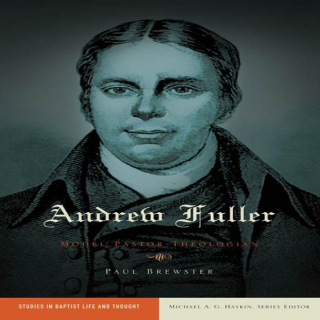 Fuller was born in Soham, Cambridgeshire, England, where in 1775 he was ordained pastor of the Baptist church. Originally schooled in the hyper-Calvinist theology then prevalent in parts of the Particular Baptist denomination, he became convinced in 1775 that the hyper-Calvinist position was not scriptural. In 1785 he published The Gospel Worthy of All Acceptation, which did much to prepare his denomination for accepting this missionary obligation. As pastor in Kettering, Northamptonshire, from 1783, Fuller became firm friends with John Sutcliff of Olney, John Ryland of Northampton, and later the young William Carey. The strengthening missionary vision of this group bore fruit on October 2, 1792, when the Particular Baptist Society for Propagating the Gospel among the Heathen (later known as the Baptist Missionary Society) was formed in the home of one of Fuller’s deacons in Kettering. Fuller was appointed secretary. Until his death he combined the demands of a busy pastorate with managing the affairs of the BMS. He traveled extensively to raise funds for the society, especially in Scotland, which he visited five times.
Brian Stanley, “Fuller, Andrew,” in Biographical Dictionary of Christian Missions, ed. Gerald H. Anderson (New York: Macmillan Reference USA, 1998), 230-231.
This article is reprinted from Biographical Dictionary of Christian Missions, Macmillan Reference USA, copyright © 1998 Gerald H. Anderson, by permission of Macmillan Reference USA, New York, NY. All rights reserved.
Pastor, apologist, and promoter of missions
Though not university trained, Andrew Fuller was recognized by his contemporaries as the preeminent Baptist theologian of their day and was awarded honorary doctor of divinity degrees by both Princeton (1798) and Yale (1805). Fuller’s published works, preaching ministry and churchmanship was, perhaps, the primary mediating agency between the transatlantic evangelical revival and the English Particular (or “Calvinist”) Baptists who had distanced themselves from what was largely at the start an Anglican renewal movement. Fuller was also well known as a co-founder of the Baptist Missionary Society (or, the Particular Baptist Society for the Propagation of the Gospel Amongst the Heathen [est. 1792]), on whose behalf he itinerated regularly in the British Isles, lobbied the East India Company, and wrote numerous letters and magazine articles during his twenty-two year tenure as its first general secretary. He was an opponent of the British slave trade and, though a dissenting non-Anglican, an acquaintance of William Wilberforce and other members of the Clapham sect, who were key allies in Parliament. He was a pastors’ pastor who exerted no small influence for evangelical doctrine and a missionary vision through the many ordination sermons he preached. From 1782 until his death in 1815 he served as pastor of the Kettering Baptist Church and was frequent chairman of the Northamptonshire Association, a consortium which included the likes of William Carey, Samuel Pearce, John Sutcliffe, and John Ryland, Jr.
Fuller was born in 1754 at Wicken, Cambridgeshire, to non-conformist parents who worked a dairy farm. In 1775, six years after his own conversion experience, he was inducted as pastor of the forty-seven member church in Soham, where he had received his baptism and was a member. In 1776 he married his first wife, Sarah Gardiner, with whom he had eleven children, only three surviving beyond early childhood. Sarah would die in 1792, less than two months before the founding of the British Missionary Society (BMS). During this seven year pastorate, Fuller immersed himself in the literary culture of Anglo-American evangelical Calvinism. He cultivated his theological perspective and ministry philosophy by ardently studying the Scriptures alongside the works of the Reformers, seventeenth-century Puritans (especially John Owen), early English Baptists like John Bunyan and John Gill, as well as the writings of American Congregationalist philosopher-theologian and pastor, Jonathan Edwards. Fuller also acknowledged in his most popular book, The Gospel Worthy of All Acceptation (1781), the influence of the lives of John Eliot and David Brainerd, both late missionaries to the native Americans. The Gospel Worthy was Fuller’s remonstration against the hyper-Calvinism that negated the propriety of evangelistic appeals. By the 1790s, evangelical (or “strict”) Calvinism was known in England as “Fullerism” (vs. “High” or hyper-Calvinism). The Gospel its Own Witness (1800) was Fuller’s refutation of Deism. Fuller gained a reputation by these two books, especially, for publically, clearly and systematically opposing in print whatever widely held doctrines he believed were undermining the church and its mission.
In the Northamptonshire Assocation Fuller was a member of a thriving intellectual community most influenced by Edwards. In 1784 John Sutcliff initiated a “concerts of prayer” movement similar to the program suggested by Edwards in An Humble Attempt to Promote Explicit Agreement and Visible Union of God’s People in Extraordinary Prayer (1748). Baptist congregations prayed monthly for the spread of the gospel and the kingdom of Christ to the ends of the earth through all denominations. In 1791, Sutcliff, Fuller and Samuel Pearce each preached at significant events (Sutcliff and Fuller at the association meeting of pastors, Pearce at William Carey’s ordination) on the duty of the church to evangelize the whole inhabitable globe. Fuller based his appeal on the eternal truth of the gospel, the eternal relevance of the gospel, the eternal power of the gospel, and the circumstances of the age that made missionary endeavors possible and obligatory.(1) Carey’s much touted association sermon from Isaiah 54:2-3 in May of 1792 did not arise in a vacuum. The influence was mutual between Carey and Fuller, both being influenced by Robert Hall, Sr. and Samuel Pearce (who had been inspired by the Methodist Thomas Coke in Birmingham).
On October 2, 1792, the BMS was formed with Fuller its first secretary and the assumption that its support would come largely from the churches of the Northamptonshire Association. When the society sent Carey and John Thomas to India the following year, Fuller preached their commissioning service from John 20:21 (“As the Father has sent me, even so I [Christ] am sending you.”). Fuller believed the mission’s raison d’être was the uniqueness of Christ and Christian responsibility to proclaim him. Bible translation and evangelism should take priority. Hindus were not desiring or seeking the Christian Scriptures. But to ignore and neglect anyone in an unconverted state is inconsistent with the love of God and man. In addition, God had promised the messiah the inheritance of the nations (An Apology for the Late Christian Missions to India, 1808). The church is obligated to employ means and make an effort as the means God uses to fulfill that promise to Christ. Obstacles are merely a test to sincerity of faith.
Fuller spent up to ten hours per day in correspondence and reporting for the BMS. He contributed articles to Evangelical Magazine, Missionary Magazine, Quarterly Magazine, Protestant Dissenters’ Magazine, Biblical Magazine, and Theological Miscellany. He sought financial support via letters and by an average of three months of vigorous itineration each year among various evangelical churches in Scotland, Ireland, Wales and England. John Ryland, Jr. wrote of Fuller’s style, that he, “…always disliked violent pressing for contributions, and attempting to outvie other societies: he chose rather to tell a plain, unvarnished tale; and he generally told it with good effect.”(2) Through written correspondence he “pastored” the missionaries in the field while maintaining a decentralized approach to mission administration. He believed the missionaries were more capable of governing themselves and that the time required for correspondence made central control impractical anyway.
The security of the unlicensed Baptist missionary society’s place in the British Empire was frequently tenuous up to 1813. Fuller occasionally had to petition Parliament or the Board of Control for continued tolerance of the BMS. Muslim irritation at the Christian missionary presence and the conversion of some Indians from Islam had been blamed for the Vellore Mutiny of 1806. Thomas Twining had openly claimed efforts at conversion were contradictory to “the mild and tolerant spirit of Christianity.” Fuller responded to Twining and other English defenders of Hinduism with his three-part Apology for the Late Christian Missions to India (1808) in which he argued for a toleration of religion that allows all religious views as well as efforts to persuade through reasonable means. He attributed several social ills, like ritual infanticide and sati, to Hinduism, and commended the missionaries for trying to put an end to such practices. Fuller was also a critic of the “detestable traffic” of the African slave trade, asserting it made England deserving of ruin at the hands of the French (from whose invasion he urged prayer that God would mercifully protect England). The prosperity of the empire should not come at the expense of other human beings. Patriotism must “harmonize” with “good will toward [other] men.”(3) On the other hand, Fuller often counseled BMS missionaries not to become “entangled” in political concerns which were “only affairs of this life” and endangered colonial toleration of the mission.(4) Because Jesus accomplished “moral revolution” in the heart, loyalty to the British government, rather than republicanism, should be encouraged as far as it is compatible with Christian commitments.(5)
Fuller, the pastor of families in England and abroad, counseled missionary families to nurture a deep spirituality for the sake of attaining the character commensurate with the nature of the gospel and their mission. Fuller knew the vicissitudes of even the Christian heart, and the “spiritual advantage” of engaging in mission. Reflecting in his diary on July 18, 1794, he wrote:
Within the last year or two, we have formed a missionary society; and have been enabled to send out two of our brethren to the East Indies. My heart has been greatly interested in this work. Surely I never felt more genuine love to God and to his cause in my life. I bless God that his work has been a means of reviving my soul. If nothing comes of it, I and many others have obtained a spiritual advantage.(6)
Fuller died in 1815. The epitaph stone for Fuller in the Kettering meeting house says he devoted his life for the prosperity of the BMS.(7) One biographer has said Fuller “lived and died a martyr to the mission.”(8) After December, 1794, he was assisted in life by his second wife, Ann Coles. Fuller also spent himself itinerating for the British and Foreign Bible Society after it was founded in 1804. His many occasional writings and sermon manuscripts reveal a love for the gospel message itself and the life-orienting impact of Bible texts such as Matthew 28:16-20 and Mark 16:15-16; John 12:36 and 20:21; and Romans 10:9, 14-17. Fuller is noted today for making a significant contribution to the revitalization of Particular (Calvinist) Baptist life in late eighteenth century England as well as for being a key figure in the historic turn toward a proliferation of free Protestant missionary societies at the beginning of the Great Century.
Fuller was born in Soham, Cambridgeshire, England, where in 1775 he was ordained pastor of the Baptist church. Originally schooled in the hyper-Calvinist theology then prevalent in parts of the Particular Baptist denomination, he became convinced in 1775 that the hyper-Calvinist position was not scriptural. In 1785 he published The Gospel Worthy of All Acceptation, which did much to prepare his denomination for accepting this missionary obligation. As pastor in Kettering, Northamptonshire, from 1783, Fuller became firm friends with John Sutcliff of Olney, John Ryland of Northampton, and later the young William Carey. The strengthening missionary vision of this group bore fruit on October 2, 1792, when the Particular Baptist Society for Propagating the Gospel among the Heathen (later known as the Baptist Missionary Society) was formed in the home of one of Fuller’s deacons in Kettering. Fuller was appointed secretary. Until his death he combined the demands of a busy pastorate with managing the affairs of the BMS. He traveled extensively to raise funds for the society, especially in Scotland, which he visited five times.
Brian Stanley, “Fuller, Andrew,” in Biographical Dictionary of Christian Missions, ed. Gerald H. Anderson (New York: Macmillan Reference USA, 1998), 230-231.
This article is reprinted from Biographical Dictionary of Christian Missions, Macmillan Reference USA, copyright © 1998 Gerald H. Anderson, by permission of Macmillan Reference USA, New York, NY. All rights reserved.
Pastor, apologist, and promoter of missions
Though not university trained, Andrew Fuller was recognized by his contemporaries as the preeminent Baptist theologian of their day and was awarded honorary doctor of divinity degrees by both Princeton (1798) and Yale (1805). Fuller’s published works, preaching ministry and churchmanship was, perhaps, the primary mediating agency between the transatlantic evangelical revival and the English Particular (or “Calvinist”) Baptists who had distanced themselves from what was largely at the start an Anglican renewal movement. Fuller was also well known as a co-founder of the Baptist Missionary Society (or, the Particular Baptist Society for the Propagation of the Gospel Amongst the Heathen [est. 1792]), on whose behalf he itinerated regularly in the British Isles, lobbied the East India Company, and wrote numerous letters and magazine articles during his twenty-two year tenure as its first general secretary. He was an opponent of the British slave trade and, though a dissenting non-Anglican, an acquaintance of William Wilberforce and other members of the Clapham sect, who were key allies in Parliament. He was a pastors’ pastor who exerted no small influence for evangelical doctrine and a missionary vision through the many ordination sermons he preached. From 1782 until his death in 1815 he served as pastor of the Kettering Baptist Church and was frequent chairman of the Northamptonshire Association, a consortium which included the likes of William Carey, Samuel Pearce, John Sutcliffe, and John Ryland, Jr.
Fuller was born in 1754 at Wicken, Cambridgeshire, to non-conformist parents who worked a dairy farm. In 1775, six years after his own conversion experience, he was inducted as pastor of the forty-seven member church in Soham, where he had received his baptism and was a member. In 1776 he married his first wife, Sarah Gardiner, with whom he had eleven children, only three surviving beyond early childhood. Sarah would die in 1792, less than two months before the founding of the British Missionary Society (BMS). During this seven year pastorate, Fuller immersed himself in the literary culture of Anglo-American evangelical Calvinism. He cultivated his theological perspective and ministry philosophy by ardently studying the Scriptures alongside the works of the Reformers, seventeenth-century Puritans (especially John Owen), early English Baptists like John Bunyan and John Gill, as well as the writings of American Congregationalist philosopher-theologian and pastor, Jonathan Edwards. Fuller also acknowledged in his most popular book, The Gospel Worthy of All Acceptation (1781), the influence of the lives of John Eliot and David Brainerd, both late missionaries to the native Americans. The Gospel Worthy was Fuller’s remonstration against the hyper-Calvinism that negated the propriety of evangelistic appeals. By the 1790s, evangelical (or “strict”) Calvinism was known in England as “Fullerism” (vs. “High” or hyper-Calvinism). The Gospel its Own Witness (1800) was Fuller’s refutation of Deism. Fuller gained a reputation by these two books, especially, for publically, clearly and systematically opposing in print whatever widely held doctrines he believed were undermining the church and its mission.
In the Northamptonshire Assocation Fuller was a member of a thriving intellectual community most influenced by Edwards. In 1784 John Sutcliff initiated a “concerts of prayer” movement similar to the program suggested by Edwards in An Humble Attempt to Promote Explicit Agreement and Visible Union of God’s People in Extraordinary Prayer (1748). Baptist congregations prayed monthly for the spread of the gospel and the kingdom of Christ to the ends of the earth through all denominations. In 1791, Sutcliff, Fuller and Samuel Pearce each preached at significant events (Sutcliff and Fuller at the association meeting of pastors, Pearce at William Carey’s ordination) on the duty of the church to evangelize the whole inhabitable globe. Fuller based his appeal on the eternal truth of the gospel, the eternal relevance of the gospel, the eternal power of the gospel, and the circumstances of the age that made missionary endeavors possible and obligatory.(1) Carey’s much touted association sermon from Isaiah 54:2-3 in May of 1792 did not arise in a vacuum. The influence was mutual between Carey and Fuller, both being influenced by Robert Hall, Sr. and Samuel Pearce (who had been inspired by the Methodist Thomas Coke in Birmingham).
On October 2, 1792, the BMS was formed with Fuller its first secretary and the assumption that its support would come largely from the churches of the Northamptonshire Association. When the society sent Carey and John Thomas to India the following year, Fuller preached their commissioning service from John 20:21 (“As the Father has sent me, even so I [Christ] am sending you.”). Fuller believed the mission’s raison d’être was the uniqueness of Christ and Christian responsibility to proclaim him. Bible translation and evangelism should take priority. Hindus were not desiring or seeking the Christian Scriptures. But to ignore and neglect anyone in an unconverted state is inconsistent with the love of God and man. In addition, God had promised the messiah the inheritance of the nations (An Apology for the Late Christian Missions to India, 1808). The church is obligated to employ means and make an effort as the means God uses to fulfill that promise to Christ. Obstacles are merely a test to sincerity of faith.
Fuller spent up to ten hours per day in correspondence and reporting for the BMS. He contributed articles to Evangelical Magazine, Missionary Magazine, Quarterly Magazine, Protestant Dissenters’ Magazine, Biblical Magazine, and Theological Miscellany. He sought financial support via letters and by an average of three months of vigorous itineration each year among various evangelical churches in Scotland, Ireland, Wales and England. John Ryland, Jr. wrote of Fuller’s style, that he, “…always disliked violent pressing for contributions, and attempting to outvie other societies: he chose rather to tell a plain, unvarnished tale; and he generally told it with good effect.”(2) Through written correspondence he “pastored” the missionaries in the field while maintaining a decentralized approach to mission administration. He believed the missionaries were more capable of governing themselves and that the time required for correspondence made central control impractical anyway.
The security of the unlicensed Baptist missionary society’s place in the British Empire was frequently tenuous up to 1813. Fuller occasionally had to petition Parliament or the Board of Control for continued tolerance of the BMS. Muslim irritation at the Christian missionary presence and the conversion of some Indians from Islam had been blamed for the Vellore Mutiny of 1806. Thomas Twining had openly claimed efforts at conversion were contradictory to “the mild and tolerant spirit of Christianity.” Fuller responded to Twining and other English defenders of Hinduism with his three-part Apology for the Late Christian Missions to India (1808) in which he argued for a toleration of religion that allows all religious views as well as efforts to persuade through reasonable means. He attributed several social ills, like ritual infanticide and sati, to Hinduism, and commended the missionaries for trying to put an end to such practices. Fuller was also a critic of the “detestable traffic” of the African slave trade, asserting it made England deserving of ruin at the hands of the French (from whose invasion he urged prayer that God would mercifully protect England). The prosperity of the empire should not come at the expense of other human beings. Patriotism must “harmonize” with “good will toward [other] men.”(3) On the other hand, Fuller often counseled BMS missionaries not to become “entangled” in political concerns which were “only affairs of this life” and endangered colonial toleration of the mission.(4) Because Jesus accomplished “moral revolution” in the heart, loyalty to the British government, rather than republicanism, should be encouraged as far as it is compatible with Christian commitments.(5)
Fuller, the pastor of families in England and abroad, counseled missionary families to nurture a deep spirituality for the sake of attaining the character commensurate with the nature of the gospel and their mission. Fuller knew the vicissitudes of even the Christian heart, and the “spiritual advantage” of engaging in mission. Reflecting in his diary on July 18, 1794, he wrote:
Within the last year or two, we have formed a missionary society; and have been enabled to send out two of our brethren to the East Indies. My heart has been greatly interested in this work. Surely I never felt more genuine love to God and to his cause in my life. I bless God that his work has been a means of reviving my soul. If nothing comes of it, I and many others have obtained a spiritual advantage.(6)
Fuller died in 1815. The epitaph stone for Fuller in the Kettering meeting house says he devoted his life for the prosperity of the BMS.(7) One biographer has said Fuller “lived and died a martyr to the mission.”(8) After December, 1794, he was assisted in life by his second wife, Ann Coles. Fuller also spent himself itinerating for the British and Foreign Bible Society after it was founded in 1804. His many occasional writings and sermon manuscripts reveal a love for the gospel message itself and the life-orienting impact of Bible texts such as Matthew 28:16-20 and Mark 16:15-16; John 12:36 and 20:21; and Romans 10:9, 14-17. Fuller is noted today for making a significant contribution to the revitalization of Particular (Calvinist) Baptist life in late eighteenth century England as well as for being a key figure in the historic turn toward a proliferation of free Protestant missionary societies at the beginning of the Great Century.
Trade Self-Help for God-Help
They set out to get help from a higher power. The lion needed courage. The tinman needed a heart. The scarecrow needed a brain. The little girl longed to return home. But at journey’s end, they came to the unfortunate discovery: The Wizard of Oz was no wizard at all. He relied on screens and microphones. His wand was broken. He had only pins and needles to give. Yet, all was not lost. Our four heroes realized that what each had sought, each already possessed. Along the way, Tinman loved, Lion risked, Scarecrow thought. Dorothy carried the ability to travel home wherever she went. They discovered that they did not need an all-powerful Oz behind the curtain. What each truly needed he already held within. Whether or not Frank Baum meant it or not, Wizard of Oz is an apt parable of the generations-old self-help movement in our increasingly post-Christian West. The Oz, many say, has nothing to offer. God, the wisdom of modern man finally confirms, is a fraud. Yet, some rush to tell us, all is not lost. After sobering from the opiate of the masses, they tell us to awaken to reality: what we’ve needed all along already resides within each of us. Truth in Self-Help Some professing Christians are promoting self-help resources at alarming rates. As can happen when biting into that pizza roll too quickly, we can lose the ability to taste differences. We chew pop-psychology’s ideology of self-reliance and discern no real difference from Christianity, which builds upon God-dependence. We swallow both indiscriminately and wonder why our stomachs hurt. Before we look at the differences between the ideologies, first a question: Can we learn anything from the self-help movement? Why does this placebo help some? Many will line up to testify of its cure-all power. What’s in the snake oil? At least one true ingredient: self-help acknowledges our personal agency. Self-help assumes that you can indeed do something to help yourself. It too rejects the deceit that we drift helplessly downstream from our past or current circumstances. We are not leaves floating down from trees. The me of yesterday doesn’t have to be the me of tomorrow. We can learn discipline. We can “take control” of various aspects of our lives, escape addictions, and overcome fears. At least self-help affirms what God always has: we can, even now, reap a different harvest by sowing a different crop. It properly highlights the truth that we can — and must — own some measures of responsibility for our lives. We each can choose, as Luther once said, many things under heaven. And each decision will have consequences. Self-help advice rescues some from the fatalistic, paternalistic, dehumanizing worldviews (so common today) that deny a crucial component of God’s world: “So God created man in his own image, in the image of God he created him; male and female he created them” (Genesis 1:27). Diagnosing the Difference The ineptitude of the self-help philosophy becomes apparent when we contrast it with God-help. Note three differences, among others. 1. On Whom Do You Rely? Self-help gurus have little to sell us other than ourselves. In stopping at mere personal agency, they send us to build a new life while denying us straw for our bricks. Sure, they interject themselves to get us going (for a small fee, of course), but the real power resides within. The god they point to stoops down to fit into every mirror we see. Returning to our childhood optimism, “I think I can, I think I can,” this endless search to find your true potential borrows from the oldest heresy: “And you will be like God” (Genesis 3:5). Claiming to be wise, these gurus exchange the glory of the immortal God for images of successful man. Believe in yourself. Clutch the scepter of your life. You can do all things through you who gives you strength. As if God, looking down from heaven without any mercy, thundered, “Just figure it out!” Promoters of self-help have not been tutored in that school that Paul had: We were so utterly burdened beyond our strength that we despaired of life itself. Indeed, we felt that we had received the sentence of death. But that was to make us rely not on ourselves but on God who raises the dead. (2 Corinthians 1:8–9) The illusions of self-help shatter when suffering weighs so heavily on our backs that we despair of life itself. Pain reminds us that we are still but creatures — for the gods do not bleed. But all affliction is a choice friend when it teaches us to sing, “I lift up my eyes to the hills. From where does my help come? My help comes from the Lord, who made heaven and earth” (Psalm 121:1–2). The shoulders of him alone, who carried the cross and willingly bled for the treason of our self-reliance, can bear all of our further needs. 2. What Help Do You Get? When we look within for help, we receive only temporal solutions to what amounts to eternal problems. That alcohol addiction is not first and foremost a sin because it destroys one’s family and poisons oneself. All transgression, as we shall all soon discover, is against God: “Against you, you only, have I sinned and done what is evil in your sight” (Psalm 51:4). God has the first grievance, though the shrapnel certainly strikes others as well. Self-dependence may subdue some of the symptoms of sin — you stop drinking, overeating, or committing adultery — but a life of sin against God remains unaddressed and ultimately unaltered. Whereas self-help can tidy a sinking ship, “godliness is of value in every way, as it holds promise for the present life and also for the life to come” (1 Timothy 4:8). Grace trains the Christian to say “No!” to theft, anger-issues, pornography, pride, laziness, and say, “Yes!” to self-control, uprightness, and godly lives in the present (Titus 2:11–12) — all while steering us home and preparing us for heaven, not hell. 3. Who Gets the Glory? When we trust in self — and actually succeed— we get the glory. I am smarter, more disciplined, better. When we become self-made men and women, and not God-made men and women, we run from disordered lives into the arms of pride. Having escaped the cobra, we encounter the bear. And this tempts the self-reliant to look down on others who aren’t successful, and, whether they ever succumb to temptation or not, they never bother looking up to God. But the man who makes God his trust has a very different victory song: Not in my bow do I trust, nor can my sword save me. But you have saved us from our foes and have put to shame those who hate us. In God we have boasted continually, and we will give thanks to your name forever. (Psalm 44:6–8) The Christian, awake to the reality that he has no good apart from his God (Psalm 16:2), speaks repeatedly, “Not to me, O God, not to me, but to your name give glory” (Psalm 115:1). Christ is his boast. Christ is his refrain. He wants every triumph to add another jewel to the crown of his King. Make the Trade Self-help gives me my own small, fleeting glory. God-help offers us deep, everlasting joy, secure in his unfading glory. Self-help offers a temporal good (at best). God-help gives eternal good with the temporal thrown in. Self-help relies on my discipline, my resolve, and my effort. God-help builds upon a child’s cry to his father, leaning on one’s eternal family, and trusting God’s unfailing promises. God-help sustains me with daily bread from heaven. Self-help cannibalizes me, for it can find no other food. God-help ends in salvation, glory, and the conquering of the world, the flesh, and the devil. Self-help addresses the coughs and sneezes of this life but leaves me, at the end of it, without hope, without forgiveness, and without God in this world. So, trade self-help for God-help. God does not help those who, unmindful of him, help themselves. He works for those who wait for him (Isaiah 64:4). In the end, self-help is sheer folly. It sends us to work on Babel, rent a room in Gomorrah, eat grass with the mad king, and speak over ourselves, “Take up your bed and rise.” The placebo works only for so long, but all shall fall eventually — and “great shall be the fall.” But those who trust in Christ have Almighty God working in them, unsearchable promises to guide them, a heaven to journey to, and a Savior to glorify along the way. Article by Greg Morse