

.-160.webp)








About the Book
"Unveiled: Tamar" by Francine Rivers is a biblical fiction novel that tells the story of Tamar, the daughter-in-law of Judah from the Old Testament. Through Tamar's journey of heartache, betrayal, and redemption, Rivers explores themes of faith, forgiveness, and the power of God's grace. Tamar's story is revealed in a powerful and emotional retelling that will leave readers inspired and moved by her resilience and unwavering faith in the face of adversity.
William Carey
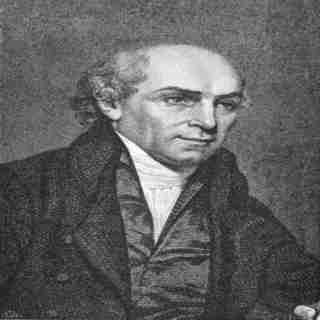 "Expect great things; attempt great things."
At a meeting of Baptist leaders in the late 1700s, a newly ordained minister stood to argue for the value of overseas missions. He was abruptly interrupted by an older minister who said, "Young man, sit down! You are an enthusiast. When God pleases to convert the heathen, he'll do it without consulting you or me."
That such an attitude is inconceivable today is largely due to the subsequent efforts of that young man, William Carey.
Plodder Carey was raised in the obscure, rural village of Paulerpury, in the middle of England. He apprenticed in a local cobbler's shop, where the nominal Anglican was converted. He enthusiastically took up the faith, and though little educated, the young convert borrowed a Greek grammar and proceeded to teach himself New Testament Greek.
When his master died, he took up shoemaking in nearby Hackleton, where he met and married Dorothy Plackett, who soon gave birth to a daughter. But the apprentice cobbler's life was hard—the child died at age 2—and his pay was insufficient. Carey's family sunk into poverty and stayed there even after he took over the business.
"I can plod," he wrote later, "I can persevere to any definite pursuit." All the while, he continued his language studies, adding Hebrew and Latin, and became a preacher with the Particular Baptists. He also continued pursuing his lifelong interest in international affairs, especially the religious life of other cultures.
Carey was impressed with early Moravian missionaries and was increasingly dismayed at his fellow Protestants' lack of missions interest. In response, he penned An Enquiry into the Obligations of Christians to Use Means for the Conversion of the Heathens. He argued that Jesus' Great Commission applied to all Christians of all times, and he castigated fellow believers of his day for ignoring it: "Multitudes sit at ease and give themselves no concern about the far greater part of their fellow sinners, who to this day, are lost in ignorance and idolatry."
Carey didn't stop there: in 1792 he organized a missionary society, and at its inaugural meeting preached a sermon with the call, "Expect great things from God; attempt great things for God!" Within a year, Carey, John Thomas (a former surgeon), and Carey's family (which now included three boys, and another child on the way) were on a ship headed for India.
Stranger in a strange land
Thomas and Carey had grossly underestimated what it would cost to live in India, and Carey's early years there were miserable. When Thomas deserted the enterprise, Carey was forced to move his family repeatedly as he sought employment that could sustain them. Illness racked the family, and loneliness and regret set it: "I am in a strange land," he wrote, "no Christian friend, a large family, and nothing to supply their wants." But he also retained hope: "Well, I have God, and his word is sure."
He learned Bengali with the help of a pundit, and in a few weeks began translating the Bible into Bengali and preaching to small gatherings.
When Carey himself contracted malaria, and then his 5-year-old Peter died of dysentery, it became too much for his wife, Dorothy, whose mental health deteriorated rapidly. She suffered delusions, accusing Carey of adultery and threatening him with a knife. She eventually had to be confined to a room and physically restrained.
"This is indeed the valley of the shadow of death to me," Carey wrote, though characteristically added, "But I rejoice that I am here notwithstanding; and God is here."
Gift of tongues
In October 1799, things finally turned. He was invited to locate in a Danish settlement in Serampore, near Calcutta. He was now under the protection of the Danes, who permitted him to preach legally (in the British-controlled areas of India, all of Carey's missionary work had been illegal).
Carey was joined by William Ward, a printer, and Joshua and Hanna Marshman, teachers. Mission finances increased considerably as Ward began securing government printing contracts, the Marshmans opened schools for children, and Carey began teaching at Fort William College in Calcutta.
In December 1800, after seven years of missionary labor, Carey baptized his first convert, Krishna Pal, and two months later, he published his first Bengali New Testament. With this and subsequent editions, Carey and his colleagues laid the foundation for the study of modern Bengali, which up to this time had been an "unsettled dialect."
Carey continued to expect great things; over the next 28 years, he and his pundits translated the entire Bible into India's major languages: Bengali, Oriya, Marathi, Hindi, Assamese, and Sanskrit and parts of 209 other languages and dialects.
He also sought social reform in India, including the abolition of infanticide, widow burning (sati), and assisted suicide. He and the Marshmans founded Serampore College in 1818, a divinity school for Indians, which today offers theological and liberal arts education for some 2,500 students.
By the time Carey died, he had spent 41 years in India without a furlough. His mission could count only some 700 converts in a nation of millions, but he had laid an impressive foundation of Bible translations, education, and social reform.
His greatest legacy was in the worldwide missionary movement of the nineteenth century that he inspired. Missionaries like Adoniram Judson, Hudson Taylor, and David Livingstone, among thousands of others, were impressed not only by Carey's example, but by his words "Expect great things; attempt great things." The history of nineteenth-century Protestant missions is in many ways an extended commentary on the phrase.
"Expect great things; attempt great things."
At a meeting of Baptist leaders in the late 1700s, a newly ordained minister stood to argue for the value of overseas missions. He was abruptly interrupted by an older minister who said, "Young man, sit down! You are an enthusiast. When God pleases to convert the heathen, he'll do it without consulting you or me."
That such an attitude is inconceivable today is largely due to the subsequent efforts of that young man, William Carey.
Plodder Carey was raised in the obscure, rural village of Paulerpury, in the middle of England. He apprenticed in a local cobbler's shop, where the nominal Anglican was converted. He enthusiastically took up the faith, and though little educated, the young convert borrowed a Greek grammar and proceeded to teach himself New Testament Greek.
When his master died, he took up shoemaking in nearby Hackleton, where he met and married Dorothy Plackett, who soon gave birth to a daughter. But the apprentice cobbler's life was hard—the child died at age 2—and his pay was insufficient. Carey's family sunk into poverty and stayed there even after he took over the business.
"I can plod," he wrote later, "I can persevere to any definite pursuit." All the while, he continued his language studies, adding Hebrew and Latin, and became a preacher with the Particular Baptists. He also continued pursuing his lifelong interest in international affairs, especially the religious life of other cultures.
Carey was impressed with early Moravian missionaries and was increasingly dismayed at his fellow Protestants' lack of missions interest. In response, he penned An Enquiry into the Obligations of Christians to Use Means for the Conversion of the Heathens. He argued that Jesus' Great Commission applied to all Christians of all times, and he castigated fellow believers of his day for ignoring it: "Multitudes sit at ease and give themselves no concern about the far greater part of their fellow sinners, who to this day, are lost in ignorance and idolatry."
Carey didn't stop there: in 1792 he organized a missionary society, and at its inaugural meeting preached a sermon with the call, "Expect great things from God; attempt great things for God!" Within a year, Carey, John Thomas (a former surgeon), and Carey's family (which now included three boys, and another child on the way) were on a ship headed for India.
Stranger in a strange land
Thomas and Carey had grossly underestimated what it would cost to live in India, and Carey's early years there were miserable. When Thomas deserted the enterprise, Carey was forced to move his family repeatedly as he sought employment that could sustain them. Illness racked the family, and loneliness and regret set it: "I am in a strange land," he wrote, "no Christian friend, a large family, and nothing to supply their wants." But he also retained hope: "Well, I have God, and his word is sure."
He learned Bengali with the help of a pundit, and in a few weeks began translating the Bible into Bengali and preaching to small gatherings.
When Carey himself contracted malaria, and then his 5-year-old Peter died of dysentery, it became too much for his wife, Dorothy, whose mental health deteriorated rapidly. She suffered delusions, accusing Carey of adultery and threatening him with a knife. She eventually had to be confined to a room and physically restrained.
"This is indeed the valley of the shadow of death to me," Carey wrote, though characteristically added, "But I rejoice that I am here notwithstanding; and God is here."
Gift of tongues
In October 1799, things finally turned. He was invited to locate in a Danish settlement in Serampore, near Calcutta. He was now under the protection of the Danes, who permitted him to preach legally (in the British-controlled areas of India, all of Carey's missionary work had been illegal).
Carey was joined by William Ward, a printer, and Joshua and Hanna Marshman, teachers. Mission finances increased considerably as Ward began securing government printing contracts, the Marshmans opened schools for children, and Carey began teaching at Fort William College in Calcutta.
In December 1800, after seven years of missionary labor, Carey baptized his first convert, Krishna Pal, and two months later, he published his first Bengali New Testament. With this and subsequent editions, Carey and his colleagues laid the foundation for the study of modern Bengali, which up to this time had been an "unsettled dialect."
Carey continued to expect great things; over the next 28 years, he and his pundits translated the entire Bible into India's major languages: Bengali, Oriya, Marathi, Hindi, Assamese, and Sanskrit and parts of 209 other languages and dialects.
He also sought social reform in India, including the abolition of infanticide, widow burning (sati), and assisted suicide. He and the Marshmans founded Serampore College in 1818, a divinity school for Indians, which today offers theological and liberal arts education for some 2,500 students.
By the time Carey died, he had spent 41 years in India without a furlough. His mission could count only some 700 converts in a nation of millions, but he had laid an impressive foundation of Bible translations, education, and social reform.
His greatest legacy was in the worldwide missionary movement of the nineteenth century that he inspired. Missionaries like Adoniram Judson, Hudson Taylor, and David Livingstone, among thousands of others, were impressed not only by Carey's example, but by his words "Expect great things; attempt great things." The history of nineteenth-century Protestant missions is in many ways an extended commentary on the phrase.
Comparison Is a Key to Godliness
Too often, I’ve bought the lie. The one the Western world shouts (and the one our sinful ears itch to hear): “Never compare, just be you. Contentment is only found within yourself.” The lie is especially sweet because it allows us to hide our lack of spiritual fruit. It’s tempting to dismiss our need for personal sanctification when we’re preoccupied with the comfort of self-confidence. Even when those lies don’t seduce us, we can still make the mistake of believing that repentance of sinful comparison — the kind that puffs up or beats down — means rejecting all comparison. But we don’t need to fear or avoid comparison, because it is often the means by which God helps us grow. Godly comparison isn’t about keeping up with someone else’s standard, or replicating another’s life, or hustling until we feel better about ourselves. It’s not about running harder on the treadmill of self-improvement, futilely seeking self-worth in our next accomplishment. Godly comparison isn’t ultimately about us. It’s about celebrating and learning from God’s grace at work in others so that we might better love and glorify God. God Compares for Our Good In Genesis, God compared two brothers who brought him an offering. He had regard for Abel’s offering and rejected Cain’s. When Cain responded in anger, revealing the hardness of his heart, God graciously appealed for him to “do well” and beware the lurking beast of sin. In love, he wanted Cain to follow in the righteous footsteps of his brother, who gave the very best of his flock out of devotion to God. Instead of learning from Abel, Cain killed him (Genesis 4:1–8). But, you may say, that was before Jesus! We do not earn his love with offerings. Through faith, we’re clothed in his righteousness. We are saved by grace alone, through faith alone, in Christ alone. Yes, but saving faith in Christ does not produce complacency in character. Jesus told his disciples to follow the examples of others. While sitting in a synagogue, he called them and directed their attention to a poor widow as she placed two copper coins into the offering basket. Contrasting her giving with the wealthy, he declared that she had given more. Though poor, she had given everything she had, demonstrating that her ultimate treasure was God himself (Mark 12:41–44). Jesus also taught us by comparing two sisters. As Martha busied herself with preparations and grumbled to Jesus over Mary’s lack of help, he responded that Mary had chosen better by remaining at his feet. His tender correction wasn’t meant to burden this weary woman with heavy expectations, but to demonstrate what Mary already knew to be true — it’s better to treasure Jesus than to merely toil for him (Luke 10:38–42). When God makes comparisons, it’s not so that we’ll be crushed or condemned, but so that more of our hearts will be captured by him. Comparing for Our Godliness We’ve been saved into one body: the church. This body is made up of many members, each with a distinct function (Romans 12:4–5). God’s glory is too vast and magnificent for a family of cookie-cutter Christians. He intends for all of us — with our different personalities and talents, backgrounds and stories, strengths and weaknesses — to display glimpses of his infinite goodness to the world. Our differences, of every kind, underline his worth in ways sameness cannot. However, while God hasn’t called us to sameness, he has called us all to holiness. As all the parts of our body move in the same direction when we walk, the church in all its diversity moves together toward Christ. One way God helps us become holy is by surrounding us with Christians who imitate him in ways that we don’t yet. These differences are a part of God’s gracious plan to conform us into the image of his Son. He has always intended for us to be sharpened by one another’s examples. That’s why Paul unashamedly told the Corinthian church to be imitators of him as he was of Christ (1 Corinthians 11:1). It’s why Paul instructed Titus to be a model of good works (Titus 2:7) and Timothy to set an example in speech, conduct, love, faith, and purity (1 Timothy 4:12). It’s why Paul spread the word of the Macedonian church’s generosity amidst their affliction (2 Corinthians 8). The body won’t grow in holiness unless there’s godly, humble, and hope-filled comparison and imitation. Our altars of autonomy must be overthrown. Just as Cain should have learned from Abel, just as Martha had to learn from Mary, just as the Corinthian church learned from the Macedonians, we need to learn from one another. How Should We Compare? As we compare, it’s helpful to focus on principles more than particulars. For example, I struggle to practice biblical hospitality, so I look to those who excel — imitating them as they imitate Christ. In doing this, I remind myself there’s freedom to extend hospitality in different ways. My mother-in-law invites people without nearby relatives to holiday gatherings. My siblings and friends have brought foster children into their families. My friend from small group recently had a Mormon missionary over to discuss faith. Rather than feeling daunted by their examples, God is helping me celebrate and learn from them. How might the Christ living in and through them live in and through my hospitality? Rather than ignoring or making excuses for my weakness, I am stirred to grow, obey, and even enjoy hospitality. In areas where we’re stronger, we should still humbly position ourselves to learn from others. I’m far more gifted in mercy than in hospitality, and love using my time and resources to care for those in need. Yet I still need to grow. I want the depth of compassion my friend Brenda has for prostitutes where we live. I want my brother’s heart for the addicted, and his boldness to declare the gospel to those in hopeless situations. The Spirit frees us to boldly and expectantly compare. Who stirs you to treasure Christ more? Who possesses godliness you lack? Who lives passionately for the mission? Consider their examples and identify ways in which you want to imitate them. The same God at work in their strengths will be faithful to slowly refine and transform your weaknesses. Article by Amy DiMarcangelo