
Others like the elijah task Features >>

Letting Go Of Your Past
Life Transformed

The Enemy Has Done This
There's A Crack In Your Armor
-160.webp)
Unchurching (Christianity Without Churchianity)
Rediscovering The Kingdom

How To Know The Will Of God
Seizing God Given Opportunities

Golden Glory - The New Wave Of Signs And Wonders
The Root Of The Righteous
About the Book
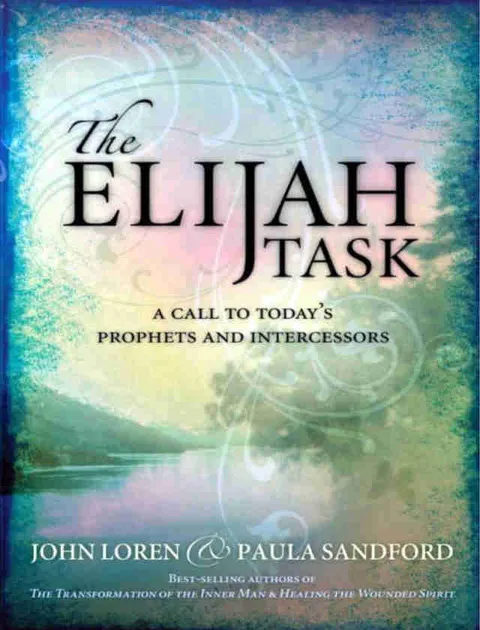
"The Elijah Task" by John Loren and Paula Sandford provides a comprehensive guide for understanding and engaging in spiritual warfare. The authors draw from the biblical story of the prophet Elijah to teach readers how to recognize and overcome spiritual strongholds, walk in authority and power, and effectively pray and intercede. Through practical advice and powerful insights, this book equips believers to fulfill their prophetic calling and experience greater intimacy with God.
C.S. Lewis
 C.S. Lewis was a prolific Irish writer and scholar best known for his 'Chronicles of Narnia' fantasy series and his pro-Christian texts.
Who Was C.S. Lewis?
Writer and scholar C.S. Lewis taught at Oxford University and became a renowned Christian apologist writer, using logic and philosophy to support the tenets of his faith. He is also known throughout the world as the author of The Chronicles of Narnia fantasy series, which have been adapted into various films for the big and small screens.
Early Life
Clive Staples Lewis was born in Belfast, Ireland, on November 29, 1898, to Flora August Hamilton Lewis and Albert J. Lewis. As a toddler, Clive declared that his name was Jack, which is what he was called by family and friends. He was close to his older brother Warren and the two spent much time together as children.
Lewis was enraptured by fantastic animals and tales of gallantry, and hence the brothers created the imaginary land of Boxen, complete with an intricate history that served them for years. Lewis' mother died when he was 10, and he went on to receive his pre-college education at boarding schools and from a tutor. During WWI, he served with the British army and was sent home after being wounded by shrapnel. He then chose to live as a surrogate son with Janie Moore, the mother of a friend of Lewis' who was killed in the war.
Teaching Career at Oxford and Wartime Broadcasts
Lewis graduated from Oxford University with a focus on literature and classic philosophy, and in 1925 he was awarded a fellowship teaching position at Magdalen College, which was part of the university. There, he also joined the group known as The Inklings, an informal collective of writers and intellectuals who counted among their members Lewis' brother Warren and J.R.R. Tolkien. It was through conversations with group members that Lewis found himself re-embracing Christianity after having become disillusioned with the faith as a youth. He would go on to become renowned for his rich apologist texts, in which he explained his spiritual beliefs via platforms of logic and philosophy.
Lewis began publishing work including Spirits in Bondage in 1919 and the satirical Dymer in 1926. After penning other titles — including The Allegory of Love (1936), for which he won the Hawthornden Prize — he released in 1938 his first sci-fi work, Out of the Silent Planet, the first of a space trilogy which dealt sub-textually with concepts of sin and desire. Later, during WWII, Lewis gave highly popular radio broadcasts on Christianity which won many converts; his speeches were collected in the work Mere Christianity.
Books and Film Legacy
Lewis was a prolific author of fiction and nonfiction who wrote dozens of books over the course of his career. His faith-based arguments as seen in texts like The Great Divorce (1946) and Miracles (1947) are held in high regard by many theologians, scholars and general readers. His satirical fiction novel The Screwtape Letters (1942) is also a beloved classic. Lewis also continued his love affair with classic mythology and narratives during his later years: His book Till We Have Faces: A Myth Retold (1956) featured the story of Psyche and Cupid. He also penned an autobiography, Surprised by Joy: The Shape of My Early Life (1955).
Lewis' landmark series, The Chronicles of Narnia, has seen a number of on-screen iterations, including a cartoon version of The Lion, The Witch and the Wardrobe that was released in 1979 and a 1989 film series. Additionally, in 2005, a big-screen adaptation of The Lion, The Witch and the Wardrobe hit movie theaters, starring Tilda Swinton as the witch Jadis and Liam Neeson as the voice of Aslan. Two more Narnia films were brought to theaters as well: Prince Caspian (2008) and The Voyage of the Dawn Treader (2010). A movie version of The Silver Chair was slated to hit theaters in the near future, with filming starting in the winter of 2018.
Lewis' relationship with his wife, Joy, has also been depicted in Shadowlands, presented as a play and two films; one of the film versions was directed by Richard Attenborough and starred Anthony Hopkins as Lewis.
'The Chronicles of Narnia'
During the 1940s, Lewis began writing the seven books that would comprise The Chronicles of Narnia children's series, with The Lion, The Witch and the Wardrobe (1950) being the first release. The story focused on four siblings who, during wartime, walk through an armoire to enter the magical world of Narnia, a land resplendent with mythical creatures and talking animals. Throughout the series, a variety of Biblical themes are presented; one prominent character is Aslan, a lion and the ruler of Narnia, who has been interpreted as a Jesus Christ figure. (Lewis would assert that his Narnia stories weren't a direct allegory to the real world.)
Though the book received some negative reviews, it was generally well-received by readers, and the series retained its international popularity over the following decades.
Marriage
In 1954, Lewis joined the faculty of Cambridge University as a literature professor, and in 1956 he married an American English teacher, Joy Gresham, with whom he had been in correspondence. Lewis was full of happiness during the years of their marriage, though Gresham died of cancer in 1960. Lewis grieved deeply for his wife and shared his thoughts in the book A Grief Observed, using a pen name.
Death
In 1963, Lewis resigned from his Cambridge position after experiencing heart trouble. He died on November 22, 1963, in Headington, Oxford.
C.S. Lewis was a prolific Irish writer and scholar best known for his 'Chronicles of Narnia' fantasy series and his pro-Christian texts.
Who Was C.S. Lewis?
Writer and scholar C.S. Lewis taught at Oxford University and became a renowned Christian apologist writer, using logic and philosophy to support the tenets of his faith. He is also known throughout the world as the author of The Chronicles of Narnia fantasy series, which have been adapted into various films for the big and small screens.
Early Life
Clive Staples Lewis was born in Belfast, Ireland, on November 29, 1898, to Flora August Hamilton Lewis and Albert J. Lewis. As a toddler, Clive declared that his name was Jack, which is what he was called by family and friends. He was close to his older brother Warren and the two spent much time together as children.
Lewis was enraptured by fantastic animals and tales of gallantry, and hence the brothers created the imaginary land of Boxen, complete with an intricate history that served them for years. Lewis' mother died when he was 10, and he went on to receive his pre-college education at boarding schools and from a tutor. During WWI, he served with the British army and was sent home after being wounded by shrapnel. He then chose to live as a surrogate son with Janie Moore, the mother of a friend of Lewis' who was killed in the war.
Teaching Career at Oxford and Wartime Broadcasts
Lewis graduated from Oxford University with a focus on literature and classic philosophy, and in 1925 he was awarded a fellowship teaching position at Magdalen College, which was part of the university. There, he also joined the group known as The Inklings, an informal collective of writers and intellectuals who counted among their members Lewis' brother Warren and J.R.R. Tolkien. It was through conversations with group members that Lewis found himself re-embracing Christianity after having become disillusioned with the faith as a youth. He would go on to become renowned for his rich apologist texts, in which he explained his spiritual beliefs via platforms of logic and philosophy.
Lewis began publishing work including Spirits in Bondage in 1919 and the satirical Dymer in 1926. After penning other titles — including The Allegory of Love (1936), for which he won the Hawthornden Prize — he released in 1938 his first sci-fi work, Out of the Silent Planet, the first of a space trilogy which dealt sub-textually with concepts of sin and desire. Later, during WWII, Lewis gave highly popular radio broadcasts on Christianity which won many converts; his speeches were collected in the work Mere Christianity.
Books and Film Legacy
Lewis was a prolific author of fiction and nonfiction who wrote dozens of books over the course of his career. His faith-based arguments as seen in texts like The Great Divorce (1946) and Miracles (1947) are held in high regard by many theologians, scholars and general readers. His satirical fiction novel The Screwtape Letters (1942) is also a beloved classic. Lewis also continued his love affair with classic mythology and narratives during his later years: His book Till We Have Faces: A Myth Retold (1956) featured the story of Psyche and Cupid. He also penned an autobiography, Surprised by Joy: The Shape of My Early Life (1955).
Lewis' landmark series, The Chronicles of Narnia, has seen a number of on-screen iterations, including a cartoon version of The Lion, The Witch and the Wardrobe that was released in 1979 and a 1989 film series. Additionally, in 2005, a big-screen adaptation of The Lion, The Witch and the Wardrobe hit movie theaters, starring Tilda Swinton as the witch Jadis and Liam Neeson as the voice of Aslan. Two more Narnia films were brought to theaters as well: Prince Caspian (2008) and The Voyage of the Dawn Treader (2010). A movie version of The Silver Chair was slated to hit theaters in the near future, with filming starting in the winter of 2018.
Lewis' relationship with his wife, Joy, has also been depicted in Shadowlands, presented as a play and two films; one of the film versions was directed by Richard Attenborough and starred Anthony Hopkins as Lewis.
'The Chronicles of Narnia'
During the 1940s, Lewis began writing the seven books that would comprise The Chronicles of Narnia children's series, with The Lion, The Witch and the Wardrobe (1950) being the first release. The story focused on four siblings who, during wartime, walk through an armoire to enter the magical world of Narnia, a land resplendent with mythical creatures and talking animals. Throughout the series, a variety of Biblical themes are presented; one prominent character is Aslan, a lion and the ruler of Narnia, who has been interpreted as a Jesus Christ figure. (Lewis would assert that his Narnia stories weren't a direct allegory to the real world.)
Though the book received some negative reviews, it was generally well-received by readers, and the series retained its international popularity over the following decades.
Marriage
In 1954, Lewis joined the faculty of Cambridge University as a literature professor, and in 1956 he married an American English teacher, Joy Gresham, with whom he had been in correspondence. Lewis was full of happiness during the years of their marriage, though Gresham died of cancer in 1960. Lewis grieved deeply for his wife and shared his thoughts in the book A Grief Observed, using a pen name.
Death
In 1963, Lewis resigned from his Cambridge position after experiencing heart trouble. He died on November 22, 1963, in Headington, Oxford.
What Cravings Will Take from You
We spend our lives with hands out and mouths open, looking for what we might consume. This is our experience as humans, in part because of how God designed us: we eat because our bodies require energy, and we reach with gentle affection for those we love out of a shared hunger for relationships. We’re born in need, and our desires, implanted by God himself (Acts 17:24–27), send us on a search for fullness of joy. Our desires, however, so easily turn into obsessions, leading us into wild over-consumption (James 4:1–3). Our desires become cravings, the ultimate pursuit and point of life itself. Rather than signals meant to send us off in exploration for the original source of joy (Psalm 16:11), they instead become taskmasters, demanding our undivided loyalty and taking our peace and joy right along with them. In our unchecked drive to consume, we ourselves become the ones consumed. My Primary (False) Allegiance When we don’t allow our desires to send us seeking fullness of joy from the source of all joy — God himself — we develop an allegiance to false kings. My primary false allegiance is to the love and admiration that come from other people. I crave validation, and I find myself performing for it like a circus animal. This is how I’ve come to know just how much I’ve allowed this false king to rule over me: the past few years have been brutal, full of confusion and emotional pain. Somewhere along the way, my heart, bowing before this false king, started aching for belonging. I started wondering if my presence mattered as a person and not as a performance. I started wondering if I was truly known. I started wondering if anyone might notice my need. My deep self-focus drew me further and further inside, and at some point I simply disengaged my heart. If I couldn’t have what I craved, I would not give of myself any longer. I began to look back at who I once was and how passionately I’d loved others, and I wanted so badly to be that person again. But I couldn’t manufacture love, and I started to believe that joy would never come again. My heart instead felt hard and apathetic, looking to be served, noticing every slight, envying the belonging of others. False Kings Only Take The trouble for an idolatrous heart (and the gift for the repentant heart) is that God will stubbornly interrupt and intercept our pursuit of joy as we seek it in anything less than him. He will not give us lasting peace in our false allegiances, because he is jealous for us to have the actual peace we’re pursuing. In those years of struggle, a chorus of people could have sung my praises, and it never would have settled as peace in my heart. Anytime a friend offered a word of encouragement, my mind immediately turned to panic: “What must I do to keep that love?” Or I’d think, “What about the one who didn’t voice encouragement? How do I win her over?” I was so hungry and thirsty that I was withering away, consumed by what I was trying to consume. False kings never give; they only take. Kings Who Take When the prophet Samuel was growing old, the Israelites worried about their future. Samuel had mediated for them well as both priest and prophet before God, but they needed a new leader, and humanly speaking, there were no options available. Samuel’s sons, the next sure thing for the nation, didn’t walk in the ways of the Lord, so the elders sought answers by looking around at how other nations were structured. They approached Samuel with their solution: “Now appoint for us a king to judge us like all the nations” (1 Samuel 8:5). At first glance, this doesn’t seem like such a bad request, but Scripture says it displeased Samuel, and it also displeased God, because the elders hadn’t thought to bring God into their calculations (1 Samuel 8:6–9). Did they not already have a King? They had, in effect, spurned the perfect rule of the One who’d delivered, provided for, led, and protected them, and they’d turned in their desire toward another option. They weren’t ready to reject God entirely. They just wanted him plus a safe, tangible plan B king like everyone else around them. Samuel’s response is a fair warning to us as well about plan B kings: they will only take from you. Samuel warns that a king appointed by people takes sons and sends them to war, takes children and turns them into slave labor, takes daughters into his service, and takes crops in order to feed his servants (1 Samuel 8:10–17). Samuel knows what false kings do: they take our best and then make us their slaves. Kingdoms with Two Kings We tend to believe the same as the Israelite elders: What will it hurt to have God and also hedge our bets a little? We want to believe we can pledge allegiance to King Jesus and also throw our heart to human kings or human things. But the Bible is plain: No one can serve two masters (Matthew 6:24). A divided kingdom cannot stand (Matthew 12:25). Jesus is our king, not merely a wise consultant we turn to when we need to know what to do. And as the Israelite leaders show us, a divided heart is actually not divided at all: it has already chosen sides. A divided heart is one that’s spurned God. We turn toward false kings who we think will give us comfort, security, belonging, approval, validation, love, sexual gratification — but in the end they only take. They promise life but give death. Consumed to Satisfy But God. Through Jesus Christ, he made a way for us out of this death spiral, giving us a direction to point our desires, providing something we can consume that doesn’t consume us in return. Jesus came saying, Repent and believe (Mark 1:15). His words were an invitation, a stretched-out hand, an open door for us to enter with him into the kingdom of God. Jesus came saying, This is my body, broken for you. This is my blood, poured out for you (Luke 22:19–20). Feed on me (John 6:51–58). Jesus was consumed by death precisely so that we would feast on him. This king is called Bread of Life (John 6:35) and Living Water (John 4:13–14), so we might know we can, in our hunger, eat, and in our thirst, drink. When we consume him, we find ourselves consuming his good rule, loving provision, and peaceful reign. We cannot reach the end of him, but in him we can certainly satisfy the longing underlying all of our desires: the longing for joy. The King Who Gives The Israelites placed a mirror before my heart, helping me see my false allegiances clearly. My actions were their actions: turning toward kings who couldn’t fulfill their promises. Like them, my desires and needs weren’t all wrong; what had been wrong was where I turned with them. I turned in repentance to Jesus and found joy again in allegiance to him. Do you have a need? A desire? Submit it totally to King Jesus. He doesn’t just require our allegiance, as if obedience is a form of punishment or something through which we grit our teeth. His demand of wholeheartedness is an invitation to receive what is his: the very kingdom (Matthew 5:3). He opens his treasury to us, sharing his peace, love, joy, life, and fruitfulness. And perhaps best of all, we receive his allegiance in return (Romans 8:38–39; Matthew 28:20; Hebrews 13:5). He is a king who gives. Article by Christine Hoover