





About the Book
"From Dream to Destiny" is a practical guide for turning your dreams into reality, written by Robert Morris. The book outlines a step-by-step process for identifying your dreams, overcoming obstacles, and achieving your goals. Morris offers valuable insights and practical advice to help readers pursue their dreams with faith and determination.
John A. Broadus
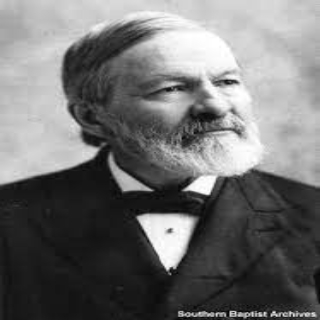
John Broadus, Southern’s second president, was born on January 24, 1827 in Culpeper County, Virginia. After undergraduate and graduate work at the University of Virginia, he joined the university’s faculty as an assistant professor of classics. There, he displayed unusual facility in his post. He served simultaneously as pastor of the Charlottesville Baptist Church. In this period, Broadus won the heart of Maria Harrison, daughter of renowned classics professor Gessner Harrison. Married on November 18, 1850, the Broaduses had three daughters (Eliza, Annie, and Maria) together before Maria passed away on October 21, 1857 at twenty-six years of age. On January 4, 1859, Broadus married Charlotte Eleanor Sinclair, who gave birth to several additional children.
The 1858 Education Convention elected Broadus to the seminary’s first faculty. Broadus declined the position because he had close ties to school and family in Charlottesville. For months, Boyce and Manly doggedly urged him to reconsider. After much thought, and not a little anguish, Broadus accepted. From the time he began teaching, Broadus showed a lifelong affection for instructing and mentoring students. Prior to the seminary’s closing in the Civil War period, Broadus drew a single student to his homiletics class. Rather than canceling the class, Broadus lectured to his lone pupil week after week, honing the content that later became the book The Preparation and Delivery of Sermons. The text’s durability was remarkable. Over half a century later, several seminaries used it in homiletics classes.
When Southern suspended courses in 1862, Broadus served as a chaplain to Confederate soldiers. He returned to Southern at the war’s end and resumed his teaching post. His talents gained renown. Over Broadus’s career, the University of Chicago, Vassar University, Brown University, Georgetown College, and Crozer Theological Seminary each wooed the professor as a potential president. Large and wealthy churches invited him to be their pastor. Broadus declined these overtures. The greatest need and his greatest influence were at the seminary he loved. In 1889 trustees elected Broadus president of the seminary to succeed Boyce. He guided the school for six peaceful years.
Broadus contributed much to the fields in which he taught. In addition to his landmark text on preaching, the scholar labored over his Commentary on the Gospel of Matthew for twenty years before publishing it. With such depth of thought, he excelled at preaching. University of Chicago professor W. C. Wilkinson once remarked of Broadus that he had “every natural endowment, every acquired accomplishment to have become, had he been only a preacher, a preacher hardly second to any in the world.” (1) By his plain exposition and conversational delivery, Broadus changed the character of SBC preaching, a shift seen in the current day.
Broadus’s life is notable on a variety of fronts. While a pastor in Virginia, Broadus baptized Lottie Moon, who became Southern Baptist’s most famous overseas missionary. In the Civil War, Broadus preached before Confederate general Robert E. Lee and other Confederate generals, earning a standing invitation from Lee to preach for him. J. D. Rockefeller went further than Lee—he offered Broadus a hefty salary to become his pastor in New York City, an offer Broadus turned down. In 1886, on the 250th anniversary of Harvard University, the school conferred an honorary degree on Broadus due to his national academic reputation. In 1889, Yale University invited the professor to New Haven to deliver the Lyman Beecher Lectures on preaching. Broadus was the only Southern Baptist to address the Ivy League school in a series of talks. Together with Basil Manly, Jr., he founded the monthly Sunday School newspaper, Kind Words in 1866, a title that was eventually adopted by the Southern Baptist Convention’s Home Mission Board.
As a preacher, professor, and leader, Broadus looms large in Southern’s history and in the history of the SBC. He was an active churchman at Louisville’s Walnut Street Baptist Church. Broadus passed away on March 16, 1895.
(1) William Mueller, A History of Southern Baptist Theological Seminary, 67. Sources: William Mueller, A History of Southern Baptist Theological Seminary, Nashville, TN: Broadman, 1959.
Building Your Marriage on a Deep, Godly Love
What is it that defines, more than anything, the person and ministry of Jesus? After all, he did the things Paul is talking about in 1 Corinthians. What about His miracles? His faith? His martyrdom? Read back through that last paragraph. A word is missing … You know the answer. It’s love. His love for us. He went to the cross not as a martyr but as a savior. He went to lay down His life for His friends. He went to rescue us. He went because of His great love for all who would die to self and follow Him. And in order for you to be a dispenser of the kind of love described in 1 Corinthians 13, you have to first be a receiver of God’s love for you. You have to recognize that you have lived a life in rebellion against God. A life focused first and foremost on yourself. Your life has been committed to you. And the Bible says that while you and I were still in a state of being committed to our own self-interests, God demonstrated His great love for us in this—Christ died for us. What does the hymn say? Jesus emptied Himself of all but what? Love. He bled for Adam’s helpless race. “Amazing love, how can it be, that thou, my God shouldst die for me.” The character qualities that define agape love listed in 1 Corinthians 13 are not some kind of self-improvement checklist. They are descriptors of the kind of love that God has for us, and that is produced by the Holy Spirit in the hearts of those whose lives are being transformed. Bob Lepine in Building Your Marriage on a Deep, Godly Love The character qualities that define agape love listed in 1 Corinthians 13 are not some kind of self-improvement checklist. They are descriptors of the kind of love that God has for us, and that is produced by the Holy Spirit in the hearts of those whose lives are being transformed. The more we realize the depth of God’s love for us, and the more we meditate on how we are recipients of God’s grace and love for us, the more we will begin to grow in grace and love for others. Your marriage will only be built on a foundation of agape love if both of you are growing in your understanding of God’s love and grace for you. The kind of love the Bible describes in 1 Corinthians 13 is not essential for a couple to have a happy marriage. That statement may shock you, but it’s true. There are plenty of couples who have negotiated a workable arrangement in their marriage that is mutually satisfying. Adjustments are made, basic desires are met, and everyone is comfortable with the setup. But God’s goal for us in marriage goes far beyond comfort and mutual satisfaction. God’s goal for marriage is that we would taste something deeper, something sweeter, and something more glorious in our marriages. He wants us to experience the kind of joy that the Father, Son, and Spirit have always known from long before the world began. He wants us to experience the profound joy that comes from a kind of oneness that is only found in Him. And the only path that leads to that kind of soul-satisfying oneness and joy is the path where the kind of love described here is being cultivated and is flourishing. When that happens in marriage, we’ll know a kind of joy and contentment we’ve never known before. And God will be exalted in the process because we’ll be showing to everyone around us that His ways are perfect and right and true. Bob Lepine