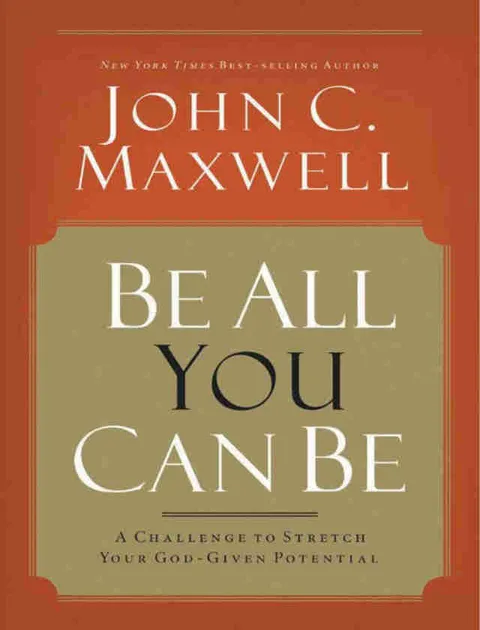

Others like battlefield of the mind Features >>
Putting On The Mind Of Christ
Conquest Of The Mind
The Lamb In The Midst Of The Throne

Qualified - Serving God With Integrity And Finishing Your Course With Honor
Secrets Of The Vine

Faith: Law Of The New Covenant

The Hidden Man
The Purpose Driven Life

Body Of Christ: A Reality
The Believer's Authority
About the Book
"Battlefield of the Mind" by Joyce Meyer explores the power of thoughts and how they impact our actions, emotions, and spiritual growth. Meyer provides practical advice on how to renew our minds, overcome negative thinking patterns, and align our thoughts with God's truth. The book offers strategies for finding peace, joy, and freedom by transforming our thought life.
Xi Shengmo
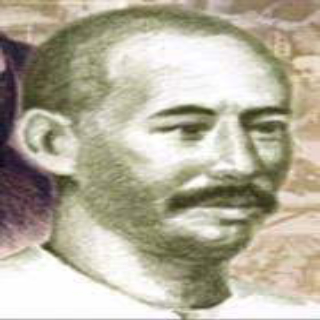
Xi Shengmo, whose birth name was Xi Zizhi, was born into a literary class family of traditional Chinese medical doctors in Western Zhang village near Linfen, Shanxi Province. Young Xi received traditional Chinese education which would one day place him among the ranks of the learned Confucian scholars. Among his friends, he was a high-spirited boy, very forceful in character and a born leader. But, when alone, there were always questions about human life, perplexing and disturbing him, and he longed for an answer to the problem of existence. When his father passed away, his estate was divided. Young Xi purchased a farm on the outskirts of the town. He now became a Confucian scholar who in 1851 obtained Xiu Cai (BA), the first of three literary degrees. He soon won the esteem of the humble villagers and was asked to mediate in quarrels, law suits and other emergencies. As a result, his reputation for wisdom spread far and wide.
But with Xi, happiness and rest of soul were not purchased by such paltry trifles. His first wife passed way, leaving no children, and Confucianism did nothing to still the tumult of his soul. His study of Chinese classics, while stimulating the intellectual side of his nature, did not bring peace. At the age of thirty, he was married again, to a girl in her late teens, who became a loving and understanding wife. But the continued conflict in Xiâs soul was affecting his health. When friends suggested that an occasional use of the opium could do no harm and might bring relief, he decided to test its merits.
Temporary exhilaration was followed by a deeper depression of spirit than he had suffered before, however. He soon became an addict and resorted to opium again and again, until he was only a shadow of his former self. Committed to death by his wife and friends, he was dressed in his best clothing and laid on his bed, awaiting the moment of departure. To his great relief, his world-weary spirit seemed to be leaving the body. Suddenly it was arrested by the authoritative command, âGo back! Go back!â Sadly, the order was obeyed and the sick man found himself again facing the realities of life. After his conversion, Xi never conceded that what had happened was the fantasy of a distorted mind, but felt rather that it was the voice of God.
In 1877, a famine of fearful proportions stalked Shanxi province. For several years, there was no rain and, consequently, no crops. Thousands of people perished from hunger, diseases or suicide. In the midst of the distress, it was learned that two foreigners, David Hill (British Methodist missionary) and Timothy Richard (British Baptist missionary), had come to a nearby town. They wore Chinese dress, distributing food and money to the starving people. They also brought with them a religion of which the people of Shanxi never had heard.
With the end of the severe famine in 1879, Hill and Richard conducted a unique type of literature evangelism at the time of the triennial examinations in Taiyuan, and offered prizes for the best literary essays on Christian themes, which covered such subjects as opium, images of the gods, and the regulation of the heart and life; the essays sought to lead scholars to examine the Christian faith.
Urged on by his family to prove his prowess, Xi wrote four essays under four different names, and submitted them for examination. When the results were announced, he won three out of the four prizes offered. He went reluctantly to collect the prize from Hill at the missionaryâs house in Pingyang, accompanied by his brother-in-law. Later Xi described the meeting:
As daylight banished darkness, so did Mr. Hillâs presence dissipate all the idle rumors I had heard. All sense of fear was gone; my mind was at rest. I beheld his kindly eye and remembered the words of Mencius: âIf a manâs heart is not right, his eye will certainly bespeak it.â That face told me I was in the presence of a true, good man.
Xi became Hillâs assistant in writing literary tracts and translating the New Testament. Within two months, he became a Christian and accepted Hillâs help in breaking his addiction to opium. After Xi started to read the Bible, the Book began to exert a great influence upon him, giving him hope of deliverance from the dreadful habit of opium smoking. One day, as he was reading the story of the crucifixion, he fell on his knees, with the Bible before him, weeping as he read. At that moment, he felt that the dying, yet living Savior, enfolded his weary soul in his great love. His search was ended; peace like a river became his portion. The slave of sin was now and forever the bond-servant of God.
This peace did not last long, however; for a week, Xi neither ate nor slept. In the fierce combat between good and evil, he experienced almost every agony known to the human body. Weakness, faintness, dizziness, exhaustion, fever, chills, depressionâ-all attacked his enfeebled frame. When the struggle was most critical, the addict cried out, âThough I die, I never will touch opium again.â Through prayer âwithout ceasingâ and Bible reading, it was revealed to him that only the Holy Spirit could enable him to conquer in the conflict. Xi said later of the Spirit:
He did what man and medicine could not do. From that moment, my body was perfectly at rest. Then I knew that to break off opium without faith in Jesus would indeed be impossible.
He was finally delivered from opium bondage and became a new man. When this victory over opium was won, Xi adopted the name Shengmo, meaning âconqueror of demons.â Along with a sense of abundant grace given him came an intense longing to spread the possibility of such an experience to men near and far. Soon he became convinced that he was commissioned by God to do that very thing.
Thus, in a very brief time, he was converted, committed to holiness of life, and feeling a call to preach the Gospel. After Hill received a new appointment and returned to Hankou, Xi was baptized in November 1880 at Pingyang by J. C. Turner, missionary with the China Inland Mission (CIM). Subsequently he worked with CIM missionaries in pioneer evangelism in Shanxi and surrounding areas. His education, forceful personality, and spiritual gifts, together with a fervent faith expressed in a deep prayer life, quickly led to his emergence as a spiritual leader.
Now the opium-drugged victims of Shanxi occupied Xiâs attention. The wide-spread use of the opiate required earnest and intense effort if the enslaved were to be rescued. His first attempt to do so was in a small town near his village. Since they were short of funds, Mrs. Xi sold some of her precious bridal garments and jewelry. They rented a shop and stocked it with medicines, and furnished it with Christian texts on the walls.
For twenty years, the system adopted in this area became a pattern for between forty and fifty others that were opened as refuges for the users of opium. In each station, hundreds of persons were treated with pills that eventually Xi made himself by a secret formula which he believed was revealed to him by God. Loving care, presentation of Gospel truth, and much prayer led to the liberation of thousands of addicts, who then carried the news of their freedom to others. Every new patient was expected to attend daily prayer sessions. Indeed, only those willing to make prayer a major factor in their treatment were admitted. The pills, which took the place of expensive, imported ones, the supply of which had often failed at a crucial time, were the fruit of a season of fasting and prayer, plus Xiâs knowledge of native drugs.
His notable achievement was to establish as many as 50 opium refuges in four provinces; these also functioned as centers for church planting. One of the largest of these centers was at Hongtong County, thirty miles north of Pingyang. These refuges were run by reformed addicts who had come through his system, first as patients, then as converts, evangelists, and assistant refuge keepers. Churches established as a result of the outreach by opium refuges were made up largely of recovered addicts.
Xi remarked that his Christian life was a very real and constant warfare with the powers of Satan. His battle to develop that most effective evangelistic spearhead, the opium refuge project, met with opposition and difficulties. The only thing he could do was to ignore criticism and resist Satan with spiritual weapons. He relied on the strength of God, rather than his own. At times he became conscious of great fatigue and weakness, and these occasions became the call to much prayer and fasting, for it was in this way that he could know that some immediate, perplexing problem was to be prayed through. Always when he thought the will of God was ascertained, or the problem resolved, the unusual energy which was âusualâ for himâ- and which he considered to be from Godâ-was regained and the work resumed.
Xi also developed a utopian community called Middle Eden, where he worshipped and ministered together with family members, 50 or 60 disciples, and many recovering opium addicts. Many of the hymns used in churches and the opium refuges were composed by Xi. These were published as Xi Shengmo Hymns by the Shanghai Presbyterian Press in 1912.
Xi was an independent, strong-willed man. For the most part, he was respectful in his relationships with the Western missionaries, although some of them fiercely proud themselves noted that he frequently manifested an anti-foreign attitude. Not all agreed with his charismatic emphasis, his desire for control, nor his use of opium refuges as the principal method in his evangelism. Despite character weaknesses of impatience, dogmatism, and authoritarianism, which mellowed with years, he eventually came to exercise a ministry widely described as apostolic. His pastoral gifts leadership were recognized in 1886 when Hudson Taylor ordained him as superintending pastor over a wide area in Shanxi. Three groups of missionariesâ-the seven CIM missionaries known as the Cambridge Seven, CIM single women, and CIM missionaries from Scandinaviaâ-worked under Xiâs direction. This reflected Taylorâs conviction that Western missionaries were merely the âscaffoldingâ in the building of an indigenous Chinese church.
In 1895, Xi planned a conference in his own home village with the purpose of enlarging the refuge work. Two hundred persons were present, and the last sermon that he preached was unusually solemn. At the close of the conference, he decided to visit Mr. Dixon Hoste, who later was to succeed Hudson Taylor as General Director of the China Inland Mission.
In the midst of genial conversation with Hoste, Xi fell to the ground unconscious. He rallied, suffering more from weakness than from pain. Within weeks, signs of a serious heart problem developed. For six months he remained with those who loved him. Xi ceased his labor and entered into everlasting rest on February 19, 1896.
Sources
Taylor, Mrs. Howard, Pastor Hsi: Confucian Scholar and Christian (1900; rev. 1949, 1989).
Austin, Alvyn James, âPilgrims and Strangers: The China Inland Mission in Britain, Canada, the United States and China 1865-1990â (Ph. D. diss., York University, North York, Ontario, 1996).
Broomhall, A. J., Assault on the Nine, Book 6: of Hudson Taylor and Chinaâs Open Century (1988).
Latourette, Kenneth Scott, A History of Christian Missions in China (1966).
About the Author
G. Wright Doyle, Director, Global China Center; English Editor, Biographical Dictionary of Chinese Christianity, Charlottesville, Virginia, USA.
Kindness in a World Gone Mad
I was waiting in line with my sons for a roller coaster when the T-shirt caught my eye: Kindness is free â so sprinkle that stuff everywhere . Iâm sympathetic to the message at one level. To many, the world feels meaner in recent years, and perhaps especially so since the last election cycle, COVID-19, and civil unrest. Yes, genuine human kindness, in the most basic of senses, has often been sorely lacking. More kindness would indeed be nice, and perhaps shine in new ways in times when weâre coming to expect meanness and outrage everywhere. But as admirable as the instincts behind the message are, the initial claim is badly mistaken. No, real kindness â the kind we really long for and need â is not free. And perhaps it would help us all to come to terms with that up front. Real kindness is costly. This Harsh World Deep down, we know that we live in a mean world â too mean to keep the meanness constantly at the forefront of our minds. Yet at times â more frequent for some than others â the meanness, the evil afoot in this world, accosts us. Even as bright as some days appear, there is a âpresent darknessâ ( Ephesians 6:12 ), still under the sway of âthe god of this worldâ ( 2 Corinthians 4:4 ). Pretender though he is, and numbered his days, his âdomain of darknessâ ( Colossians 1:13 ) is real, and âthe power of darknessâ ( Luke 22:53 ) treacherous. And not only has the world out there  gone mad, but far too often the sway of the world, and the indwelling sin in us all, brings that meanness in here , into the people who profess to be Christâs. Tragically, the very people who are to make Jesus known by their love for each other ( John 13:35 ) can be harsh, quarrelsome, impatient, shrill, nasty. Itâs only human to respond in kind. But Christ requires of his church what is more than human: respond in kindness . Virtue in a Vacuum? In part, internal conflict in the Ephesian church prompted Paulâs second letter to Timothy. At the letterâs heart, the aging apostle gives his protĂ©gĂ© this arresting charge: The Lordâs servant must not be quarrelsome but kind to everyone , able to teach, patiently enduring evil, correcting his opponents with gentleness. God may perhaps grant them repentance leading to a knowledge of the truth, and they may come to their senses and escape from the snare of the devil, after being captured by him to do his will. ( 2 Timothy 2:24â26 ) Christians have long celebrated kindness as one of the heavenly virtues . Yet we live in a day that often makes very little of kindness. We assume itâs free. We celebrate ârandom acts of kindness.â We think of kindness without context . Of course, in our mean world, it is pleasant to be surprised by a strangerâs kindness, free and random as it may seem. Sure, sprinkle that stuff everywhere. But the Christian vision of kindness is far deeper, more significant, and contextualized. âKindness is not random or free, but a costly, counter-intuitive response to meanness, rather than responding in kind.â Christian kindness is no common courtesy or virtue in a vacuum, but a surprising response to mistreatment and hurt. It is not random or free, but a costly, counterintuitive response to meanness, to outrage, rather than responding in kind. As Don Carson comments on 1 Corinthians 13:4 , âLove is kind â not merely patient or long-suffering in the face of injury, but quick to pay back with kindness what it received in hurtâ ( Showing the Spirit , 79). Companions of Kindness One way to see that Christian kindness is not random is to observe the kind of company it keeps, especially in the letters of Paul â who would be âthe apostle of kindness,â if there were one. No one sprinkles costly kindness like Paul. Among other graces, kindness often appears hand in hand with patience and compassion. Patience appears side by side with kindness, and in the same order, in 2 Corinthians 6:6  and Galatians 5:22 : âpatience, kindness.â So also, Paul presses them together in Romans 2:4 , in speaking of divine patience and kindness: âDo you presume on the riches of his kindness and forbearance and patience, not knowing that Godâs kindness is meant to lead you to repentance?â So too, as weâve seen, Christian pastors â âthe Lordâs servantâ in the midst of conflict â âmust not be quarrelsome but kind to everyone, . . . patiently enduring evilâ ( 2 Timothy 2:24 ). Kind to everyone  â isnât that surprising? The opponents here are false teachers. They must not be coddled or encouraged. Rather, they must be exposed and corrected â and yet that is no license to treat them harshly or with meanness. Opponents can be patiently endured and gently corrected. In fact, it would not be kind  to a false teacher, or the church, to let him continue in error. Exposing his error and gently correcting him is kindness. As for compassion, Ephesians 4:32  memorably explains the command to âbe kind to one anotherâ with the word âtenderheartedâ (or âcompassionate,â Greek eusplanchnos ). Kindness is an expression of a tender, compassionate heart. Colossians 3:12  puts all three together, with humility and meekness: âPut on then, as Godâs chosen ones, holy and beloved, compassionate hearts, kindness, humility, meekness, and patience.â Kindness, we might say, is a kind of secondary virtue. Compassion and patience, in various ways, make kindness possible. A compassionate heart leads to kindness, and external actions that give expression to that kindness. So also, patience makes internal kindness and its external acts possible. Patience gives emotional and practical space for kindness to ripen and move outward in physical acts. True kindness and its expressions (which are not random or free) complete and extend its companion virtues. The fruit of kindness needs the roots of patience and compassion, and they need kindness. Costly Kind Our young kids are still honest enough with themselves, and us, to admit to how costly kindness can be. When a sibling is mean, or someone on the playground, their natural response (and ours) is not to be kind, but to respond in kind. Which is why we consider kindness a Christian virtue  â which doesnât just happen spontaneously without practice and the enabling of the Holy Spirit. Kindness, Paul says, is the produce of the Spirit ( Galatians 5:22â23 ; 2 Corinthians 6:6 ), not of the natural human heart. Real kindness requires intervention from the outside, both from Godâs Spirit and also his divine Son stepping into our mean world, showing us a different way, and doing it, climactically, to our eternal salvation and joy. As my wife and I have learned  in almost fifteen years of marriage, kindness toward each other begins with Godâs kindness toward us in Christ. Only then can we really find the resources to overcome evil with good, triumph over annoyance with patience, and rise above meanness with kindness. In other words, the heart of how we become kinder â not with free, random, imitation kindness, but with thick, genuine, Christian kindness â is knowing and enjoying the kindness of God toward us, and doing so specifically by feeding on, and taking our cues from, the very words of God. Behold His Kindness Our world, in its rebellion and cosmic treason, is no meaner than in its meanness to God himself â God who is holy and just. And yet what shocking kindness he displays, even toward the unbelieving. Our heavenly Father âis kind to the ungrateful and the evilâ ( Luke 6:35 ). Even those who live the hardest, meanest of lives are surrounded by rays of Godâs common kindness , as we might call it: beautiful days, human minds and bodies and words, friends and family, food and shelter, the everyday divine kindnesses we take for granted until theyâre gone. âEven those who live the hardest, meanest of lives are surrounded by rays of Godâs common kindness.â As Paul preached at Lystra, even âin past generations,â before Christ, when God âallowed all the nations to walk in their own ways,â he showed the unbelieving his common kindness, and âdid not leave himself without witness, for he did good by giving you rains from heaven and fruitful seasons, satisfying your hearts with food and gladnessâ ( Acts 14:16â17 ). Such kindness even in our day, gratuitous as it may seem to us, is not wasted. It is not random but has purpose: âmeant to lead you to repentanceâ ( Romans 2:4 ). Yet in the fullness of time, âthe goodness and loving kindness of God our Savior appearedâ ( Titus 3:4 ), bringing salvation â Godâs special kindness  â through faith in Christ. Such divine kindness not only brought eternal rescue for Godâs long-chosen people, but it engrafts even strangers into Godâs ancient tree of blessing through faith ( Romans 11:22 ). Jesus is Kindness incarnate, whose yoke is not severe, but (literally) kind  ( Matthew 11:30 ). He is the Lord whom we, with new Spirit-given palates, taste as kind  ( 1 Peter 2:3 ). Kindness Coming As Christ, by his Spirit, shows kindness to us, in his word and in our lives, he also forms us into instruments of his kindness to others. âGod in Christ forgave you,â Paul says in Ephesians 4:32 . Therefore, âBe kind to one another, tenderhearted, forgiving one another.â Ultimately, it is the kindness of God that melts an unforgiving spirit, softens a hard heart, and transforms unkind actions. In Christ, we become the kind of people who see others , and have compassion  for them, and exercise patience  toward them, and show kindness  to them, knowing not only that we ourselves have been shown kindness but that âin the coming ages [God himself will] show the immeasurable riches of his grace in kindness toward us in Christ Jesusâ ( Ephesians 2:7 ). We have only begun to taste the kindness of our God.