
Others like woman, thou art loosed! Features >>
-160.webp)
Beautiful In God's Eyes For Young Women: Looking Good From The Inside Out

All Of The Women Of The Bible

Women Of The Bible

Esther: The Beauty Of Courageous Submission
Power Of Passion: The Principles Of Mary Magdalene

Becoming A Brave New Woman

A Woman After God's Own Heart
-160.webp)
Women Of The Word
The Mary | Martha Principles

Every Woman's Battle
About the Book
"Woman, Thou Art Loosed!" by T. D. Jakes is a powerful book that addresses the emotional and spiritual healing of women who have experienced trauma, abuse, and other challenges. Through personal experiences and biblical teachings, Jakes encourages women to overcome their past and find freedom, forgiveness, and restoration in their lives. The book offers hope and empowerment to women who may have felt broken or lost, using faith as a guiding light towards healing and redemption.
Jack Coe
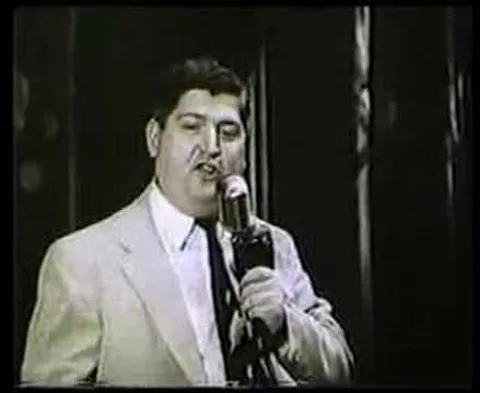 Jack G. Coe was born on March 11, 1918 in Oklahoma City, Oklahoma. His father, George, was a gambler and an alcoholic. His parents, although having been Christians, did not attend church. His grandparents, on his father's side were Christians but they were not able to influence their son's behavior. The couple had seven children in all. When Jack was five his father gambled away all their furniture and their house, leaving his mother Blanche destitute with seven children. They were devastated. His mother tried to make a new life by moving to Pennsylvania, but it was too hard. When Coe's father came to her house promising to change she agreed to reunite. The change did not last, however, and George went back to gambling.
Blanche left George for good, but only took her daughter with her this time. The boys were left with their father, which meant they were essentially left on their own. Often they did not have food to eat. Blanche did return to claim them, but could not care for them on her own. When Jack was nine he and his twelve year old brother was turned over to an orphanage. His older brother ran away, but was hit by a car and died. Jack struggled with rejection and abandonment. At seventeen he left the orphanage and began to drink, becoming an alcoholic like his father. He drank so much he had ulcers and his heart became enlarged. The doctor told him that if he didn't quit drinking he was going to die. Not knowing where else to go he moved to California to be near his mother. When he thought he was near death he promised God he would turn his life around and he was healed for a while. The family moved to Texas and he was drinking again. This time he heard God's voice "This is your last chance". The following Sunday he went to a Nazarene church and accepted Christ. He was radically changed. He went to church meetings almost every night, prayed, and read the Word constantly. After a year and a half he went to a Pentecostal meeting and was filled with the Holy Spirit and had a vision of Jesus.
Jack felt called to the ministry and went to and Assembly of God school called Southwestern Bible Institute, led by P.C. Nelson. He left in 1941 to join the army after the bombing of Pearl Harbor. He was so committed to God's purposes that he went to church every night. His sergeant sent him for psychiatric evaluation This happened several times while he was in the army. One day he was reading a book by P.C. Nelson on Healing when he fell asleep. He had a dream where he saw his sister close to death in a hospital but he saw a bright light come into her room and she was healed. He left immediately to see her and everything was as he'd seen it in a dream. She was healed and he was changed forever.
In 1944 Coe became ill with malaria. He was sent home because the doctors felt they could not help him. He sought the Lord who told him "preach the gospel". God healed him. He went out to preach and three people were saved. That year he was ordained as an Assembly of God minister. His healing experiences caused him to seek God about the gifts of healing. In 1945 he felt God called him to have a healing meeting. He went to Texas and announced in a church that God was going to heal the sick, cause the blind to see, and the deaf to hear. Those were bold words indeed! A woman received her sight that night. His ministry was launched. He began traveling over the country.
In 1946 God spoke to Coe and his wife Juanita to sell their house and start an itinerant ministry. They purchased a beat up truck and a ministry tent and began to live on the road. In 1948 God spoke to Coe to go to Redding, California. A woman, whose leg was about to be amputated, was healed and the news spread throughout the city. God blessed the couple and for the first time had enough money to be ahead on their finances. Healings and miracles regularly occurred in his meetings.
There were some very controversial things about Jack Coe. He believed that he should have a larger tent than other evangelists and went and measured Oral Roberts tent, then he ordered one larger. His style was dramatic and he often hit, slapped, or jerked people. He also would pull people out of wheelchairs. His speaking style was aggressive as he challenged people to believe God. He suggested that people who stood against him would be "struck dead by God". He was anti-medicine and told people not to go to doctors. He also encouraged interracial meetings.
In 1950 Coe began publishing the Herald of Healing magazine. Within six years it was being sent to over 350,000 people. God began to speak to Coe about opening an orphanage. He collected money for the project at every meeting. He sold his own home and began to build the children's home. His own family moved into the partially finished building so they would have a place to live. Coe eventually bought 200 acres outside of Dallas and built four dormitories and established a home farm. They could support 200 abandoned children.
In 1952 Coe began a radio ministry, which eventually was carried on over 100 radio stations. He also began having trouble with the Assembly of God organization. Although initially responsive to suggestions, he felt their goal was to limit the ministry. He suggested that the Assembly of God leadership had lost the belief in the miraculous and felt that they should be replaced. Needless to say this aggravated the situation. In 1953 Coe was expelled from the Assembly of God church. They felt that he was independent, extreme, prone to exaggeration, and they weren't sure about his ministry style. Coe felt that it was an attack against his success. He told people that "one of the officials made the remark to me that he would not rest until every man that was preaching divine healing in a deliverance ministry, separated from the General Council of the Assembly of God."
In 1953 Coe started his own church in Dallas. It was called the Dallas Revival Center. God spoke to him that it was important for those not getting healed to receive teaching about healing from the Word. In 1954 Coe opened a faith home, where people could stay for extended periods of time to receive prayer for healing. Teaching and prayer were given daily. 1956 was a pivotal year. While Coe was preaching in Miami he was arrested for practicing medicine without a license. This brought national attention to him and the ministry, both positive and negative. He was acquitted of practicing medicine without a license when the trial went to court.
At the end of 1956 Coe became ill. He had pushed himself night and day for years. He had poor eating habits and was overweight. He thought it was exhaustion but it was bulbar polio, a form of polio that affects the nerves. He became paralyzed, developed pneumonia, and died December 16, 1956.
Jack G. Coe was born on March 11, 1918 in Oklahoma City, Oklahoma. His father, George, was a gambler and an alcoholic. His parents, although having been Christians, did not attend church. His grandparents, on his father's side were Christians but they were not able to influence their son's behavior. The couple had seven children in all. When Jack was five his father gambled away all their furniture and their house, leaving his mother Blanche destitute with seven children. They were devastated. His mother tried to make a new life by moving to Pennsylvania, but it was too hard. When Coe's father came to her house promising to change she agreed to reunite. The change did not last, however, and George went back to gambling.
Blanche left George for good, but only took her daughter with her this time. The boys were left with their father, which meant they were essentially left on their own. Often they did not have food to eat. Blanche did return to claim them, but could not care for them on her own. When Jack was nine he and his twelve year old brother was turned over to an orphanage. His older brother ran away, but was hit by a car and died. Jack struggled with rejection and abandonment. At seventeen he left the orphanage and began to drink, becoming an alcoholic like his father. He drank so much he had ulcers and his heart became enlarged. The doctor told him that if he didn't quit drinking he was going to die. Not knowing where else to go he moved to California to be near his mother. When he thought he was near death he promised God he would turn his life around and he was healed for a while. The family moved to Texas and he was drinking again. This time he heard God's voice "This is your last chance". The following Sunday he went to a Nazarene church and accepted Christ. He was radically changed. He went to church meetings almost every night, prayed, and read the Word constantly. After a year and a half he went to a Pentecostal meeting and was filled with the Holy Spirit and had a vision of Jesus.
Jack felt called to the ministry and went to and Assembly of God school called Southwestern Bible Institute, led by P.C. Nelson. He left in 1941 to join the army after the bombing of Pearl Harbor. He was so committed to God's purposes that he went to church every night. His sergeant sent him for psychiatric evaluation This happened several times while he was in the army. One day he was reading a book by P.C. Nelson on Healing when he fell asleep. He had a dream where he saw his sister close to death in a hospital but he saw a bright light come into her room and she was healed. He left immediately to see her and everything was as he'd seen it in a dream. She was healed and he was changed forever.
In 1944 Coe became ill with malaria. He was sent home because the doctors felt they could not help him. He sought the Lord who told him "preach the gospel". God healed him. He went out to preach and three people were saved. That year he was ordained as an Assembly of God minister. His healing experiences caused him to seek God about the gifts of healing. In 1945 he felt God called him to have a healing meeting. He went to Texas and announced in a church that God was going to heal the sick, cause the blind to see, and the deaf to hear. Those were bold words indeed! A woman received her sight that night. His ministry was launched. He began traveling over the country.
In 1946 God spoke to Coe and his wife Juanita to sell their house and start an itinerant ministry. They purchased a beat up truck and a ministry tent and began to live on the road. In 1948 God spoke to Coe to go to Redding, California. A woman, whose leg was about to be amputated, was healed and the news spread throughout the city. God blessed the couple and for the first time had enough money to be ahead on their finances. Healings and miracles regularly occurred in his meetings.
There were some very controversial things about Jack Coe. He believed that he should have a larger tent than other evangelists and went and measured Oral Roberts tent, then he ordered one larger. His style was dramatic and he often hit, slapped, or jerked people. He also would pull people out of wheelchairs. His speaking style was aggressive as he challenged people to believe God. He suggested that people who stood against him would be "struck dead by God". He was anti-medicine and told people not to go to doctors. He also encouraged interracial meetings.
In 1950 Coe began publishing the Herald of Healing magazine. Within six years it was being sent to over 350,000 people. God began to speak to Coe about opening an orphanage. He collected money for the project at every meeting. He sold his own home and began to build the children's home. His own family moved into the partially finished building so they would have a place to live. Coe eventually bought 200 acres outside of Dallas and built four dormitories and established a home farm. They could support 200 abandoned children.
In 1952 Coe began a radio ministry, which eventually was carried on over 100 radio stations. He also began having trouble with the Assembly of God organization. Although initially responsive to suggestions, he felt their goal was to limit the ministry. He suggested that the Assembly of God leadership had lost the belief in the miraculous and felt that they should be replaced. Needless to say this aggravated the situation. In 1953 Coe was expelled from the Assembly of God church. They felt that he was independent, extreme, prone to exaggeration, and they weren't sure about his ministry style. Coe felt that it was an attack against his success. He told people that "one of the officials made the remark to me that he would not rest until every man that was preaching divine healing in a deliverance ministry, separated from the General Council of the Assembly of God."
In 1953 Coe started his own church in Dallas. It was called the Dallas Revival Center. God spoke to him that it was important for those not getting healed to receive teaching about healing from the Word. In 1954 Coe opened a faith home, where people could stay for extended periods of time to receive prayer for healing. Teaching and prayer were given daily. 1956 was a pivotal year. While Coe was preaching in Miami he was arrested for practicing medicine without a license. This brought national attention to him and the ministry, both positive and negative. He was acquitted of practicing medicine without a license when the trial went to court.
At the end of 1956 Coe became ill. He had pushed himself night and day for years. He had poor eating habits and was overweight. He thought it was exhaustion but it was bulbar polio, a form of polio that affects the nerves. He became paralyzed, developed pneumonia, and died December 16, 1956.
Be Content with What You Have
Contentment is not simply about settling for what we have, but trusting in what God has said. Both anxiety and greed rise in our hearts as God’s words fall. When the author of Hebrews wanted to teach his readers about contentment, he told them an old story with a familiar refrain. He quieted their fears and quenched their greed by reminding them what God had said . “Keep your life free from love of money, and be content with what you have, for he has said , ‘I will never leave you nor forsake you’” (Hebrews 13:5). Which prompted Charles Spurgeon to ask, Will not the distresses of life and the pangs of death, will not the internal corruptions and the external snares, will not the trials from above and the temptations from beneath all seem but light afflictions when we can hide ourselves beneath the bulwark of “he has said”? The seed of unnecessary fear in the heart of a Christian is forgetfulness — an inability to remember and trust what the God of the universe has said and done. No one has ever had any grounds to accuse God of not following through on his word. Not even one phrase in any sentence in any statement he has ever made has failed (Joshua 21:45). We will only be truly content with what we have when we know that we have him. And we will remember that we have him when we hear and believe his voice. God Has Said When God said, “I will never leave you nor forsake you,” he was speaking to Joshua before little Israel went up to take the whole land of Canaan by force. A nation of nomads was about to invade a land filled with enemies bigger and stronger than themselves. Not one army, but many (Joshua 3:10) — and not our turf, but theirs. Israel’s only confidence was that God had told them to go. He had said . What did he say? The foreign land you are about to enter is already yours (Joshua 1:3). No enemy, no matter how many or how strong, will be able to defeat you (Joshua 1:5). And most promising of all: “I will not leave you or forsake you.” ‘I Will Never Leave You’ “Both anxiety and greed rise in our hearts as God’s words fall.” This great promise will fall flat if we think mainly in terms of geography and not fidelity. Of course God will never leave us because he’s everywhere all the time. “If I ascend to heaven, you are there! If I make my bed in Sheol, you are there!” (Psalms 139:8). But we see God’s fidelity in the very next verse, “If I take the wings of the morning and dwell in the uttermost parts of the sea, even there your hand shall lead me, and your right hand shall hold me” (Psalms 139:9–10). If you are his, he will not leave you; he will lead and protect you. When Joshua stared out into impossible circumstances and enormous opposition, God said, “I will not leave you or forsake you. . . . Be strong and courageous. Do not be frightened, and do not be dismayed, for the Lord your God is with you wherever you go.” (Joshua 1:5, 9) When the author of Hebrews saw what followers of Jesus would face, and how they would be tempted to wander, he went back to those same words (the only time this promise is quoted in the New Testament), “He has said, ‘I will never leave you nor forsake you’” (Hebrews 13:5). You will never be alone. No matter how desperate and alone you feel, no matter how much opposition you face, no matter how precarious your circumstances become, he has said, I will be with you. His presence can calm any fear — if we don’t forget that he’s there, he’s near, and he’s attentive. What You Don’t Have The author of Hebrews, however, wasn’t warning about Canaanites, Hittites, Hivites, Perizzites, Girgashites, Amorites, and Jebusites. His readers, who were Jewish converts, were facing intense persecution, but from within their own nation — from their own communities, even their own families. And as the scorching friendly fire fell, an even more threatening enemy emerged within their hearts: their own cravings and desires. He says, “Keep your life free from love of money, and be content with what you have, for he has said, ‘I will never leave you nor forsake you’” (Hebrews 13:5). When Western Christians today read, “Be content with what you have,” we might assume the Christian has enough. We may hear, “Don’t long for more than you need.” But many of these young converts were being thrown out of their families, cut off from all provision and protection. To follow Jesus was to embrace abandonment and accept poverty. So, many of them were being called to be content with what they did not have. “The seed of unnecessary fear in the heart of a Christian is forgetfulness.” Discontentment suddenly doesn’t seem so unreasonable. Some of them went without food — for Christ. Some of them had only the clothes on their back — for Christ. Some of them lost their homes — for Christ. Some of them “joyfully accepted the plundering of [their] property, since [they] knew that [they themselves] had a better possession and an abiding one” (Hebrews 10:34). If they could be content with what they had, and didn’t have, how can we not learn to be content with what we have? Grace Enough Be content with what you have. Are there six more terrifying words in a culture like ours? They certainly land on me like six sharp cannon blasts. Don’t let your heart endlessly pine for what you might have one day, but cultivate satisfaction in what God has given you for today. The word for content is the same word in 2 Corinthians 12:9, when Jesus says to the apostle Paul, “My grace is sufficient for you, for my power is made perfect in weakness.” Paul responds, “Therefore I will boast all the more gladly of my weaknesses, so that the power of Christ may rest upon me. For the sake of Christ, then, I am content with weaknesses, insults, hardships, persecutions, and calamities. For when I am weak, then I am strong” (2 Corinthians 12:9–10). Paul’s message is not like so many contentment gospels: If the Lord gives you less, make lemonade. Rather, he says, If Christ gives you less, boast in your less, because you get to see more of him in your less. His grace is sufficient to cover any deficiency in us. If God is that big, and grace that sweet, then we are able to say what the vast majority cannot say: “If we have food and clothing, with these we will be content” (1 Timothy 6:8). We will not be simply appeased, but pleased, because our deepest joy does not rise and fall with what we have (Philippians 4:11). How Silver Kills a Man If we want to be content with what we have, however, we have to be free from the love of money. As Paul warns, “The love of money is a root of all kinds of evils. It is through this craving that some have wandered away from the faith and pierced themselves with many pangs” (1 Timothy 6:10). And through this craving, many have forfeited contentment and forgotten what God has said. Intimacy with God loses its value as we fall deeper in love with our currency (and all it buys for us). “We will only be truly content with what we have when we know that we have him.” If we keep flirting with money, we will make ourselves sons of Judas, who traded God himself for thirty pitiful pieces of silver (Matthew 26:15). But even before he died, Judas knew he had been had (Matthew 27:3). He had grossly overestimated money and misjudged the love that no amount of silver could buy: “I will never leave you nor forsake you.” Could he not see how murderously unhappy the Pharisees were (Luke 16:14)? Still he couldn’t shake his cravings for more, even if they cost him everything. If we could feel the horrible realization he felt after trading Jesus away for money, would we not race to give away every possession necessary to have God? Would we not gladly have however little in this life to gain him in the next and forever? Content and Courageous What does contentment sound like? True contentment does not sound cheap, shy, or docile because it often requires profound strength and lionhearted courage. Hebrews continues, “He has said, ‘I will never leave you nor forsake you.’ So we can confidently say , ‘The Lord is my helper; I will not fear; what can man do to me?’” (Hebrews 13:5–6). As he looks out on this small army of Jesus-followers, facing want and need and worse, he turns from Joshua 1 to Psalm 118, which goes on to say, It is better to take refuge in the Lord than to trust in man. It is better to take refuge in the Lord than to trust in princes. (Psalm 118:8–9) Courage ties Psalm 118 to the promise from Joshua 1 because God says to Joshua three times, “Be strong and courageous” (Joshua 1:6–7, 9). And before Joshua heard those four words, Moses had said to him, “Be strong and courageous. Do not fear or be in dread of them, for it is the Lord your God who goes with you. He will not leave you or forsake you” (Deuteronomy 31:6). When you are tempted to worry about how much you have, set your mind on what he has said . If the true God is your God, he goes with you. He knows what you need (Matthew 6:32). And knowing all you need, and all you will face, he will never leave you nor forsake you. Therefore, we can be courageous wherever his hand leads us, flee the shiny promises of silver, and rejoice in what we have. Most of all, we can rejoice that we have him.