
Others like winner, don’t quit! Features >>

The 80/20 Principle: The Secret To Achieving More With Less
-160.webp)
Better Decisions, Fewer Regrets (5 Questions To Help You Determine Your Next Move)
The Obstacle Is The Way

Goals!
-160.webp)
The Fifteen Percent (Overcoming Hardships And Achieving Lasting Success)

Give And Take - A Revolutionary Approach To Success

The Power Of Vision

Think Again

The Book That Changed My Life
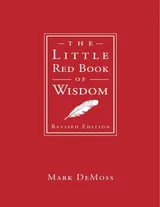
The Little Red Book Of Wisdom
About the Book
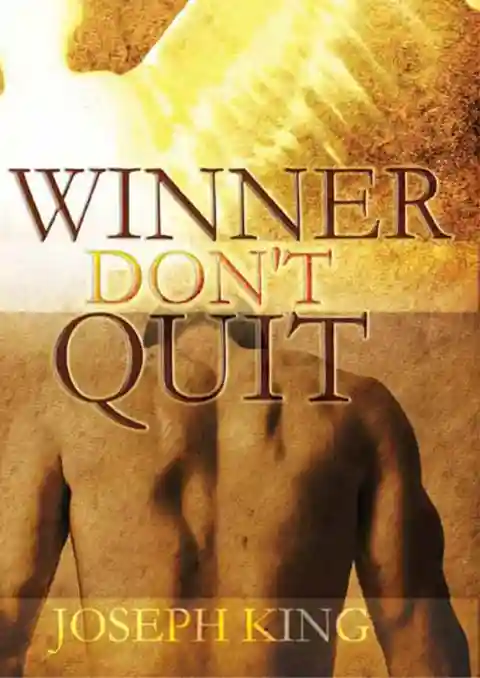
"WINNER, DON’T QUIT!" by Joseph King is a motivational book that encourages readers to persevere and overcome obstacles in order to achieve success. The author shares personal stories and tips for developing a winner's mindset and staying motivated in the face of challenges. This book serves as a guide for anyone looking to reach their goals and fulfill their potential.
Brother Andrew
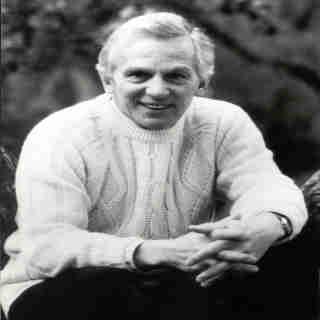 Son of a blacksmith, Brother Andrew didn’t even finish high school. But God used this ordinary dutch man, with his bad back, limited education, without sponsorship and no funds to do things that many said were impossible. From Yugoslavia to North Korea, Brother Andrew penetrated countries hostile to the gospel to bring bibles and encouragement to believers.
Andy van der Bijl, who became known as Brother Andrew, was born in 1928 the son of a deaf father and a semi-invalid mother. Andrew was the third of six children and they lived in the smallest house in the village of Witte in the Netherlands.
In the book God’s smuggler, Andrew describes the impact that the death of his oldest brother ‘Bas’ had upon him. Bas, who was severely handicapped died when Andrew was just 11 years old. Andrew had wanted to die with Bas, but God hadn’t let him.
THIRST FOR ADVENTURE
As a child, brother Andrew was mischievous and dreamt of adventure. When Germany invaded, Andrew amused himself (and the rest of the village) by playing pranks on the occupying troops.
NOTORIOUS COMMANDO WHO NEEDED GOD
His thirst for adventure led him into the Dutch army at the age of 18 where he became a notorious commando. Andrew and his comrades became famous for wearing yellow straw hats in battle, their motto was: ‘get smart – lose your mind’.
The atrocities that Andrew committed as a commando haunted him and he became wrapped in a sense of guilt. Nothing he did – drinking, fighting, writing or reading letters helped him escape the strangle that guilt had upon him.
Shot in the ankle in combat, at the age of 20, his time in the army came to an abrupt end.
In hospital, bed ridden, the witness of Franciscan sisters who served the sick joyfully and the conviction of his own sin, drove him to read the Bible. Andy studied the bible while asking many questions to a friend (Thile), who had written to him throughout his time in the army. Andrew sent questions to Thile who searched for answers from her pastor and the library. His searching within the bible did not however lead him to give his life to God whilst he was still in hospital.
ANDREW RETURNS HOME A CRIPPLE AND SEEKS GOD
Returning home a cripple to his old town, Andrew’s life was empty. He had not found the adventure he had been looking for.
Somehow however, when he return home, he developed a thirst for God. Every evening Andrew attended a meeting and during the day he would read the bible and lookup up bible verses mentioned in the sermons he had heard. At last, one evening he gave up his ego and prayed: ‘Lord if You will show me the way, I will follow You. Amen’.
GOD CALLS BROTHER ANDREW TO MISSION
Soon after becoming a Christian, Brother Andrew attended a an evangelistic meeting taken by a Dutch evangelist Arne Donker. At this meeting Andrew responded to the call to become a missionary. This call to share the good news of salvation started at home, with Andrew and his friend Kees holding an evangelistic event with Pastor Donker in their home town of Witte.
Before going away on mission, Andrew started work at the Ringers chocolate factory. Working in a female dominated environment which was smitten with filthy jokes, God used Andrew and another Christian, and future wife Corrie, to reach their lost co-workers. Through personal witness and inviting them to evangelistic events, many became Christians, including the ring leader of the women. The atmosphere at work changed dramatically and prayer groups were held.
Andrew excelled in his work despite being lame and Mr Ringers, the owner of the factory applauded his work and evangelistic efforts. Because of his high IQ, Andrew was trained up as a job analyst within the factory. But Andrew knew that God was calling him to mission. The big obstacle however was his lack of education.
Giving up smoking, Andrew was able to start saving to buy books. Andrew bought dictionaries and commentaries and so began studying in his spare time. One day Andrew learnt about the bible college in Glasgow run by the WEC mission. At Glasgow bible college Christians could be trained up for mission in 2 years.
Unsure of Gods will for his life, Andrew spent a Sunday afternoon alone with God, speaking aloud with God. Through this time, Andrew realised that he needed to say ‘yes’ to God who was calling him to mission. Before this, Andrew had been saying ‘Yes BUT I am lame.’ ‘Yes BUT I have no education’. Andrew said yes. In an amazing instant, Andrew made this step of yes, and in God’s grace he healed Andrews lame leg.
ANDREW GOES TO ENGLAND
Andrew applied for the Bible college in Glasgow and was accepted. Sponsored by no church, no organisation and lacking education, Andrew obeyed God and went despite being told by the love of his life at the time (Thile) that in going he would lose her.
Andrew’s place at the bible college was delayed by a year. Despite receiving a telegram from WEC telling him not to come, Andrew believed God was instructing him to go. In faith he obeyed God and left for England in 1952.
Andrew spent the first few months in England painting the WEC headquarters building (Bulstrode). While living at Bulstrode, Andrew began spending time with God at the beginning of everyday – a Quiet Time. This was something that Andrew found helpful and endeavoured to do every day of his life. Once Andrew had finished painting Bulstrode, he then moved in with Mr and Mrs Hopkins. Living with Mr and Mrs Hopkins, they developed a wonderful relationship. Andy learnt so much from the couple because they were utterly without self-consciousness and opened up their home to drunks and beggars.
In September 1953, Brother Andrew started his studies at the WEC Glasgow bible college. Over the entrance of the wooden archway of the college were the words‘have faith in God’. During the following two years whilst studying, Andrew learnt about having faith in God and put his faith into practice in numerous ways.
THE KINGS WAY
Throughout his time at Glasgow bible college, Andy learnt of ‘The Kings Way’ in providing. Andrew saw God provide every essential need he had and always provide on time. In the book God’s Smuggler, Andrew describes how it was exciting waiting to see how God would provide at his time of need. God always provided, but did so, not according to mans logic but in a kingly matter, not in a grovelling way.
One example of God providing miraculously was when Andrew needed to pay his visa. When Andrew received a visitor the day before he needed to send off his application for a visa, he was confident that the visitor would have come to give him money to pay for the visa. But the visitor was Richard, a man who Andrew had met in the slums in Glasgow. Richard had not come to give, but to ask. Andy explained that he had no money himself to give to Richard, but as he spoke, Andy saw a Shilling on the floor. This shilling was how much Andy needed to pay for his visa which would mean he could stay at the bible school. Rather than keeping the Shilling for himself, Andrew gave the Shilling to Richard. Andy had done what he knew was right, but how would God provide? Minutes later, Andy received a letter and in it was 30 Shillings! God had provided in His way, a Kingly Manner of provision.
GOD CALLS ANDREW BEHIND THE IRON CURTAIN
Leaving bible college in 1955, God guided Andy to attend a Communist trip to Warsaw. This would be the first of many trips into Communist countries.
During his first trip to Warsaw, brother Andrew visited local churches, a bible shop and spoke with Christians in the country. Coming back to Holland, Andrew had lots of opportunities to share about his trip and how Christians lived behind the iron curtain.
Weeks later, the communist party arranged for him to attend a trip to Czechoslovakia. Andrew managed to break away from the organised trip to learn that the church was suffering and that bibles were very scarce. Officials were angry he had broken away from the official tour and had contact with Christians so he was prohibited from entering the country again. But his trip had opened his eyes to the needs of the church behind the iron curtain and this became his mission field.
In the following years, Andy dedicated his life to the needs of the church in the Communist countries. God provided Andrew with a new Volkswagen Beetle and with it Brother Andrew smuggled bibles and literature into the countries in need. Working alone for the first few years, Andrew worked tirelessly in serving the churches behind the iron curtain. When Andrew had finished one trip he would go back to Holland where he would share his experience and then go back to one of the countries. Each trip was full of stories of how God had miraculously provided and led Andrew to meet Godly believers.
ANDREW MARRIES AND HAS A FAMILY
Although serving God in this way was exciting, Andrew felt alone and wanted a wife. In the book God’s Smuggler, Andrew describes how he prayed about a wife three times. The first two times that Brother Andrew asked for a wife God spoke to him clearly through Isaiah 54:1 “The children of the desolate are more than the children of the married”. But Andrew prayed a third time about it, and this time God answered his prayer, reminding him of a lady he worked with at the Ringers chocolate factor, Corrie van Dam. Andrew hadn’t had contact with Corrie for a long time so went to visit her. By God’s grace, Corrie was still single and over a period of several years Andrew and Corrie became great friends. Corrie and Andrew married on June 27th 1958 in Alkmaar, Netherlands.
Corrie was married to a missionary and Andrew very much continued to live like a missionary, smuggling bibles into countries closed countries. Over the years, God blessed Corrie and Andrew with five children, three boys and two girls.
ANDREW STARTS WORKING WITH OTHERS
Andrew kept serving God behind the iron curtain but the work had become difficult to do alone. Andrew thought about how helpful it would be to have a co-worker. This began with a man called Hans and slowly grew until a number of them were smuggling bibles into the communist countries.
SERVING THE WORLD WIDE CHURCH
When the doors to communist Europe were opened in the 1960’s, Brother Andrew began to serve and strengthen the churches in the Middle East and Islamic world.
BROTHER ANDREW RECEIVES RELIGIOUS LIBERTY AWARD IN 2007
On Andy van der Bijl’s 69th birthday, he was honoured by being awarded ‘The Religious Liberty Award’ which was presented by the World Evangelical Fellowship (WEF). The chairman of WEF’s Religious Liberty Commission stated:
“Brother Andrew has been the preeminent example of those from the outside who have excelled in the ministry of encouragement – the many years he has devoted himself to serving the oppressed. His exploits have become legendary as he has crossed borders carrying Bibles, which were liable to confiscation. Time after time God has blinded the eyes of the border guards, and the Bibles got through.
BROTHER ANDREW RESOURCES
God’s Smuggler – Book about Brother Andrew smuggling Bibles.
Son of a blacksmith, Brother Andrew didn’t even finish high school. But God used this ordinary dutch man, with his bad back, limited education, without sponsorship and no funds to do things that many said were impossible. From Yugoslavia to North Korea, Brother Andrew penetrated countries hostile to the gospel to bring bibles and encouragement to believers.
Andy van der Bijl, who became known as Brother Andrew, was born in 1928 the son of a deaf father and a semi-invalid mother. Andrew was the third of six children and they lived in the smallest house in the village of Witte in the Netherlands.
In the book God’s smuggler, Andrew describes the impact that the death of his oldest brother ‘Bas’ had upon him. Bas, who was severely handicapped died when Andrew was just 11 years old. Andrew had wanted to die with Bas, but God hadn’t let him.
THIRST FOR ADVENTURE
As a child, brother Andrew was mischievous and dreamt of adventure. When Germany invaded, Andrew amused himself (and the rest of the village) by playing pranks on the occupying troops.
NOTORIOUS COMMANDO WHO NEEDED GOD
His thirst for adventure led him into the Dutch army at the age of 18 where he became a notorious commando. Andrew and his comrades became famous for wearing yellow straw hats in battle, their motto was: ‘get smart – lose your mind’.
The atrocities that Andrew committed as a commando haunted him and he became wrapped in a sense of guilt. Nothing he did – drinking, fighting, writing or reading letters helped him escape the strangle that guilt had upon him.
Shot in the ankle in combat, at the age of 20, his time in the army came to an abrupt end.
In hospital, bed ridden, the witness of Franciscan sisters who served the sick joyfully and the conviction of his own sin, drove him to read the Bible. Andy studied the bible while asking many questions to a friend (Thile), who had written to him throughout his time in the army. Andrew sent questions to Thile who searched for answers from her pastor and the library. His searching within the bible did not however lead him to give his life to God whilst he was still in hospital.
ANDREW RETURNS HOME A CRIPPLE AND SEEKS GOD
Returning home a cripple to his old town, Andrew’s life was empty. He had not found the adventure he had been looking for.
Somehow however, when he return home, he developed a thirst for God. Every evening Andrew attended a meeting and during the day he would read the bible and lookup up bible verses mentioned in the sermons he had heard. At last, one evening he gave up his ego and prayed: ‘Lord if You will show me the way, I will follow You. Amen’.
GOD CALLS BROTHER ANDREW TO MISSION
Soon after becoming a Christian, Brother Andrew attended a an evangelistic meeting taken by a Dutch evangelist Arne Donker. At this meeting Andrew responded to the call to become a missionary. This call to share the good news of salvation started at home, with Andrew and his friend Kees holding an evangelistic event with Pastor Donker in their home town of Witte.
Before going away on mission, Andrew started work at the Ringers chocolate factory. Working in a female dominated environment which was smitten with filthy jokes, God used Andrew and another Christian, and future wife Corrie, to reach their lost co-workers. Through personal witness and inviting them to evangelistic events, many became Christians, including the ring leader of the women. The atmosphere at work changed dramatically and prayer groups were held.
Andrew excelled in his work despite being lame and Mr Ringers, the owner of the factory applauded his work and evangelistic efforts. Because of his high IQ, Andrew was trained up as a job analyst within the factory. But Andrew knew that God was calling him to mission. The big obstacle however was his lack of education.
Giving up smoking, Andrew was able to start saving to buy books. Andrew bought dictionaries and commentaries and so began studying in his spare time. One day Andrew learnt about the bible college in Glasgow run by the WEC mission. At Glasgow bible college Christians could be trained up for mission in 2 years.
Unsure of Gods will for his life, Andrew spent a Sunday afternoon alone with God, speaking aloud with God. Through this time, Andrew realised that he needed to say ‘yes’ to God who was calling him to mission. Before this, Andrew had been saying ‘Yes BUT I am lame.’ ‘Yes BUT I have no education’. Andrew said yes. In an amazing instant, Andrew made this step of yes, and in God’s grace he healed Andrews lame leg.
ANDREW GOES TO ENGLAND
Andrew applied for the Bible college in Glasgow and was accepted. Sponsored by no church, no organisation and lacking education, Andrew obeyed God and went despite being told by the love of his life at the time (Thile) that in going he would lose her.
Andrew’s place at the bible college was delayed by a year. Despite receiving a telegram from WEC telling him not to come, Andrew believed God was instructing him to go. In faith he obeyed God and left for England in 1952.
Andrew spent the first few months in England painting the WEC headquarters building (Bulstrode). While living at Bulstrode, Andrew began spending time with God at the beginning of everyday – a Quiet Time. This was something that Andrew found helpful and endeavoured to do every day of his life. Once Andrew had finished painting Bulstrode, he then moved in with Mr and Mrs Hopkins. Living with Mr and Mrs Hopkins, they developed a wonderful relationship. Andy learnt so much from the couple because they were utterly without self-consciousness and opened up their home to drunks and beggars.
In September 1953, Brother Andrew started his studies at the WEC Glasgow bible college. Over the entrance of the wooden archway of the college were the words‘have faith in God’. During the following two years whilst studying, Andrew learnt about having faith in God and put his faith into practice in numerous ways.
THE KINGS WAY
Throughout his time at Glasgow bible college, Andy learnt of ‘The Kings Way’ in providing. Andrew saw God provide every essential need he had and always provide on time. In the book God’s Smuggler, Andrew describes how it was exciting waiting to see how God would provide at his time of need. God always provided, but did so, not according to mans logic but in a kingly matter, not in a grovelling way.
One example of God providing miraculously was when Andrew needed to pay his visa. When Andrew received a visitor the day before he needed to send off his application for a visa, he was confident that the visitor would have come to give him money to pay for the visa. But the visitor was Richard, a man who Andrew had met in the slums in Glasgow. Richard had not come to give, but to ask. Andy explained that he had no money himself to give to Richard, but as he spoke, Andy saw a Shilling on the floor. This shilling was how much Andy needed to pay for his visa which would mean he could stay at the bible school. Rather than keeping the Shilling for himself, Andrew gave the Shilling to Richard. Andy had done what he knew was right, but how would God provide? Minutes later, Andy received a letter and in it was 30 Shillings! God had provided in His way, a Kingly Manner of provision.
GOD CALLS ANDREW BEHIND THE IRON CURTAIN
Leaving bible college in 1955, God guided Andy to attend a Communist trip to Warsaw. This would be the first of many trips into Communist countries.
During his first trip to Warsaw, brother Andrew visited local churches, a bible shop and spoke with Christians in the country. Coming back to Holland, Andrew had lots of opportunities to share about his trip and how Christians lived behind the iron curtain.
Weeks later, the communist party arranged for him to attend a trip to Czechoslovakia. Andrew managed to break away from the organised trip to learn that the church was suffering and that bibles were very scarce. Officials were angry he had broken away from the official tour and had contact with Christians so he was prohibited from entering the country again. But his trip had opened his eyes to the needs of the church behind the iron curtain and this became his mission field.
In the following years, Andy dedicated his life to the needs of the church in the Communist countries. God provided Andrew with a new Volkswagen Beetle and with it Brother Andrew smuggled bibles and literature into the countries in need. Working alone for the first few years, Andrew worked tirelessly in serving the churches behind the iron curtain. When Andrew had finished one trip he would go back to Holland where he would share his experience and then go back to one of the countries. Each trip was full of stories of how God had miraculously provided and led Andrew to meet Godly believers.
ANDREW MARRIES AND HAS A FAMILY
Although serving God in this way was exciting, Andrew felt alone and wanted a wife. In the book God’s Smuggler, Andrew describes how he prayed about a wife three times. The first two times that Brother Andrew asked for a wife God spoke to him clearly through Isaiah 54:1 “The children of the desolate are more than the children of the married”. But Andrew prayed a third time about it, and this time God answered his prayer, reminding him of a lady he worked with at the Ringers chocolate factor, Corrie van Dam. Andrew hadn’t had contact with Corrie for a long time so went to visit her. By God’s grace, Corrie was still single and over a period of several years Andrew and Corrie became great friends. Corrie and Andrew married on June 27th 1958 in Alkmaar, Netherlands.
Corrie was married to a missionary and Andrew very much continued to live like a missionary, smuggling bibles into countries closed countries. Over the years, God blessed Corrie and Andrew with five children, three boys and two girls.
ANDREW STARTS WORKING WITH OTHERS
Andrew kept serving God behind the iron curtain but the work had become difficult to do alone. Andrew thought about how helpful it would be to have a co-worker. This began with a man called Hans and slowly grew until a number of them were smuggling bibles into the communist countries.
SERVING THE WORLD WIDE CHURCH
When the doors to communist Europe were opened in the 1960’s, Brother Andrew began to serve and strengthen the churches in the Middle East and Islamic world.
BROTHER ANDREW RECEIVES RELIGIOUS LIBERTY AWARD IN 2007
On Andy van der Bijl’s 69th birthday, he was honoured by being awarded ‘The Religious Liberty Award’ which was presented by the World Evangelical Fellowship (WEF). The chairman of WEF’s Religious Liberty Commission stated:
“Brother Andrew has been the preeminent example of those from the outside who have excelled in the ministry of encouragement – the many years he has devoted himself to serving the oppressed. His exploits have become legendary as he has crossed borders carrying Bibles, which were liable to confiscation. Time after time God has blinded the eyes of the border guards, and the Bibles got through.
BROTHER ANDREW RESOURCES
God’s Smuggler – Book about Brother Andrew smuggling Bibles.
What Does Ongoing Sin Say About Me
One of the most common questions a Christian can ask is also one of the most troubling: What does my ongoing sin say about me? The question is common because all Christians deal with ongoing sin, and many with patterns of repetitive sin. And the question is troubling because it ushers us into one of the great tensions of Scripture. We know, on the one hand, that “if we say we have no sin, we deceive ourselves, and the truth is not in us” (1 John 1:8). And we know, on the other hand, that “no one born of God makes a practice of sinning” (1 John 3:9). Every Christian sins — even every day (Matthew 6:11–12) — yet some practices of sin throw doubt on a person’s claim to be born of God. So, what distinguishes Christians from the world when it comes to sin? Puritan pastor Richard Baxter, writing to “melancholy” (or depressed) Christians, offers one fruitful answer: Remember what a comfortable evidence you carry about with you that your sin is not damning while you feel that you love it not but hate it and are weary of it. Scarce any sort of sinners have so little pleasure in their sin as the melancholy, or so little desire to keep them, and only beloved sins undo men. ( The Genius of Puritanism , 88–89) Christians commit sins. At times, they may even commit grievous sins, as David and Peter did. But Christians do not love their sins. And only beloved sins undo us. Our Complex Hearts Of course, Baxter’s answer forces us to ask another question: How can we know whether we hate or love sin? Answering that question requires great care. We find many people in Scripture, for example, who only seemed to hate their sin. Israel’s wilderness generation “repented and sought God earnestly” at times, but in the end “their heart was not steadfast toward him” (Psalm 78:34, 37). The Pharisees likewise appeared to hate sin — yet beneath their religious exterior they were “lovers of money” (Luke 16:14). The love of sin, though smothered for a time, was never quenched. Alternatively, we can find cases where genuine Christians, often immature ones, seemed for a time to love sin. Some surprising sins appear in Paul’s letters to the Corinthians, for example, yet godly grief could also follow, and with it a restored indignation against sin (2 Corinthians 7:10–11). How then can we tell whether, under all our conflicting feelings and internal wrestlings and contradictory actions, our fundamental attitude toward sin is an increasing hatred or love ? We might begin by prayerfully asking ourselves four smaller questions. How do you commit your sin? Although we all sin, we do not all sin in the same way. The Old Testament distinguishes between types of transgressions, ranging from less severe unintentional sins to sins committed “with a high hand” (Numbers 15:22, 30). Our own sins likewise fall on a spectrum between defiant and reflexive — between those we pursue and those that pursue us . If sin is a snare (Proverbs 5:22), then sometimes we walk into it with eyes wide open, and other times we find our foot caught before we know what happened. A mother may speak a harsh word, for example, after slowly brewing the cauldron of her self-pity — or she may do so in a rush of unlooked-for impatience. Similarly, a husband may indulge an illicit sexual image because he went looking for a website — or because a billboard went looking for him. The mother and the husband sin in both cases, but how they do so — especially as a characteristic practice — reveals much about their heart’s orientation. Ongoing patterns of planned, premeditated sin expose a heart whose affections are dangerously entangled. “Christians commit sins. But Christians do not love their sins. And only beloved sins undo us.” In one sense, of course, we play the role of both pursuer and pursued whenever we sin. Even the most defiant sins have spiritual forces of evil behind them (Ephesians 2:2); even the most reflexive sins reveal a twisted inner willingness (James 1:14). More than that, genuine Christians still can fall into patterns of pursuing sin for a season. At times, we contradict the life of Christ within us and step into snares that we see. But in general, those who hate sin move — gradually but genuinely — farther from planned, pursued sins the longer they are in Christ. How far have you come? Now for a complication. Although everyone who hates sin gradually moves away from planned, pursued sins, we start moving from different spots. Some begin walking toward Mount Zion from Moab; others from as far as Babylon. And as with any journey, distance (though important) matters less than direction . Some people, by virtue of God’s common grace, enter Christ with great degrees of decency and discipline. And others enter Christ with self-control threadbare, a conscience almost seared, and a soul still bearing the claw marks of addiction. Both receive in Christ the same Spirit, one “of power and love and self-control” (2 Timothy 1:7). But if we expect their progress toward Christlikeness to look the same, we deny their radically different starting places. Imagine, for example, the sin of drunkenness, which falls nearer the defiant side of the spectrum. A night of drunkenness for the first Christian may raise a serious concern: here is a planned, pursued sin unknown even in his pre-Christian days. But for the second Christian, a night of drunkenness may be only one brief backward step on an otherwise forward journey. (Which is no reason, of course, for resting satisfied with even one backward step: repentance means opposing all known sin now , not on a gradually reduced schedule.) The Christian life goes “from one degree of glory to another” (2 Corinthians 3:18); the sky above us “shines brighter and brighter until full day” (Proverbs 4:18); we travel “from strength to strength” (Psalm 84:7). But as important as asking, “How far along are you?” is “How far have you come?” How do you confess your sin? Just as we can commit sin in more ways than one, so we can confess sin in more ways than one. While some confess with sincere resolve not to commit that sin again, others confess with silent resignation to sin’s power in their lives. The second kind of confession, as John Piper puts it, expresses guilt and sorrow for sinning, but underneath there is the quiet assumption that this sin is going to happen again, probably before the week is out. . . . It’s a cloak for fatalism about your besetting sins. You feel bad about them, but you have surrendered to their inevitability. Those who confess in this way often treat forgiveness as only a balm for a wounded conscience, and not also as a sword for the fight against sin. They hate the guilt that sin brings, but they may not hate the sin itself , or at least not enough to rage against the lie that sin is ever inevitable. To be sure, those who hate sin often need to confess the same sins repeatedly (especially sins of the more reflexive kind), even over years and decades. But apart from some regrettable seasons, their confessions hold no hints of fatalism or inevitability. Rather, their confessions match the pattern of Proverbs 28:13: Whoever conceals his transgressions will not prosper, but he who confesses and forsakes them will obtain mercy. Those who confess sin sincerely also strive to forsake sin completely. So, when they rise from their knees and return to the battle, they do not hold their weapon loosely, as one who expects defeat. They enter with head held high, shielded with new mercy, clothed with fresh power. How do you fight your sin? Some of the clearest displays of our loves and hates appear on the battlefield. While some fight their sin half expecting and (if truth be told) half hoping to lose, others learn to fight like their souls are at stake — like Jesus spoke seriously, even if not literally, when he talked about cutting off hands and tearing out eyes (Matthew 5:29–30). Sin haters walk through this world armed with spiritual weapons (Romans 8:13; Ephesians 6:17) — not to harm others, but to harm every enemy within themselves. They watch and pray against temptation, needy enough to ask for daily deliverance (Matthew 6:13). They resolve to make no provision for the flesh, even if doing so requires abstaining from otherwise neutral substances, situations, and forms of entertainment (Romans 13:14). Their battle plans are not vague (“Read the Bible and pray more”) but specific (“Wake up at 6:00 to read and pray for an hour”). And though they know that no wall of accountability can rise higher than their sin, they also live like they are dead without help (Hebrews 3:13). “Sin seems beloved to us only when Christ does not.” And what’s more, they do not fight for a day or a season or a year, but for a life. They know this warfare ends only when their breath does (2 Timothy 4:7). So, though they sometimes feel weary in the war, they refuse to lie down on the battlefield. In time, fresh strength comes from above, fresh resolves fire from within, and despite many discouragements and defeats, they make progress. Those who, at bottom, still love their sin will not fight their sin like this . They may raise a resistance of sorts, but not a whole-souled war. We cannot kill what we still love. Better Beloved So then, how do you commit your sin? How far have you come? How do you confess your sin? How do you fight your sin? Questions like these call for our attention — but only some of our attention. Self-examination can help us discern the state of our souls, but it cannot change the state of our souls. Wherever we find ourselves in these questions, if we would hate sin increasingly, then only one path lies before us: love Christ increasingly. Richard Baxter’s contemporary John Owen once wrote, Be frequent in thoughts of faith, comparing [Christ] with other beloveds, sin, world, legal righteousness; and preferring him before them, counting them all loss and dung in comparison of him. ( A Quest for Godliness , 206) Sin seems beloved to us only when Christ does not. So go ahead and compare your sins to him: their blackness with his light, their shame with his glory, their cruelty with his mercy, their hell with his heaven. For now, we see only the rays of Christ’s beauty. But even the faintest of them outshines the most attractive sin. Only beloved sins undo us. And the only Savior from beloved sins is a beloved Christ.