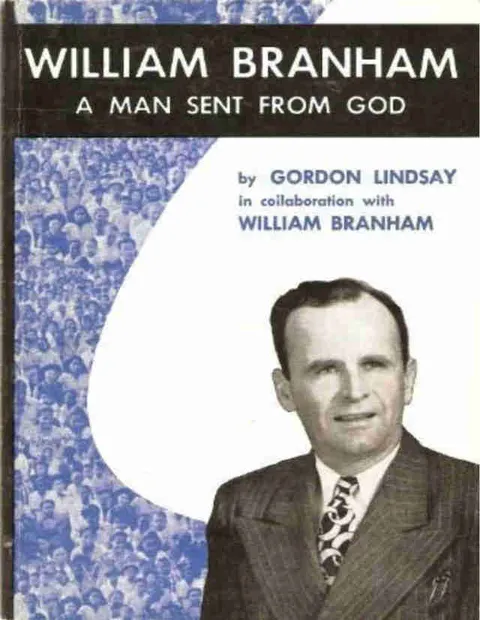

William Branham: A Man Sent By God Order Printed Copy
- Author: Gordon Lindsay
- Size: 678KB | 128 pages
- |
Others like william branham: a man sent by god Features >>

Hearts Of Fire - Eight Women In The Underground Church And Their Stories Of Costly Faith

Charlie Coulson: The Christian Drummer Boy
The Heroes Of Faith
Autobiography Of Madame Guyon

God's Generals: Jack Coe

Joshua: God's Chosen Warrior
George Fox - Autobiography

Foxe’s Book Of Martyrs
Ten Men Of The Bible
Church History: The First Century
About the Book
"WILLIAM BRANHAM: A MAN SENT BY GOD" is a biography written by Gordon Lindsay that chronicles the life of William Branham, a controversial preacher who was considered by many to be a prophet of God. The book explores his early life, ministry, and impact on the Pentecostal movement, while also examining the criticisms and controversies surrounding his work. Ultimately, Lindsay paints a complex portrait of a man whose life and teachings sparked both devotion and skepticism among believers.
Charles Finney
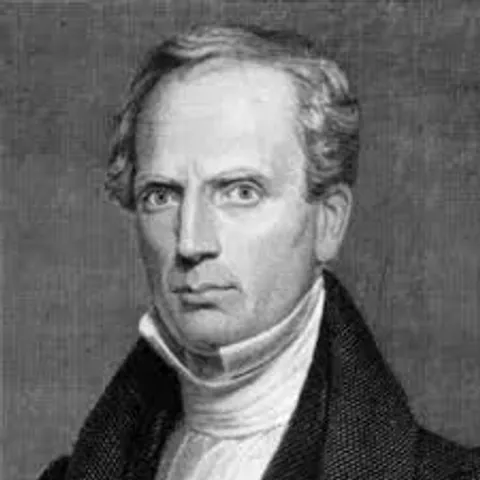 Childhood and Teen years
Charles Grandison Finney was born the year after Wesley died on 29th August, 1792 in Warren, Connecticut. In 1794 his family moved to New York state, eventually settling at Henderson, near Lake Ontario. Although he received only a brief formal education he decided to study law and joined the practice of a local lawyer, Benjamin Wright. He was also very musical, played the cello and directed the choir at the local Presbyterian Church pastured by Rev. George Gale.
His conversion
His conversion on October 10th 1821 reads like something out of the book of Acts. Smitten with conviction from Bible reading he decided to ‘settle the question of my soul’s salvation at once, that if it were possible, I would make my peace with God.’ (Autobiography)
This conviction increased to an unbearable level over the next couple of days and came to an head when he was suddenly confronted with an ‘inward voice.’ He was inwardly questioned about his spiritual condition and finally received revelation about the finished work of Christ and his own need to give up his sins and submit to Christ’s righteousness.
As he sought God in a nearby wood he was overwhelmed with an acute sense of his own wickedness and pride but finally submitted his life to Christ. Back at work that afternoon he was filled with a profound sense of tenderness, sweetness and peace. When work was over and he bade his employer goodnight, he then experienced a mighty baptism in the Holy Spirit, which was recorded as vividly as the day he experienced it, though it was penned some fifty years later.
The next morning Finney announced to a customer that he was leaving his law studies to become a preacher of the Gospel.
Charles Finney licensed to preach
He was licensed to preach in 1823 and ordained as an evangelist in 1824. His penetrating preaching was quite different from many local ministers and included an obvious attempt to break away from the traditional and, as he saw it, dead, orthodox Calvinism. He married to Lydia Andrews in October 1824 and was also joined by Daniel Nash (1774-1831), known popularly as ‘Father Nash.’ Undoubtedly Nash’s special ministry of prayer played a great part in Finney’s growing success as an evangelist.
Things really took off when he preached in his old church, where Rev. Gale still ministered. Numerous converts and critics followed! Similar results were experienced in nearby towns of Rome and Utica. Soon newspapers were reporting his campaigns and he began drawing large crowds with dramatic responses.
Soon he was preaching in the largest cities of the north with phenomenal results. Campaign after campaign secured thousands of converts.
The high point of Finney’s revival career was reached at Rochester, New York, during his 1830-1 meetings. Shopkeepers closed their businesses and the whole city seemed to centre on the revivalist. Responding to his irresistible logic and passionate arguments many of his converts were lawyers, merchants and those from a higher income and professional status.
His Preaching
Finney openly preached a modified Calvinism, influenced with his own theology of conversion and used what were perceived to be ‘revivalistic techniques.’
These ‘means’ included the use of the anxious bench (a special place for those under conviction), protracted meetings, women allowed to pray in mixed meetings, publicly naming those present resisting God in meetings and the hurried admission of new converts into church membership. Opponents viewed his preaching of the law as ‘scare tactics’ and his persuasive appeals for sinners to come to Christ for salvation were seen as over-emphasising the responsibility of men and ignoring the sovereignty of God.
His theology and practise soon became known as the ‘New Measures’ and attracted many opponents from the Old School Presbyterians led by Asahel Nettleton (himself no stranger to true revival and , the revivalistic Congregationalists headed by Lyman Beecher.
Pastor at Chatham Street Chapel
Finney accepted an appointment as pastor of Chatham Street Chapel in New York City in 1832 where he remained until 1837. It was during this time that he delivered a series of sermons published in 1835 as ‘Lectures on Revivals of Religion.’ Here he clearly stated his views regarding revivals being products of the correct use of human means. Such was the controversy that he left the Presbyterian denomination and joined the Congregationalists in 1836.
Oberlin College
The next year he became professor of theology at Oberlin College (Ohio) where he taught until his death. He was President here from 1851 until 1866, but still continued regular revival meetings in urban settings (twice in England, 1848, 1851) until 1860. During his stay at Oberlin he produced his, Lectures to Professing Christians (1836), Sermons on Important Subjects (1839) and his famous Memoirs.
The Father of Modern Revivalism
There is no doubt that Charles Grandison Finney well-deserves the title ‘The Father of Modern Revivalism.’ He was an evangelistic pioneer whose model was followed by a long line of revivalists from D. L. Moody to Billy Graham. His writing have made a massive impact on the entire evangelical world and particularly the ‘Lectures on Revivals’ which has, arguably, ignited more fires of revival than any other single piece literature in evangelical history.
This ‘Prince of Revivalists’ passed away peacefully at Oberlin on Sunday, 16th August, 1875 aged almost 83 years.
Bibliography: I Will Pour Out My Spirit, R. E. Davies, 1997; Ed: A. Scott Moreau, Baker Evangelical Dictionary of World Missions, 2000; Dictionary of Evangelical Biography 1730-1860, Vol. 1, 1995.
Tony Cauchi
Childhood and Teen years
Charles Grandison Finney was born the year after Wesley died on 29th August, 1792 in Warren, Connecticut. In 1794 his family moved to New York state, eventually settling at Henderson, near Lake Ontario. Although he received only a brief formal education he decided to study law and joined the practice of a local lawyer, Benjamin Wright. He was also very musical, played the cello and directed the choir at the local Presbyterian Church pastured by Rev. George Gale.
His conversion
His conversion on October 10th 1821 reads like something out of the book of Acts. Smitten with conviction from Bible reading he decided to ‘settle the question of my soul’s salvation at once, that if it were possible, I would make my peace with God.’ (Autobiography)
This conviction increased to an unbearable level over the next couple of days and came to an head when he was suddenly confronted with an ‘inward voice.’ He was inwardly questioned about his spiritual condition and finally received revelation about the finished work of Christ and his own need to give up his sins and submit to Christ’s righteousness.
As he sought God in a nearby wood he was overwhelmed with an acute sense of his own wickedness and pride but finally submitted his life to Christ. Back at work that afternoon he was filled with a profound sense of tenderness, sweetness and peace. When work was over and he bade his employer goodnight, he then experienced a mighty baptism in the Holy Spirit, which was recorded as vividly as the day he experienced it, though it was penned some fifty years later.
The next morning Finney announced to a customer that he was leaving his law studies to become a preacher of the Gospel.
Charles Finney licensed to preach
He was licensed to preach in 1823 and ordained as an evangelist in 1824. His penetrating preaching was quite different from many local ministers and included an obvious attempt to break away from the traditional and, as he saw it, dead, orthodox Calvinism. He married to Lydia Andrews in October 1824 and was also joined by Daniel Nash (1774-1831), known popularly as ‘Father Nash.’ Undoubtedly Nash’s special ministry of prayer played a great part in Finney’s growing success as an evangelist.
Things really took off when he preached in his old church, where Rev. Gale still ministered. Numerous converts and critics followed! Similar results were experienced in nearby towns of Rome and Utica. Soon newspapers were reporting his campaigns and he began drawing large crowds with dramatic responses.
Soon he was preaching in the largest cities of the north with phenomenal results. Campaign after campaign secured thousands of converts.
The high point of Finney’s revival career was reached at Rochester, New York, during his 1830-1 meetings. Shopkeepers closed their businesses and the whole city seemed to centre on the revivalist. Responding to his irresistible logic and passionate arguments many of his converts were lawyers, merchants and those from a higher income and professional status.
His Preaching
Finney openly preached a modified Calvinism, influenced with his own theology of conversion and used what were perceived to be ‘revivalistic techniques.’
These ‘means’ included the use of the anxious bench (a special place for those under conviction), protracted meetings, women allowed to pray in mixed meetings, publicly naming those present resisting God in meetings and the hurried admission of new converts into church membership. Opponents viewed his preaching of the law as ‘scare tactics’ and his persuasive appeals for sinners to come to Christ for salvation were seen as over-emphasising the responsibility of men and ignoring the sovereignty of God.
His theology and practise soon became known as the ‘New Measures’ and attracted many opponents from the Old School Presbyterians led by Asahel Nettleton (himself no stranger to true revival and , the revivalistic Congregationalists headed by Lyman Beecher.
Pastor at Chatham Street Chapel
Finney accepted an appointment as pastor of Chatham Street Chapel in New York City in 1832 where he remained until 1837. It was during this time that he delivered a series of sermons published in 1835 as ‘Lectures on Revivals of Religion.’ Here he clearly stated his views regarding revivals being products of the correct use of human means. Such was the controversy that he left the Presbyterian denomination and joined the Congregationalists in 1836.
Oberlin College
The next year he became professor of theology at Oberlin College (Ohio) where he taught until his death. He was President here from 1851 until 1866, but still continued regular revival meetings in urban settings (twice in England, 1848, 1851) until 1860. During his stay at Oberlin he produced his, Lectures to Professing Christians (1836), Sermons on Important Subjects (1839) and his famous Memoirs.
The Father of Modern Revivalism
There is no doubt that Charles Grandison Finney well-deserves the title ‘The Father of Modern Revivalism.’ He was an evangelistic pioneer whose model was followed by a long line of revivalists from D. L. Moody to Billy Graham. His writing have made a massive impact on the entire evangelical world and particularly the ‘Lectures on Revivals’ which has, arguably, ignited more fires of revival than any other single piece literature in evangelical history.
This ‘Prince of Revivalists’ passed away peacefully at Oberlin on Sunday, 16th August, 1875 aged almost 83 years.
Bibliography: I Will Pour Out My Spirit, R. E. Davies, 1997; Ed: A. Scott Moreau, Baker Evangelical Dictionary of World Missions, 2000; Dictionary of Evangelical Biography 1730-1860, Vol. 1, 1995.
Tony Cauchi
the dating games - an online war against true love
A war is being waged against true love. As we celebrate another Valentine’s Day, I wonder if you will be another civilian casualty. If the current trends continue, what will the pursuit of marriage be like in twenty years? One new study reports, “Apps are the new norm in dating. . . . By 2040, 70% of people are expected to meet through dating apps.” Why does that cause any concern? Well, because despite all the new and innovative ways to find love, “People are lonelier than ever. . . . One study found that over half of dating app users reported feeling lonely after swiping.” They have called it “the gamification of courtship.” The fierce irony is that the “game” wounds and devastates so many. Dating websites and apps have ridden in on digital horseback, bearing a dozen roses and declaring their fidelity, but their first love is in your pocket — and they’re jealous lovers. They play the sympathetic matchmaker up front, but they’re more like the Gamemaker in Hunger Games — pulling whatever levers necessary, at whatever cost to you, to get what they really want. Online dating may have wed its thousands, but it’s wounded its tens of thousands. If you’re wandering out into the crossfire in your own search for marriage, are you awake to the pitfalls? Who Will Deliver Us? For all its many weaknesses and perils, old-fashioned courtship did prevent the pursuit of marriage from becoming a playground for digital likes, swipes, and winks. Real-world structure and boundaries meant, for the most part, that pursuing a woman required intentionality, clear communication, patience, and risk. It felt more like buying your first home than renting a movie on iTunes. Wi-Fi, one of the greatest achievements in communications technology, should have made romance so much easier — more people, less driving, more access. Instead, it seems to have blurred the lines we needed, leaving us even more lonely and less likely to find wedded bliss. The websites and apps have manifestly facilitated random sex and superficial flirtation, but they seem to have done far less to help us find love. Far from solving our problems, they have often multiplied and complicated them, leaving many feeling like we’re driving blindfolded — until the inevitable crash into greater heartache and deeper loneliness. Who will deliver us from the gamification of our hearts — from this dating scene of death? “Thanks be to God through Jesus Christ our Lord!” (Romans 7:25). Because of him, in the midst of all of the confusion and heartache, we have an anchor and a refuge. We’re no longer condemned by the sins we’ve committed in relationships in the past — by the ways we have wittingly or unwittingly followed the course of this world (Ephesians 2:2) — and we’re not captive to the broken and prevailing dating trends of our day. Five Reasons to Quit Playing While the world plays games with sex, romance, and “commitment,” Christ frees us to quit playing and start dating differently — with selflessness and humility, with clarity and intentionality, with patience and sobriety, even if we choose to meet someone online. If you have been wounded by the romantic carelessness of others, or you’re tired of suffering from all the ambiguity, or you simply want to avoid the dangers of dating today, here are five big reasons to beware online. 1. Humility, not vanity, prepares us to love a spouse. The overwhelmingly popular swipe feature, which allows you to impulsively like or reject people based on their appearance, can poison anyone with pride. The flick of a thumb, so seemingly harmless, threatens to cheapen the image of God. What does God feel when we flippantly swipe a real man or woman, someone he himself wove together, into the trash bin of our phones? When there were no apps between us, the dynamic was more palpable. You had to reject people to their face (or at least with your voice over the phone), where you were confronted with them as a person, not just as pixels. We don’t have to like or date every man or woman who likes us; we do need to treat them as eternally valuable made ones. Online dating has made it so much easier to treat them as virtually nothing. The yay-or-nay culture in online dating not only diminishes the value of a person; it also fortifies our walls of pride. The apps and profiles pretend to give us the power to decide what is better or worse, ugly or beautiful in a human being. Instead of leading us to marital bliss, that kind of vanity ruins us for marriage, for the kind of the crucified love that requires Christlike humility at every single turn. Fill your phone and life with habits that expose vanity and cultivate humility. If you want to love a woman (or man) well, you will need to be relentlessly vulnerable about your own faults and tenaciously patient and compassionate toward hers (or his). 2. Money, not wisdom, fuels online dating. If you seriously want to be informed, you won’t have to read long to realize that money, not love, drives these companies. They don’t go to sleep at night dreaming about how to get you married. They go to sleep, wake up in the morning, and work extremely hard to make money — from you or anyone else. It’s not personal, but it is incredibly professional. People have undoubtedly always made money from people who want to marry, but never at this scale and never this pervasively. By some reports, $2.5 billion every year (and growing). After food, shelter, and water, there is no demand higher than love, and Silicon Valley has quickly learned how to turn the demand into millions and millions of dollars. Even if you don’t pay, they’re selling your “free” clicks and likes and connections for advertising. This does not mean that dating websites or apps are inherently bad, or that godly people may not find their godly spouse through them, but it does mean dating online is inherently dangerous. The apostle Paul warns, “The love of money is a root of all kinds of evils” (1 Timothy 6:10). If your priorities and desires are shaped by Christ, then I’m sure dating websites and apps can be one good way to meet your future spouse — like a pirate ship in the hands of a just captain. I fear, however, that too many Christians have instead reluctantly climbed aboard with Jack Sparrow, expecting to find a stowaway among the crew to marry, while blindly riding into whatever trouble the ship takes them. 3. Perfection is an illusion, not an expectation. The apps allow you to create the illusion of perfection — and to buy that same illusion from others. No one creates a profile looking for opportunities to highlight their weaknesses and expose their flaws. The whole system is built to make us look (and feel) too good about ourselves — to indulge in (and entice others with) an illusion of ourselves. Paul says, “By the grace given to me I say to everyone among you not to think of himself more highly than he ought to think, but to think with sober judgment, each according to the measure of faith that God has assigned” (Romans 12:3). Can we really think honestly and soberly about ourselves while we’re busy making ourselves look as good as possible? Many of us need to be reminded that God’s perfect person for us isn’t all that perfect. Every person who marries is a sinner, so the search for a spouse isn’t a pursuit of perfection, but a mutually flawed pursuit of Jesus. We are not only looking for an almost-perfect husband or wife; we are looking for a man or woman secure enough in Christ to boast in their weaknesses (2 Corinthians 12:9). Regardless of the believer you marry (and how well their profile scored), you will likely find out soon that you do not feel as “compatible” as you once did, but hopefully you will marvel more at God’s love for you in Jesus and the amazing privilege it is to live out that love together, especially in light of the ways you consistently disappoint and fail each other. 4. Romance has the power to ruin lives and souls. Gamification . I wrote this article because of that word — because the word was so grossly (and personally) familiar, and because it was so deeply offensive. I have seen the destruction careless dating can cause because I have been the naïve, reckless, and selfish destroyer. I flirted without any serious intention of pursuing. I let girls wonder if I was leading them on. I played hide-and-seek with the blood-bought hearts of my sisters in Christ. I treated physical intimacy like a hobby. Game may describe how some of us have treated love, but what we leave behind often looks and feels more like a house leveled by a tornado. We all want to pretend dating is fun and harmless until we’re the ones harmed while someone else has their fun. But even before we get hurt, we know how much is at stake. We know the springs of life flow from the heart (Proverbs 4:23). We know she was formed by God in her mother’s womb (Psalm 139:13), and given a soul that will last forever. We know the passions of the flesh wage war against us (1 Peter 2:11). We know that we are lured and enticed by our desires into sin, which leads to death (James 1:14). Romance has as much power as anything to ruin lives and betray souls. When you’re tempted to treat it more like Candy Crush, remember the eternities that are affected by romantic intimacy. 5. Jesus demands (and offers) more. You cannot avoid this war altogether. Even if you left all the websites and traded in your smartphone, pursuing love will mean being vulnerable to potential heartbreak. The world of online dating simply makes it easier to get hurt. I want you to be wide awake to Satan’s schemes against you. I want you to be prepared for the fiery arrows that will fall on your path to marriage. I also want you to know how people are wounded so that you can love them well in dating, even if you never marry them. Jesus will demand more of you. Dating how he wants us to will not be convenient, easy, or cheap. It will require extraordinary patience, self-control, and sacrifice — far more than most expect from us online, and far more than we can muster without his moment-by-moment help. The love he demands won’t have the thrill of flirtation, or the mystique of ambiguity, or the adrenaline rush of sexual immorality, but for the first time, it will feel real. Because it will be real. Because it will be filled with him.