-480.webp)

When God Says Yes (His Promise And Provision When You Need It Most) Order Printed Copy
- Author: Julia Loren
- Size: 1.19MB | 147 pages
- |
Others like when god says yes (his promise and provision when you need it most) Features >>

When God Fights For You

The Power Of Praise And Worship
-160.webp)
Hi God, It's Me Again (What To Pray When You Don't Know What To Say)

Praying For The Impossible

Holy Spirit Power: Knowing The Voice, Guidance And Person Of The Holy Spirit

The Fasting Edge

Discerning The Voice Of God

The Lost Art Of Intercession
The Callused Knees

Ten Ways God Speaks
About the Book
"When God Says Yes" by Julia Loren explores the concept of God's promises and provisions during challenging times. The book provides insight and encouragement for believers on how to trust in God's faithfulness and receive His blessings. Through personal stories and biblical examples, the author demonstrates the power of prayer, faith, and patience in receiving God's "yes" in our lives. Ultimately, the book serves as a reminder that God's promises are always true and His provision is always available to those who believe.
John and Betty Stam
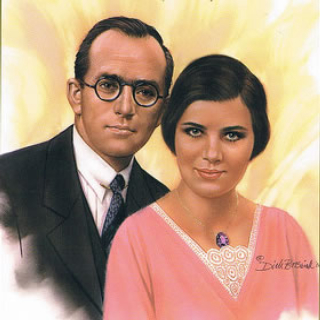 The year 1934. Americans John and Betty Stam were serving as missionaries in China. One morning Betty was bathing her three-month-old daughter Helen Priscilla Stam when Tsingteh's city magistrate appeared. Communist forces were near, he warned, and urged the Stams to flee.
So John Stam went out to investigate the situation for himself. He received conflicting reports. Taking no chances, he arranged for Betty and the baby to be escorted away to safety if need be. But before the Stams could make their break, the Communists were inside the city. By little-known paths, they had streamed over the mountains behind government troops. Now gun shots sounded in the streets as looting began. The enemy beat on the Stams' own gate.
A faithful cook and maid at the mission station had stayed behind. The Stams knelt with them in prayer. But the invaders were pounding at the door. John opened it and spoke courteously to the four leaders who entered, asking them if they were hungry. Betty brought them tea and cakes. The courtesy meant nothing. They demanded all the money the Stams had, and John handed it over. As the men bound him, he pleaded for the safety of his wife and child. The Communists left Betty and Helen behind as they led John off to their headquarters.
Before long, they reappeared, demanding mother and child. The maid and cook pleaded to be allowed to accompany Betty.
"No," barked the captors, and threatened to shoot.
"It is better for you to stay here," Betty whispered. "If anything happens to us, look after the baby."
[When we consecrate ourselves to God, we think we are making a great sacrifice, and doing lots for Him, when really we are only letting go some little, bitsie trinkets we have been grabbing, and when our hands are empty, He fills them full of His treasures. --Betty Stam]
Betty was led to her husband's side. Little Helen needed some things and John was allowed to return home under guard to fetch them. But everything had been stolen. That night John was allowed to write a letter to mission authorities. "My wife, baby and myself are today in the hands of the Communists in the city of Tsingteh. Their demand is twenty thousand dollars for our release. . . . We were too late. The Lord bless and guide you. As for us, may God be glorified, whether by life or by death."
Prisoners in the local jail were released to make room for the Stams. Frightened by rifle fire, the baby cried out. One of the Reds said, "Let's kill the baby. It is in our way." A bystander asked, "Why kill her? What harm has she done?"
"Are you a Christian?" shouted one of the guards.
The man said he was not; he was one of the prisoners just released.
"Will you die for this foreign baby?" they asked. As Betty hugged Helen to her chest, the man was hacked to pieces before her eyes.
Terror in the Streets
The next morning their captors led the Stams toward Miaosheo, twelve miles distant. John carried little Helen, but Betty, who was not physically strong, owing to a youthful bout with inflammatory rheumatitis was allowed to ride a horse part of the way. Terror reigned in the streets of Miaosheo. Under guard, the foreign family was hustled into the postmaster's shop.
"Where are you going?" asked the postmaster, who recognized them from their previous visits to his town. "We do not know where they are going, but we are going to heaven," answered John. He left a letter with the postmaster. "I tried to persuade them to let my wife and baby go back from Tsingteh with a letter to you, but they would not let her. . . ."
That night the three were held in the house of a wealthy man who had fled. They were guarded by soldiers. John was tied to a post all that cold night, but Betty was allowed enough freedom to tend the baby. As it turned out, she did more than that.
Execution
The next morning the young couple were led through town without the baby. Their hands were tightly bound, and they were stripped of their outer garments as if they were common criminals. John walked barefoot. He had given his socks to Betty. The soldiers jeered and called the town’s folk to come see the execution. The terrified people obeyed.
On the way to the execution, a medicine-seller, considered a lukewarm Christian at best, stepped from the crowd and pleaded for the lives of the two foreigners. The Reds angrily ordered him back. The man would not be stilled. His house was searched, a Bible and hymnbook found, and he, too was dragged away to die as a hated Christian.
John pleaded for the man’s life. The Red leader sharply ordered him to kneel. As John was speaking softly, the Red leader swung his sword through the missionary’s throat so that his head was severed from his body. Betty did not scream. She quivered and fell bound beside her husband’s body. As she knelt there, the same sword ended her life with a single blow.
Betty
Betty Scott was born in the United States but reared in China as the daughter of missionaries. She came to the United States and attended Wilson College in Pennsylvania. Betty prepared to follow in her parents’ footsteps and work in China or wherever else the Lord directed her.
But China it proved to be. At a prayer meeting for China, she met John Stam and a friendship developed that ripened into love. Painfully they recognized that marriage was not yet possible. “The China Inland Mission has appealed for men, single men, to work in sections where it would be impossible to take a woman until more settled work has commenced,” wrote John. He committed the matter to the Lord, whose work, he felt, must come before any human affection. At any rate, Betty would be leaving for China before him, to work in an entirely different region, and so they must be separated anyhow. As a matter of fact, John had not yet even been accepted by the China Inland Mission whereas Betty had. They parted after a long tender day, sharing their faith, picnicking, talking, and praying.
Betty sailed while John continued his studies. On July 1, 1932, John, too, was accepted for service in China. Now at least he could head toward the same continent as Betty. He sailed for Shanghai.
Meanwhile, Betty found her plans thwarted. A senior missionary had been captured by the Communists in the region where she was to have worked. The mission directors decided to keep her in a temporary station, and later ill-health brought her to Shanghai. Thus without any choice on her part, she was in Shanghai when John landed in China. Immediately they became engaged and a year later were married, long before they expected it. In October, 1934 Helen Priscilla was born to them. What would become of her now that her parents John and Betty were dead?
In the Hills
For two days, local Christians huddled in hiding in the hills around Miaosheo. Among them was a Chinese evangelist named Mr. Lo. Through informants, he learned that the Communists had captured two foreigners. At first he did not realize that these were John and Betty Stam, with whom he had worked, but as he received more details, he put two and two together. As soon as government troops entered the valley and it was safe to venture forth, Mr. Lo hurried to town. His questions met with silence. Everyone was fearful that spies might report anyone who said too much.
An old woman whispered to Pastor Lo that there was a baby left behind. She nodded in the direction of the house where John and Betty had been chained their last night on earth. Pastor Lo hurried to the site and found room after room trashed by the bandits. Then he heard a muffled cry. Tucked by her mother in a little sleeping bag, Helen was warm and alive, although hungry after her two day fast.
The kindly pastor took the child in his arms and carried her to his wife. With the help of a local Christian family, he wrapped the bodies that still lay upon the hillside and placed them into coffins. To the crowd that gathered he explained that the missionaries had only come to tell them how they might find forgiveness of sin in Christ. Leaving others to bury the dead, he hurried home. Somehow Helen had to be gotten to safety.
Pastor Lo's own son, a boy of four, was desperately ill -- semi-conscious after days of exposure. Pastor Lo had to find a way to carry the children a hundred miles through mountains infested by bandits and Communists. Brave men were found willing to help bear the children to safety, but there was no money to pay them for their efforts. Lo had been robbed of everything he had.
From Beyond the Grave
But from beyond the grave, Betty provided. Tucked in Helen's sleeping bag were a change of clothes and some diapers. Pinned between these articles of clothing were two five dollar bills. It made the difference.
Placing the children in rice baskets slung from the two ends of a bamboo pole, the group departed quietly, taking turns carrying the precious cargo over their shoulders. Mrs. Lo was able to find Chinese mothers along the way to nurse Helen. On foot, they came safely through their perils. Lo's own boy recovered consciousness suddenly and sat up, singing a hymn.
Eight days after the Stams fell into Communist hands, another missionary in a nearby city heard a rap at his door. He opened it and a Chinese woman, stained with travel, entered the house, bearing a bundle in her arms. "This is all we have left," she said brokenly.
The missionary took the bundle and turned back the blanket to uncover the sleeping face of Helen Priscilla Stam. Many kind hands had labored to preserve the infant girl, but none kinder than Betty who had spared no effort for her baby even as she herself faced degradation and death.
Kathleen White has written an excellent and very readable biography John and Betty Stam, available from Bethany House Publishers (1988). She reports that Betty's alma mater, Wilson College in Pennsylvania, took over baby Helen's support and covered the costs of her college education. She added: "Helen is living in this country (USA) with her husband and family but does not wish her identity and whereabouts to be made known."
Resources:
Huizenga, Lee S. John and Betty Stam; Martyrs. Zondervan, 1935.
Pollock, John. Victims of the Long March and Other Stories. Waco, Texas.: Word Publishing, 1970.
Taylor, Mrs. Howard. The Triumph of John and Betty Stam. China Inland Mission, 1935.
The year 1934. Americans John and Betty Stam were serving as missionaries in China. One morning Betty was bathing her three-month-old daughter Helen Priscilla Stam when Tsingteh's city magistrate appeared. Communist forces were near, he warned, and urged the Stams to flee.
So John Stam went out to investigate the situation for himself. He received conflicting reports. Taking no chances, he arranged for Betty and the baby to be escorted away to safety if need be. But before the Stams could make their break, the Communists were inside the city. By little-known paths, they had streamed over the mountains behind government troops. Now gun shots sounded in the streets as looting began. The enemy beat on the Stams' own gate.
A faithful cook and maid at the mission station had stayed behind. The Stams knelt with them in prayer. But the invaders were pounding at the door. John opened it and spoke courteously to the four leaders who entered, asking them if they were hungry. Betty brought them tea and cakes. The courtesy meant nothing. They demanded all the money the Stams had, and John handed it over. As the men bound him, he pleaded for the safety of his wife and child. The Communists left Betty and Helen behind as they led John off to their headquarters.
Before long, they reappeared, demanding mother and child. The maid and cook pleaded to be allowed to accompany Betty.
"No," barked the captors, and threatened to shoot.
"It is better for you to stay here," Betty whispered. "If anything happens to us, look after the baby."
[When we consecrate ourselves to God, we think we are making a great sacrifice, and doing lots for Him, when really we are only letting go some little, bitsie trinkets we have been grabbing, and when our hands are empty, He fills them full of His treasures. --Betty Stam]
Betty was led to her husband's side. Little Helen needed some things and John was allowed to return home under guard to fetch them. But everything had been stolen. That night John was allowed to write a letter to mission authorities. "My wife, baby and myself are today in the hands of the Communists in the city of Tsingteh. Their demand is twenty thousand dollars for our release. . . . We were too late. The Lord bless and guide you. As for us, may God be glorified, whether by life or by death."
Prisoners in the local jail were released to make room for the Stams. Frightened by rifle fire, the baby cried out. One of the Reds said, "Let's kill the baby. It is in our way." A bystander asked, "Why kill her? What harm has she done?"
"Are you a Christian?" shouted one of the guards.
The man said he was not; he was one of the prisoners just released.
"Will you die for this foreign baby?" they asked. As Betty hugged Helen to her chest, the man was hacked to pieces before her eyes.
Terror in the Streets
The next morning their captors led the Stams toward Miaosheo, twelve miles distant. John carried little Helen, but Betty, who was not physically strong, owing to a youthful bout with inflammatory rheumatitis was allowed to ride a horse part of the way. Terror reigned in the streets of Miaosheo. Under guard, the foreign family was hustled into the postmaster's shop.
"Where are you going?" asked the postmaster, who recognized them from their previous visits to his town. "We do not know where they are going, but we are going to heaven," answered John. He left a letter with the postmaster. "I tried to persuade them to let my wife and baby go back from Tsingteh with a letter to you, but they would not let her. . . ."
That night the three were held in the house of a wealthy man who had fled. They were guarded by soldiers. John was tied to a post all that cold night, but Betty was allowed enough freedom to tend the baby. As it turned out, she did more than that.
Execution
The next morning the young couple were led through town without the baby. Their hands were tightly bound, and they were stripped of their outer garments as if they were common criminals. John walked barefoot. He had given his socks to Betty. The soldiers jeered and called the town’s folk to come see the execution. The terrified people obeyed.
On the way to the execution, a medicine-seller, considered a lukewarm Christian at best, stepped from the crowd and pleaded for the lives of the two foreigners. The Reds angrily ordered him back. The man would not be stilled. His house was searched, a Bible and hymnbook found, and he, too was dragged away to die as a hated Christian.
John pleaded for the man’s life. The Red leader sharply ordered him to kneel. As John was speaking softly, the Red leader swung his sword through the missionary’s throat so that his head was severed from his body. Betty did not scream. She quivered and fell bound beside her husband’s body. As she knelt there, the same sword ended her life with a single blow.
Betty
Betty Scott was born in the United States but reared in China as the daughter of missionaries. She came to the United States and attended Wilson College in Pennsylvania. Betty prepared to follow in her parents’ footsteps and work in China or wherever else the Lord directed her.
But China it proved to be. At a prayer meeting for China, she met John Stam and a friendship developed that ripened into love. Painfully they recognized that marriage was not yet possible. “The China Inland Mission has appealed for men, single men, to work in sections where it would be impossible to take a woman until more settled work has commenced,” wrote John. He committed the matter to the Lord, whose work, he felt, must come before any human affection. At any rate, Betty would be leaving for China before him, to work in an entirely different region, and so they must be separated anyhow. As a matter of fact, John had not yet even been accepted by the China Inland Mission whereas Betty had. They parted after a long tender day, sharing their faith, picnicking, talking, and praying.
Betty sailed while John continued his studies. On July 1, 1932, John, too, was accepted for service in China. Now at least he could head toward the same continent as Betty. He sailed for Shanghai.
Meanwhile, Betty found her plans thwarted. A senior missionary had been captured by the Communists in the region where she was to have worked. The mission directors decided to keep her in a temporary station, and later ill-health brought her to Shanghai. Thus without any choice on her part, she was in Shanghai when John landed in China. Immediately they became engaged and a year later were married, long before they expected it. In October, 1934 Helen Priscilla was born to them. What would become of her now that her parents John and Betty were dead?
In the Hills
For two days, local Christians huddled in hiding in the hills around Miaosheo. Among them was a Chinese evangelist named Mr. Lo. Through informants, he learned that the Communists had captured two foreigners. At first he did not realize that these were John and Betty Stam, with whom he had worked, but as he received more details, he put two and two together. As soon as government troops entered the valley and it was safe to venture forth, Mr. Lo hurried to town. His questions met with silence. Everyone was fearful that spies might report anyone who said too much.
An old woman whispered to Pastor Lo that there was a baby left behind. She nodded in the direction of the house where John and Betty had been chained their last night on earth. Pastor Lo hurried to the site and found room after room trashed by the bandits. Then he heard a muffled cry. Tucked by her mother in a little sleeping bag, Helen was warm and alive, although hungry after her two day fast.
The kindly pastor took the child in his arms and carried her to his wife. With the help of a local Christian family, he wrapped the bodies that still lay upon the hillside and placed them into coffins. To the crowd that gathered he explained that the missionaries had only come to tell them how they might find forgiveness of sin in Christ. Leaving others to bury the dead, he hurried home. Somehow Helen had to be gotten to safety.
Pastor Lo's own son, a boy of four, was desperately ill -- semi-conscious after days of exposure. Pastor Lo had to find a way to carry the children a hundred miles through mountains infested by bandits and Communists. Brave men were found willing to help bear the children to safety, but there was no money to pay them for their efforts. Lo had been robbed of everything he had.
From Beyond the Grave
But from beyond the grave, Betty provided. Tucked in Helen's sleeping bag were a change of clothes and some diapers. Pinned between these articles of clothing were two five dollar bills. It made the difference.
Placing the children in rice baskets slung from the two ends of a bamboo pole, the group departed quietly, taking turns carrying the precious cargo over their shoulders. Mrs. Lo was able to find Chinese mothers along the way to nurse Helen. On foot, they came safely through their perils. Lo's own boy recovered consciousness suddenly and sat up, singing a hymn.
Eight days after the Stams fell into Communist hands, another missionary in a nearby city heard a rap at his door. He opened it and a Chinese woman, stained with travel, entered the house, bearing a bundle in her arms. "This is all we have left," she said brokenly.
The missionary took the bundle and turned back the blanket to uncover the sleeping face of Helen Priscilla Stam. Many kind hands had labored to preserve the infant girl, but none kinder than Betty who had spared no effort for her baby even as she herself faced degradation and death.
Kathleen White has written an excellent and very readable biography John and Betty Stam, available from Bethany House Publishers (1988). She reports that Betty's alma mater, Wilson College in Pennsylvania, took over baby Helen's support and covered the costs of her college education. She added: "Helen is living in this country (USA) with her husband and family but does not wish her identity and whereabouts to be made known."
Resources:
Huizenga, Lee S. John and Betty Stam; Martyrs. Zondervan, 1935.
Pollock, John. Victims of the Long March and Other Stories. Waco, Texas.: Word Publishing, 1970.
Taylor, Mrs. Howard. The Triumph of John and Betty Stam. China Inland Mission, 1935.
Talking Back to God - How His Promises Provoke Our Prayers
It is one of the most audacious, and awe-inspiring, moments in all of Scripture. In the wake of Israel’s shocking rebellion against God — blatantly violating the covenant God just made with them — Moses humbly dares to mediate between God and his people. At the climax of his intercession, and his careful yet determined dialogue with the living God, Moses makes what is perhaps the greatest, and most perceptive, petition a creature can of his Creator. And it is, after all, a prayer — a modest yet bold request, made by man, to God Almighty: “Please show me your glory.” That this is, in some sense, a special moment is plain. We do not stand in Moses’s sandals. We are not prophets called to mediate a covenant, nor do we live under that Sinai pact. Yet Moses’s prayer still functions as a model for the godly after him. It will not be the last prayer in Scripture for a sight of God’s glory, and rightly do the faithful echo it today. What might we who are in Christ learn about our own prayers from the amazing sequence of Moses’s pressing into God in Exodus 32–33? Can and Will God Forgive? Before wrestling with the prayer itself, we need to first acknowledge Moses’s haunting question: Could and would God forgive the people such a horrific breach of the covenant? Moses was not yet sure. He heard stories of his forefathers, encountered God at the bush, and witnessed the plagues in Egypt and the rescue in the Red Sea. Moses knew a powerful God who had delivered his people, but would he also forgive them? At first, it looked like he wouldn’t. When God first informed Moses, on the mountain, that the people had “corrupted themselves,” by making and worshiping a golden calf (32:7–8), God had said, “Let me alone, that my wrath may burn hot against them and I may consume them. . .” (32:10). As Moses began to plead that God withhold destruction, it was far from clear that any relationship of peace could be fully restored. God did relent of immediately consuming the people (32:14), yet the covenant remained broken. Although Moses went down the mountain, confronted the people in their rebellion, burnt the calf, disciplined the people (32:15–20), and oversaw the purging of the three thousand who led in the rebellion (32:21–29), Moses knew this did not restore what lay shattered. The next day, he returned to meet God on the mountain. What drives Moses’s sequence of prayer in Exodus 33 is the question he begins to ask in 32:32: Can and will Yahweh forgive? Will God restore the relationship, and dwell among them, after they had worshiped the golden calf? And as we will see, God draws prayer out of Moses, and then moves to answer Moses’s question, in a way far more powerful, and memorable, than if there had not been an unfolding, developing, deepening relationship with God. Moses, Teach Us to Pray Exodus 33 begins with God declaring to the people that even though he will give them the land promised to their forefathers, God himself will not go up among them (33:3). They mourn this “disastrous word.” They want him, not just the promised land. They humble themselves before God, taking off their ornaments “from Mount Horeb onward” (33:6). Even though the people heard this disastrous word, however, Moses continues to enjoy remarkable favor with God. In a tent pitched far off from the camp, God speaks with Moses (33:9), and verse 11 comments: “Thus the Lord used to speak to Moses face to face, as a man speaks to his friend.” This sets the scene for Moses’s remarkable intercessory prayer in 33:12–18. “In prayer, we respond to God. . . . First, we hear his voice in Scripture; then we access his ear in prayer.” Observe, then, at least three lessons Christians today might take from Moses’s otherwise inimitable prayer. 1. Prayer responds to God. The living God takes the initiative. He first announced to Moses the people’s breach of the covenant (32:7–10). And he revealed his enduring favor on Moses, prompting the prophet to reply. So too for us. We don’t just “dial up” God in prayer when we so wish. First, he speaks, as he has revealed himself in his world, and in his word, and in his Son, the Word. In prayer, we respond to him in light of his revelation to us. First, we hear his voice in Scripture; then we access his ear in prayer. We pray in light of what he has promised. 2. Prayer pleads God’s reputation and glory. When God announces to Moses the peoples’ sin, and the intention to destroy them and start over with him, Moses’s reflex is to lean into God’s own reputation. This is a good reflex. “Why should the Egyptians say, ‘With evil intent did he bring them out, to kill them in the mountains and to consume them from the face of the earth’?” (Exodus 21:12). Moses prays for God to turn from righteous anger and relent “from this disaster against your people,” for God’s own name’s sake. Moses does not plea the people’s worth — or their humanity, made in God’s image — but God’s choice and word. He chose them as his people. “At the bottom of prayer to a God like ours is our longing for his face, not merely the provisions of his hand.” Today we are in good company to pray for God’s own reputation in the world, and to take notice of, and pray, God’s own promises back to him. God loves for his people to pray in light of what he’s said to us, to make our pleas in response to his promises. And praying for his glory not only concerns God’s reputation in the world, but also, and most significantly, our own knowing and enjoying him. At the bottom of prayer to such a God is our longing for his face, not merely the provisions of his hand. 3. Prayer can be incremental and sequential. We might even call Moses’s prayer “dialogical.” It is striking how relational his process and sequence of prayer is in these chapters. At the heart of the “dialogue,” reverent as it is, is whose people the Israelites are, a topic God introduces and draws Moses into. First, to Moses, God calls them, after their sin, “your people, whom you brought up out of the land of Egypt” (32:7). Then God introduces the surprising tension of his ongoing favor on Moses. God will consume the people and “make a great nation” of Moses (32:9–10). This favor, combined with calling the nation “your people,” presents Moses an invitation to reply in prayer. Moses asks to know more about this God — “please show me now your ways” (33:13) — to discern whether God will forgive his stiff-necked nation. And Moses meekly, but importantly, appends this to this first plea: “Consider too that this nation is your people.” God answers positively, though briefly: “My presence will go with you, and I will give you rest” (33:14). The short reply invites Moses to press in further, for the sake of the people. His “me” moves to “us.” He pleads for “I and your people”; then again “we . . . I and your people.” Moses identifies himself with the people, asking that God’s favor on him extend to them. Prayer, by human persons to the living and personal God, is far more than transactional. It is relational, and often incremental, with measured, humble boldness. God leads us, like Moses, into prayer. We make our requests. He answers in time. We learn more of him, which leads us to ask to see more of him. ‘Show Me Your Glory’ Moses’s prayerful dialogue with God has become more and more daring — slowly, one incremental plea at a time: Don’t consume your people (32:11–13). Please forgive your people (32:31–32). Show me your ways (33:13). Count the people with me in my favor with you (33:15–16). And now, most boldly, “Please show me your glory” (33:18). This short but daring plea will be Moses’s last. He will not speak again until 34:9, when he finally completes the plea for forgiveness he left unfinished in 32:32. In Exodus 33:19, God begins to respond: I will make all my goodness pass before you and will proclaim before you my name ‘The Lord.’ And I will be gracious to whom I will be gracious, and will show mercy on whom I will show mercy. (Exodus 33:19) Moses receives his full answer, however, a chapter later in Exodus 34:7 with another revelation: The Lord passed before him and proclaimed, “The Lord, the Lord, a God merciful and gracious, slow to anger, and abounding in steadfast love and faithfulness, keeping steadfast love for thousands, forgiving iniquity and transgression and sin. (Exodus 34:6–7). The driving question has been answered, and so Moses bows in worship and prays with confidence, “O Lord, please let the Lord go in the midst of us . . . and pardon our iniquity and our sin . . .” (34:9). Having prayed, and seen the glory in God’s declarations about his character, his goodness, his mercy, his grace, Moses is confident that God will grant forgiveness and renew the covenant. Christ, Our Moses For Christians today, any Moses-like leveraging of God’s favor we know to be firmly grounded in his favor on Christ. More significant than our echoes and imitations of Moses is the fulfillment of his intercession, and final mediation for God’s people, in Jesus. We may indeed glean some categories and concepts from Moses’s prayers. Yet, as we come in Christ to Exodus 32–33, we identify not only with the prophet, but with the people. They are “stiff-necked.” Rebellious. Deserving of divine justice. Desperate for mercy and grace. But in Christ, we have one far greater than Moses who intercedes for us, leveraging his own perfect favor with God on our behalf. Jesus, our great high priest, “has passed through the heavens,” and calls us to “draw near with confidence to the throne of grace, [to] receive mercy and find grace to help in time of need” (Hebrews 4:14, 16). And he does so not only as new-covenant mediator and intercessor, but also as the very one in whose face we see the glory of God. What was unique in ancient Israel — speaking to God “as a man speaks to his friend” — is offered to all who are in Christ. God now invites us to come to him as Father, and to come to Christ as husband — the deepest and nearest of human relationships — not to make requests, get what we want, pivot, and go back to life apart from him, but to come closer, and nearer, through prayer, and discover again and again that he himself, in Christ, is the great reward.
-480.webp)