
Others like the songs of jesus Features >>








About the Book
"The Songs of Jesus" by Timothy Keller is a devotional commentary on the book of Psalms in the Bible. Keller explores the themes of the Psalms and provides insightful reflections and meditations on their relevance to everyday life, helping readers to deepen their understanding of God and cultivate a richer prayer life.
Charles Finney
 Childhood and Teen years
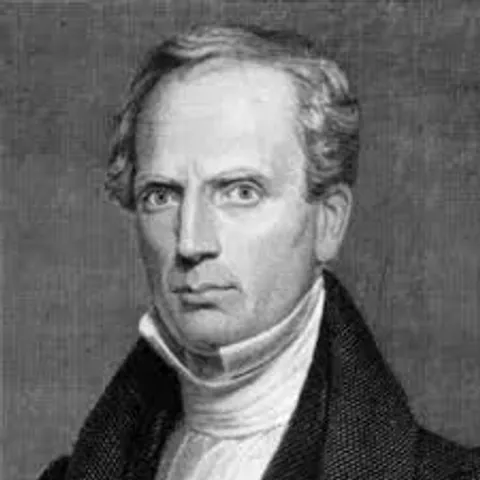
Charles Grandison Finney was born the year after Wesley died on 29th August, 1792 in Warren, Connecticut. In 1794 his family moved to New York state, eventually settling at Henderson, near Lake Ontario. Although he received only a brief formal education he decided to study law and joined the practice of a local lawyer, Benjamin Wright. He was also very musical, played the cello and directed the choir at the local Presbyterian Church pastured by Rev. George Gale.
His conversion
His conversion on October 10th 1821 reads like something out of the book of Acts. Smitten with conviction from Bible reading he decided to ‘settle the question of my soul’s salvation at once, that if it were possible, I would make my peace with God.’ (Autobiography)
This conviction increased to an unbearable level over the next couple of days and came to an head when he was suddenly confronted with an ‘inward voice.’ He was inwardly questioned about his spiritual condition and finally received revelation about the finished work of Christ and his own need to give up his sins and submit to Christ’s righteousness.
As he sought God in a nearby wood he was overwhelmed with an acute sense of his own wickedness and pride but finally submitted his life to Christ. Back at work that afternoon he was filled with a profound sense of tenderness, sweetness and peace. When work was over and he bade his employer goodnight, he then experienced a mighty baptism in the Holy Spirit, which was recorded as vividly as the day he experienced it, though it was penned some fifty years later.
The next morning Finney announced to a customer that he was leaving his law studies to become a preacher of the Gospel.
Charles Finney licensed to preach
He was licensed to preach in 1823 and ordained as an evangelist in 1824. His penetrating preaching was quite different from many local ministers and included an obvious attempt to break away from the traditional and, as he saw it, dead, orthodox Calvinism. He married to Lydia Andrews in October 1824 and was also joined by Daniel Nash (1774-1831), known popularly as ‘Father Nash.’ Undoubtedly Nash’s special ministry of prayer played a great part in Finney’s growing success as an evangelist.
Things really took off when he preached in his old church, where Rev. Gale still ministered. Numerous converts and critics followed! Similar results were experienced in nearby towns of Rome and Utica. Soon newspapers were reporting his campaigns and he began drawing large crowds with dramatic responses.
Soon he was preaching in the largest cities of the north with phenomenal results. Campaign after campaign secured thousands of converts.
The high point of Finney’s revival career was reached at Rochester, New York, during his 1830-1 meetings. Shopkeepers closed their businesses and the whole city seemed to centre on the revivalist. Responding to his irresistible logic and passionate arguments many of his converts were lawyers, merchants and those from a higher income and professional status.
His Preaching
Finney openly preached a modified Calvinism, influenced with his own theology of conversion and used what were perceived to be ‘revivalistic techniques.’
These ‘means’ included the use of the anxious bench (a special place for those under conviction), protracted meetings, women allowed to pray in mixed meetings, publicly naming those present resisting God in meetings and the hurried admission of new converts into church membership. Opponents viewed his preaching of the law as ‘scare tactics’ and his persuasive appeals for sinners to come to Christ for salvation were seen as over-emphasising the responsibility of men and ignoring the sovereignty of God.
His theology and practise soon became known as the ‘New Measures’ and attracted many opponents from the Old School Presbyterians led by Asahel Nettleton (himself no stranger to true revival and , the revivalistic Congregationalists headed by Lyman Beecher.
Pastor at Chatham Street Chapel
Finney accepted an appointment as pastor of Chatham Street Chapel in New York City in 1832 where he remained until 1837. It was during this time that he delivered a series of sermons published in 1835 as ‘Lectures on Revivals of Religion.’ Here he clearly stated his views regarding revivals being products of the correct use of human means. Such was the controversy that he left the Presbyterian denomination and joined the Congregationalists in 1836.
Oberlin College
The next year he became professor of theology at Oberlin College (Ohio) where he taught until his death. He was President here from 1851 until 1866, but still continued regular revival meetings in urban settings (twice in England, 1848, 1851) until 1860. During his stay at Oberlin he produced his, Lectures to Professing Christians (1836), Sermons on Important Subjects (1839) and his famous Memoirs.
The Father of Modern Revivalism
There is no doubt that Charles Grandison Finney well-deserves the title ‘The Father of Modern Revivalism.’ He was an evangelistic pioneer whose model was followed by a long line of revivalists from D. L. Moody to Billy Graham. His writing have made a massive impact on the entire evangelical world and particularly the ‘Lectures on Revivals’ which has, arguably, ignited more fires of revival than any other single piece literature in evangelical history.
This ‘Prince of Revivalists’ passed away peacefully at Oberlin on Sunday, 16th August, 1875 aged almost 83 years.
Bibliography: I Will Pour Out My Spirit, R. E. Davies, 1997; Ed: A. Scott Moreau, Baker Evangelical Dictionary of World Missions, 2000; Dictionary of Evangelical Biography 1730-1860, Vol. 1, 1995.
Tony Cauchi
Childhood and Teen years
Charles Grandison Finney was born the year after Wesley died on 29th August, 1792 in Warren, Connecticut. In 1794 his family moved to New York state, eventually settling at Henderson, near Lake Ontario. Although he received only a brief formal education he decided to study law and joined the practice of a local lawyer, Benjamin Wright. He was also very musical, played the cello and directed the choir at the local Presbyterian Church pastured by Rev. George Gale.
His conversion
His conversion on October 10th 1821 reads like something out of the book of Acts. Smitten with conviction from Bible reading he decided to ‘settle the question of my soul’s salvation at once, that if it were possible, I would make my peace with God.’ (Autobiography)
This conviction increased to an unbearable level over the next couple of days and came to an head when he was suddenly confronted with an ‘inward voice.’ He was inwardly questioned about his spiritual condition and finally received revelation about the finished work of Christ and his own need to give up his sins and submit to Christ’s righteousness.
As he sought God in a nearby wood he was overwhelmed with an acute sense of his own wickedness and pride but finally submitted his life to Christ. Back at work that afternoon he was filled with a profound sense of tenderness, sweetness and peace. When work was over and he bade his employer goodnight, he then experienced a mighty baptism in the Holy Spirit, which was recorded as vividly as the day he experienced it, though it was penned some fifty years later.
The next morning Finney announced to a customer that he was leaving his law studies to become a preacher of the Gospel.
Charles Finney licensed to preach
He was licensed to preach in 1823 and ordained as an evangelist in 1824. His penetrating preaching was quite different from many local ministers and included an obvious attempt to break away from the traditional and, as he saw it, dead, orthodox Calvinism. He married to Lydia Andrews in October 1824 and was also joined by Daniel Nash (1774-1831), known popularly as ‘Father Nash.’ Undoubtedly Nash’s special ministry of prayer played a great part in Finney’s growing success as an evangelist.
Things really took off when he preached in his old church, where Rev. Gale still ministered. Numerous converts and critics followed! Similar results were experienced in nearby towns of Rome and Utica. Soon newspapers were reporting his campaigns and he began drawing large crowds with dramatic responses.
Soon he was preaching in the largest cities of the north with phenomenal results. Campaign after campaign secured thousands of converts.
The high point of Finney’s revival career was reached at Rochester, New York, during his 1830-1 meetings. Shopkeepers closed their businesses and the whole city seemed to centre on the revivalist. Responding to his irresistible logic and passionate arguments many of his converts were lawyers, merchants and those from a higher income and professional status.
His Preaching
Finney openly preached a modified Calvinism, influenced with his own theology of conversion and used what were perceived to be ‘revivalistic techniques.’
These ‘means’ included the use of the anxious bench (a special place for those under conviction), protracted meetings, women allowed to pray in mixed meetings, publicly naming those present resisting God in meetings and the hurried admission of new converts into church membership. Opponents viewed his preaching of the law as ‘scare tactics’ and his persuasive appeals for sinners to come to Christ for salvation were seen as over-emphasising the responsibility of men and ignoring the sovereignty of God.
His theology and practise soon became known as the ‘New Measures’ and attracted many opponents from the Old School Presbyterians led by Asahel Nettleton (himself no stranger to true revival and , the revivalistic Congregationalists headed by Lyman Beecher.
Pastor at Chatham Street Chapel
Finney accepted an appointment as pastor of Chatham Street Chapel in New York City in 1832 where he remained until 1837. It was during this time that he delivered a series of sermons published in 1835 as ‘Lectures on Revivals of Religion.’ Here he clearly stated his views regarding revivals being products of the correct use of human means. Such was the controversy that he left the Presbyterian denomination and joined the Congregationalists in 1836.
Oberlin College
The next year he became professor of theology at Oberlin College (Ohio) where he taught until his death. He was President here from 1851 until 1866, but still continued regular revival meetings in urban settings (twice in England, 1848, 1851) until 1860. During his stay at Oberlin he produced his, Lectures to Professing Christians (1836), Sermons on Important Subjects (1839) and his famous Memoirs.
The Father of Modern Revivalism
There is no doubt that Charles Grandison Finney well-deserves the title ‘The Father of Modern Revivalism.’ He was an evangelistic pioneer whose model was followed by a long line of revivalists from D. L. Moody to Billy Graham. His writing have made a massive impact on the entire evangelical world and particularly the ‘Lectures on Revivals’ which has, arguably, ignited more fires of revival than any other single piece literature in evangelical history.
This ‘Prince of Revivalists’ passed away peacefully at Oberlin on Sunday, 16th August, 1875 aged almost 83 years.
Bibliography: I Will Pour Out My Spirit, R. E. Davies, 1997; Ed: A. Scott Moreau, Baker Evangelical Dictionary of World Missions, 2000; Dictionary of Evangelical Biography 1730-1860, Vol. 1, 1995.
Tony Cauchi
Kneeling Among Lions - Learning to Pray Like Daniel
Tucked away in the book of Daniel, sandwiched between stories about fiery furnaces and lions on the one hand, and visions of statues, beasts, and rising kings on the other, is an extended prayer with a shockingly immediate answer. Daniel 9 contains an extended, earnest, and heartfelt prayer by the prophet. And before he even says “Amen,” the angel Gabriel is standing before him, ready to give insight and understanding to the broken-hearted prophet. What did Daniel pray that caused God to immediately dispatch an angel with an answer? And can Daniel’s prayer instruct us today in how to pray? Plot Against Prayer Daniel’s prayer is a dated prayer. “In the first year of Darius the son of Ahasuerus” (Daniel 9:1). And the particular timing mentioned draws attention to one of the most famous stories in the Bible. At the end of Daniel 5, Darius the Mede conquers the Chaldeans and dethrones Belshazzar. In chapter 6, he appoints 120 local rulers as governors over his kingdom, with high officials overseeing them. Daniel is one of these high officials. Indeed, he is distinguished above all of the high officials because of the excellent spirit (or is it Spirit?) residing in him (Daniel 6:1–3). Darius plans to elevate Daniel over all the other officials, provoking them to jealousy. They then plot to find fault with Daniel in hopes of bringing him down. After examining his life, they conclude, “We shall not find any ground for complaint against this Daniel unless we find it in connection with the law of his God” (Daniel 6:5). Soon enough, they do find a ground for complaint against Daniel — his habits of prayer. Daniel’s custom is to pray three times per day with an open window facing Jerusalem. The jealous officials manipulate Darius into passing an irrevocable decree against praying to anyone except the king (Daniel 6:6–9). And Daniel’s defiance of this decree famously lands him in the lions’ den (Daniel 6:10–16). What is the relevance for the prayer of Daniel 9? It’s likely that Daniel 9 is the sort of prayer that Daniel was praying with that famous window open. What’s more, if we’re attentive to the whole Scriptures, we can better understand why Daniel was praying with a window open facing Jerusalem. Solomon, Jeremiah, and Daniel In 1 Kings 8, Solomon is dedicating the temple of the Lord. As he nears the end of his prayer, he contemplates the possibility (and even likelihood) that the people of Israel will sin grievously against God. When they do, God will, in fulfillment of the warnings of Deuteronomy, give them over to their enemies so that Israel will be carried captive into a foreign land. Nevertheless, God will remain faithful to his promises and his people, even as he sends them into exile. In Solomon’s request, notice the specific direction his exiled people ought to pray: Yet if they turn their heart in the land to which they have been carried captive, and repent and plead with you in the land of their captors, saying, “We have sinned and have acted perversely and wickedly,” if they repent with all their heart and with all their soul in the land of their enemies, who carried them captive, and pray to you toward their land, which you gave to their fathers, the city that you have chosen, and the house that I have built for your name, then hear in heaven your dwelling place their prayer and their plea, and maintain their cause and forgive your people who have sinned against you, and all their transgressions that they have committed against you, and grant them compassion in the sight of those who carried them captive, that they may have compassion on them (for they are your people, and your heritage, which you brought out of Egypt, from the midst of the iron furnace). (1 Kings 8:47–51) Solomon specifically mentions repenting and praying from exile toward Israel, toward Jerusalem. Thus, Daniel’s actions make perfect sense. He is following Solomon’s instructions in hope that God will have compassion and restore his people. Beyond Solomon’s dedication, the immediate cause of Daniel’s prayer is Jeremiah’s prophecy concerning the seventy weeks. Recorded in Jeremiah 25, the prophet rebukes Israel for her stubbornness and promises God’s judgment through Nebuchadnezzar, king of Babylon, who will lay waste to Israel. Babylon will be triumphant for seventy years, after which God will bring judgment upon them for their own sins. Daniel has this prophecy in mind when he offers his own prayer of repentance (Daniel 9:2). Lessons from Daniel’s Prayer These particulars matter. Daniel offered this prayer at a specific moment in redemptive history, under the covenant that God made with Moses, during the time when Jerusalem was the center of the spiritual universe. Today we are in a different redemptive era, under the new covenant, when the heavenly Jerusalem is the center of the universe. Nonetheless, there are truths that span the covenants. Despite our differences in time, redemptive era, location, and circumstances, Daniel’s prayer was still “written for our instruction, that . . . we might have hope” (Romans 15:4). So how does Daniel’s prayer give us hope? Confess Clearly First, Daniel says “Amen” to God’s judgment. Daniel’s prayer is fundamentally a prayer of confession and repentance. Again and again, Daniel acknowledges the sin of God’s people. “We have sinned. We have done wrong. We have acted wickedly. We have rebelled. We have turned aside from your commandments. We have not listened to your prophets. We have committed treachery. We have not obeyed your voice.” Twenty times, Daniel acknowledges that Israel has sinned. You will look in vain for any rationalizations in this prayer. Daniel is not asking God to excuse Israel’s sin; he is asking God to forgive Israel’s sin. And forgiveness begins with saying “Amen” to God’s judgment. “Daniel teaches us to mince no words in confession, to use no euphemisms, to soft-pedal no transgressions.” And this instructs us. We all are prone to justify and rationalize our sin, to ask God to excuse us for what we’ve done, rather than asking him to forgive us for what we’ve done. But Daniel teaches us to mince no words in confession, to use no euphemisms, to soft-pedal no transgressions; indeed, the great variety of terms for sin and wickedness in his prayer teaches us to labor to be clear before God about the precise ways that we have fallen short of his standards. Remember Specifically Second, Daniel remembers God’s word and God’s works. In confessing, Daniel directly quotes Deuteronomy 7:9, and frames his prayer by Israel’s failure to obey the law of Moses (Daniel 9:11). In punishing Israel, God is simply confirming the oaths and curses he laid down in Deuteronomy 28. Even more than that, Daniel remembers the great works of God, especially the exodus, when God brought his people out of Egypt with a mighty hand (Daniel 9:15). “God is pleased with Bible-shaped and Scripture-saturated prayers.” This too instructs us. God is pleased with Bible-shaped and Scripture-saturated prayers. It is good and right for us to orient our confession, our repentance, and our supplications in light of God’s laws, his promises, and his warnings. By using Scripture to frame our own prayers, we approach God in a way that he has established, with words that he has inspired, and thus we have greater confidence that he will hear and answer. Plead Confidently Third, Daniel pleads for God’s mercy. Even as he says “Amen” to the judgment of God, Daniel appeals to Yahweh’s mercy and forgiveness (Daniel 9:9). Daniel knows that judgment is not God’s final word. And thus, he asks for God to again shine his face on his sanctuary (Daniel 9:17), and to turn aside his anger that has cast his people into exile. In doing so, Daniel demonstrates his deep faith in Yahweh’s fundamental character toward his people: he is a God compassionate and merciful, slow to anger, and abounding in steadfast love (Exodus 34:6–7). We too can approach God’s throne with confidence because we know it is a throne of grace. Whatever chastisement and discipline he brings, mercy reigns in the heart of God. He will by no means clear the guilty, but he loves to forgive those who turn to him in humble faith. Unifying Thread Finally, what ties these elements together is God’s righteousness — his unswerving commitment to uphold the glory of his name. Underneath Daniel’s “Amen” to God’s judgment, underneath Daniel’s remembrance of God’s word and works, and underneath Daniel’s appeal to God’s mercy is Daniel’s sure faith that God is uppermost in God’s affections. To the Lord belongs righteousness, and therefore he has punished his people (Daniel 9:7). His judgment is a fulfillment of his commitment to his word; he will not overlook transgressions against his law (Daniel 9:11–12). He is righteous to bring this judgment. But more than that, he is righteous in showing mercy. Daniel appeals to God’s love for his name. God made a name for himself in delivering Israel from Egypt (Daniel 9:15). And now, Daniel roots his plea for mercy in God’s righteousness (Daniel 9:16). Israel has become a byword; the nations mock at the once-great nation and the once-great city of Jerusalem. But this nation and this city are called by the name of Yahweh. And therefore, Daniel’s final plea is not based on Israel’s righteousness, but on God’s name. Now therefore, O our God, listen to the prayer of your servant and to his pleas for mercy, and for your own sake, O Lord, make your face to shine upon your sanctuary, which is desolate. O my God, incline your ear and hear. Open your eyes and see our desolations, and the city that is called by your name. For we do not present our pleas before you because of our righteousness, but because of your great mercy. O Lord, hear; O Lord, forgive. O Lord, pay attention and act. Delay not, for your own sake, O my God, because your city and your people are called by your name. (Daniel 9:17–19) So too for us. When we approach God, we do not come based on our righteousness. How could we? Instead, we beg God to act on our behalf for his own sake. Indeed, as those who live under God’s new covenant, we appeal to him in the name of his Son Jesus. We plead for God to hear and forgive and pay attention and act on our behalf because we are called by the name of his Son, the great and awesome God who keeps covenant and steadfast love with his blood-bought people.