

The Scientist’s God (Novel) Order Printed Copy
- Author: Opeyemi O. Akintunde
- Size: 2.92MB | 180 pages
- |



-160.webp)






About the Book
"The Scientist's God" is a novel that tells the story of a scientist who embarks on a journey to discover the existence of God through his research and encounters with the supernatural. As he delves deeper into his investigation, he is faced with challenging questions about faith, science, and the limits of human knowledge. The novel explores themes of spirituality, belief, and the intersection between science and religion.
William Chalmers Burns
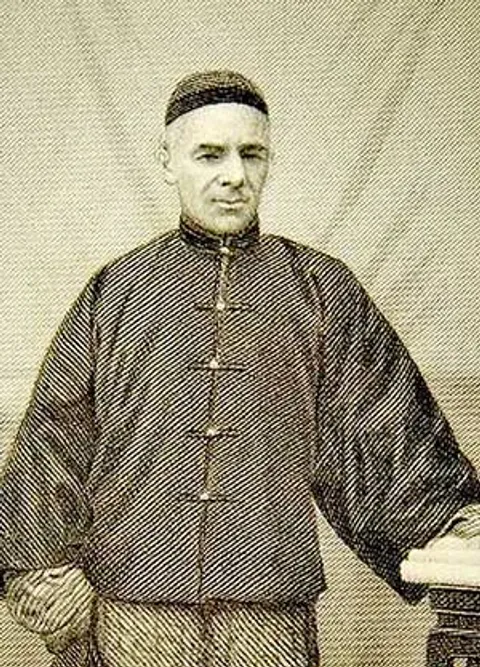 William Chalmers Burns was born in the Manse of Dun, in Angus, on April Ist, 1815. He was the third son of the Parish Church minister there. After leaving school, he went to Edinburgh to be apprenticed with an uncle to the legal profession. His eldest sister, a gay young lady, was converted to God, and became a bright witness for the Lord Jesus in 1831, and it was by means of her decided testimony that William was first awakened to a sense of his need of salvation, and led to put his trust in the Son of God, as his Redeemer and Saviour.
It was shortly after his conversion that he walked into the manse of Kilsyth, where the family then resided, having walked on foot the thirty-six miles from Edinburgh, to tell his mother and his sisters the glad news of his conversion, and to say that his desire now was to relinquish his study of law, and devote himself entirely to the preaching of the Gospel of God’s grace to his fellowmen.
And this he did heartily and with all his might, first in the neglected Parts of Scotland, and latterly among many heathen millions of the great Chinese Empire, then scarcely touched by the feet of God’s messengers of peace.
Mr. Burns’s name came into prominence in connection with a wonderful work of grace in Dundee, while he was preaching for Robert Murray M’Cheyne, then on a visit to Palestine, for the evangelization of the Jews. During Mr. Burns’s preaching in Dundee, a remarkable awakening took place; thousands were aroused to their condition in the sight of God, truly converted, and set on the heavenward way.
Remarkable scenes were witnessed in the old church of St. Peter’s, near to which M’Cheyne’s body now lies, awaiting the first resurrection. It was on the evening of a Lord’s Day in Kilsyth, after preaching to a crowded congregation, that Mr. Burns felt constrained to intimate to the people that he would preach to the people in the open air, before returning to Dundee the following day.
Deeply burdened with the souls of the people, he went into the village and invited the people, who thronged into the old church, until every seat and passage was filled. And the Lord helped His servant to preach straight to the people with great power, with the result that the whole congregation became melted under the message, many weeping aloud and crying to God for mercy. A glorious work of conversion followed.
Meetings for prayer and preaching of the Gospel continued in the churchyard, the market-place and elsewhere for weeks, while Mr. Burns returned to Dundee to resume his ministry. The work progressed in Dundee with increased interest, until the return of Mr. M’Cheyne, who greatly rejoiced in all that the Lord had done during his absence, through the ministry of His servant.
There was no jealousy, but the deepest gratitude, and these two true ministers of Christ rejoiced together over the Lord’s doings, which were indeed marvellous in their eyes.
From that time onward, until the Lord’s call came to go to China, Mr. Burns gave himself almost wholly to itinerant Gospel preaching, through Perthshire, up as far north as Aberdeen, preaching in barns, on market-places, and wherever the people could be gathered together to hear the Word. His message was plain, and to the point; thousands were awakened and many saved. But the adversary opposed. Time and again Mr. Burns was stoned, and bore the marks of these brands of the enemy for many days.
Believing it to be the call of the Lord, he went forth to China as the first missionary of the Presbyterian Church of England, in June, 1847. When questioned by those interested in his out-going, how long it would take him to prepare for the voyage, he replied with all simplicity, “I will be ready to go to-morrow.”
On a brief visit to his home, to take farewell of his sister, he silently wrung her hand, took a last glance around their old home, and with a small bag in his hand and his mother’s plaid across his arm, went forth, in the Name of the Lord with the Gospel to China’s benighted people, of whom it was said “a million a month” were dying without having once heard the Gospel.
For years this solitary witness toiled alone, at times with a few helpers, in the great heathen land, amid overwhelming hindrances, but his faith in God never faltered. On and on he went, sowing the seed which others would reap, until he reached the borders of the great kingdom of Manchuria, where, in a small, comfortless room in Nieu-chang, wearied and worn in labours abundant, he fell asleep on April 4th, 1868, his last audible words being, “For Thine is the Kingdom and the Power and the Glory.”
It is of this great land that the story of grace related in the following pages is told, and those who saw and shared in its joyful results, say that it was no doubt part of the result of William Burns’s sowing, in his earlier years in China.
William Chalmers Burns was born in the Manse of Dun, in Angus, on April Ist, 1815. He was the third son of the Parish Church minister there. After leaving school, he went to Edinburgh to be apprenticed with an uncle to the legal profession. His eldest sister, a gay young lady, was converted to God, and became a bright witness for the Lord Jesus in 1831, and it was by means of her decided testimony that William was first awakened to a sense of his need of salvation, and led to put his trust in the Son of God, as his Redeemer and Saviour.
It was shortly after his conversion that he walked into the manse of Kilsyth, where the family then resided, having walked on foot the thirty-six miles from Edinburgh, to tell his mother and his sisters the glad news of his conversion, and to say that his desire now was to relinquish his study of law, and devote himself entirely to the preaching of the Gospel of God’s grace to his fellowmen.
And this he did heartily and with all his might, first in the neglected Parts of Scotland, and latterly among many heathen millions of the great Chinese Empire, then scarcely touched by the feet of God’s messengers of peace.
Mr. Burns’s name came into prominence in connection with a wonderful work of grace in Dundee, while he was preaching for Robert Murray M’Cheyne, then on a visit to Palestine, for the evangelization of the Jews. During Mr. Burns’s preaching in Dundee, a remarkable awakening took place; thousands were aroused to their condition in the sight of God, truly converted, and set on the heavenward way.
Remarkable scenes were witnessed in the old church of St. Peter’s, near to which M’Cheyne’s body now lies, awaiting the first resurrection. It was on the evening of a Lord’s Day in Kilsyth, after preaching to a crowded congregation, that Mr. Burns felt constrained to intimate to the people that he would preach to the people in the open air, before returning to Dundee the following day.
Deeply burdened with the souls of the people, he went into the village and invited the people, who thronged into the old church, until every seat and passage was filled. And the Lord helped His servant to preach straight to the people with great power, with the result that the whole congregation became melted under the message, many weeping aloud and crying to God for mercy. A glorious work of conversion followed.
Meetings for prayer and preaching of the Gospel continued in the churchyard, the market-place and elsewhere for weeks, while Mr. Burns returned to Dundee to resume his ministry. The work progressed in Dundee with increased interest, until the return of Mr. M’Cheyne, who greatly rejoiced in all that the Lord had done during his absence, through the ministry of His servant.
There was no jealousy, but the deepest gratitude, and these two true ministers of Christ rejoiced together over the Lord’s doings, which were indeed marvellous in their eyes.
From that time onward, until the Lord’s call came to go to China, Mr. Burns gave himself almost wholly to itinerant Gospel preaching, through Perthshire, up as far north as Aberdeen, preaching in barns, on market-places, and wherever the people could be gathered together to hear the Word. His message was plain, and to the point; thousands were awakened and many saved. But the adversary opposed. Time and again Mr. Burns was stoned, and bore the marks of these brands of the enemy for many days.
Believing it to be the call of the Lord, he went forth to China as the first missionary of the Presbyterian Church of England, in June, 1847. When questioned by those interested in his out-going, how long it would take him to prepare for the voyage, he replied with all simplicity, “I will be ready to go to-morrow.”
On a brief visit to his home, to take farewell of his sister, he silently wrung her hand, took a last glance around their old home, and with a small bag in his hand and his mother’s plaid across his arm, went forth, in the Name of the Lord with the Gospel to China’s benighted people, of whom it was said “a million a month” were dying without having once heard the Gospel.
For years this solitary witness toiled alone, at times with a few helpers, in the great heathen land, amid overwhelming hindrances, but his faith in God never faltered. On and on he went, sowing the seed which others would reap, until he reached the borders of the great kingdom of Manchuria, where, in a small, comfortless room in Nieu-chang, wearied and worn in labours abundant, he fell asleep on April 4th, 1868, his last audible words being, “For Thine is the Kingdom and the Power and the Glory.”
It is of this great land that the story of grace related in the following pages is told, and those who saw and shared in its joyful results, say that it was no doubt part of the result of William Burns’s sowing, in his earlier years in China.
the progressive pilgrim: allegory for an easy age
Jesus said, “The gate is narrow and the way is hard that leads to life, and those who find it are few” (Matthew 7:13–14). In the twenty-first century, does his statement seem true to you? Have you found an easier way? Abraham may have wandered in tents, Paul may have been hunted like a deer, the disciples may have met brutal ends to their earthly careers, and many in the early church may have been slandered, reviled, plundered, fed to lions, burned to light the streets of Rome — “killed all the day long . . . regarded as sheep to be slaughtered” (Romans 8:36) — but that was then . We have smartphones now. Modernity seems to have done wonders to smooth the way. The narrow path lying between the City of Destruction and the Celestial City seems paved. Nathaniel Hawthorne (1804–1864) made a similar observation in his day. Though no friend of the Puritans, his short story “The Celestial Railroad” imitates and engages with John Bunyan’s The Pilgrim’s Progress . In it, he critiques the pillow-soft spirituality of his day (including Unitarianism and Transcendentalism), firing a critique that could have been written yesterday to describe the rampant easy-believism of today. Celestial Railroad Wandering through the gate of dreams, Mr. Hawthorne arrives at the famous City of Destruction. Having read Mr. Bunyan on the place, he is rather taken aback, and pleasantly surprised, to find that hostilities between this city and the Celestial City have all but vanished. Former foes shake hands. A pact built on “mutual compromise” has made allies from enemies. Enmity between the two lands is water under the bridge — or rather, a shining railroad over it. The Wicket Gate, that narrow and impossibly awkward entryway, as Bunyan’s readers will recall, has been replaced by the railroad station itself. Mr. Smooth-it-away — a distinguished gentleman in the enterprise who guides Mr. Hawthorne on his journey — ensures us all that this large building is much better suited to include the broadminded travelers of modernity. And the effect cannot be overstated, as Mr. Hawthorne relays: It would have done Bunyan’s heart good to see it. Instead of a lonely and ragged man, with a huge burden on his back, plodding along sorrowfully on foot, while the whole city hooted after him, here were parties of the first gentry and most respectable people in the neighborhood, setting forth towards the Celestial City, as cheerfully as if the pilgrimage were merely a summer tour. (199) The Celestial Railroad now transports would-be travelers — comfortably and safely — to the renowned City of Light. Individuals from Christian’s birthplace saw to it that no good-hearted pilgrim would ever again leave the city in derision or vulnerable to unsavory conditions and smiling foes. Nor would any carry that dreadful burden upon his back for miles on end — no, as Hawthorne gladly reports, One great convenience of the new method of going on pilgrimage, I must not forget to mention. Our enormous burdens, instead of being carried on our shoulders, as had been the custom of old, were all snugly deposited in the baggage-car, and, as I was assured, would be delivered to their respective owners at the journey’s end. (200) The travelers are sent off with their backpacks snugly tucked away, “to be delivered to their respective owners at the journey’s end.” Genius. But this, dear reader, is but the start to the innovations of the Celestial Railroad. Let me relay but a few more to you. Old Sites, New Conveniences Lengthy scrolls and books are not needed as tiresome maps along this journey; only a ticket is required. Such is very reasonable and expedient. To begin the journey, the dreadful Slough of Despond — that bog full of past sins and lusts and fears and temptations and doubts, in which Christian sank and at which Pliable flustered, only to return home — has a new sparkling bridge erected overhead. While wholesome teaching could not fill Bunyan’s slough, Hawthorne tells us, books of morality, German rationalism, modern sermons, and extracts of Plato, combined with a few innovative commentaries on Scripture, sufficed to lay the sturdy foundations to erect the bridge upon (198). Traveling farther, one discovers that the Interpreter’s House, while still receiving the occasional pilgrim of the old method, was no stop of the Celestial Railroad. Regretfully, Mr. Smooth-it-away remarks, that grand Interpreter grew rather sour, prudish, and prejudiced in his old age (a similar theme for the likes of Evangelist and Great-heart, the latter even “perpetually at blows” with his new collaborators). He could not keep with the times and got left behind. Hurried Cross Yes, dear reader, I can hear your question: What has become of the cross where the burden fell from Christian’s back? Let me cite the firsthand account: We were rushing by the place where Christian’s burden fell from his shoulders, [the] sight of the Cross. This served as a theme for Mr. Smooth-it-away, Mr. Live-for-the-world, Mr. Hide-sin-in-the-heart, Mr. Scaly-conscience, and a knot of gentlemen from the town of Shun-repentance, to descant upon the inestimable advantages resulting from the safety of our baggage. (203) “Crosses must be carried in every age, and the costs must be considered.” Rushing past the cross, the passengers revel in their good fortune at finding a way to travel to the Celestial City without leaving behind their precious habits and secret delights. It would be a shame, after all, to lose such desirable pastimes if they could help it. Yet there are still more improvements upon the old way to display. A tunnel now conveniently travels through Hill Difficult — the excavated ground then used to fill in the Valley of Humiliation. That dreary and gloomy Valley of the Shadow of Death now glows with gas lamps. And should you, with Mr. Hawthorne, regret missing the chance to visit Palace Beautiful — where live the young and fair Piety, Prudence, and Charity — ease your disappointed mind by overhearing, “Young ladies!” cried Mr. Smooth-it-away, as soon as he could speak for laughing. “And charming young ladies! Why, my dear fellow, they are old maids, every soul of them — prim, starched, dry, and angular — and not one of them, I will venture to say, has altered so much as the fashion of her gown, since the days of Christian’s pilgrimage.” (203–204) These fair maidens of yesterday, again, resisted the hard-won improvements, cherishing ancient, rough, and inefficient paths. Vanity Fair What can be said of Vanity Fair? Hear it from Mr. Hawthorne: this wonder of a place has the power to make anyone feel at home. The “great capital of human business and pleasure” stands as the epitome of everything “fascinating beneath the sun.” The people, Hawthorne finds, are most interesting and agreeable. Concerning the hostility that once led to the unfortunate execution of Faithful, Christian’s beloved companion, they’ve come to see the misstep. These noble and charming and wise people now enter into great camaraderie and trade with the passengers of the Celestial Railroad; indeed, many of them have taken to the railway themselves. But of all the wonders of the metropolis, Hawthorne relates one that might outshine them all: The Christian reader, if he had no accounts of the city later than Bunyan’s time, will be surprised to hear that almost every street has its church, and that the reverend clergy are nowhere held in higher respect than at Vanity Fair. (209) Indeed, few places could boast so much religiosity. Hawthorne continues, In justification of this high praise, I need only mention the names of the Rev. Mr. Shallow-deep; the Rev. Mr. Stumble-at-Truth; that fine old clerical character, the Rev. Mr. This-to-day, who expects shortly to resign his pulpit to the Rev. Mr. That-to-morrow; together with the Rev. Mr. Bewilderment; the Rev. Mr. Clog-the-spirit; and, last and greatest, the Rev. Dr. Wind-of-doctrine. (209) Filled with fine-dressing, stimulating people, and endless pleasures to buy, sell, and enjoy — mind you, in such a fine Christian place — the only curiosity was that people would just disappear. So common was the occurrence, Hawthorne relates, that the citizens learned to continue on as if nothing had happened. Today’s Celestial Railroad Now, Nathaniel Hawthorne was no Christian, and he wrote antagonistically about the Puritans in other stories (in part due to an infamous family history). But here, he casts stones — almost in sympathy with Bunyan — against the modern religiosity he viewed as shallow, smooth, and deceptive. Any reader of the story sees parallels today. They had Mr. Smooth-it-away; so have we. They had trains leaving every day to what is thought the Celestial City; so have we. They had people tucking their sins under the caboose, deploring the hard way, wanting merely a ticket to heaven; so have we. They hurried past the cross of Christ; so do many who claim to be his followers today. How many sermons, small groups, Christian ministries escape this description? There was much pleasant conversation about the news of the day, topics of business, politics, or the lighter matters of amusement while religion, though indubitably the main thing at heart, was thrown tastefully into the background. Even an infidel would have heard little or nothing to shock his sensibility. (200) “False paths, sliding downward, are smoothest.” Teachers and preachers, once found in the Interpreter’s house, wooing pilgrims with golden crowns and warning them against smooth paths, now create them. Done with the cautions and commands, they converse among friends. His name is not Pastor; it is Jake — just Jake. He does not tell you what God has said; he is there to listen, just another broken sheep like everyone else. He gives comforting homilies and entertaining stories, but the utterance “Thus says the Lord” is far from his lips. And I fear that, just as in the end of Hawthorne’s dream before he awakes, so in our world, Mr. Smooth-it-away leaves many on steam ferryboats traveling to Tophet (hell). False paths, sliding downward, are smoothest. The true path is not easy or broad — even for societies without much physical intimidation. Our Christ, who carried his own cross, leaves his church crosses to be carried in every age, and costs to be considered. This earth will pass away, but Jesus’s word shall not: “The gate is narrow and the way is hard that leads to life, and those who find it are few” (Matthew 7:13–14).