
Others like the power of consecration Features >>

The Fourth Dimension Volume 1

The Order Of Melchizedek
-160.webp)
The Law Of Recognition (The Laws Of Life Series)

The Wisdom Of Making Right Choices
The Power Of Hope
The Life Of Obedience

The Gift Of Discerning Of Spirits

The Root Of The Righteous

The Consecrated Way To Christian Perfection
-160.webp)
The A-B-C Of Fasting (Glorified Fasting)
About the Book
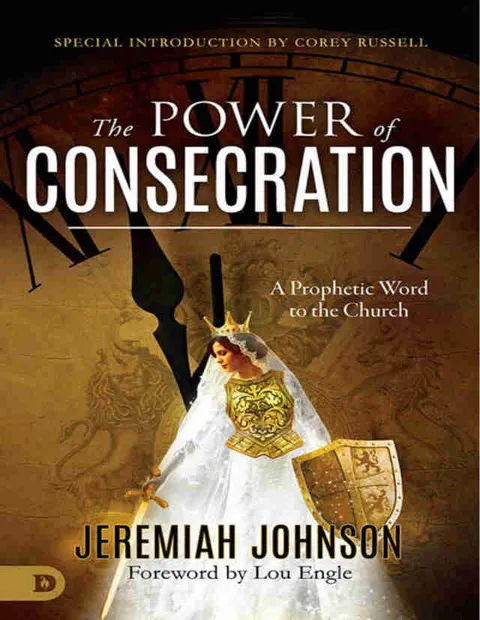
"The Power of Consecration" by Jeremiah Johnson explores the importance of consecrating ourselves to God and living a life fully dedicated to Him. Through personal anecdotes and biblical teachings, Johnson emphasizes the transformational power of true consecration and how it can lead to a deeper relationship with God and a life filled with purpose and fulfillment.
Kenneth E. Hagin
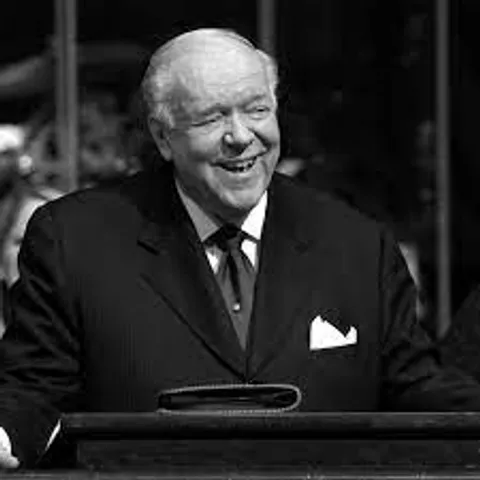 Rev. Kenneth Erwin Hagin was born on Aug. 20, 1917, in McKinney, Texas. Rev. Hagin was sickly as a child, suffering from a deformed heart and an incurable blood disease. He was not expected to live and became bedfast at age 15. In April 1933 during a dramatic conversion experience, he reported dying three times in 10 minutes, each time seeing the horrors of hell and then returning to life.
In August 1934, Rev. Hagin was miraculously healed, raised off a deathbed by the power of God and the revelation of faith in God’s Word. Jesus appeared to Rev. Hagin eight times over the next several years in visions that changed the course of his ministry. In 1967, he began a regular radio broadcast that continues today as Rhema for Today.
In 1968 Rev. Hagin published the first issues of The Word of Faith. That magazine, now produced nine times a year, has a circulation of over 200,000. The publishing outreach he founded, Faith Library Publications, has circulated worldwide more than 75 million copies of books by Rev. Hagin, Kenneth W. Hagin, Lynette Hagin, Craig W. Hagin, and several other authors. Faith Library Publications also has produced millions of audio and video teachings.
Other outreaches of Kenneth Hagin Ministries include Rhema Praise, a weekly television broadcast hosted by Revs. Kenneth and Lynette Hagin; Rhema Correspondence Bible School; Rhema Alumni Association; Rhema Ministerial Association International; the Rhema Prayer and Healing Center; and the Rhema prison ministry.
In 1974 Rev. Hagin founded what is now Rhema Bible Training College. The school has campuses all over the world and continues to expand.
Until shortly before his death, Rev. Hagin continued to travel and teach throughout the United States and into Canada conducting All Faiths’ Crusades and other special meetings.
Known as the “father of the modern faith movement,” Rev. Hagin was a dynamic preacher, teacher, and prophet. His teachings and books are filled with vivid stories that show God’s power and truth working in his life and the lives of others. He will be remembered not only as a great minister but as a great family man—for his family was his heart. He was there at every milestone ready to talk, to answer, to pray. He was a man whose belly laugh filled the room at the sight of one of his grandchildren or great-grandchildren.
Rev. Kenneth Erwin Hagin was born on Aug. 20, 1917, in McKinney, Texas. Rev. Hagin was sickly as a child, suffering from a deformed heart and an incurable blood disease. He was not expected to live and became bedfast at age 15. In April 1933 during a dramatic conversion experience, he reported dying three times in 10 minutes, each time seeing the horrors of hell and then returning to life.
In August 1934, Rev. Hagin was miraculously healed, raised off a deathbed by the power of God and the revelation of faith in God’s Word. Jesus appeared to Rev. Hagin eight times over the next several years in visions that changed the course of his ministry. In 1967, he began a regular radio broadcast that continues today as Rhema for Today.
In 1968 Rev. Hagin published the first issues of The Word of Faith. That magazine, now produced nine times a year, has a circulation of over 200,000. The publishing outreach he founded, Faith Library Publications, has circulated worldwide more than 75 million copies of books by Rev. Hagin, Kenneth W. Hagin, Lynette Hagin, Craig W. Hagin, and several other authors. Faith Library Publications also has produced millions of audio and video teachings.
Other outreaches of Kenneth Hagin Ministries include Rhema Praise, a weekly television broadcast hosted by Revs. Kenneth and Lynette Hagin; Rhema Correspondence Bible School; Rhema Alumni Association; Rhema Ministerial Association International; the Rhema Prayer and Healing Center; and the Rhema prison ministry.
In 1974 Rev. Hagin founded what is now Rhema Bible Training College. The school has campuses all over the world and continues to expand.
Until shortly before his death, Rev. Hagin continued to travel and teach throughout the United States and into Canada conducting All Faiths’ Crusades and other special meetings.
Known as the “father of the modern faith movement,” Rev. Hagin was a dynamic preacher, teacher, and prophet. His teachings and books are filled with vivid stories that show God’s power and truth working in his life and the lives of others. He will be remembered not only as a great minister but as a great family man—for his family was his heart. He was there at every milestone ready to talk, to answer, to pray. He was a man whose belly laugh filled the room at the sight of one of his grandchildren or great-grandchildren.
Reformation Day: Jesus Came Knocking
Sometime around A.D. 95, Jesus, through the apostle John, came metaphorically knocking on the door of the church in Laodicea with an unsurpassed invitation: “Behold, I stand at the door and knock. If anyone hears my voice and opens the door, I will come in to him and eat with him, and he with me.” (Revelation 3:20) Pulled out of its context, this verse can sound like Jesus was calling softly and tenderly. Paintings inspired by this verse tend to portray a gentle Jesus mildly knocking. In reality, he was anything but soft and tender, gentle and mild. This invitation came on the heels of a bracing rebuke and serious warning. Jesus was pounding on the Laodicean’s door with the urgency of emergency: “I know your works: you are neither cold nor hot. Would that you were either cold or hot! So, because you are lukewarm, and neither hot nor cold, I will spit you out of my mouth. For you say, I am rich, I have prospered, and I need nothing, not realizing that you are wretched, pitiable, poor, blind, and naked. I counsel you to buy from me gold refined by fire, so that you may be rich, and white garments so that you may clothe yourself and the shame of your nakedness may not be seen, and salve to anoint your eyes, so that you may see. Those whom I love, I reprove and discipline, so be zealous and repent.” (Revelation 3:15–19) Jesus was pounding on the door of a church whose trust in an idol put them in grave spiritual danger. Their prosperous tepidness made him want to gag. But because he loved these lukewarm Christians, he lovingly disciplined them with hard words and called them to zealous repentance and reformation. When Jesus Came Knocking in Wittenberg On October 31, 1517, Jesus, through a little-known German priest/professor named Martin Luther, came quite literally knocking on the Wittenberg door of the Roman Catholic Church. Unrestrained corruption of power and wealth was a sin-cancer that had metastasized in the Roman Catholic Church and spread to many of her leaders and, through them, into her doctrines and practices. This cancer was killing the church. She too had grown very prosperous and yet did not realize how wretched, pitiable, poor, blind, and naked she had become. She had not listened sufficiently to Jesus’s authoritative voice in the Scriptures, or to the prophetic voices of warning that he had repeatedly sent to her. The Lord was at the end of his patience. But because he loved his sin-diseased church whose idolatry put her in grave spiritual danger, he sent an unlikely messenger from an unlikely town — so very like the Lord — with a hard word of loving discipline. Professor Luther walked up to the door of the Castle Church in Wittenberg with a hammer, a few nails, and a parchment listing 95 stinging indictments against the Roman Catholic Church. Unlike what the Laodiceans received, Luther’s theses were not inerrant Scripture. In fact, later Luther knew a number of them did not go far enough. But still, they were a largely biblical call to zealous repentance, as the first thesis so clearly captures: When our Lord and Master Jesus Christ said, ‘Repent’ (Matthew 4:17), he willed the entire life of believers to be one of repentance. In the pounding of Martin’s hammer, Jesus came knocking. And his knocking set off a chain-reaction that exploded into the Protestant Reformation, a gospel detonation that is still shaking the world nearly 500 years later. A Reformation Detonation As a result of October 31, 1517, hundreds of millions of Christians all over the world have submitted to God’s word as their highest authority (Sola Scriptura) and his teaching that salvation is a gift given by God’s grace alone (Sola Gratia) through the instrument of faith alone (Sola Fide) in the death and resurrection of their one savior and mediator, Jesus Christ (Sola Christus), so that all glory would always redound to the Triune God alone (Sola Deo Gloria). Wherever the church opened the door to Jesus, repentance and reformation was like chemotherapy to the cancer of spiritual corruption and recovered belief in the gospel of Christ spread spiritual health through much of Europe, then on to the New World, Asia, and Africa. It spawned massive evangelism, church planting, Bible translation, and frontier missions efforts. And in its wake it brought about all manner of social good: stronger families, honest commerce, economic empowerment for the poor, hospitals and clinics for the sick, education for the masses, encouragement for the scientific enterprise, democratic forms of civic government, and on and on. When we really comprehend the massive floodgate of mercy that was opened to us because Jesus came knocking in Wittenberg, Reformation Day (October 31st) becomes a thanksgiving day — a day for feasting or perhaps for fasting and prayer for another reformation detonation in our lives and churches and nations. Is Jesus Knocking on Your Door? In fact, given the prosperity that most of us in the West are experiencing and the arid spiritual climate most of us live in, it may be that the best way we can observe Reformation Day is to do some serious, prayerful soul-searching. Have we allowed a Laodicean type of acedia to settle in? We know that significant portions of the Western church are diseased with various heresies. Do they provoke us to earnest prayer? And we should ask ourselves, is Jesus knocking — or pounding — on our door? Are we hearing him? Are we ignoring or even resisting him? Are we tolerating and justifying any idols? One clear symptom of idolatry is spiritual lukewarmness. Tepidness typically does not feel like a grave danger. It can feel like a tolerable and even nearly pleasant malaise. But it is deadly. In this state we do not realize how wretched, pitiable, poor, blind, and naked we are. And because Jesus loves sinful people like us, when we fall into such a state he comes knocking — hard. We often do not recognize it as him at first because he can come in the form of a messenger, sometimes an unlikely one. And the pounding of their hard words can make us defensive and mad. But let us listen carefully and drop our guard. The hard words are painful, especially to our pride. But Jesus (or his imperfect messenger) is not being mean or condemning us. It is the loving discipline of our Savior to warn us. Lukewarmness means spiritual life-threatening idolatry. The cure is for us to “be zealous and repent” (Revelation 3:19). If Jesus is knocking on our door, let us welcome him in fully that we may eat with him and he with us (Revelation 3:20). Accepting his unsurpassed invitation to joy through repentance and reformation may be the greatest way to celebrate Reformation Day. Article by Jon Bloom