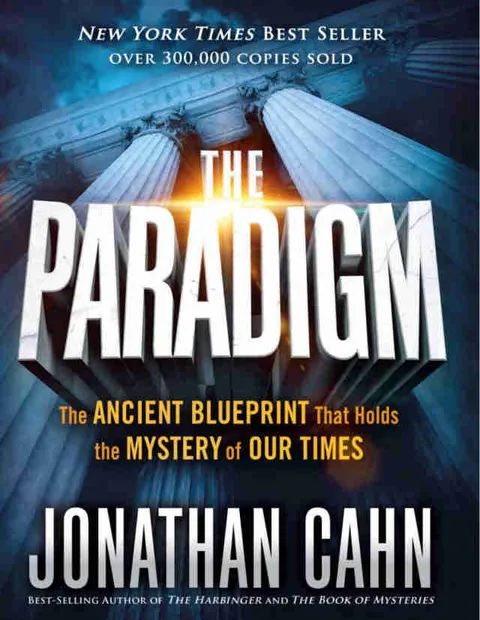

The Paradigm: The Ancient Blueprint That Holds The Mystery Of Our Times Order Printed Copy
- Author: Jonathan Cahn
- Size: 5.08MB | 310 pages
- |
Others like the paradigm: the ancient blueprint that holds the mystery of our times Features >>
A History Of The Ancient Near-East
The Act Of The Apostle
Just As I Am: The Autobiography Of Billy Graham
Smith Wigglesworth : A Life Ablaze With The Power Of God

Maria Woodworth-Etter

God's Generals: A. A. Allen

The Great Life Of St Benedict
God's Generals (Jack Coe)
God's Generals (Smith Wigglesworth)
Autobiography Of Madame Guyon
About the Book
"The Paradigm" by Jonathan Cahn presents a theory that historical events and leaders from ancient Israel parallel events and leaders in modern America. The book explores how these parallels reveal a pattern of divine judgment and offer warnings for current times. Through a blend of history, politics, and prophecy, Cahn argues that the future of America may be determined by how closely we follow or deviate from this ancient blueprint.
Jackie Hill Perry
Jackie Hill Perry has a way with words, and people canât stop listening. A gifted poet, rapper, writer, and teacher, she has written books and Bible studies, released hip-hop albums, and taught at events, conferences, colleges, and coliseums all over the nation. Inspired by her powerful testimony of salvation and deliverance from a gay lifestyle and her teaching on the holiness of God, the word is out: God is good, He is Lord, and those who surrender to Him are made new.
The Power of God
Itâs a message Jackie is passionate about because she knows firsthand the transformational power of Jesus Christ. She and her husband â fellow spoken-word artist, Preston Perry â met in 2009 while performing at an artistâs showcase. Impressed with Jackieâs poetry, Preston struck up a friendship that deepened over the years. Eventually, they began dating, which presented significant challenges but also great rewards. The Lord used Preston as a source of healing, and marriage forced Jackie to deal with hurts and fears sheâd been reluctant to give to God. The couple, who reside in Atlanta, married in 2014. They are now the parents of three daughters: Eden, Autumn, and Sage; and are expecting a son.
A decade ago, Jackie could never have imagined marriage, motherhood, and ministry in her future. Violated and abandoned by men who should have loved and protected her, Jackie was hurting. Fear and distrust kept watch over her heart. Surrender wasnât an option, even when a loving God promised her new life. Despite some exposure to church and to Scripture, Jackie was adamant that she would never submit to Jesus as Lord.
Her attraction to women started in early childhood and intensified during adolescence. Jackie finally gave in to same-sex desires, along with drugs and other habits that brought comfort, pleasure, and an emotional escape. Suppressing her femininity by wearing menâs clothing and assuming the male role in dating relationships, Jackie says every area of her life was characterized by sin and rebellion against God.
Then one evening, 19-year-old Jackie felt the conviction of the Holy Spirit. Recalling the experience, she says, âIt was a God thing. No one can ever tell me that I saved myself. I had some understanding of Jesus and obedience and Christianity. But I sincerely wanted nothing to do with God on His terms.â
Even as she resisted, Jackie clearly sensed the Lord speaking to her. âWhen He showed me that all of my sin would be the death of me â that it was true that the wages of sin is death, but it was equally true that God offered eternal life if I would repent and believe â I was compelled to trust Him. For the first time in my life, I knew that God was real and He was worth it. Just the day before, my heart was hard as a rock, and now I wanted Jesus. Only the Holy Spirit could have done that.â
âFor the first time in my life, I knew that God was real and He was worth it. Just the day before, my heart was hard as a rock, and now I wanted Jesus. Only the Holy Spirit could have done that.â
The Power of Words
Jackie dove into Godâs Word and began discovering the woman He designed her to be â mind, body, and spirit. Seeking to express herself in deeper, more artistic ways, she began writing poetry. Jackie didnât shy away from revealing her past or the ongoing struggle with temptation and sin. Her poems unflinchingly spoke gospel truth and glorified God as the ultimate source of love and life. After connecting with the Passion for Christ Movement (P4CM), Jackie was asked to write a poem about being an ex-lesbian. Hesitant at first, she felt the Lord prompting her to move forward. Through its confessional lyrics and rock-solid theology, My Life as a Stud shined a spotlight on Jackieâs conversion and marked the beginning of her public ministry.
âWhen My Life As a Stud came out in 2009, so many gay and lesbian people who didnât go to church, didnât trust Christians, and didnât want to have anything to do with the Bible clicked on the poem and suddenly wanted Jesus. I realized God had given me this art form where Iâm able to speak to peopleâs hearts.â
Since then, she has taken the message of Godâs love to artist showcases, faith-based conferences, college campuses, and major media outlets. The foundation of her message is always the Word of God: In His goodness, God created male and female. As the perfect designer of gender and sexuality, God is worthy of trust and obedience. Although same-sex attraction is central to her testimony, Jackie emphasizes that the church should approach the LGBTQ community the same way it approaches other people. Everyone is created to be an image-bearer of the living God with a unique identity and great worth. Rather than labeling someone as âa gay friend,â itâs important to develop genuine, one-on-one relationships the same way Jesus did. By investing in authentic friendships, Christians will be able to share the gospel because theyâre actually modeling it.
The Power of Redemption
Jackie points out that being âdead in sinâ goes far beyond someoneâs sexual preference. Without Christ, people are lost in every way. But when Jesus gives new life, He forgives and redeems the whole person. She says, âGod saved me from sin, not just my sexuality. I was an all-around sinful person. In essence, sin was my lord. As much as I loved women in a lustful way, I also loved pornography and drugs, bitterness and unforgiveness.â
Through discipleship, Jackie recognized the holistic nature of Godâs redemption. âIâve learned that pride is one of my greatest struggles, even more so than same-sex attraction,â she explains. âPride manifests itself in so many areas of my life, itâs hard to keep up. God didnât just rescue me from being gay. He saved me from believing Iâm a better lord than He is.â In response to the growing debate over same-sex attraction and the frequent questions she receives when people hear her testimony, Jackie wrote her first book, Gay Girl, Good God, to serve three core groups: people seeking to help and understand those within the LGBTQ community; people within the community who may disagree with some of her conclusions but are still intrigued; and people who are believers, yet have same-sex attraction and are trying to figure out how to love Jesus while dealing with those feelings.
When asked what she hopes the church learns from the book, she says, âI want people to see that how you reach the LGBTQ community is the same way you reach anybody â with the gospel. The gospel is about God. The method shouldnât be any different when youâre speaking to someone who is dealing with gluttony or lying or lust. Itâs all the same. God is Lord, Heâs Master, Heâs King, Heâs able to save. And the problem with sin is always a problem between us and God.â
"God is Lord, Heâs Master, Heâs King, Heâs able to save. And the problem with sin is always a problem between us and God."
The Power of Community
Jackie hopes the church will develop greater empathy for same-sex individuals and recognize how difficult it is to walk away from the gay lifestyle. She says, âItâs not a random sin that is easily put off. The feelings are real, and it takes time and work and a long process of dying to self.â Without a supportive church family to encourage and affirm her, the author might have fallen away. The first couple of years as a Christian were the hardest. Jackie had to learn to put off the old nature and put on Christ. The process required spiritual and physical discipline. She had to shop for womenâs clothing, an experience that made her feel strange, vulnerable, and afraid.
Temptation was a constant source of condemnation, at times pushing Jackie into depression and doubt as she grieved over her sinful nature. After a decade of growing in Christ, Jackie still faces temptations but says theyâre more subtle and easier to flee. Instead of looking at women as objects of lust, she chooses to see them as image-bearers of God. In evaluating her walk with the Lord, she considers whether she is loving people well, growing in holiness, and bearing good fruit. And she looks to Jesus, who endured the horror of the cross because He loved God with all of His heart. Knowing Jesus didnât want the cup of suffering, yet accepted it with humility, helps Jackie run the Christian race with endurance.
Endurance and spiritual growth became the inspiration for Jackieâs second album, Crescendo, which was hailed as âstunning,â âflawless,â and arguably âthe best hip-hop album of the year.â Although she began experimenting with rap simply for creative expression, Jackie soon saw it as another platform to share the gospel. When asked about the albumâs title, the talented artist says, âIn music theory, âcrescendoâ means the increase in sound. So I wanted to apply that to faith. When youâre in Christ, as your faith increases, your fruit should get louder. You love more, youâre more generous, more attentive to the needs of people. You listen well. Things begin to change as your faith becomes more evident.â
She wrote the album to mimic that spiritual progression. The first track begins on a low note with âLamentations,â a rap about the reality of sin and the tendency for Jackie to forget sheâs been forgiven. Taking listeners through an honest exploration of spiritual growth, Crescendo ends on a high note, celebrating how the Lord saved Jackie through His gospel, initiated her Christian walk, and sustains her to this day.
The Power of Legacy
A gifted communicator and lyricist, Jackie isnât just impacting culture with wordcraft. Sheâs also building a spiritual legacy for her children. Because of her childhood trauma, the idea of raising daughters was terrifying. But sheâs found so much joy in becoming a mom. Jackie says, âWhen I think of parenthood, I know Iâm only called to steward these children and disciple them and hope they will love the Lord with all their hearts, souls, minds, and strength. When I was carrying Eden, Titus 2 really spoke to me about the older women teaching the younger women.
"Once I realized what a privilege it would be to raise up a woman in my home, I welcomed the challenge.â As Jackie reflects on the last decade, she gives God all the glory and praise. Without Christ, she wouldnât have her precious daughters, would have missed out on beautiful friendships, and would never have experienced being loved by a man for the first time in her life. âIf God hadnât rescued me, none of this would be possible,â Jackie says. âLife still has its challenges, for sure. But itâs better. Itâs so much better.â
This article courtesy of HomeLife magazine.
Mercy at the Bottom
Jonah is a fascinating case study in the mercy of God. He is a no-good, rotten man who resents God for his mercy. Jonah would rather see his enemies destroyed and annihilated than forgiven. Nestled within the story of this rotten man, though, is his prayer in the second chapter. The prayer gives insight into Jonahâs inner struggle and plays no small part in the development of the story. It also tells us much about the God to whom we pray. Perhaps youâve breezed through the prayer in a previous reading of the book, but letâs slow down to see what we can learn from his cry for help from within the belly of the great fish. Most Reluctant Prayer Imagine the flannel graph with me. God sends his prophet to a wicked people to proclaim the judgment of God. Jonah, instead of going to Nineveh, runs from God by sailing in the opposite direction. Jonah â Godâs chosen instrument â is a leaky vessel. Despite the futility, he seeks to run âaway from the presence of the Lordâ (Jonah 1:3). Clearly, he wants no part of Nineveh, but weâre not yet told why. A storm rages on the high seas, and Jonah is reluctantly thrown into the sea by the sailors. These pagan seafarers call out to God for mercy, yet throughout the storm, Jonah opens not his mouth. He will not mutter even one meager word. Jonah would rather die, it seems, than be an instrument of Godâs mercy (to others or even himself). We quickly learn that Jonah is not the hero of the story, and frankly, a bit of a rotten fellow. As weâll see, however, we find good company in Jonahâs character deficiencies. And we can find solace from the fact that God still heard Jonahâs prayer, the desperate cries of a wayward prophet. Chapter 2 records Jonahâs prayer from the belly of the fish. If there is ever a foxhole cry for help recorded in the Bible, this is it. As Jonah gasps for air, covered in darkness and with death at his door, he finally manages to muster a cry for help. What Was Clear in the Dark What, if anything, can we draw out of Jonahâs prayer? Let me trace three themes and then come back to how we might personally be encouraged for our own prayer lives. GOD STILL LISTENS First, Jonah comes to his senses and prays to God. I imagine a cry of help escaped as Jonah was hoisted into the air and as he plunged in the pitch-black sea. Maybe just a singular yelp, or a thought of âsave me, Lord,â but that was all it took. Jonah wakes to the overpowering aroma of rotting fish carcasses, thinking that hell resembles a fish market. But then he regains his senses and realizes heâs alive in the belly of a fish. In this dire and desperate situation, Jonah prays: âI called out to the Lord, out of my distress, and he answered me; out of the belly of Sheol I cried, and you heard my voiceâ (Jonah 2:2). Despite his disobedience and stubbornness, he calls out to the Maker of heaven and earth. Despite attempting to run from God, he now turns to him for deliverance and help. God is always ready to receive the desperate cries of his children. GOD STILL REIGNS Jonah admits that God is in control. He doesnât say, âThose rotten sailors, I canât believe they threw me into the sea!â Instead, he sees the sovereign hand of God at work even in his precarious situation. He confesses, âYou cast me into the deep; . . . all your waves and your billows passed over meâ (Jonah 2:3). Desperate situations are not a result of God falling asleep at the wheel. Jonah admits that God is in control, and reminds us that we can trust him even in dire circumstances. God is still sovereign when our safety is compromised. GOD STILL DELIVERS Lastly, Jonah concludes that God saved him for a purpose. Jonah is incapacitated, but clearly not yet dead, and so he concludes that God saved him for some divine purpose. âGod is still sovereign when our safety is compromised.â He prays, âI shall again look upon your holy temple. . . . You brought up my life from the pit. . . . My prayer came to you, into your holy templeâ (Jonah 2:4, 6, 7). God did not satisfy Jonahâs death wish (Jonah 1:12). He has been spared to once again worship God in his holy temple. Jonah rightly concludes that his deliverance has some meaning, and he even begins to declare Godâs greatness from the belly of the fish: âSalvation belongs to the Lord!â (Jonah 2:9). Ugliest Kind of Grief We know how the story ends. Jonahâs prayer is heard and answered, and he eventually washes ashore. Jonah relents, goes to Nineveh, preaches, and the people heed his message and repent â and then the surprise comes. Jonah does not rejoice over their repentance; he gets angry (Jonah 4:1). We learn that Jonah wasnât worried that the Ninevites wouldnât listen or that they would kill the messenger. Rather, he was worried that the Ninevites would repent. He knew God would be gracious and merciful â and now that God has, he grieves. Godâs character is stunningly juxtaposed with the most pathetic display of prophetic sulking in Scripture: [Jonah] prayed to the Lord and said, âO Lord, is not this what I said when I was yet in my country? That is why I made haste to flee to Tarshish; for I knew that you are a gracious God and merciful, slow to anger and abounding in steadfast love, and relenting from disaster. Therefore now, O Lord, please take my life from me, for it is better for me to die than to live.â (Jonah 4:2â3) For all of his sins, at least Jonah is consistent. He would rather die than go preach, he would rather die than pray in the storm, and now he would rather die than see his enemies forgiven. Jonah, however, wasnât wrong about everything. He wasnât wrong about God. He knew that God would be gracious and merciful, eager to relent from disaster. The problem was that Jonah didnât share Godâs heart. He was eager for retribution, revenge, and judgment. He wanted to see the people of Nineveh burn for their oppression of Israel. Did Jonah ever become a faithful prophet? Did he ever live up to his task and mission? Did the leaky vessel ever get patched? Iâd like to think so, but the author leaves aside any tidy endings. Weâre left to ask our own question: Are we like Jonah, or are we like God? Two Lessons for Your Knees How, then, might Jonahâs prayer shape and inspire our prayers today? What might we learn from his cries out of the depths of treacherous seas? See the unrelenting kindness of God. First, we learn that God is still listening. The reality is so simple we might be tempted to overlook it. Even if you just committed a heinous sin â like running away from the living God â he has not decisively closed his ear to you. The intercom to heaven hasnât been turned off. In the immediate aftermath of sinning against him, we might imagine God exasperated and simmering with anger. We imagine him responding like we would. Jonah, however, reveals that God still waits to receive our desperate and dejected cries, even from the most disobedient among us. Heâs eager to receive and welcome our humble and broken prayers for help. As Romans 2:4 reveals, Godâs kindness is meant to lead us to repentance. God displays his mercy and forgiveness to Jonah and to the people of Nineveh. We can have confidence, even if we are low-down, dirty, rotten sinners, to come to Jesus with our first or thousandth request for forgiveness â if we humble ourselves and run to him, rather than hiding from him and running away. Resist the urge to run and hide. Second, wherever you are and whatever obedience youâre currently resisting, run to God in prayer. Be persistent in prayer, knowing your God is even more persistent in mercy. Of all the people who shouldnât have expected their prayers to be answered, it was Jonah. He openly rebelled against God. When God called, he ran in the opposite direction. He jumped aboard a ship and tried to flee the Sovereign of the seas. Even when the storms raged, he refused to pray for deliverance. He would have rather drowned than repented. And yet, out of this watery grave, he comes to his senses and cries out â and wonder of wonders, God listens and answers. âJonah teaches us that God is more merciful, more patient, and more forgiving than we can now imagine.â If we are in a Jonah-like season of rebellion, we too can pray. Even if weâve been in a decades-long season of fleeing from God, running from his presence, and resisting his call, weâre invited to come, lay down our rebellion, and be immersed, not in judgment, but in love. God wants to pour out mercy on you, and then through you to other sinners, that they too might repent and be delivered. God is not like us. Where we are quick to anger, slow to forgive, easily frustrated, and prone to hold grudges, God is not like us. Jonah teaches us that God is more merciful, more patient, and more forgiving than we can now imagine. The good news of the gospel is far better than we expect. Through Christ, the better Jonah, we call out to God, with confidence that he will overflow with mercy to no-good, rotten people who come with empty hands â and with confidence that his mercy can change our hearts to be like his. Article by Steven Lee