
Others like the human spirit Features >>

-160.webp)



.mobi-160.webp)
About the Book
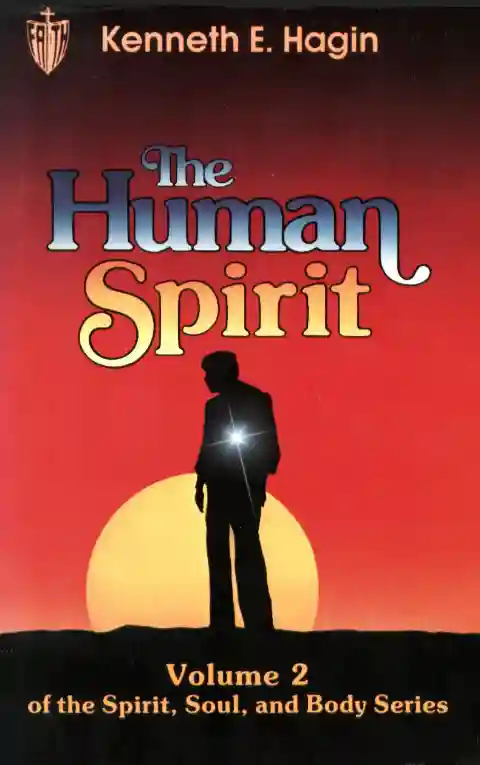
"The Human Spirit" by Kenneth Hagin explores the importance of understanding the nature of the human spirit and how it impacts our relationship with God. Hagin delves into topics such as the power of the spirit, spiritual growth, and how to cultivate a strong spiritual life. He emphasizes the importance of tapping into our spirit and aligning it with God's will in order to live a fulfilling and purposeful life. Ultimately, the book serves as a guide for readers to deepen their spiritual understanding and develop a closer connection with God.
Rich Mullins
 Born Richard Wayne Mullins on October 21, 1955, in Richmond, IN; died on September 19, 1997, in La Salle County, IL; son of John and Neva Mullins. Education: Attended Friends University, Wichita, KS, late 1980s.
The talents of Contemporary Christian singer/songwriter Rich Mullins and his work with the group Zion were first noticed by Christian music superstar Amy Grant. The inclusion of his song "Sing Your Praise to the Lord" on Grant's Age to Age album in 1982 soon lead to deals with Reunion Records and the start of a successful career as a songwriter and singer. With nearly ten albums and numerous Contemporary Christian hit songs to his credit, Mullins's career was cut short by an automobile accident that took his life on September 19, 1997, in Illinois.
Raised near Richmond, Indiana, Mullins began writing songs in his head as he drove a tractor over the fields of his family's farm. He taught himself to play the piano at age four and soon mastered a number of other instruments as well, including the guitar and hammered dulcimer. Long before his birth, however, factors over which he had no control were beginning to shape the world in which he would grow up. In Rich Mullins: An Arrow Pointing to Heaven by James Bryan Smith, the singer tells of some family history and how it came to affect his life: "My dad grew up back and forth between Kentucky and Virginia because his father was a coal miner. And when my dad was 14 my grandpa came home and told my grandma to load up the truck 'cause they were gonna move.... And my grandpa said, 'Well, Rose, we're going to Detroit.' And she said, 'Why in the world are we going to Detroit?' And he said, 'Because I don't want my boys to grow up to be coal miners.' And so they got as far as Indiana and ran out of gas--and that's how I got here."
As a boy, Mullins was known as Wayne, his middle name. Although he went by Richard when he went off to college and shortened that to Rich when he launched his music career, he preferred to be known as Wayne by his family. Mullins was particularly close to his mother, Neva, who was raised a Quaker. He admits, however, to having been somewhat embarrassed by his father, who was raised in the heart of Appalachia, "which is a very polite way to say that he was a hillbilly," Mullins told Smith. Mullins said that it was not until he was nearing the end of high school that he began to understand the true meaning of the biblical injunction to "honor thy father and mother." In Smith's book Mullins is quoted: "[I]f you cannot honor your father and mother, then you can't honor anybody. Until you come to terms with your heritage, you'll never be at peace with yourself. That was a real breakthrough moment for me. So, what I needed to do was come to understand the Appalachian life, so that I could know more about my father, who had been a stranger to me all my life."
In 1974, after finishing high school, Mullins attended Cincinnati Bible College in Ohio, working as a youth minister in a local church. A couple of years into college, he formed a band of his own. The band only stayed together for about a year, and during that time it performed Christian music at schools and colleges throughout the Cincinnati area. In the late 1970s Mullins left college to work with Zion Ministries and perform with their band, aptly named Zion. In the summer of 1981 a copy of an album recorded by Zion--made up mostly of songs written by Mullins--found its way to Christian singer Amy Grant. The up-and-coming Grant and her managers were impressed by Mullins's "Sing Your Praise to the Lord" and decided to include it on Grant's next album, Age to Age, released in 1982. Mike Blanton, an adviser to Grant and founder of Reunion Records, signed Mullins to his first publishing deal as well as his first artist deal.
Mullins's first album for Reunion, self-titled, was released in 1986 and includes such songs as "Place to Stand," "Elijah," and "Few Good Men." He followed that in 1987 with Pictures in the Sky, which includes "When You Love," "Be with You," and "Verge of a Miracle." Winds of Heaven, Stuff of Earth, Mullins's third album for Reunion, was released in 1989 and features "Awesome God," "Other Side of the World," and "If I Stand." Also hitting music stores in 1989 was Never Picture Perfect, which includes the singles "I Will Sing," "While the Nations Rage," and "First Family."
In 1988 Mullins moved to Wichita, Kansas, to study music education at Friends University, a nondenominational Christian institution. While studying at Friends, he continued to record and perform whenever he could. In 1991 and 1992, he released two volumes of a compilation entitled World As Best As I Remember It. After completing his studies at Friends, Mullins joined a Compassion International mission to the vast Navajo Reservation in Arizona to teach music to the local children and spread the Christian gospel to whomever he could reach. As part of his work in the Navajo Nation, he formed a music club for some of the younger residents. In May of 1995, he moved to the Navajo Nation, settling into a trailer adjacent to the reservation. He lived there with fellow musician Mitch McVicker, and the two were involved in a project to collect musical instruments for the children of the reservation.
Throughout his career, Mullins has been nominated a total of 12 times for Dove Awards, presented each year to the best in Contemporary Christian music. He never received the award, but close friend Doris Howard told Release magazine that he probably didn't mind. "Nashville didn't own Rich, but then, he cared nothing for the things of this world."
On September 19, 1997, the Jeep in which Mullins and McVicker were traveling from Chicago to Wichita overturned on Interstate 39 in La Salle County, Illinois. Both men were thrown onto the road from their vehicle. A tractor trailer following close behind swerved to miss the Jeep but instead hit Rich, killing him instantly. McVicker, though injured critically, recovered.
Rich Mullins's Career
Joined Christian group Zion, late 1970s; released self-titled album for Reunion Records, 1986; recorded total of nine albums of Christian music for Reunion, 1986-96; wrote several Contemporary Christian hits, including "Awesome God" and "Sing Your Praise to the Lord"; studied music education, devoted time to relief efforts among Navajo Indians of the Southwest, mid-1990s.
Born Richard Wayne Mullins on October 21, 1955, in Richmond, IN; died on September 19, 1997, in La Salle County, IL; son of John and Neva Mullins. Education: Attended Friends University, Wichita, KS, late 1980s.
The talents of Contemporary Christian singer/songwriter Rich Mullins and his work with the group Zion were first noticed by Christian music superstar Amy Grant. The inclusion of his song "Sing Your Praise to the Lord" on Grant's Age to Age album in 1982 soon lead to deals with Reunion Records and the start of a successful career as a songwriter and singer. With nearly ten albums and numerous Contemporary Christian hit songs to his credit, Mullins's career was cut short by an automobile accident that took his life on September 19, 1997, in Illinois.
Raised near Richmond, Indiana, Mullins began writing songs in his head as he drove a tractor over the fields of his family's farm. He taught himself to play the piano at age four and soon mastered a number of other instruments as well, including the guitar and hammered dulcimer. Long before his birth, however, factors over which he had no control were beginning to shape the world in which he would grow up. In Rich Mullins: An Arrow Pointing to Heaven by James Bryan Smith, the singer tells of some family history and how it came to affect his life: "My dad grew up back and forth between Kentucky and Virginia because his father was a coal miner. And when my dad was 14 my grandpa came home and told my grandma to load up the truck 'cause they were gonna move.... And my grandpa said, 'Well, Rose, we're going to Detroit.' And she said, 'Why in the world are we going to Detroit?' And he said, 'Because I don't want my boys to grow up to be coal miners.' And so they got as far as Indiana and ran out of gas--and that's how I got here."
As a boy, Mullins was known as Wayne, his middle name. Although he went by Richard when he went off to college and shortened that to Rich when he launched his music career, he preferred to be known as Wayne by his family. Mullins was particularly close to his mother, Neva, who was raised a Quaker. He admits, however, to having been somewhat embarrassed by his father, who was raised in the heart of Appalachia, "which is a very polite way to say that he was a hillbilly," Mullins told Smith. Mullins said that it was not until he was nearing the end of high school that he began to understand the true meaning of the biblical injunction to "honor thy father and mother." In Smith's book Mullins is quoted: "[I]f you cannot honor your father and mother, then you can't honor anybody. Until you come to terms with your heritage, you'll never be at peace with yourself. That was a real breakthrough moment for me. So, what I needed to do was come to understand the Appalachian life, so that I could know more about my father, who had been a stranger to me all my life."
In 1974, after finishing high school, Mullins attended Cincinnati Bible College in Ohio, working as a youth minister in a local church. A couple of years into college, he formed a band of his own. The band only stayed together for about a year, and during that time it performed Christian music at schools and colleges throughout the Cincinnati area. In the late 1970s Mullins left college to work with Zion Ministries and perform with their band, aptly named Zion. In the summer of 1981 a copy of an album recorded by Zion--made up mostly of songs written by Mullins--found its way to Christian singer Amy Grant. The up-and-coming Grant and her managers were impressed by Mullins's "Sing Your Praise to the Lord" and decided to include it on Grant's next album, Age to Age, released in 1982. Mike Blanton, an adviser to Grant and founder of Reunion Records, signed Mullins to his first publishing deal as well as his first artist deal.
Mullins's first album for Reunion, self-titled, was released in 1986 and includes such songs as "Place to Stand," "Elijah," and "Few Good Men." He followed that in 1987 with Pictures in the Sky, which includes "When You Love," "Be with You," and "Verge of a Miracle." Winds of Heaven, Stuff of Earth, Mullins's third album for Reunion, was released in 1989 and features "Awesome God," "Other Side of the World," and "If I Stand." Also hitting music stores in 1989 was Never Picture Perfect, which includes the singles "I Will Sing," "While the Nations Rage," and "First Family."
In 1988 Mullins moved to Wichita, Kansas, to study music education at Friends University, a nondenominational Christian institution. While studying at Friends, he continued to record and perform whenever he could. In 1991 and 1992, he released two volumes of a compilation entitled World As Best As I Remember It. After completing his studies at Friends, Mullins joined a Compassion International mission to the vast Navajo Reservation in Arizona to teach music to the local children and spread the Christian gospel to whomever he could reach. As part of his work in the Navajo Nation, he formed a music club for some of the younger residents. In May of 1995, he moved to the Navajo Nation, settling into a trailer adjacent to the reservation. He lived there with fellow musician Mitch McVicker, and the two were involved in a project to collect musical instruments for the children of the reservation.
Throughout his career, Mullins has been nominated a total of 12 times for Dove Awards, presented each year to the best in Contemporary Christian music. He never received the award, but close friend Doris Howard told Release magazine that he probably didn't mind. "Nashville didn't own Rich, but then, he cared nothing for the things of this world."
On September 19, 1997, the Jeep in which Mullins and McVicker were traveling from Chicago to Wichita overturned on Interstate 39 in La Salle County, Illinois. Both men were thrown onto the road from their vehicle. A tractor trailer following close behind swerved to miss the Jeep but instead hit Rich, killing him instantly. McVicker, though injured critically, recovered.
Rich Mullins's Career
Joined Christian group Zion, late 1970s; released self-titled album for Reunion Records, 1986; recorded total of nine albums of Christian music for Reunion, 1986-96; wrote several Contemporary Christian hits, including "Awesome God" and "Sing Your Praise to the Lord"; studied music education, devoted time to relief efforts among Navajo Indians of the Southwest, mid-1990s.
you can’t fake what you love
The soul is measured by its flights, Some low and others high, The heart is known by its delights, And pleasures never lie. I was 25 years old when John Piper’s book The Pleasures of God was first released in 1991. My wife and I had been attending Bethlehem Baptist for two years and had read John’s book Desiring God , which unpacked what he called Christian Hedonism. His fresh emphasis on the truth that God is most glorified in us when we are most satisfied in him was working its way into our spiritual bones. But as I read the introduction to The Pleasures of God , the one-sentence poem above crystalized the truth of Christian Hedonism for me, opening my mind to the role delight plays in the Christian life. One Sentence Begets Another John wrote that life-changing sentence as a kind of exposition of another life-changing sentence he had read four years earlier. In fact, the whole sermon series that birthed the book was born of his meditation on that sentence written in the seventeenth century by a young Professor of Divinity in Scotland named Henry Scougal. Scougal had actually penned the sentence in a personal letter of spiritual counsel to a friend, but it was so profound that others copied and passed it around. Eventually Scougal gave permission for it to be published in 1677 as The Life of God in the Soul of Man . A year later, Scougal died of tuberculosis before he had reached his twenty-eighth birthday. John Piper describes what gripped him so powerfully: One sentence riveted my attention. It took hold of my thought life in early 1987 and became the center of my meditation for about three months. What Scougal said in this sentence was the key that opened for me the treasure house of the pleasures of God. He said, “ The worth and excellency of a soul is to be measured by the object of its love .” (18) John realized that this statement is as true of God as it was of man. The worth and excellency of God’s soul is measured by the object of its love. This object must, then, be God himself, since nothing of greater value exists than God. John previously devoted a whole chapter in Desiring God to God’s happiness in himself — the God-centeredness of God. Scougal’s sentence, however, opened glorious new dimensions of this truth for John as he contemplated how the excellency of God’s soul is measured. And John’s sentence opened glorious new dimensions for me as I began to contemplate that a heart, whether human or divine, is known by its delights. Pleasures Never Lie It was the last line of John’s poem that hit me hardest: The heart is known by its delights, And pleasures never lie. Pleasures never lie. This phrase cut through a lot of my confusion and self-deceit to the very heart of the matter: what really matters to my heart. “Our lips can lie about what we love, but our pleasures never lie.” “Pleasures never lie” doesn’t mean things we find pleasurable are never deceitful. We all know, from personal experience as well as the testimony of Scripture, that many worldly pleasures lie to us (Hebrews 11:25). Rather, it means that pleasure is the whistle-blower of the heart. Pleasure is our heart’s way of telling us what we treasure (Matthew 6:21). When we take pleasure in something evil, we don’t have a pleasure problem ; we have a treasure problem . Our heart’s pleasure gauge is working just like it’s supposed to. What’s wrong is what our heart loves. Our lips can lie about what we love, but our pleasures never lie . And we can’t keep our pleasure-giving treasures hidden, whether good or evil, at least not for long. What we truly love always ends up working its way out of the unseen heart into the plain view of what we say and don’t say, and what we do and don’t do. My heart, like God’s heart, is known by its delights. I found this wonderfully clarifying. It resonated deeply; all my experience bore out its truth. And I saw it woven throughout the Bible. The more I contemplated it, however, the more devastating this truth became. Devastated by Delight It’s devastating because if the worth and excellency of my soul is measured by the heights of its flights of delights in God, I find myself “naked and exposed” before God, without embellishment or disguise (Hebrews 4:13). No professed theology, however robust and historically orthodox, no amount of giftedness I possess, no “reputation of being alive” (Revelation 3:1) can compensate if I have a deficit of delight in God. And to make sure I understand what is and isn’t allowed on the affectional scale, John says, You don’t judge the glory of a soul by what it wills to do with lukewarm interest, or with mere teeth-gritting determination. To know a soul’s proportions you need to know its passions. The true dimensions of a soul are seen in its delights. Not what we dutifully will but what we passionately want reveals our excellence or evil. (18) As I place my passions on God’s soul-scale, my deficits become clear. I’m a mixed bag when it comes to my passion for God. I can savor God like Psalm 63 and yet still sin against him like Psalm 51. I have treasured God like Psalm 73:25–26, and questioned him like Psalm 73:2–3. Sometimes I sweetly sing Psalm 23:1–3, and sometimes I bitterly cry Psalm 10:1. At times I keenly feel the wretchedness of Romans 7:24, and at times the wonder of Romans 8:1. I have known the light of Psalm 119:105 and the darkness of Psalm 88:1–3. I’ve known the fervency of Romans 12:11 and the lukewarmness of Revelation 3:15. Many times I need Jesus’s exhortation in Matthew 26:41. “We must know our spiritual poverty before we will earnestly seek true spiritual wealth.” It is devastating to stand before God with only what we passionately want revealing the state of our hearts, measuring the worth of our souls. But it is a merciful devastation we desperately need. For we must know our spiritual poverty before we will earnestly seek true spiritual wealth. We must see our miserable idolatries before we will repent and forsake them. We must feel our spiritual deadness before we will cry out, “Will you not revive us again, that your people may rejoice in you?” (Psalm 85:6) That’s all true. However, the longer I contemplated John’s sentence over time, the more I realized the devastating exposure of my spiritual poverty is meant to be a door into an eternal world of delight-filled love. Pleasures Forevermore I made this discovery in the story of the rich young man (Mark 10:17–22). When Jesus helped this man see his heart’s true passions (when he exposed his spiritual poverty), the exposure wasn’t Jesus’s primary purpose. Jesus wanted the man to have “treasure in heaven,” to give this man eternal joy (Mark 10:21). And Jesus knew the man would never joyfully sell everything he had to obtain the treasure that is God unless he saw God as his supreme treasure (Matthew 13:44). So he tried to show him by calling the man to the devastating door of exposure and knocking on it. And he grieved when the man wouldn’t open it, because the door led to a far greater treasure than the one he would leave behind. God created pleasure because he is a happy God and wants his joy to be in us and our joy to be full (John 15:11). When he designed pleasure as the measure of our treasure, his ultimate purpose was that we would experience maximal joy in the Treasure. And that the Treasure would receive maximal glory from the joy we experience in him. It is a marvelous, merciful, absolutely genius design: God is most glorified in us when we are most satisfied in him . If God has to expose our poverty to pursue our eternal joy, he will. But what he really wants for us is to experience “fullness of joy” in his presence and “pleasures forevermore” at his right hand (Psalm 16:11). And so it is a great mercy, even if at times devastating, that our pleasures never lie.