
Others like the early christians Features >>

The Christians As The Romans Saw Them
5 Classic Christian Biographies
A Dictionary Of Early Christian Beliefs
-160.webp)
By Their Blood (Christian Martyrs From The Twentieth Century And Beyond)
-160.webp)
50 Women Every Christian Should Know: Learning From Heroines Of The Faith
The True History Of The Early Christian Church
Smith Wigglesworth : A Life Ablaze With The Power Of God
Jerusalem In The Time Of Jesus
George Whitefield Chadwick (The Life And Music Of The Pride Of New England)
The Spirit Of Prophecy Volume 2
About the Book
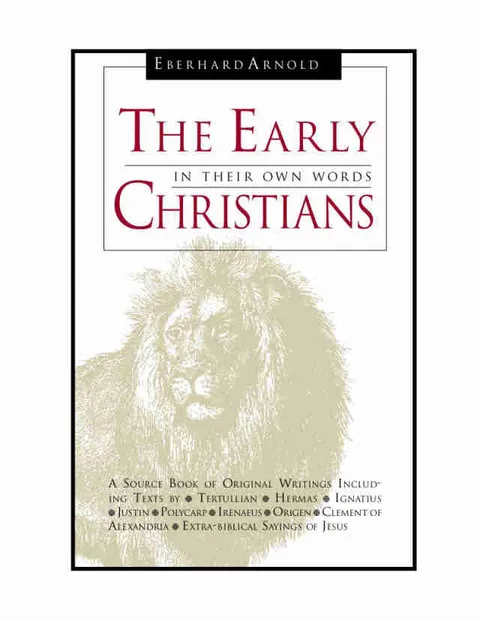
"The Early Christians" by Eberhard Arnold provides a comprehensive look at the beliefs, practices, and struggles of the early Christian communities in the first centuries after Christ's death. Arnold delves into the teachings of Jesus and the apostles, as well as the social and political contexts in which these early Christians lived. He emphasizes the radical nature of their faith, their commitment to community, and their dedication to living out the teachings of Jesus in everyday life. Arnold's work offers insights into the origins of Christianity and inspires readers to consider how these early Christians' beliefs and practices can inform their own faith journey.
J.C. Ryle
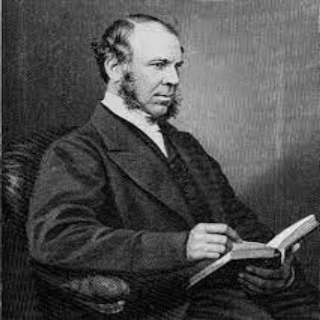
martyr or madman: the unnerving faith of ignatius
“I am afraid of your love,” Bishop Ignatius wrote to the early church in Rome, “lest it should do me an injury” ( Epistle to the Romans 1.2). It is hard to imagine more ironic words. Ignatius, a disciple of the apostle John, was nearing seventy years of age when he sent the letter ahead of him on August 24 (somewhere between AD 107 and 110). He told them he remained “afraid” of the believers’ love — meaning he was afraid that they would keep him from martyrdom, that they would “do him an injury” by keeping him from being torn apart by lions. Ignatius sent a total of seven letters to seven churches en route to the Colosseum. This letter to the church in Rome gave his thoughts on martyrdom and extended a special plea for their non-interference in his. Instead of asking for whatever influence the Roman believers may have had to release him, he bids them stand down. In his own words, For neither shall I ever hereafter have such an opportunity of attaining to God; nor will ye, if ye shall now be silent, ever be entitled to the honor of a better work. For if ye are silent concerning me, I shall become God’s; but if ye show your love to my flesh, I shall again have to run my race. Pray, then, do not seek to confer any greater favor upon me than that I be sacrificed to God. (2.2) And again, I write to all the Churches, and impress on them all, that I shall willingly die for God, unless ye hinder me. I beseech of you not to show an unseasonable good-will towards me. Suffer me to become food for the wild beasts, through whose instrumentality it will be granted me to attain to God. (4.1) Martyr or Madman? Michael Haykin’s assessment seems conclusive: “In the seven letters of Ignatius of Antioch we possess one of the richest resources for understanding Christianity in the era immediately following that of the apostles” (31). Surveying Ignatius’s letters to the seven churches on the road to Rome, Haykin summarizes three concerns weighing heavily upon the bishop’s mind: (1) the unity of the local church, (2) her standing firm against heresy, and (3) non-interference in his calling to martyrdom (32). The first and second are unsurprising, but what are we to make of the third? What do you think of a man saying, “May I enjoy the wild beasts that are prepared for me; and I pray that they may be found eager to rush upon me, which also I will entice to devour me speedily. . . . But if they be unwilling to assail me, I will compel them to do so” (5.2)? Who is this Daniel praying not for rescue but looking forward to the lion’s den? “Christians had been killed in the past, but few with as much enthusiasm.” Some scholars, Haykin notes, have called him mentally imbalanced, pathologically bent on death (32). Christians had been killed in the past, but few, if any, with such enthusiasm. What right-thinking Christian would write, “If I shall suffer, ye have loved me; but if I am rejected, ye have hated me” (8.3)? Was he a madman? ‘Sanity’ to Ignatius Did he have an irrational proclivity for martyrdom? Can his death wish fit within the bounds of mature Christian life and experience? If you were his fellow bishop and friend — say, Polycarp (later a martyr himself) — what might you say if you desired to dissuade him? You might call his mind to the holy Scripture — for example, Jesus’s prophecy of Peter’s own martyrdom (which happened years earlier in Rome). Jesus foretold, “Truly, truly, I say to you, when you were young, you used to dress yourself and walk wherever you wanted, but when you are old, you will stretch out your hands, and another will dress you and carry you where you do not want to go ” (John 21:18). The apostle Peter did not want to go and stretch out his hands in his own crucifixion. He did not want to be dressed by another and “carried” to his death. Granted, he wanted that end more than denying his Master again, but it stands to reason that if he could have ended differently, he would have chosen otherwise. Or you might consider the apostle Paul and his second-to-last letter before he too was likely beheaded in Rome. “First of all, then, I urge that supplications, prayers, intercessions, and thanksgivings be made for all people, for kings and all who are in high positions, that we may lead a peaceful and quiet life, godly and dignified in every way” (1 Timothy 2:1–2). He exhorts that prayers be made for rulers that Christians might lead quiet and peaceful lives. Pray for your leaders, in part, that they might be saved — and thus not given to killing you “all the day long” for public entertainment (Romans 8:36). Ignatius to ‘Sanity’ “But,” the well-taught bishop might have responded, “did not Peter write much of suffering and necessary trials as tests to our faith? Does not God place our faith in the fire (or the Colosseum) that it might be found to result in praise and glory and honor at Christ’s revelation (1 Peter 1:7; 4:12)? Or did Peter not put forward the suffering servant, Jesus Christ, as our example to follow? Or is it not a ‘gracious thing in the sight of God’ to endure suffering for righteousness’ sake — something we are ‘called to’ and blessed in (1 Peter 2:20; 3:14)? And further, did Peter not tell the church to ‘arm’ themselves with this thinking (1 Peter 4:1), and to rejoice insofar as they share in Christ’s sufferings, evidence that the Spirit of glory rests upon them (1 Peter 4:13–14)? “And what to say of our beloved Paul? Was it not he who was hard pressed to stay, even when fruitful labor awaited him? Did he not inscribe my heart on paper when he said, ‘To live is Christ, and to die is gain,’ and that to be with Christ is ‘far better’ (Philippians 1:21, 23)? And was it not also the case that, knowing he was walking from one affliction to the next, he walked the martyr’s path — against the behest and weeping of fellow Christians who threatened to break the apostle’s heart (Acts 21:12–13)? “‘Constrained by the Spirit,’ did he not go forward (Acts 20:22)? He testified that he did not count his life of any value nor as precious to himself, if only he could finish his race and ministry to testify to God’s grace (Acts 20:24). He assured crying saints along the violent road that he was ready not only to be imprisoned but to die for the name of Jesus (Acts 21:13). They eventually submitted and said, ‘Let the will of the Lord be done’ (Acts 21:14). Will you not imitate them, beloved Polycarp?” This imagining is to help us get into the mind of the “madman,” as well as to warn us from drawing hasty applications. Though most will not consent so insistently and passionately to a martyr’s death, some will pass by other exits on the way to testifying to the ultimate worth of Christ. Messiah’s Madmen What might we, far from the lions of Ignatius’s day, learn from the martyred bishop of Antioch? I am challenged by his all-consuming love for Jesus, a love that the world — and some in the church — considers crazy. Let fire and the cross; let the crowds of wild beasts; let breakings, tearings, and separations of bones; let cutting off of members; let bruising to pieces of the whole body; and let the very torment of the devil come upon me: only let me attain to Jesus Christ. (5.3) “If we are madmen, let it be for Christ.” If we are madmen, let it be for Christ. Should not Paul’s words be stated over our entire lives? “If we are beside ourselves, it is for God; if we are in our right mind, it is for you” (2 Corinthians 5:13). If we are crazy, it is because of Christ. If we are in our right minds, it is for others to be won to the same madness we have. The love of Christ “controls us” (2 Corinthians 5:14). Oh what a beautiful strangeness, what a provocative otherness, what an unidentifiable oddity is a Christian who loves Christ with his all and considers death to be truly gain. Such a one can see, even behind the teeth of lions, an endless life with him .