
Others like the disciple whom jesus loved Features >>
Discipleship: The Road Less Taken
-160.webp)
The Justification Of God (An Exegetical And Theological Study Of Romans 91-23)

Cruden's Complete Concordance To The Old And New Testaments
%20(Library%20of%20Christian%20Classics)%20by%20John%20Calvin-160.webp)
Library Of Christian Classics

Truth And The New Kind Of Christian
The Birth Of Satan
The Canon Of Scripture

The Bible And Reason
-160.webp)
Father, Son, And Holy Spirit (Relationships, Roles, And Relevance)

The Fundamentals - A Testimony To The Truth Volume 3
About the Book
"The Disciple Whom Jesus Loved" by Eastwood Anaba is a book that explores the relationship between Jesus and the disciple whom he loved, believed to be John. The book delves into the special bond between Jesus and this disciple, examining the lessons and insights that can be gleaned from their interactions. Anaba's work sheds light on the deep love and understanding that existed between Jesus and this disciple, offering valuable insights for readers looking to deepen their own spiritual relationships.
Smith Wigglesworth
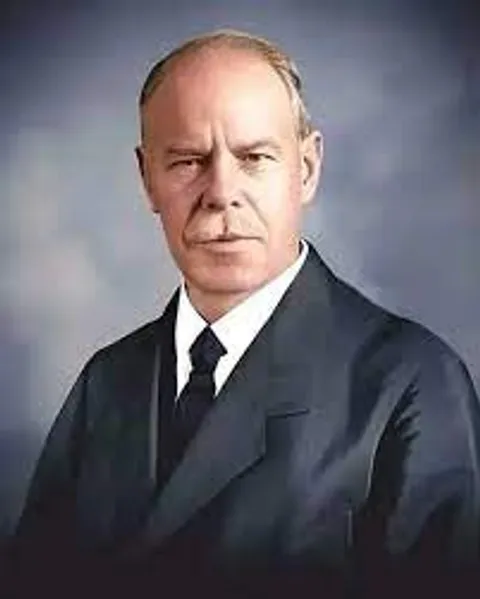 Smith Wigglesworth was born in 1859 to a very poor family. His father did manual labor, for very little pay. Smith himself went to work at the age of six to help with the family income. At six he was pulling turnips and at seven he was working in a woolen mill twelve hours a day. His parents did not know God, but Smith hungered in his heart to know Him. Even as a youngster he would pray in the fields. His grandmother was the critical Christian in his life. She was a Wesleyan Methodist and would take Smith to meetings with her. At one of these meetings there was a song being sung about Jesus as the lamb and Smith came into the realization of God's love for him and his decision to believe Christ for his salvation was decided that day. He was immediately filled with the desire to evangelize and led his own mother to Christ.
Smith has various church experiences as he was growing up. He first went to an Episcopal church and then at thirteen a Wesleyan Methodist church. When he was sixteen he became involved in the Salvation Army. He felt deeply called to fast and pray for lost souls. He saw many people come to Christ. At seventeen a mentor shared with him about water baptism and he decided to be baptized. The Salvation Army was experiencing a tremendous level of the power of God in those days. He describes meetings where "many would be prostrated under the power of the Spirit, sometimes for as long as twenty-four hours at a time." They would pray and fast and cry out for the salvation of fifty or a hundred people for the week and they would see what they had prayed for.
At eighteen Smith left the factory and became a plumber. He moved to Liverpool when he was twenty and continued to work during the day and minister during his free time. He felt called to minister to young people and brought them to meetings. These were destitute and ragged children, whom he would often feed and care for. Hundreds were saved. Smith was often asked to speak in Salvation meetings and he would break down and weep under the power of God. Many would come to repentance in those meetings through this untrained man. At twenty-three he returned back Bradford and continued his work with the Salvation Army.
In Bradford Smith met Mary Jane Featherstone, known as Polly, the daughter of a temperance lecturer. She left home and went to Bradford to take a servants job. One night she was drawn to a Salvation Army meeting. She listened to the woman evangelist, Gipsy Tillie Smith, and gave her heart to Christ. Smith was in that meeting and saw her heart for God. Polly became an enthusiastic Salvationsist and was granted a commission by General Booth. They developed a friendship, but Polly went to Scotland to help with a new Salvationist work. She eventually moved back to Bradford and married Smith, who was very much in love with her.
The couple worked together to evangelize the lost. They opened a small church in a poor part of town. Polly would preach and Smith would make the altar calls. For a season, however, Smith became so busy with his plumbing work that his evangelistic fervor began to wane. Polly continued on, bringing Smith to conviction. One day while Smith was working in the town of Leeds he heard of a divine healing meeting. He shared with Polly about it. She needed healing and so they went to a meeting, and Polly was healed.
Smith struggled with the reality of healing, while being ill himself. He decided to give up the medicine that he was taking and trust God. He was healed. They had five children, a girl and four boys. One morning two of the boys were sick. The power of God came and they prayed for the boys and they were instantly healed. Smith struggled with the idea that God would use him to heal the sick in general. He would gather up a group of people and drive them to get prayer in Leeds. The leaders of the meeting were going to a convention and left Smith in charge. He was horrified. How could he lead a meeting about divine healing? He tried to pass it off to someone else but could not. Finally he led the meeting and several people were healed. That was it. From then on Smith began to pray for people for healing.
Smith had another leap to make. He had heard about the Pentecostals who were being baptized in the Holy Spirit. He went to meetings and was so hungry for God he created a disturbance and church members asked him to stop. He went to prayer and prayed for four days. Finally he was getting ready to head home and the vicar's wife prayed for him and he fell under the power of God and spoke in tongues. Everything changed after that. He would walk by people and they would come under the conviction of the Holy Spirit and be saved. He began to see miracles and healings and the glory of God would fall when he prayed and preached.
Smith had to respond to the many calls that came in and gave up his business for the ministry. Polly unexpectedly died in 1913, and this was a real blow to Smith. He prayed for her and commanded that death release her. She did arise but said "Smith - the Lord wants me." His heartbroken response was "If the Lord wants you, I will not hold you". She had been his light and joy for all the years of their marriage, and he grieved deeply over the loss. After his wife was buried he went to her grave, feeling like he wanted to die. When God told him to get up and go Smith told him only if you "give to me a double portion of the Spirit – my wife’s and my own – I would go and preach the Gospel. God was gracious to me and answered my request.” His daughter Alice and son-in-law James Salter began to travel with him to handle his affairs.
Smith would pray and the blind would see, and the deaf were healed, people came out of wheelchairs, and cancers were destroyed. One remarkable story is when He prayed for a woman in a hospital. While he and a friend were praying she died. He took her out of the bed stood her against the wall and said "in the name of Jesus I rebuke this death". Her whole body began to tremble. The he said "in the name of Jesus walk", and she walked. Everywhere he would go he would teach and then show the power of God. He began to receive requests from all over the world. He taught in Europe, Asia, New Zealand and many other areas. When the crowds became very large he began a "wholesale healing". He would have everyone who needed healing lay hands on themselves and then he would pray. Hundreds would be healed at one time.
Over Smith's ministry it was confirmed that 14 people were raised from the dead. Thousands were saved and healed and he impacted whole continents for Christ. Smith died on March 12, 1947 at the funeral of his dear friend Wilf Richardson. His ministry was based on four principles " First, read the Word of God. Second, consume the Word of God until it consumes you. Third believe the Word of God. Fourth, act on the Word."
Smith Wigglesworth was born in 1859 to a very poor family. His father did manual labor, for very little pay. Smith himself went to work at the age of six to help with the family income. At six he was pulling turnips and at seven he was working in a woolen mill twelve hours a day. His parents did not know God, but Smith hungered in his heart to know Him. Even as a youngster he would pray in the fields. His grandmother was the critical Christian in his life. She was a Wesleyan Methodist and would take Smith to meetings with her. At one of these meetings there was a song being sung about Jesus as the lamb and Smith came into the realization of God's love for him and his decision to believe Christ for his salvation was decided that day. He was immediately filled with the desire to evangelize and led his own mother to Christ.
Smith has various church experiences as he was growing up. He first went to an Episcopal church and then at thirteen a Wesleyan Methodist church. When he was sixteen he became involved in the Salvation Army. He felt deeply called to fast and pray for lost souls. He saw many people come to Christ. At seventeen a mentor shared with him about water baptism and he decided to be baptized. The Salvation Army was experiencing a tremendous level of the power of God in those days. He describes meetings where "many would be prostrated under the power of the Spirit, sometimes for as long as twenty-four hours at a time." They would pray and fast and cry out for the salvation of fifty or a hundred people for the week and they would see what they had prayed for.
At eighteen Smith left the factory and became a plumber. He moved to Liverpool when he was twenty and continued to work during the day and minister during his free time. He felt called to minister to young people and brought them to meetings. These were destitute and ragged children, whom he would often feed and care for. Hundreds were saved. Smith was often asked to speak in Salvation meetings and he would break down and weep under the power of God. Many would come to repentance in those meetings through this untrained man. At twenty-three he returned back Bradford and continued his work with the Salvation Army.
In Bradford Smith met Mary Jane Featherstone, known as Polly, the daughter of a temperance lecturer. She left home and went to Bradford to take a servants job. One night she was drawn to a Salvation Army meeting. She listened to the woman evangelist, Gipsy Tillie Smith, and gave her heart to Christ. Smith was in that meeting and saw her heart for God. Polly became an enthusiastic Salvationsist and was granted a commission by General Booth. They developed a friendship, but Polly went to Scotland to help with a new Salvationist work. She eventually moved back to Bradford and married Smith, who was very much in love with her.
The couple worked together to evangelize the lost. They opened a small church in a poor part of town. Polly would preach and Smith would make the altar calls. For a season, however, Smith became so busy with his plumbing work that his evangelistic fervor began to wane. Polly continued on, bringing Smith to conviction. One day while Smith was working in the town of Leeds he heard of a divine healing meeting. He shared with Polly about it. She needed healing and so they went to a meeting, and Polly was healed.
Smith struggled with the reality of healing, while being ill himself. He decided to give up the medicine that he was taking and trust God. He was healed. They had five children, a girl and four boys. One morning two of the boys were sick. The power of God came and they prayed for the boys and they were instantly healed. Smith struggled with the idea that God would use him to heal the sick in general. He would gather up a group of people and drive them to get prayer in Leeds. The leaders of the meeting were going to a convention and left Smith in charge. He was horrified. How could he lead a meeting about divine healing? He tried to pass it off to someone else but could not. Finally he led the meeting and several people were healed. That was it. From then on Smith began to pray for people for healing.
Smith had another leap to make. He had heard about the Pentecostals who were being baptized in the Holy Spirit. He went to meetings and was so hungry for God he created a disturbance and church members asked him to stop. He went to prayer and prayed for four days. Finally he was getting ready to head home and the vicar's wife prayed for him and he fell under the power of God and spoke in tongues. Everything changed after that. He would walk by people and they would come under the conviction of the Holy Spirit and be saved. He began to see miracles and healings and the glory of God would fall when he prayed and preached.
Smith had to respond to the many calls that came in and gave up his business for the ministry. Polly unexpectedly died in 1913, and this was a real blow to Smith. He prayed for her and commanded that death release her. She did arise but said "Smith - the Lord wants me." His heartbroken response was "If the Lord wants you, I will not hold you". She had been his light and joy for all the years of their marriage, and he grieved deeply over the loss. After his wife was buried he went to her grave, feeling like he wanted to die. When God told him to get up and go Smith told him only if you "give to me a double portion of the Spirit – my wife’s and my own – I would go and preach the Gospel. God was gracious to me and answered my request.” His daughter Alice and son-in-law James Salter began to travel with him to handle his affairs.
Smith would pray and the blind would see, and the deaf were healed, people came out of wheelchairs, and cancers were destroyed. One remarkable story is when He prayed for a woman in a hospital. While he and a friend were praying she died. He took her out of the bed stood her against the wall and said "in the name of Jesus I rebuke this death". Her whole body began to tremble. The he said "in the name of Jesus walk", and she walked. Everywhere he would go he would teach and then show the power of God. He began to receive requests from all over the world. He taught in Europe, Asia, New Zealand and many other areas. When the crowds became very large he began a "wholesale healing". He would have everyone who needed healing lay hands on themselves and then he would pray. Hundreds would be healed at one time.
Over Smith's ministry it was confirmed that 14 people were raised from the dead. Thousands were saved and healed and he impacted whole continents for Christ. Smith died on March 12, 1947 at the funeral of his dear friend Wilf Richardson. His ministry was based on four principles " First, read the Word of God. Second, consume the Word of God until it consumes you. Third believe the Word of God. Fourth, act on the Word."
When Our Waiting Will Be Over
My favorite songs are ones that make my heart burn with longing. They’re songs that have unusual power to, as C.S. Lewis put it, rip open my “inconsolable secret” — the secret “which pierces with such sweetness,” yet is so hard to capture in words, since “it is a desire for something that has never actually appeared in our experience” (The Weight of Glory, 29–30). Which is why among my favorites is a song written by Bob and Jordan Kauflin, “When We See Your Face.” The song taps into subterranean longings and triggers profound emotions in me. I am not one to cry easily, but I rarely can listen to it without tears. So, I usually listen to it alone, sparing others the awkwardness of a weeping middle-aged man. Lest it appear suspicious to anyone, let me say up front that I was not asked to promote this song. I asked permission to write about it, receiving no benefit beyond what the song itself delivers — which is a benefit more precious than gold. For my soul very much needs this song’s reminder, especially as another year passes and I am another year older, still fighting against the relentless darkness, still waiting, still desiring something that has never actually appeared in my experience. Not yet. It remains a desire for a promised appearing — an appearing I’m growing to increasingly love (2 Timothy 4:8). I share this song because I assume you also need its precious reminder. And perhaps it will tap into your piercing, sweet, inconsolable secret too. Though the Dark Is Overwhelming Though the dark is overwhelming And the brightest lights grow dim Though the Word of God Is trampled on by foolish men Though the wicked never stumble And abound in every place We will all be humbled when we see Your face It doesn’t take reaching our middle or elder years to know just how dark the world can be. But I can attest now to a cumulative effect it has upon the soul the longer one lives here. And I do not claim to have suffered greatly — yet. Prolonged exposure to confounding darkness is a wearisome experience (Psalm 73:16). It is not merely the physical effects of aging that tempt many of us to retreat from action as we enter the older demographic columns. It’s also the spiritual and psychological effects of prolonged dealing with evil that infects and harms our families, friendships, churches, vocations, societies, and nations. We probably thought ourselves more a match for it in the optimistic bloom of youth, but experience put us in our place. The evil is beyond our strength and our comprehension. Hope can take a beating in the relentless battle against darkness. Until we remember. Until we remember that one day all oppressive darkness will be banished from the experience of the saints (Revelation 22:5), and that even now, even as the darkness rages (Revelation 12:12), it is passing away as the true light shines (1 John 2:8). We remember that we were never supposed to know and understand the evil we face (Genesis 3:7) — of course it’s a wearisome task! Only the Omniscient and Omnipotent can comprehend it and not grow weary (Isaiah 40:28). We remember that he promised us, “In the world you will have tribulation. But take heart; I have overcome the world” (John 16:33). We remember that our great task, the one way we truly conquer darkness, is to trust him (Proverbs 3:5–6) and obey him (John 14:15). And the great day that will end all night — the day of the joyful humbling of the redeemed righteous and the horrible humbling of the condemned wicked (Philippians 2:10–11) — will be inaugurated when we see the face of Jesus (1 Corinthians 13:12). All Our Sins Will Be Behind Us And the demons we’ve been fighting Those without and those within Will be underneath our feet To never rise again All our sins will be behind us Through the blood of Christ erased And we’ll taste Your kindness when we see Your face I’m so sick of Satan and his wretched wraiths that I don’t even want to give them the attention of a mention — except to say that one day (hear this, you horrid hoard!), the almighty foot of the Son of Man will come down once for all upon the heads of the great dragon and all his infernal snakes, and we will wrestle them no more (Ephesians 6:12; Revelation 20:10). But we also remember something far, far sweeter — and growing sweeter every year we grow older and come more to terms with just how intractable and entwined our demon-like indwelling sin is in the very members of our bodies (Romans 7:23). We remember that our sin will someday be behind us. Oh, we know that Jesus has paid our ransom in full (1 Timothy 2:6) and that by God’s grace through faith (Ephesians 2:8) we have been clothed in Christ’s righteousness (Philippians 3:9), so that God even now sees us justified, as if we had never sinned and always obeyed (Romans 3:26). It is, for now, an almost incomprehensibly glorious thing. But one day, our blood-bought innocence, our holy purity, will cease to be primarily a forensic reality we embrace by faith. On that day we will fully experience what it’s like to be righteous in every atom of our resurrected bodies and every dimension of our eternal, immaterial souls. We will have no more sin. No more tainted motives, no more illicit desires, no more damned selfish ambition. We will know in every part of our being what it’s like to fully obey the Great Commandment as if it’s the most natural thing in the world — for it will be! And we will worship the Lamb who was slain for us with unclouded minds and hearts bursting with joy. We will taste this unfathomably gracious kindness of Jesus when we see his face. All the Waiting Will Be Over All the waiting will be over Every sorrow will be healed All the dreams it seemed Could never be will all be real And You’ll gather us together In Your arms of endless grace As Your Bride forever when we see Your face The waiting will be over. I can’t write that sentence with dry eyes. Most of our Christian experience in this dark valley is hopeful waiting for what we so long to see (Romans 8:25). And much of that waiting is accompanied by hopeful groaning (Romans 8:20): groaning in illness, groaning in grief, groaning in disappointment and perplexity over the terrible, violent brokenness of the world and the inscrutable purposes of our only wise God (Romans 16:27), whose ways are not our ways (Isaiah 55:8). And we hopefully groan, like a bride, with longing for the consummate intimacy of knowing the Lover of our souls, even as we have been fully known (1 Corinthians 13:12). But one day — our Groom has promised it will be “soon” (Revelation 22:20) — the waiting will be over. And he will come, our Hero, of which all legendary heroes are but copies and shadows, and he will save us to the uttermost (Isaiah 35:4; Hebrews 7:25). And all that is dark and diseased and damaged and destroyed will pass away like a bad dream and become the shadows of the great yesterday (Psalm 90:4–5), serving only to heighten our savoring of the bright, eternal today (Revelation 22:5). And of all the light in which we delight, the fairest will be his face. We’ll Be Yours Forevermore We will see, we will know Like we’ve never known before We’ll be found, we’ll be home We’ll be Yours forevermore Having once been lost, we will fully know just how found we are (Luke 19:10). Having once known our Savior in such a small part, we will fully know him — as much as the finite can fully know the Infinite (1 Corinthians 13:12). We will be fully his and fully home — forever. Home. That is our inconsolable secret, isn’t it? That piercing sweetness, that desire for what has never actually appeared in our experience, yet somehow we know it is where we truly belong. I think that’s what this song taps into: our homesickness for a place we’ve not been, and a sense of alienation in the very places we were born. We don’t belong here, where it’s dark, depraved, and demonic, and where our sweetest experience is the blessed hope we taste in the future promises we trust. We long for home. For home is where we will meet the One we have loved, though we have not seen him (1 Peter 1:8). Home is where we will see his face. Article by Jon Bloom