
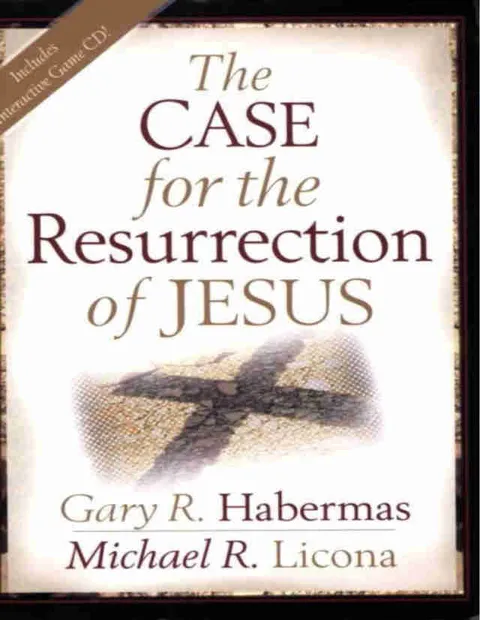

The Case For The Resurrection Of Jesus Order Printed Copy
- Author: Gary R. Habermas, Michael R. Licona
- Size: 4.39MB | 426 pages
- |
Others like the case for the resurrection of jesus Features >>
The Case For The Resurrection
The Case For Christ

The Case For Hope
-160.webp)
Evidence For The Resurrection (What It Means For Your Relationship With God)

The Gentle Breeze Of Jesus
The Leadership Secrets Of Billy Graham

He Came To Set The Captives Free
-160.webp)
The Cross And The Switchblade: A True Story

The Reason For God: Belief In An Age Of Scepticism

School Of Apologetics
About the Book
"The Case for the Resurrection of Jesus" presents a detailed examination of the evidence supporting the resurrection of Jesus Christ. Authors Gary R. Habermas and Michael R. Licona provide historical and philosophical arguments for the resurrection, addressing common skeptical objections and presenting a compelling case for the truth of this key event in Christianity.
Jack Coe
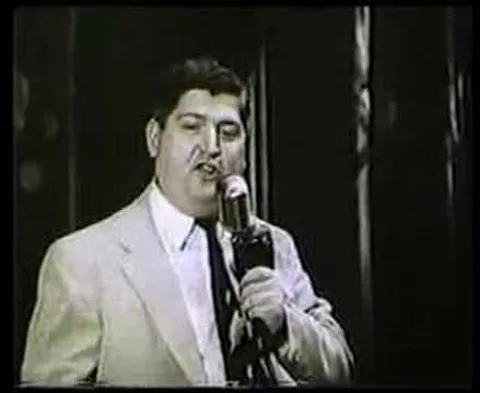 Jack G. Coe was born on March 11, 1918 in Oklahoma City, Oklahoma. His father, George, was a gambler and an alcoholic. His parents, although having been Christians, did not attend church. His grandparents, on his father's side were Christians but they were not able to influence their son's behavior. The couple had seven children in all. When Jack was five his father gambled away all their furniture and their house, leaving his mother Blanche destitute with seven children. They were devastated. His mother tried to make a new life by moving to Pennsylvania, but it was too hard. When Coe's father came to her house promising to change she agreed to reunite. The change did not last, however, and George went back to gambling.
Blanche left George for good, but only took her daughter with her this time. The boys were left with their father, which meant they were essentially left on their own. Often they did not have food to eat. Blanche did return to claim them, but could not care for them on her own. When Jack was nine he and his twelve year old brother was turned over to an orphanage. His older brother ran away, but was hit by a car and died. Jack struggled with rejection and abandonment. At seventeen he left the orphanage and began to drink, becoming an alcoholic like his father. He drank so much he had ulcers and his heart became enlarged. The doctor told him that if he didn't quit drinking he was going to die. Not knowing where else to go he moved to California to be near his mother. When he thought he was near death he promised God he would turn his life around and he was healed for a while. The family moved to Texas and he was drinking again. This time he heard God's voice "This is your last chance". The following Sunday he went to a Nazarene church and accepted Christ. He was radically changed. He went to church meetings almost every night, prayed, and read the Word constantly. After a year and a half he went to a Pentecostal meeting and was filled with the Holy Spirit and had a vision of Jesus.
Jack felt called to the ministry and went to and Assembly of God school called Southwestern Bible Institute, led by P.C. Nelson. He left in 1941 to join the army after the bombing of Pearl Harbor. He was so committed to God's purposes that he went to church every night. His sergeant sent him for psychiatric evaluation This happened several times while he was in the army. One day he was reading a book by P.C. Nelson on Healing when he fell asleep. He had a dream where he saw his sister close to death in a hospital but he saw a bright light come into her room and she was healed. He left immediately to see her and everything was as he'd seen it in a dream. She was healed and he was changed forever.
In 1944 Coe became ill with malaria. He was sent home because the doctors felt they could not help him. He sought the Lord who told him "preach the gospel". God healed him. He went out to preach and three people were saved. That year he was ordained as an Assembly of God minister. His healing experiences caused him to seek God about the gifts of healing. In 1945 he felt God called him to have a healing meeting. He went to Texas and announced in a church that God was going to heal the sick, cause the blind to see, and the deaf to hear. Those were bold words indeed! A woman received her sight that night. His ministry was launched. He began traveling over the country.
In 1946 God spoke to Coe and his wife Juanita to sell their house and start an itinerant ministry. They purchased a beat up truck and a ministry tent and began to live on the road. In 1948 God spoke to Coe to go to Redding, California. A woman, whose leg was about to be amputated, was healed and the news spread throughout the city. God blessed the couple and for the first time had enough money to be ahead on their finances. Healings and miracles regularly occurred in his meetings.
There were some very controversial things about Jack Coe. He believed that he should have a larger tent than other evangelists and went and measured Oral Roberts tent, then he ordered one larger. His style was dramatic and he often hit, slapped, or jerked people. He also would pull people out of wheelchairs. His speaking style was aggressive as he challenged people to believe God. He suggested that people who stood against him would be "struck dead by God". He was anti-medicine and told people not to go to doctors. He also encouraged interracial meetings.
In 1950 Coe began publishing the Herald of Healing magazine. Within six years it was being sent to over 350,000 people. God began to speak to Coe about opening an orphanage. He collected money for the project at every meeting. He sold his own home and began to build the children's home. His own family moved into the partially finished building so they would have a place to live. Coe eventually bought 200 acres outside of Dallas and built four dormitories and established a home farm. They could support 200 abandoned children.
In 1952 Coe began a radio ministry, which eventually was carried on over 100 radio stations. He also began having trouble with the Assembly of God organization. Although initially responsive to suggestions, he felt their goal was to limit the ministry. He suggested that the Assembly of God leadership had lost the belief in the miraculous and felt that they should be replaced. Needless to say this aggravated the situation. In 1953 Coe was expelled from the Assembly of God church. They felt that he was independent, extreme, prone to exaggeration, and they weren't sure about his ministry style. Coe felt that it was an attack against his success. He told people that "one of the officials made the remark to me that he would not rest until every man that was preaching divine healing in a deliverance ministry, separated from the General Council of the Assembly of God."
In 1953 Coe started his own church in Dallas. It was called the Dallas Revival Center. God spoke to him that it was important for those not getting healed to receive teaching about healing from the Word. In 1954 Coe opened a faith home, where people could stay for extended periods of time to receive prayer for healing. Teaching and prayer were given daily. 1956 was a pivotal year. While Coe was preaching in Miami he was arrested for practicing medicine without a license. This brought national attention to him and the ministry, both positive and negative. He was acquitted of practicing medicine without a license when the trial went to court.
At the end of 1956 Coe became ill. He had pushed himself night and day for years. He had poor eating habits and was overweight. He thought it was exhaustion but it was bulbar polio, a form of polio that affects the nerves. He became paralyzed, developed pneumonia, and died December 16, 1956.
Jack G. Coe was born on March 11, 1918 in Oklahoma City, Oklahoma. His father, George, was a gambler and an alcoholic. His parents, although having been Christians, did not attend church. His grandparents, on his father's side were Christians but they were not able to influence their son's behavior. The couple had seven children in all. When Jack was five his father gambled away all their furniture and their house, leaving his mother Blanche destitute with seven children. They were devastated. His mother tried to make a new life by moving to Pennsylvania, but it was too hard. When Coe's father came to her house promising to change she agreed to reunite. The change did not last, however, and George went back to gambling.
Blanche left George for good, but only took her daughter with her this time. The boys were left with their father, which meant they were essentially left on their own. Often they did not have food to eat. Blanche did return to claim them, but could not care for them on her own. When Jack was nine he and his twelve year old brother was turned over to an orphanage. His older brother ran away, but was hit by a car and died. Jack struggled with rejection and abandonment. At seventeen he left the orphanage and began to drink, becoming an alcoholic like his father. He drank so much he had ulcers and his heart became enlarged. The doctor told him that if he didn't quit drinking he was going to die. Not knowing where else to go he moved to California to be near his mother. When he thought he was near death he promised God he would turn his life around and he was healed for a while. The family moved to Texas and he was drinking again. This time he heard God's voice "This is your last chance". The following Sunday he went to a Nazarene church and accepted Christ. He was radically changed. He went to church meetings almost every night, prayed, and read the Word constantly. After a year and a half he went to a Pentecostal meeting and was filled with the Holy Spirit and had a vision of Jesus.
Jack felt called to the ministry and went to and Assembly of God school called Southwestern Bible Institute, led by P.C. Nelson. He left in 1941 to join the army after the bombing of Pearl Harbor. He was so committed to God's purposes that he went to church every night. His sergeant sent him for psychiatric evaluation This happened several times while he was in the army. One day he was reading a book by P.C. Nelson on Healing when he fell asleep. He had a dream where he saw his sister close to death in a hospital but he saw a bright light come into her room and she was healed. He left immediately to see her and everything was as he'd seen it in a dream. She was healed and he was changed forever.
In 1944 Coe became ill with malaria. He was sent home because the doctors felt they could not help him. He sought the Lord who told him "preach the gospel". God healed him. He went out to preach and three people were saved. That year he was ordained as an Assembly of God minister. His healing experiences caused him to seek God about the gifts of healing. In 1945 he felt God called him to have a healing meeting. He went to Texas and announced in a church that God was going to heal the sick, cause the blind to see, and the deaf to hear. Those were bold words indeed! A woman received her sight that night. His ministry was launched. He began traveling over the country.
In 1946 God spoke to Coe and his wife Juanita to sell their house and start an itinerant ministry. They purchased a beat up truck and a ministry tent and began to live on the road. In 1948 God spoke to Coe to go to Redding, California. A woman, whose leg was about to be amputated, was healed and the news spread throughout the city. God blessed the couple and for the first time had enough money to be ahead on their finances. Healings and miracles regularly occurred in his meetings.
There were some very controversial things about Jack Coe. He believed that he should have a larger tent than other evangelists and went and measured Oral Roberts tent, then he ordered one larger. His style was dramatic and he often hit, slapped, or jerked people. He also would pull people out of wheelchairs. His speaking style was aggressive as he challenged people to believe God. He suggested that people who stood against him would be "struck dead by God". He was anti-medicine and told people not to go to doctors. He also encouraged interracial meetings.
In 1950 Coe began publishing the Herald of Healing magazine. Within six years it was being sent to over 350,000 people. God began to speak to Coe about opening an orphanage. He collected money for the project at every meeting. He sold his own home and began to build the children's home. His own family moved into the partially finished building so they would have a place to live. Coe eventually bought 200 acres outside of Dallas and built four dormitories and established a home farm. They could support 200 abandoned children.
In 1952 Coe began a radio ministry, which eventually was carried on over 100 radio stations. He also began having trouble with the Assembly of God organization. Although initially responsive to suggestions, he felt their goal was to limit the ministry. He suggested that the Assembly of God leadership had lost the belief in the miraculous and felt that they should be replaced. Needless to say this aggravated the situation. In 1953 Coe was expelled from the Assembly of God church. They felt that he was independent, extreme, prone to exaggeration, and they weren't sure about his ministry style. Coe felt that it was an attack against his success. He told people that "one of the officials made the remark to me that he would not rest until every man that was preaching divine healing in a deliverance ministry, separated from the General Council of the Assembly of God."
In 1953 Coe started his own church in Dallas. It was called the Dallas Revival Center. God spoke to him that it was important for those not getting healed to receive teaching about healing from the Word. In 1954 Coe opened a faith home, where people could stay for extended periods of time to receive prayer for healing. Teaching and prayer were given daily. 1956 was a pivotal year. While Coe was preaching in Miami he was arrested for practicing medicine without a license. This brought national attention to him and the ministry, both positive and negative. He was acquitted of practicing medicine without a license when the trial went to court.
At the end of 1956 Coe became ill. He had pushed himself night and day for years. He had poor eating habits and was overweight. He thought it was exhaustion but it was bulbar polio, a form of polio that affects the nerves. He became paralyzed, developed pneumonia, and died December 16, 1956.
letter to a friend engaged to a nonbeliever
Dear Kelly, I was surprised by the recent news of your engagement. While I wish I could celebrate with you without reservation, I admit I have some. My greatest concern is that your fiancé does not know or love Christ. Because I love you and care about your future, I feel compelled to speak now rather than to hold my peace, knowing full well how you might receive my “peace.” I expect that, if you’re honest, you may have your own reservations about the upcoming ceremony. I hope you will heed those reservations and reconsider. As I have watched people walk down this road, I have noticed several common ways people justify marrying a nonbeliever. I want to address them in hope that you might experience grace to trust God and his word regarding marriage. “Others Are Doing It.” “Let me be clear: to marry an unbeliever is to sin against God (1 Corinthians 7:39).” You know my story. My wife began dating me as an unbeliever. But as much as I love her and our marriage, it was wrong for her to do so. While God was gracious to us, and brought me to a saving knowledge of Christ prior to our wedding date, let me be clear: to marry an unbeliever is to sin against God (1 Corinthians 7:39). Furthermore, the difficult path to my own conversion and then to our wedding ceremony is not one I would wish upon others. I fear you’ve latched onto God’s grace in my marriage (and others like mine) as a sort of promise for your own. God has made no such promise. While God was merciful to bring me to himself despite my wife’s disobedience, we are the exception and not the rule — certainly not the model. I know far more stories that did not play out like ours. The Bible gives us more stories like that (Exodus 34:16; Ezra 9:1–15). Solomon says, “Whoever walks with the wise becomes wise, but the companion of fools will suffer harm” (Proverbs 13:20). Don’t let the mistakes of others serve as a justification for repeating them. “He’s a Good Guy.” While I do think your fiancé is a great guy by earthly standards, it’s his standing before God that matters most for marriage. You mentioned how important it was to you that he respected your boundaries, particularly after your last boyfriend pushed the boundaries, even while claiming to be Christian. I agree that he certainly seems to outshine your last suitor, but it’s easy to fall into the trap of lateral comparison. We must be careful about making choices today based solely on setting them next to bad choices in the past. Look for a man striving to imitate Jesus (1 Corinthians 11:1). Why did you put your faith in Jesus, and choose to follow him? Are you absolutely sure you won’t regret committing yourself until death to someone who might never help you see or love Jesus more? If he does not share your captivation with Christ, you and he will always stand on unlevel and unsteady ground as you carry out your vows in marriage. “Give Him a Chance.” You’ve mentioned that your boyfriend is “warming up” to the idea of spiritual things. You’ve even thought at times he might be on the verge of conversion. Beware of your heart, which is prone to lie to you (Jeremiah 17:9), and of the butterflies in your stomach that often flutter louder than the Spirit within us. Until you are absolutely sure that he has also been born again by the same Spirit alive in you (John 3:5), heed the warning and conviction the Spirit brings (John 16:8). “If he has no interest in the things of Christ now, what makes you think things will change after the wedding?” Don’t be fooled into thinking he is simply “spiritual, but not religious.” There is no such thing as spiritual neutrality. We are always either with Jesus or against him (Matthew 12:30). Despite his warmth toward you, any attempt to have God on his own terms is an attempt to reject the true God over your life and heart. If he has no interest in the things of Christ now, what makes you think things will change after the wedding? “I’ll Die Alone.” I know it can be hard to see other couples getting married, holding hands, and having kids while you remain single. Don’t let this serve as a reason to try and seize marriage at the first opportunity. I wish you could see a glimpse of a future in which you remained faithful to your vows to a man who remained faithless toward your Savior. Worse than attending church alone your entire life, while your husband remained at home, is the haunting thought that the man you gave yourself to might spend eternity separated from you and God. Worse yet is the thought that he might lead you or your children down the same path (Matthew 7:13). It really is possible to be more isolated and alone within a marriage than without. Marriage is no savior. It will not ultimately save anyone from sin or loneliness or unhappiness. It cannot bear the weight of those needs and longings. While the single life is not without trials, remember you are not alone. So long as you cling to Jesus, he will be with you (Matthew 28:20). He will never leave you nor forsake you (Hebrews 13:5). He’s also given you community in the church. Even if your hope for a husband is never fulfilled in this life, you are promised a seat at the great wedding supper of the Lamb (Revelation 19:7), and he will far surpass everything you might have experienced with an earthly husband. “I Already Said ‘Yes.’” I know that backing out of your engagement at this point may cost you, financially and otherwise. I know it might feel embarrassing. But it would be far better in the long run to lose some money and gain a few months of heartache than to commit the rest of your life to a marriage God does not want for you. Until you say, “I do,” it is not too late to wait. God may even redeem the situation in a surprising way for his glory if it is handled well. Would it not speak volumes about your faith if you told him you were deciding to entrust your future to God? If you were to say, “The Lord gave, and the Lord has taken away; blessed be the name of the Lord” (Job 1:21)? Tell him you will settle for nothing less than being married “in the Lord.” Confess your disobedience to God and the sin of misleading him. Your repentance and faith could, by God’s mysterious grace, be the vehicle God uses to bring him to himself. “If you truly love him, your concern for his soul should outweigh your hopes for marriage.” Even then, you must make clear to him that a future with you is not promised. Should he come to saving faith, it must be to have God, not to have a wife. Otherwise, he risks making an idol out of you and using Jesus as a means to something else. If you truly love him, your concern for his soul should outweigh your hopes for marriage. I trust that, if you are willing to listen, the Holy Spirit will lead you into the truth that gaining a husband while forsaking your soul is a trade you do not want to make (Mark 8:36). I also pray that you would eventually see any wounds I have caused you as the faithful wounds of a friend (Proverbs 27:6), and not as those of an enemy. As you seek God’s will, hide yourself in him and his will, and wait with patience for the day he will wipe away every tear. With love and grace, Your Pastor

-480.webp)