
Others like the book of practical faith Features >>




-160.webp)
About the Book
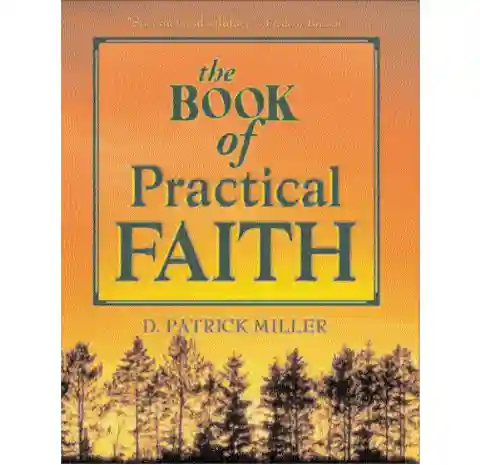
"The Book of Practical Faith" by Patrick Miller is a guide for living a life of faith in practical ways. It explores the foundations of faith and offers practical advice on how to integrate faith into all aspects of daily life, including relationships, work, and personal growth. Through stories, reflections, and exercises, the book helps readers deepen their spiritual practice and live with purpose and meaning.
Smith Wigglesworth
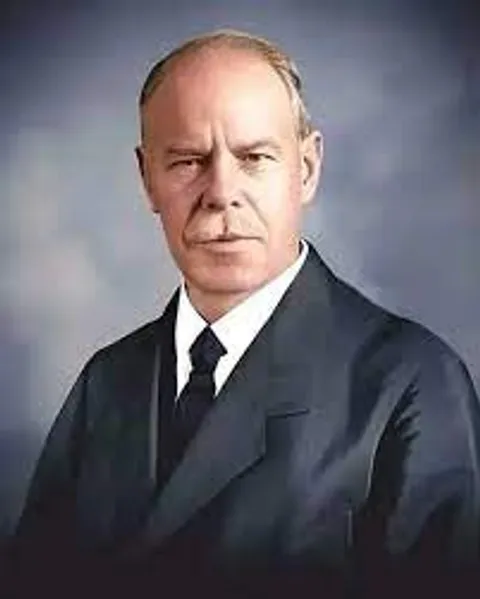 Smith Wigglesworth was born in 1859 to a very poor family. His father did manual labor, for very little pay. Smith himself went to work at the age of six to help with the family income. At six he was pulling turnips and at seven he was working in a woolen mill twelve hours a day. His parents did not know God, but Smith hungered in his heart to know Him. Even as a youngster he would pray in the fields. His grandmother was the critical Christian in his life. She was a Wesleyan Methodist and would take Smith to meetings with her. At one of these meetings there was a song being sung about Jesus as the lamb and Smith came into the realization of God's love for him and his decision to believe Christ for his salvation was decided that day. He was immediately filled with the desire to evangelize and led his own mother to Christ.
Smith has various church experiences as he was growing up. He first went to an Episcopal church and then at thirteen a Wesleyan Methodist church. When he was sixteen he became involved in the Salvation Army. He felt deeply called to fast and pray for lost souls. He saw many people come to Christ. At seventeen a mentor shared with him about water baptism and he decided to be baptized. The Salvation Army was experiencing a tremendous level of the power of God in those days. He describes meetings where "many would be prostrated under the power of the Spirit, sometimes for as long as twenty-four hours at a time." They would pray and fast and cry out for the salvation of fifty or a hundred people for the week and they would see what they had prayed for.
At eighteen Smith left the factory and became a plumber. He moved to Liverpool when he was twenty and continued to work during the day and minister during his free time. He felt called to minister to young people and brought them to meetings. These were destitute and ragged children, whom he would often feed and care for. Hundreds were saved. Smith was often asked to speak in Salvation meetings and he would break down and weep under the power of God. Many would come to repentance in those meetings through this untrained man. At twenty-three he returned back Bradford and continued his work with the Salvation Army.
In Bradford Smith met Mary Jane Featherstone, known as Polly, the daughter of a temperance lecturer. She left home and went to Bradford to take a servants job. One night she was drawn to a Salvation Army meeting. She listened to the woman evangelist, Gipsy Tillie Smith, and gave her heart to Christ. Smith was in that meeting and saw her heart for God. Polly became an enthusiastic Salvationsist and was granted a commission by General Booth. They developed a friendship, but Polly went to Scotland to help with a new Salvationist work. She eventually moved back to Bradford and married Smith, who was very much in love with her.
The couple worked together to evangelize the lost. They opened a small church in a poor part of town. Polly would preach and Smith would make the altar calls. For a season, however, Smith became so busy with his plumbing work that his evangelistic fervor began to wane. Polly continued on, bringing Smith to conviction. One day while Smith was working in the town of Leeds he heard of a divine healing meeting. He shared with Polly about it. She needed healing and so they went to a meeting, and Polly was healed.
Smith struggled with the reality of healing, while being ill himself. He decided to give up the medicine that he was taking and trust God. He was healed. They had five children, a girl and four boys. One morning two of the boys were sick. The power of God came and they prayed for the boys and they were instantly healed. Smith struggled with the idea that God would use him to heal the sick in general. He would gather up a group of people and drive them to get prayer in Leeds. The leaders of the meeting were going to a convention and left Smith in charge. He was horrified. How could he lead a meeting about divine healing? He tried to pass it off to someone else but could not. Finally he led the meeting and several people were healed. That was it. From then on Smith began to pray for people for healing.
Smith had another leap to make. He had heard about the Pentecostals who were being baptized in the Holy Spirit. He went to meetings and was so hungry for God he created a disturbance and church members asked him to stop. He went to prayer and prayed for four days. Finally he was getting ready to head home and the vicar's wife prayed for him and he fell under the power of God and spoke in tongues. Everything changed after that. He would walk by people and they would come under the conviction of the Holy Spirit and be saved. He began to see miracles and healings and the glory of God would fall when he prayed and preached.
Smith had to respond to the many calls that came in and gave up his business for the ministry. Polly unexpectedly died in 1913, and this was a real blow to Smith. He prayed for her and commanded that death release her. She did arise but said "Smith - the Lord wants me." His heartbroken response was "If the Lord wants you, I will not hold you". She had been his light and joy for all the years of their marriage, and he grieved deeply over the loss. After his wife was buried he went to her grave, feeling like he wanted to die. When God told him to get up and go Smith told him only if you "give to me a double portion of the Spirit – my wife’s and my own – I would go and preach the Gospel. God was gracious to me and answered my request.” His daughter Alice and son-in-law James Salter began to travel with him to handle his affairs.
Smith would pray and the blind would see, and the deaf were healed, people came out of wheelchairs, and cancers were destroyed. One remarkable story is when He prayed for a woman in a hospital. While he and a friend were praying she died. He took her out of the bed stood her against the wall and said "in the name of Jesus I rebuke this death". Her whole body began to tremble. The he said "in the name of Jesus walk", and she walked. Everywhere he would go he would teach and then show the power of God. He began to receive requests from all over the world. He taught in Europe, Asia, New Zealand and many other areas. When the crowds became very large he began a "wholesale healing". He would have everyone who needed healing lay hands on themselves and then he would pray. Hundreds would be healed at one time.
Over Smith's ministry it was confirmed that 14 people were raised from the dead. Thousands were saved and healed and he impacted whole continents for Christ. Smith died on March 12, 1947 at the funeral of his dear friend Wilf Richardson. His ministry was based on four principles " First, read the Word of God. Second, consume the Word of God until it consumes you. Third believe the Word of God. Fourth, act on the Word."
Smith Wigglesworth was born in 1859 to a very poor family. His father did manual labor, for very little pay. Smith himself went to work at the age of six to help with the family income. At six he was pulling turnips and at seven he was working in a woolen mill twelve hours a day. His parents did not know God, but Smith hungered in his heart to know Him. Even as a youngster he would pray in the fields. His grandmother was the critical Christian in his life. She was a Wesleyan Methodist and would take Smith to meetings with her. At one of these meetings there was a song being sung about Jesus as the lamb and Smith came into the realization of God's love for him and his decision to believe Christ for his salvation was decided that day. He was immediately filled with the desire to evangelize and led his own mother to Christ.
Smith has various church experiences as he was growing up. He first went to an Episcopal church and then at thirteen a Wesleyan Methodist church. When he was sixteen he became involved in the Salvation Army. He felt deeply called to fast and pray for lost souls. He saw many people come to Christ. At seventeen a mentor shared with him about water baptism and he decided to be baptized. The Salvation Army was experiencing a tremendous level of the power of God in those days. He describes meetings where "many would be prostrated under the power of the Spirit, sometimes for as long as twenty-four hours at a time." They would pray and fast and cry out for the salvation of fifty or a hundred people for the week and they would see what they had prayed for.
At eighteen Smith left the factory and became a plumber. He moved to Liverpool when he was twenty and continued to work during the day and minister during his free time. He felt called to minister to young people and brought them to meetings. These were destitute and ragged children, whom he would often feed and care for. Hundreds were saved. Smith was often asked to speak in Salvation meetings and he would break down and weep under the power of God. Many would come to repentance in those meetings through this untrained man. At twenty-three he returned back Bradford and continued his work with the Salvation Army.
In Bradford Smith met Mary Jane Featherstone, known as Polly, the daughter of a temperance lecturer. She left home and went to Bradford to take a servants job. One night she was drawn to a Salvation Army meeting. She listened to the woman evangelist, Gipsy Tillie Smith, and gave her heart to Christ. Smith was in that meeting and saw her heart for God. Polly became an enthusiastic Salvationsist and was granted a commission by General Booth. They developed a friendship, but Polly went to Scotland to help with a new Salvationist work. She eventually moved back to Bradford and married Smith, who was very much in love with her.
The couple worked together to evangelize the lost. They opened a small church in a poor part of town. Polly would preach and Smith would make the altar calls. For a season, however, Smith became so busy with his plumbing work that his evangelistic fervor began to wane. Polly continued on, bringing Smith to conviction. One day while Smith was working in the town of Leeds he heard of a divine healing meeting. He shared with Polly about it. She needed healing and so they went to a meeting, and Polly was healed.
Smith struggled with the reality of healing, while being ill himself. He decided to give up the medicine that he was taking and trust God. He was healed. They had five children, a girl and four boys. One morning two of the boys were sick. The power of God came and they prayed for the boys and they were instantly healed. Smith struggled with the idea that God would use him to heal the sick in general. He would gather up a group of people and drive them to get prayer in Leeds. The leaders of the meeting were going to a convention and left Smith in charge. He was horrified. How could he lead a meeting about divine healing? He tried to pass it off to someone else but could not. Finally he led the meeting and several people were healed. That was it. From then on Smith began to pray for people for healing.
Smith had another leap to make. He had heard about the Pentecostals who were being baptized in the Holy Spirit. He went to meetings and was so hungry for God he created a disturbance and church members asked him to stop. He went to prayer and prayed for four days. Finally he was getting ready to head home and the vicar's wife prayed for him and he fell under the power of God and spoke in tongues. Everything changed after that. He would walk by people and they would come under the conviction of the Holy Spirit and be saved. He began to see miracles and healings and the glory of God would fall when he prayed and preached.
Smith had to respond to the many calls that came in and gave up his business for the ministry. Polly unexpectedly died in 1913, and this was a real blow to Smith. He prayed for her and commanded that death release her. She did arise but said "Smith - the Lord wants me." His heartbroken response was "If the Lord wants you, I will not hold you". She had been his light and joy for all the years of their marriage, and he grieved deeply over the loss. After his wife was buried he went to her grave, feeling like he wanted to die. When God told him to get up and go Smith told him only if you "give to me a double portion of the Spirit – my wife’s and my own – I would go and preach the Gospel. God was gracious to me and answered my request.” His daughter Alice and son-in-law James Salter began to travel with him to handle his affairs.
Smith would pray and the blind would see, and the deaf were healed, people came out of wheelchairs, and cancers were destroyed. One remarkable story is when He prayed for a woman in a hospital. While he and a friend were praying she died. He took her out of the bed stood her against the wall and said "in the name of Jesus I rebuke this death". Her whole body began to tremble. The he said "in the name of Jesus walk", and she walked. Everywhere he would go he would teach and then show the power of God. He began to receive requests from all over the world. He taught in Europe, Asia, New Zealand and many other areas. When the crowds became very large he began a "wholesale healing". He would have everyone who needed healing lay hands on themselves and then he would pray. Hundreds would be healed at one time.
Over Smith's ministry it was confirmed that 14 people were raised from the dead. Thousands were saved and healed and he impacted whole continents for Christ. Smith died on March 12, 1947 at the funeral of his dear friend Wilf Richardson. His ministry was based on four principles " First, read the Word of God. Second, consume the Word of God until it consumes you. Third believe the Word of God. Fourth, act on the Word."
God So Loved the World, He Sent You
Long before he made the world, God the Father prepared to send his one and only Son to earth. He loved him “before the foundation of the world” (John 17:24), and yet even then he knew how much the baby born in Bethlehem would suffer. We know the Father knew because our names were “written before the foundation of the world in the book of life of the Lamb who was slain” (Revelation 13:8). Before God planted the first pine tree, the Christmas story had already been planned. Before he lit the sun with fire, he had already begun digging the ground where the cross would one day stand. He always knew that Jesus would one day take on flesh and, eventually, shed his own blood. Can you imagine the all-wise, all-powerful author of life and history preparing his Son to live as one of us — and to die a uniquely horrible death? Even our wildest dreams would look like scratch drawings on a napkin compared with the intimacy they shared in divinity for an eternity before history — before there was even time to count. God So Loved His Son But the sent one himself gives us stunning glimpses into how the Father had prepared him: “I lay down my life for the sheep. And I have other sheep that are not of this fold. I must bring them also, and they will listen to my voice. . . . For this reason the Father loves me, because I lay down my life that I may take it up again. No one takes it from me, but I lay it down of my own accord. I have authority to lay it down, and I have authority to take it up again. This charge I have received from my Father.” (John 10:15–18) When the Son came to earth, he came covered in his Father’s love. When the Father set his love on us, at the excruciating expense of his Son, he did not love his Son less. He loved him more for his sacrifice. Jesus says, “For this reason the Father loves me, because I lay down my life that I may take it up again” (John 10:17). God’s love for his Son didn’t keep him from sending his Son to save us. Love for his Son prompted God to send him. The Father sent Jesus with unparalleled love, and with unrivaled authority. Jesus says, “No one takes it from me, but I lay it down of my own accord. I have authority to lay it down, and I have authority to take it up again” (John 10:18). The Father harnessed all the power of heaven for this mission, and entrusted it to the humble child from Nazareth. He held nothing back. Jesus, who was human in every way that we are, could say the scandalous and unfathomable: “All that the Father has is mine” (John 16:15). As much as he suffered as man, he did not come to earth empty-handed; he came bearing the universe. He came as God. But with the limitless love and unassailable authority of his Father, he was sent to die. Feel the awful heaviness of the full meaning of Christmas in his words: “I lay down my life for the sheep. . . . I lay down my life. . . . This charge I have received from my Father” (John 10:15, 17–18). The Father did not merely send Jesus to take on flesh, but to lay it down. The Spirit conceived a Christ to be crucified. For lost and wandering and helpless sheep — for you and me. Jesus was sent to lose everything that we might gain everything. He became poor — in birth, in life, and in death — that we might inherit his heavenly wealth (2 Corinthians 8:9). Sent in love, sent with authority, sent to die — and to save. As the Father Sent Me The wonder and weight of Christmas — a sending conceived in the mind of God before the foundation of the world, a sending on which every event in history turns and hangs — fills one sentence from Jesus with staggering significance. He prays to the Father, “As you sent me into the world, so I have sent them into the world.” (John 17:18) Nothing compares to the Creator of the universe sending the radiance of his own glory, the exact imprint of his nature into his creation. Until Jesus sends you. After he rises from the dead, he says it again, before he ascends into heaven, “Peace be with you. As the Father has sent me, even so I am sending you” (John 20:21). As the Father sent the Son — planned before the foundation of the world, demonstrating God’s infinite beauty, strength, and worth, paying for the sins of people from every tribe, tongue, people, and nation, with billions and billions of destinies hanging in the balance — so the Son now sends us. As the Father sent his Son on a specific and spectacular mission, so the Son has set us loose on a world in need of hope (John 17:21, 23). As the Father sent his Son with precious words to proclaim, so the Son has given us something to say, a Lord to adore, and a commission to obey (John 17:14; Matthew 28:19–20). As the Father sent the Son to suffer for love, so the Son sends his sheep into the wolf pack (Matthew 10:16). As the Father set joy before his Son, so the Son has promised us his very own joy (John 17:13), now in part, forever in full. As the Father sent his Son with love, so the Son has loved us (John 15:13). And so he has sent us into the world. God So Loved the World We have not descended from heaven, but in Christ we are not of this world. Jesus says of you and me, “They are not of the world, just as I am not of the world” (John 17:16). But while neither he nor we are of this world, he has stationed us here for now. Jesus prays, “I am no longer in the world, but they are in the world” (John 17:11). He is not in the world anymore, but we are. Instead of staying to bring in by himself all the sheep who are not yet of this fold, he ascended to mission control — the throne of the universe — and sent us in after him. Having completed his once-for-all mission of securing redemption — the work only he could do — he entrusted us with telling the whole world what he had done. He says to his disciples, “All authority in heaven and on earth has been given to me. Go therefore and make disciples of all nations” (Matthew 28:18–19). As he had heard the Father say, “Go,” he now sends us into the world — with his authority, his words, his help, his joy, and his own presence: “Behold, I am with you always, to the end of the age” (Matthew 28:20). To whom has God sent you? The people in your family, on your street, near your office are not the offspring of chance. God lovingly placed them within arm’s reach of forgiveness, hope, and joy — by placing you near them. They were not alive a hundred years ago, but they are now. They will not live where they do in a hundred years, but they do now. God arranged and orchestrated every person in your life for his glory (Acts 17:26–27), just as he guided all of human history for thousands of years before Christ came — and then he sent you precisely where you are — with words and joy, in love, to suffer and say and save. As you celebrate the greatest sending again this Christmas, remember God so loved the world, that he also sent you. Article by Marshall Segal