
Others like the book of practical faith Features >>

About the Book
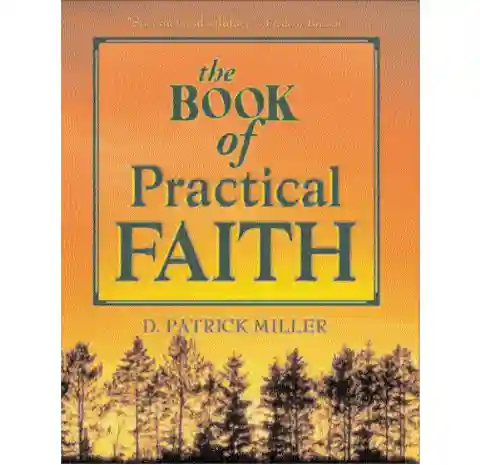
"The Book of Practical Faith" by Patrick Miller is a guide for living a life of faith in practical ways. It explores the foundations of faith and offers practical advice on how to integrate faith into all aspects of daily life, including relationships, work, and personal growth. Through stories, reflections, and exercises, the book helps readers deepen their spiritual practice and live with purpose and meaning.
John Alexander Dowie
By John Alexander Dowie (1847 â 1907)
I sat in my study in the parsonage of the Congregational Church at Newtown, a suburb of the beautiful city of Sydney, Australia. My heart was very heavy, for I had visited the sick and dying beds of more than thirty of my flock, and I had cast the dust to its kindred dust into more than forty graves within a few weeks. Where, oh where, was He Who used to heal His suffering children? No prayer for healing seemed to reach His ear, and yet I knew His hand had not been shortened. Still it did not save from death even those for whom there was so much in life to live for God and others. Strong men, fathers, good citizens, and more than all, true Christians sickened with a putrid fever, suffered nameless agonies, passed into delirium, sometimes with convulsions, and then died.
Oh, what aching voids were left in many a widowed or orphaned heart. There were many homes where, one by one, the little children, the youths and the maidens lay stricken, and after a hard struggle with the foul disease, they too, lay cold and dead. It seemed sometimes as if I could almost hear the triumphant mockery of evil ringing in my ear whilst I spoke to the bereaved ones the words of Christian hope and consolation. Disease, the foul offspring of its father, Satan, and its mother Sin, was defiling and destroying the earthly temples of Godâs children and there was no deliverance.
There I sat with sorrow-bowed head for my afflicted people, until the bitter tears came to relieve my burning heart. Then I prayed for some message, and oh, how I longed to hear some words from Him Who wept and sorrowed for the suffering long ago, a Man of Sorrows and Sympathies. The words of the Holy Ghost inspired In Acts 10:38, stood before me all radiant with light, revealing Satan as the Defiler, and Christ as the Healer. My tears were wiped away, my heart strong, I saw the way of healing, and the door thereto was opened wide, so I said, âGod help me now to preach the Word to all the dying around, and tell them how Satan still defiles, and Jesus still delivers, for He is just the same today.â
A loud ring and several raps at the outer door, a rush of feet, and there at my door stood two panting messengers who said, âOh, come at once, Mary is dying; come and pray. âWith just a feeling as a shepherd has who hears that his sheep are being torn from the fold by a cruel wolf, I rushed from my house, ran without my hat down the street, and entered the room of the dying maiden. There she lay groaning and grinding her clenched teeth in the agony of the conflict with the destroyer. The white froth, mingled with her blood, oozing from her pale and distorted mouth. I looked at her and then my anger burned. âOh,â I thought, âfor some sharp sword of heavenly temper keen to slay this cruel foe who is strangling that lovely maiden like an invisible serpent, tightening his deadly coils for a final victory.â
In a strange way, It came to pass; I found the sword I needed was in my hands, and in my hand I hold it still and never will I lay It down. The doctor, a good Christian man, was quietly walking up and down the room, sharing the motherâs pain and grief. Presently he stood at my side and said, âSir, are not Godâs ways mysterious?â Instantly the sword was flashed in my hand, the Spiritâs sword, the Word of God. âGodâs way?!â I said, pointing to the scene of conflict, âHow dare you call that Godâs way of bringing His children home from earth to Heaven? No sir, that is the devilâs work and it is time we called on Him Who came to destroy the work of the devil, to slay that deadly foul destroyer, and to save this child. Can you pray, Doctor, can you pray the prayer of faith that saves the sick?â At once, offended at my words, my friend was changed, and saying,â You are too much excited, sir, it is best to say âGodâs will be done,ââ and he left the room.
Excited?! The word was quite inadequate for I was almost frenzied with divinely imparted anger and hatred of that foul destroyer, disease, which was doing Satanâs will. âIt is not so,â I exclaimed, âno will of God sends such cruelty, and I shall never say âGodâs will be doneâ to Satanâs works, which Godâs own Son came to destroy, and this is one of them.â Oh, how the Word of God was burning in my heart: âJesus of Nazareth went about doing good, and healing all that were oppressed of the devil; for God was with Him.â And was not God with me? And was not Jesus there and all His promises true? I felt that it was even so, and turning to the mother I inquired,â Why did you send for me?â To which she answered, âDo pray, oh pray for her that God may raise her up.â So we prayed.
What did I say? It may be that I cannot recall the words without mistake, but words are in themselves of small importance. The prayer of faith may be a voiceless prayer, a simple heartfelt look of confidence into the face of Christ. At such moment, words are few, but they mean much, for God is looking at the heart. Still, I can remember much of that prayer unto this day, and asking God to aid, I will attempt to recall it. I cried, âOur Father, help! and Holy Spirit, teach me how to pray. Plead Thou for us, oh, Jesus, Savior, Healer, Friend, our Advocate with God the Father. Hear and heal, Eternal One! From all disease and death, deliver this sweet child of yours. I rest upon the Word. We claim the promise now. The Word is true, âI am the Lord that heals thee.â Then heal her now. The Word is true, âI am the Lord, I change not.â Unchanging God, then prove Yourself the healer now. The Word is true. âThese signs shall follow them that believe in My Name, they shall lay hands on the sick, and they shall recover.â And I believe and I lay hands in Jesusâ Name on her and claim this promise now. Your Word is true. âThe prayer of faith shall save the sick. Trusting in You alone. I cry. Oh, save her now, for Jesusâ sake. Amen!â
Then, the maid lay in sleep so deep and sweet that the mother asked in a low whisper, âIs she dead?â âNo,â I answered, in a whisper lower still. âMary will live; the fever is gone. She is perfectly well and sleeping as an infant sleeps.â I was smoothing the long dark hair from her now peaceful brow, and feeling the steady pulsation of her heart and cool moist hands. I saw that Christ had heard, and that once more, as long ago in Peterâs house, âHe touched her and the fever left her.â Turning to the nurse, I said, âGet me at once, please, a cup of cocoa and several slices of bread and butter.â Beside the sleeping maid we sat quietly and almost silently until the nurse returned, and then I bent over her and snapping my fingers called, âMary!â
Instantly she woke, smiled and said, âOh, sir, when did you come? I have slept so long;â then stretching her arms out to meet her motherâs embrace, she said, âMother, I feel so well.â âAnd hungry, too?â I asked, pouring some of the cocoa in a saucer and offering it to her when cooled by my breath. âYes, hungry too,â she answered with a little laugh, and drank and ate again, and yet again until all was gone. In a few minutes, she fell asleep, breathing easily and softly. Quietly thanking God. We left her bed and went to the next room where her brother and sister also lay sick of the same fever. With these two, we prayed and they were healed too. The following day all three were well and in a week or so they brought me a little letter and a gift of gold, two sleeve links with my monogram, which I wore for many years. As I went away from the home where Christ as the Healer had been victorious, I could not but have somewhat in my heart of the triumphant song that rang through Heaven, and yet I was not a little amazed at my own strange doings, and still more at my discovery that He is just the same today.
Excerpt from the Sermons of John Alexander Dowie Champions of Faith by Gordon Lindsay
the majesty of god mastered him: john calvin
In 1538, the Italian Cardinal Sadolet wrote to the leaders of Geneva trying to win them back to the Roman Catholic Church after they had turned to the Reformed teachings. John Calvinâs response to Sadolet uncovers the root of Calvinâs quarrel with Rome that would determine his whole life. Hereâs what Calvin wrote to the cardinal: â[Your] zeal for heavenly life [is] a zeal which keeps a man entirely devoted to himself, and does not, even by one expression, arouse him to sanctify the name of God â ( John Calvin: Selections from His Writings , 89). The issue for Calvin was not, ďŹrst, the well-known sticking points of the Reformation: justiďŹcation, priestly abuses, transubstantiation, prayers to saints, and papal authority. All those would come in for discussion. But beneath all of them, the fundamental issue for Calvin, from the beginning to the end of his life, was the issue of the centrality and supremacy and majesty of the glory of God. Calvin goes on and says to Sadolet that what he should do â and what Calvin aims to do with all his life â is âset before [man], as the prime motive of his existence, zeal to illustrate the glory of God â ( Selections , 89). This would be a ďŹtting banner over all of John Calvinâs life and work â zeal to illustrate the glory of God . The essential meaning of Calvinâs life and preaching is that he recovered and embodied a passion for the absolute reality and majesty of God. Captive to Glory What happened to John Calvin to make him a man so mastered by the majesty of God? And what kind of ministry did this produce in his life? He was born July 10, 1509, in Noyon, France, when Martin Luther was 25 years old and had just begun to teach the Bible in Wittenberg. When he was 14, his father sent him to study theology at the University of Paris, which at that time was untouched by the Reformation and steeped in Medieval theology. But ďŹve years later (when Calvin was 19), his father ran afoul of the church and told his son to leave theology and study law, which he did for the next three years at Orleans and Bourges. His father died in May of 1531, when Calvin was 21. Calvin felt free then to turn from law to his ďŹrst love, which had become the classics. He published his first book, a commentary on Seneca, in 1532, at the age of 23. But sometime during these years he was coming into contact with the message and the spirit of the Reformation, and by 1533 something dramatic had happened in his life. Calvin recounts, seven years later, how his conversion came about. He describes how he had been struggling to live out the Catholic faith with zeal when I at length perceived, as if light had broken in upon me, in what a sty of error I had wallowed, and how much pollution and impurity I had thereby contracted. Being exceedingly alarmed at the misery into which I had fallen . . . as in duty bound, [I] made it my ďŹrst business to betake myself to thy way [O God], condemning my past life, not without groans and tears. God, by a sudden conversion, subdued and brought my mind to a teachable frame. . . . Having thus received some taste and knowledge of true godliness, I was immediately inďŹamed with [an] intense desire to make progress. ( Selections , 26) What was the foundation of Calvinâs faith that yielded a life devoted utterly to displaying the glory and majesty of God? The answer seems to be that Calvin suddenly, as he says, saw and tasted in Scripture the majesty of God. And in that moment, both God and the word of God were so powerfully and unquestionably authenticated to his soul that he became the loving servant of God and his word the rest of his life. Henceforth he would be a man utterly devoted to displaying the majesty of God by the exposition of the word of God. Compelled to Geneva What form would that ministry take? Calvin knew what he wanted. He wanted the enjoyment of literary ease so he could promote the Reformed faith as a literary scholar. That is what he thought he was cut out for by nature. But God had radically different plans. In 1536, Calvin left France, taking his brother Antoine and sister Marie with him. He intended to go to Strasbourg and devote himself to a life of peaceful literary production. But one night, as Calvin stayed in Geneva, William Farel, the ďŹery leader of the Reformation in that city, found out he was there and sought him out. It was a meeting that changed the course of history, not just for Geneva, but for the world. Calvin tells us what happened in his preface to his commentary on Psalms: Farel, who burned with an extraordinary zeal to advance the gospel, immediately learned that my heart was set upon devoting myself to private studies, for which I wished to keep myself free from other pursuits, and ďŹnding that he gained nothing by entreaties, he proceeded to utter an imprecation that God would curse my retirement, and the tranquillity of the studies which I sought, if I should withdraw and refuse to give assistance, when the necessity was so urgent. By this imprecation I was so stricken with terror, that I desisted from the journey which I had undertaken. ( Selections , 28) The course of his life was irrevocably changed. Not just geographically, but vocationally. Never again would Calvin work in what he called the âtranquillity of . . . studies.â From now on, every page of the 48 volumes of books and tracts and sermons and commentaries and letters that he wrote would be hammered out on the anvil of pastoral responsibility. Unrelenting Exposition Once in Geneva, what kind of ministry did his commitment to the majesty of God produce? Part of the answer is that it produced a ministry of incredible steadfastness â a ministry, to use Calvinâs own description of faithful ministers of the word, of âinvincible constancyâ ( Sermons from Job , 245). But that is only half the answer. The constancy had a focus: the unrelenting exposition of the word of God. Calvin had seen the majesty of God in the Scriptures. This persuaded him that the Scriptures were the very word of God. He said, âWe owe to the Scripture the same reverence which we owe to God, because it has proceeded from Him alone, and has nothing of man mixed with itâ ( John Calvin: A Collection of Distinguished Essays , 162). His own experience had taught him that âthe highest proof of Scripture derives in general from the fact that God in person speaks in itâ ( Institutes of the Christian Religion , 1.7.4). These truths led to an inevitable conclusion for Calvin. Since the Scriptures are the very voice of God, and since they are therefore self-authenticating in revealing the majesty of God, and since the majesty and glory of God are the reason for all existence, it follows that Calvinâs life would be marked by âinvincible constancyâ in the exposition of Scripture. He wrote tracts, he wrote the great Institutes , he wrote commentaries (on all the New Testament books except Revelation, plus the Pentateuch, Psalms, Isaiah, Jeremiah, and Joshua), he gave biblical lectures (many of which were published as virtual commentaries), and he preached ten sermons every two weeks. But all  of it was exposition of Scripture. In his last will and testament, he said, âI have endeavored, both in my sermons and also in my writings and commentaries, to preach the Word purely and chastely, and faithfully to interpret His sacred Scripturesâ ( Selections , 35). This was the ministry unleashed by seeing the majesty of God in Scripture. The Scriptures were absolutely central because they were absolutely the word of God and had as their self-authenticating theme the majesty and glory of God. But out of all these labors of exposition, preaching was supreme. Godâs Voice in Every Verse Calvinâs preaching was of one kind from beginning to end: he preached steadily through book after book of the Bible. He never wavered from this approach to preaching for almost 25 years of ministry in St. Peterâs church of Geneva â with the exception of a few high festivals and special occasions. âOn Sunday he took always the New Testament, except for a few Psalms on Sunday afternoons. During the week . . . it was always the Old Testament.â To give you some idea of the scope of Calvinâs pulpit, he began his series on the book of Acts on August 25, 1549, and ended it in March 1554. After Acts he went on to the Epistles to the Thessalonians (46 sermons), Corinthians (186 sermons), the Pastoral Epistles (86 sermons), Galatians (43 sermons), Ephesians (48 sermons) â until May 1558. Then there is a gap when he was ill. In the spring of 1559, he began the Harmony of the Gospels and was not ďŹnished when he died in May 1564. On the weekdays during that season he preached 159 sermons on Job, 200 on Deuteronomy, 353 on Isaiah, 123 on Genesis, and so on. One of the clearest illustrations that this was a self-conscious choice on Calvinâs part was the fact that on Easter Day, 1538, after preaching, he left the pulpit of St. Peterâs, banished by the City Council. He returned in September 1541, over three years later, and picked up the exposition in the next verse. Divine Majesty of the Word Why this remarkable commitment to the centrality of sequential expository preaching? Three reasons are just as valid today as they were in the sixteenth century. First, Calvin believed that the word of God was a lamp that had been taken away from the churches. He said in his own personal testimony, âThy word, which ought to have shone on all thy people like a lamp, was taken away, or at least suppressed as to us.â Calvin reckoned that the continuous exposition of books of the Bible was the best way to overcome the âfearful abandonment of [Godâs] Wordâ ( Selections , 115). Second, biographer T.H.L. Parker says that Calvin had a horror of those who preached their own ideas in the pulpit. He said, âWhen we enter the pulpit, it is not so that we may bring our own dreams and fancies with usâ ( Portrait of Calvin , 83). He believed that by expounding the Scriptures as a whole, he would be forced to deal with all that God wanted to say, not just what he  might want to say. Third, he believed with all his heart that the word of God was indeed the word of God , and that all of it was inspired and proďŹtable and radiant with the light of the glory of God. In Sermon number 61 on Deuteronomy, he challenged pastors of his day and ours: Let the pastors boldly dare all things by the word of God . . . . Let them constrain all the power, glory, and excellence of the world to give place to and to obey the divine majesty of this word . Let them enjoin everyone by it, from the highest to the lowest. Let them edify the body of Christ. Let them devastate Satanâs reign. Let them pasture the sheep, kill the wolves, instruct and exhort the rebellious. Let them bind and loose thunder and lightning, if necessary, but let them do all according to the word of God . ( Sermons on the Epistle to the Ephesians , xii) The key phrase here is âthe divine majesty of this word.â This was always the root issue for Calvin. How might he best show forth for all of Geneva and all of Europe and all of history the majesty of God? He answered with a life of continuous expository preaching. This is why preaching remains a central event in the life of the church five hundred years after Calvin. If God is the great, absolute, sovereign, mysterious, all-glorious God of majesty whom Calvin saw in Scripture, there will always be preaching, because the more this God is known and the more this God is central, the more we will feel that he must not just be analyzed and explained â he must be acclaimed and heralded and magniďŹed with expository exultation.