
Others like the bondage of the will Features >>

Freedom Of The Will
An Outline Of The Christian Faith
The Authority Of The Bible And The Rise Of The Modern World
The Kingdom Of The Occult
The Coming Of God's Kingdom

The Lion And The Lamb
The Sons Of God, The Flood, The Tower Of Babel
-160.webp)
The Gospel Of The Kingdom: Scriptural Studies In The Kingdom Of God
Reading The Word Of God In The Presence Of God: A Handbook For Biblical Interpretation
The Revelation Of The Seven Seals
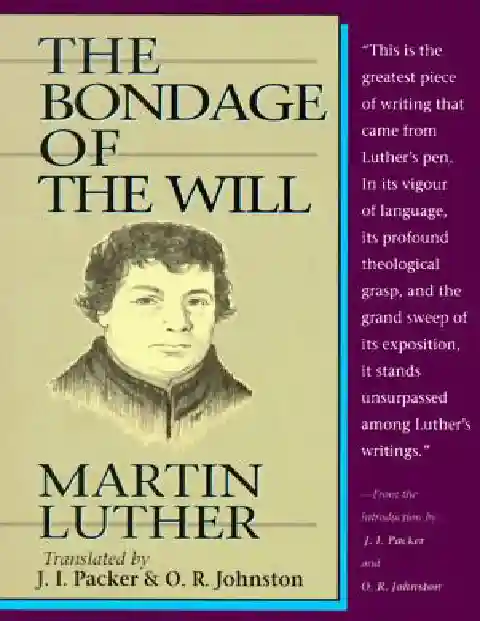
About the Book
In "The Bondage of the Will," Martin Luther argues against the idea of free will and asserts that human beings are inherently unable to choose salvation through their own actions. Luther critiques the teachings of Erasmus, defending the doctrine of predestination and emphasizing the importance of faith in God's grace for salvation. The book is a key text in Protestant theology and a foundational work in the debate between free will and predestination.
Elizabeth Elliot

the only certain hope on earth
“It is the hope that kills you,” as many English football (soccer) fans say. Is it not better to have low expectations instead of hoping your team will do well, only to see those hopes dashed in sometimes cruel ways? The world has an idea of hope that sees it as an optimistic expectation that something good may happen in this life or, for the religious, the life to come. People cannot help but hope; it is part of our DNA as humans. We hope for good health, a good marriage, good weather, or an enjoyable holiday. Many even hope for a better life after the life they have lived on earth, which explains why so many claim that loved ones (including animals) are “smiling down” upon them after their death. Much of the hope that is found in the world lacks promise and certainty, which is like building a house on sand. Christian hope is very different from worldly hope. Christian hope is a Spirit-given virtue enabling us to joyfully expect what God has promised through Jesus Christ. It is, therefore, thoroughly Trinitarian. Height of Our Hope Christian hope looks to God because he is “the God of hope” (Romans 15:13). Because of the resurrection of Christ, Peter says that our “faith and hope are in God” (1 Peter 1:21). The degree to which we find God desirable and excellent will be the same to which hope plays a role in our lives. Our view of God will affect the hope we possess. A small god begets a small hope; but knowing God and Christ (John 17:3), which is eternal life, is ground for possessing a hope that bursts forth in our souls on a daily basis. The psalmist describes the blessed person as the one “whose help is the God of Jacob, whose hope is in the Lord his God” (Psalm 146:5). Consider the words of Thomas Aquinas on this: Wherefore the good which we ought to hope for from God properly and chiefly is the infinite good, which is proportionate to the power of our divine helper, since it belongs to an infinite power to lead anyone to an infinite good. Such a good is eternal life, which consists in the enjoyment of God Himself. For we should hope from Him for nothing less than Himself, since His goodness, whereby He imparts good things to His creature, is no less than His essence . Therefore the proper and principal object of hope is eternal happiness. ( Summa Theologica , II-II.17.2) In short, Aquinas is saying that our joy is connected to our hope, which is connected to our Savior, which is connected to our God. Christian hope exists only when we hope in the God and Father of our Lord Jesus Christ (1 Peter 1:13). The height of our hope is God himself. Certain as God’s Promises Certain conditions characterize biblical hope: it must be good, it must be in the future, it involves some degree of difficulty (for example, patient suffering), and it must be founded on God’s promises. Those who persevere, by faith, shall attain what we hope for: the sight of our Savior (Titus 2:13). “Christian hope is a Spirit-given virtue enabling us to joyfully expect what God has promised through Jesus Christ.” This hope of the blessed vision of Christ is based not only upon the fact that we know he will return, but also on the knowledge that God dwells in us. This explains Paul’s language in Romans 15:13, “May the God of hope fill you with all joy and peace in believing, so that by the power of the Holy Spirit you may abound in hope.” Hope arises from not only objective promises, but also an internal “pull” toward God and Christ by his Spirit. Thus, Christian hope is not about probable hope or about mere conjecture concerning things future, but about great certainty. Faith, Hope, and Love Faith in God through Christ by the Spirit gives rise to Christian hope. Faith and hope bear an intimate relation to one another (Romans 4:18–21; 5:2; 15:13; Galatians 5:5; Ephesians 1:18–19; Colossians 1:23; 1 Timothy 4:10; Hebrews 11:1; 1 Peter 1:21). Faith is the foundation of hope, so that hope without faith is no hope at all. We believe God in order to hope in what we believe. But faith also returns to hope to give it courage to persevere. If faith apprehends God’s promises, hope expects what he promises. In times of trouble, despair, and suffering, faith and hope feed on God and his promises. The difference between faith and hope is not easy to discern. Simply put, faith believes, but hope waits patiently. (Yet there is an aspect whereby faith also requires patience.) God is the object of hope, as it specifically focuses on his goodness to us in Christ. Faith not only looks to God but also trembles at his threatenings (when appropriate). Hope remains free of such fear. Faith and love can relate to a present or future object, but hope looks to the future alone. And of course, faith and hope also bear an intimate relation to love. If hope relates to faith in terms of our expectations, hope relates to love in terms of our desire. Love requires desire, so the more we desire the good, the more we will love it. Equally, hope requires desire. The more we desire what is promised, the more we hope for it. Since faith focuses on Christ, hope will always be present where there is true faith. And since faith focuses on Christ, love will always accompany faith and hope because God and Christ are the object of faith and hope — how can we not love the one we believe has saved us and promised so much for the future? Thus, faith, hope, and love give expression to our Christian life (1 Corinthians 13:13; Colossians 1:4). Hope That Purifies The life of hope yields many benefits to the Christian, such as the expectation of eternal life (Titus 1:2; 3:7), salvation (1 Thessalonians 5:8), heaven (Colossians 1:5), the resurrection (Acts 23:6), the gospel (Colossians 1:23), God’s calling (Ephesians 1:18; 4:4), and our inheritance (Ephesians 1:18). But there is also a “duty” bound up with hope, namely, purification of our souls: “Everyone who thus hopes in him purifies himself as he is pure” (1 John 3:3). This command follows one of the greatest promises of Christian hope: “Beloved, we are God’s children now, and what we will be has not yet appeared; but we know that when he appears we shall be like him, because we shall see him as he is” (1 John 3:2). Those who have the hope of being made like Christ in body and soul must also have the present desire to be pure . While in sanctification the accent is often on what God does, here in 1 John 3:3 the accent is on what we do. Christians, if they embrace a hope of seeing Christ face to face, are to purify themselves. In other words, hope has a moral effect. The pursuit of purity arises out of our possession of hope. Hope gives birth to sanctification; and as we are sanctified, we hope even more because we get closer to God. Besides John, Peter also makes this point. He speaks of the future promise of the new heavens and new earth to his readers (2 Peter 3:13), and then reasons, “Therefore, beloved, since you are waiting for these, be diligent to be found by [God] without spot or blemish, and at peace” (2 Peter 3:14). “Our joy is connected to our hope, which is connected to our Savior, which is connected to our God.” Likewise, Paul writes, “Since we have these promises, beloved, let us cleanse ourselves from every defilement of body and spirit, bringing holiness to completion in the fear of God” (2 Corinthians 7:1). The promises Paul speaks of include our adoption as sons and daughters, wherein God makes his dwelling and walks among us (2 Corinthians 6:16, 18). These promises are, of course, realized in this life, but they also await a type of consummation that we can all look forward to (see Romans 8:23). Christian hope has present realities, one of which includes our sanctification. In this matter, our faith clings ever so tightly to our hope, as we seek to be holy as God is holy. Hope Unlike the World’s In the church today, we have underemphasized the future motivation (our Christian hope) for how to live the sanctified life. As with the Lord’s Supper, we do not only look back to Christ’s death but also look now to the risen Christ and forward to the future blessings that await us. This is the purification of the truly hopeful. Our hope is unlike the world’s. The world’s hope is often vague, uncertain, a wish thrust up at the stars. But Christian hope is solid, certain, future, and cleansing. It lasts as long as the eternal God lives, and stands as tall as he stands. He is our hope, for apart from him, no such thing exists (Ephesians 2:13).