
Others like the bondage of the will Features >>

Freedom Of The Will
An Outline Of The Christian Faith
The Authority Of The Bible And The Rise Of The Modern World
The Kingdom Of The Occult
The Coming Of God's Kingdom
The Lion And The Lamb
The Sons Of God, The Flood, The Tower Of Babel
The Gospel Of The Kingdom: Scriptural Studies In The Kingdom Of God
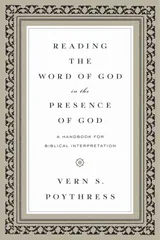
Reading The Word Of God In The Presence Of God: A Handbook For Biblical Interpretation
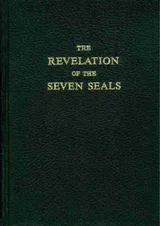
The Revelation Of The Seven Seals
About the Book
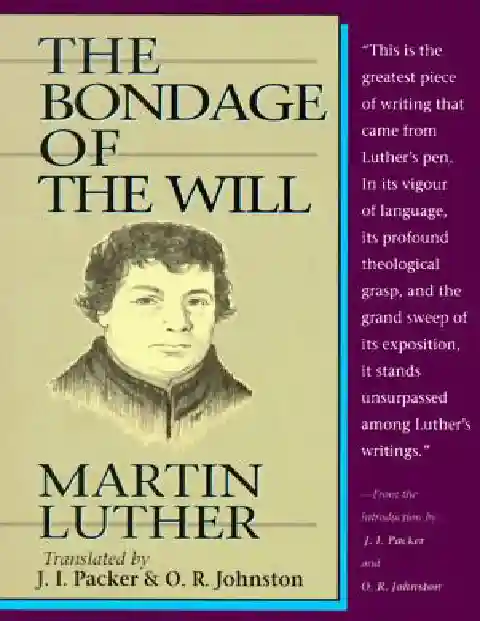
In "The Bondage of the Will," Martin Luther argues against the idea of free will and asserts that human beings are inherently unable to choose salvation through their own actions. Luther critiques the teachings of Erasmus, defending the doctrine of predestination and emphasizing the importance of faith in God's grace for salvation. The book is a key text in Protestant theology and a foundational work in the debate between free will and predestination.
Richard Sibbes
Richard Sibbes was born in Tostock, Suffolk, four miles from Bury St. Edmunds, in 1577.[1] He is the eldest son of Paul Sibbes and Joane. His father was a wheelwright who hoped Sibbes would be in the same field of occupation. Instead of following the footsteps of his father, young Sibbes, out of love for reading, would choose books over wooden wheels.[2] Truly enough, throughout his lifetime, books were part of Sibbes’ life.[3] Proof of this interest to books is his accomplishments as a lecturer [pastor], fellow tutor, vicar, and for obtaining various degrees in his academic education.
Sibbes’ legacy of his seven-volume work was collected by A. B. Grosart which was published from 1862 to 1864.[4] Sibbes’ ministries and his works spread throughout England even after his death. However, he was never married.
Sibbes died on July 5, 1635, in his chambers at Gray’s Inn.[5] J. I. Packer noted that Sibbes’ left more than two million words on paper after his death.[6]
Educational Background
Sibbes’ started studying at St. John’s College, Cambridge when he was eighteen, in 1595. He then proceeded to finish a Bachelor of Arts in 1599. He received a fellowship grant in 1601. Sibbes continued studying, finishing a Master of Arts degree by 1602.
Sibbes became a prominent preacher in Cambridge and got the endorsement to apply for a Bachelor of Divinity. After his defense and fulfilling the requirements, he earned this degree in 1610.[7] Furthermore, in almost two decades, Sibbes received his Doctor of Divinity in 1627 after returning from London for his mastership at St. Katherine.[8]
Ministerial Experience and Vocation
Sibbes’ conversion happened after hearing Paul Bayne’s sermon in 1603. Bayne succeeded William Perkins at St. Andrews, Cambridge.[9] During Sibbes’ stay in Cambridge, as a fellow, he handled and supervised five to six students for a tutorial.[10] Sibbes held various vocations such as being chaplain, lecturer, and got a promotion from mere fellow to senior fellowship. After being a senior dean at St. John, Sibbes became the master of St. Katherine’s College in 1626.[11]
As a preacher, Sibbes received his ordination in Norwich, in 1607. He became the minister of Thurston in 1608. Later, in 1610, Sibbes accepted the offer as a lecturer of Holy Trinity Church, Cambridge until he was called to be a lecturer at Gray’s Inn, London, in 1617.[12] This lectureship lasts until his death.
Even during Sibbes’ mastership at St. Katherine, he remained a lecturer at Gray’s Inn. In 1633, through the appointment of King Charles I, Sibbes became the vicar of Holy Trinity Church, Cambridge. The positions held by Sibbes were mastership at St. Katherine, a lecturer at Gray’s Inn, and vicar of Holy Trinity Church.
Influence of the Heavenly Doctor
Throughout Sibbes ministries, prominence followed as he influenced many Puritan ministers. Sibbes, as an influencer, is known to be the “pastor of pastors,” not just in the Church of England but even to Presbyterians and Independent Congregationalists.[13] Sibbes was responsible for John Cotton’s conversion in 1612.[14]
Moreover, he persuaded John Preston’s style in preaching, transforming from witty sermons to more plain but spiritual preaching.[15] Sibbes’ book, The Bruised Reed, encouraged Richard Baxter to gain settled-conviction on his conversion.[16] Likewise, Sibbes helped Thomas Goodwin, the chief editor of most of his works, to keep away from Arminianism.[17]
Sibbes’ ministry extends even to common people. Humphrey Mills, a layman, shared his testimony about Sibbes’ ministry. Mills was spiritually refreshed and brought to peace and joy after hearing Sibbes’ “sweet soul-melting Gospel-sermons.”[18] Sibbes’ encouragement did not end in the days of Puritans. Martyn Lloyd-Jones, one of the greatest preachers in the twentieth century, was grateful for Sibbes’ works. Lloyd-Jones, in his spiritual dryness, said that Sibbes’ books “quietened, soothed, comforted, encouraged, and healed [him].”[19]
Sibbes was a renowned Puritan throughout Cambridge, London, and even to Amsterdam. Mainly because of his various offices plus broad networks outside the church. He remained a moderate Puritan perceiving the Church of England as the true church. Sibbes encouraged other Separatists to return and warned the moderates not to dissent.
Yet many historians and scholars misinterpreted Sibbes in his theology and ministry. Thankfully, Mark Dever, in his recent work, argues contrary to many historians that Sibbes was dismissed in his ministry. Dever also concludes that Sibbes did not drift away from Calvinism, claiming that he was a thoroughly Reformed preacher and never became non-conformist, rather a moderate puritan.[20]
Sibbes, through his works, are still penetrating churches and seminaries up to this day. Recently, his seven-volume set was published by The Banner of Truth Trust in 2001. The best introduction for Sibbes’ works, personally, is his The Bruised Reed and the Smoking Flax. For Michael Reeves’ opinion, Sibbes is “the best introduction to the Puritans…. Reading him is like sitting in the sunshine: he gets into your heart and warms it to Christ.”[21]
References
[1] Alexander B. Grosart, “Memoir of Richard Sibbes, D.D.,” in Richard Sibbes, The Works of Richard Sibbes, ed. Alexander Grosart, 7 vols. (1862-1864; reprint, Carlisle, Pennsylvania: The Banner of Truth Trust, 2001), 1:xxvii.
[2] Joel Beeke, “Richard Sibbes on Entertaining the Holy Spirit,” in The Beauty and Glory of the Holy Spirit, ed. Joel Beeke and Joseph Pipa Jr. (Grand Rapids, Michigan: Reformation Heritage Books, 2012), 228. Cf. Joel Beeke and Mark Jones, A Puritan Theology: Doctrine for Life (Grand Rapids, MI: Reformation Heritage Books, 2012), chap. 36, Kindle.
[3] Joel Beeke and Randall Pederson, Meet the Puritans (Grand Rapids, MI: Reformation Heritage Books, 2006), 534-5.
[4] Mark Dever, “The Works of Richard Sibbes,” in You Must Read: Books that Have Shaped Our Lives (Carlisle, PA: The Banner of Truth Trust, 2015), 154.
[5] Grosart, “Memoir,” in Sibbes, Works, 1:cxxxi.
[6] J. I. Packer, foreword to Richard Sibbes: Puritanism and Calvinism in Late Elizabethan and Early Stuart England, by Mark E. Dever (Macon, Georgia: Mercer University Press, 2000), ix.
[7] Dever, Richard Sibbes, 37-38. Bachelor of Divinity, according to Dr. Shawn Wright is equivalent with Master of Divinity today, “Lectures in English Puritanism” (The Southern Baptist Theological Seminary, Louisville, KY, Spring 2020), but the process is different. Dever noted in his work that Sibbes undergone two public preaching, one in English and another in Latin, and two defense topics chosen by the panelists.
[8] Grosart, “Memoir,” in Sibbes, Works, 1:cxi.
[9] Beeke and Pederson, Meet the Puritans, 534-5.
[10] Dever, Richard Sibbes, 30-31.
[11] Dever, 31-34, 46.
[12] Beeke and Pederson, Meet the Puritans, 534-6.
[13] Beeke, “Richard Sibbes on Entertaining the Holy Spirit,” 230.
[14] Dever, Richard Sibbes, 40.
[15] Beeke and Pederson, Meet the Puritans, 535-7.
[16] Richard Baxter, The Autobiography of Richard Baxter (Bedford St., London: J.M. Dent & Sons Ltd., 1931), 7. Baxter’s father bought Sibbes’ book from a peddler and gave it to Richard Baxter. Cf. Timothy K. Beougher, Richard Baxter and Conversion: A Study of the Puritan Concept of Becoming a Christian (Scotland, UK: Christian Focus Publications, 2007), 21.
[17] Dever, Richard Sibbes, 41.
[18] Ronald Frost, “The Bruised Reed by Richard Sibbes (1577-1635)” in Kelly M. Kapic and Randal C. Gleason, The Devoted Life: An Invitation to the Puritan Classics (Downers Grove, IL: Intervarsity Press, 2004), 80-81. Quoting from a collection of Puritan testimonials by John Rogers, Ohel or Bethshemesh, A Tarbernacle for the Sun (London, n.p., 1653), 410.
[19] D. Martyn Lloyd-Jones, Preaching and Preachers (Grand Rapids, Michigan: Zondervan Publishing House, 1972), 175. Cf. Publisher’s Foreword to The Bruised Reed, by Richard Sibbes, x.
[20] Dever, Richard Sibbes, 211-8.
[21] Michael Reeves, “A Short Biography of Richard Sibbes,” in Richard Sibbes, Christ it Best; or, St. Paul’s Strait (Carlisle, PA: Banner of Truth Trust, 2012), 66.
Satan Will Sing You to Sleep
“You don’t tell people about Jesus, because you don’t care about their eternal state.” His assertion stung. But I knew it was true. Confronted with the way he lives for the lost, its truth was as obvious to me as the nose on my face. And like the nose on my face, I wasn’t paying much attention to it until he called it out. But unlike the nose on my face, his assertion was eternally significant. I recently met this remarkable man while traveling in the Middle East. He, along with his wife, is leading a rapidly growing movement of Muslims turning to Christ in a very restrictive part of the Islamic world. I had the great (and exposing) privilege of spending hours with him. I wish I could tell you more about his story — how Jesus called him and the incredible ways the Lord uniquely prepared him to make disciples and plant churches in a very dangerous place. His story is worth a book someday. For now, I will spare the details, lest I in any way expose him. I must pass along something he shared with me, though, because we all might be ignoring the obvious and eternally significant “nose” on our collective Western Christian faces — to our own spiritual detriment, for sure, but also to the spiritual catastrophe of those around us. What Could Happen to Them My new friend lives in an Islamic country where sharing the gospel, if you’re caught, will get you thrown into prison and likely tortured to extract information about other Christians. Yet he and his wife are daily, diligently seeking to share the gospel with others because they want to “share with them in its blessings” (1 Corinthians 9:23) — even more than they want their own survival. Each morning, when this husband and wife part ways, they acknowledge to one another that it might be the last time they see each other. She knows, if caught, part of her torture will almost assuredly include rape, probably repeatedly. He knows, if caught, brutal things await him before a likely execution. For to them, “to live is Christ, and to die is gain” (Philippians 1:21). Yet each day they prayerfully pursue the Spirit of Jesus’s direction in order to show the lost the way of salvation. And they are equipping other Christians to do the same. Wholly Dependent on God When I say “prayerfully,” I mean prayerfully. They, and their fellow leaders, spend a minimum of four hours a day in prayer and God’s word, and frequently fast for extended periods, before they go out seeking souls. They do this because they need to. Spiritual strongholds do not give way and conversions don’t happen unless they do this. One wrong move and a whole network of believers could be exposed. So, they depend on the Holy Spirit to specifically lead them to people the Spirit has prepared. For them, the doctrine of election is not some abstract theological controversy for seminary students to debate. They see it played out in front of them continually. The cessationism-continuationism debate is also a moot issue for them. They regularly see the Holy Spirit do things we read about in the book of Acts. As my friend described the Spirit’s activity where he lives, it was clear that all the revelatory and miraculous spiritual gifts listed in 1 Corinthians 12–14 are a normal part of life for these believers — because they really need them. They’re not debating Christian Hedonism either. When you live under the threat of death daily, either life is Christ and death is gain to you, or you will not last. So, I learned that my friend has translated John Piper’s original sermon series on Christian Hedonism into his native language and used them as part of his core theological curriculum for believers. Lulled by an Evil Lullaby All those things were wonderful and encouraging — as well as convicting — to hear. But then he told me a disturbing story. A number of years ago, this man and his wife were given the opportunity to move to the States, and they did. After living here for a period of time, however, the wife began to plead with her husband that they move back to their Islamic country of origin. Why? She told him, “It’s like there’s a satanic lullaby playing here, and the Christians are asleep. And I feel like I’m falling asleep! Please, let’s go back!” Which they did (God be praised!). This story contains an urgent message we must hear: she wanted to go back to a dangerous environment to escape what she recognized as a greater danger to her faith: spiritual lethargy and indifference. This should stop us in our tracks. Do we recognize this as a serious danger? How spiritually sleepy are we? According to my new friend, we can gauge our sleepiness by how the eternal states of non-Christians around us shape the way we approach life. Judging by the general behavior of Christians in the West, it’s clear to my friend that, as a whole (we all can point to remarkable exceptions), we don’t care much about people’s eternal states. Are We Content to Sleep? My friend and his wife are right. There is a satanic lullaby playing, even in churches, across the West. Why else are we so lethargic in the midst of such relative freedom and unprecedented prosperity? Where is our collective Christian sense of urgency? Where are the tears over the perishing? Where is the groaning? Where is the fasting and prevailing intercession for those we love and those we live near and those we work with, not to mention the unreached of the world who have no meaningful gospel witness among them? Paul had “great sorrow and unceasing anguish in [his] heart” over his unbelieving Jewish kinsmen (Romans 9:2). Do we feel anything like that? And Paul’s Spirit-inspired urgency to bring the gospel to the lost shaped his whole approach to life: I have become all things to all people, that by all means I might save some. I do it all for the sake of the gospel, that I may share with them in its blessings. (1 Corinthians 9:22–23) What is shaping our approach to life? If we think that kind of mentality was only for someone with Paul’s apostolic calling, all we need to do is keep reading 1 Corinthians 9:24–27. It’s clear that Paul means for us to run our unique faith-races with the same kind of kingdom-focused mentality. If we’re not feeling anguish over people’s eternal state and ordering our lives around praying for and trying to find ways to bring the gospel to them, we are being lulled to sleep by the devil’s soothing strains. It’s time to start fasting and praying and pleading with God and one another to wake up. Now Is the Time It matters not if we call ourselves Calvinists and believe we have an accurate knowledge of the doctrine of election, if our knowledge does not lead us to feel anguish in our hearts over the lost and a resolve to do whatever it takes to save some. “We do not yet know as we ought to know” (to paraphrase 1 Corinthians 8:2). What we need is to cultivate Paul’s heart for the lost. My conversation with this new friend showed me that, Calvinist though I am, I do not yet know as I ought to know. But, Father, I want to know as I ought to know! I repent of all lethargy and indifference! I will not remain sleepy anymore when it comes to the eternal states of the unbelieving family and friends and neighbors and restaurant servers and checkout clerks all around me. Over Our Dead Bodies According to Jesus, in his parable of the ten virgins, spiritual sleepiness is a very, very dangerous condition (Matthew 25:1–13). We need to get more oil — now! There isn’t much time. I want to be done with satanic sleepiness and cultivate the resolve that led Charles Spurgeon — that unashamed Calvinist — to say, If sinners be damned, at least let them leap to hell over our dead bodies. And if they perish, let them perish with our arms wrapped about their knees, imploring them to stay. If hell must be filled, let it be filled in the teeth of our exertions, and let not one go unwarned and unprayed for. Father, in Jesus’s name, increase my anguish over perishing unbelievers and my urgent resolve to “become all things to all people, that by all means I might save some” (1 Corinthians 9:22), whatever it takes! Article by Jon Bloom