




-by-karen-kingsbury-160.webp)

-160.webp)



About the Book
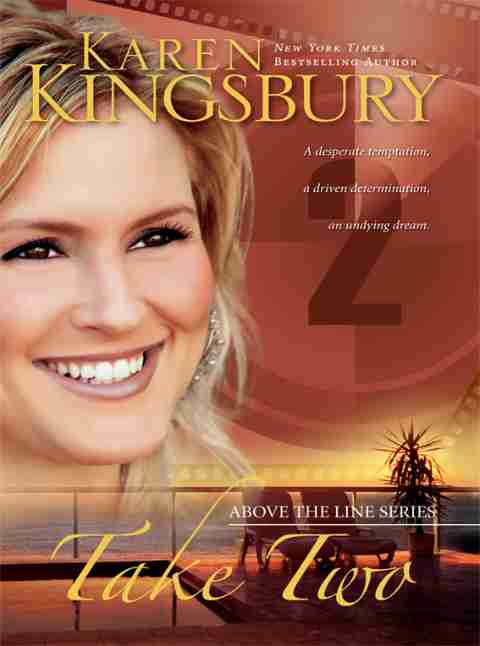
"Take Two" by Karen Kingsbury follows the lives of Chase Ryan and Keith Ellison as they navigate fame, friendship, and faith in Hollywood. The story explores the challenges and opportunities that come with success in the entertainment industry, and highlights the power of forgiveness and second chances.
Brother Yun
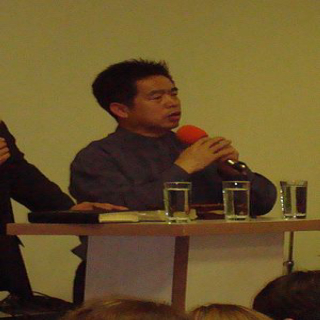 Brother Yun was born in February 1958 in the province of Henan. His original name was Liu Zhenying (刘振营).
Brother Yun became a believer at the age of 16. Soon after he became a Christian, God called him to be His witness in the west and south. As he was obedient to the calling, he eventually became a witness of Christ not just in the western and southern parts of China, but throughout China and in the nations beyond China as well.
Brother Yun was born into a poor family. His family’s financial situation took a turn for the worst when his father became ill with an asthmatic condition that led to lung cancer eventually. His life got worse when he became a Christian as he suffered severe trials and persecutions. In the midst of suffering for the Lord, however, he experienced miracle after miracle, which helped to strengthen his faith.
HOW BROTHER YUN BECAME A BELIEVER
In 1974, Brother Yun’s father became ill with lung cancer. His mother, who had been a Christian for many years but had become spiritually cold after the expulsion of Western missionaries during the Cultural Revolution, felt a deep sense of desperation because if her husband had died then, it would leave the family in dire straits. She thought of committing suicide. One evening, as she was lying in bed, she heard a voice saying to her that Jesus loved her. In tears and in repentance, she rededicated her life to God and gathered her family to pray for her husband. The next morning, her husband got better and as a result, everyone in the family, including Brother Yun, put their faith in God.
HIS HUNGER FOR THE WORD OF GOD
Brother Yun was 16 when he became a Christian. Soon after, he started hungering for the Word of God. However, his family did not have a Bible. He began asking his mother who Jesus was. In response, his mother would tell him that Jesus was the Son of God and that He had recorded all His teachings in the Bible.
Brother Yun wanted a Bible and his mother recalled that there was a man in another village who had one. So she brought him to see the man. The man was too afraid to show Brother Yun his Bible. So he suggested to the latter that he could pray and ask God for one.
Brother Yun decided to fast and pray for a Bible. For the next 100 days, he ate only one bowl of steamed rice everyday. One day at 4am, after fasting for 100 days, he saw a vision. In the vision, he was walking up a steep hill and trying to push a heavy cart at the same time. He was heading towards a village where he intended to beg for food for his family. He struggled greatly as he continued his climb uphill. The cart was about to roll back and fall on him when he saw three men walking down the hill in the opposite direction. One of them was a kind old man and he was pulling a large cart of fresh bread. When the old man saw Brother Yun, he asked him if he was hungry. He said ‘yes’ and started crying. The old man then took a red bag of bread from his cart and asked his two servants to give it to Brother Yun. As he put the bread into his mouth, it immediately turned into a Bible.
Upon waking up, Brother Yun began to search for the Bible. His search, however, was in vain. All of a sudden, he heard a faint knock on the door and someone was calling out his name. Immediately, he recognised the voice – it was the same voice he had heard in the vision. He quickly opened the door and standing before him were the two servants he had seen in the vision. One of them held a red bag in his hand. In this red bag was a Bible.
It was later that Brother Yun found out the names of the two men. One was Brother Wang while the other was Brother Sung. They were sent by an evangelist to give Brother Yun the Bible. The evangelist, who had suffered terribly during the Cultural Revolution and had nearly died while being tortured, had received a vision from God. In the vision, God showed him Brother Yun’s house and the location of his village. He was asked to give his Bible to Brother Yun. However, he did not obey God until three months later.
Brother Yun began to devour the Word of God. Even though he could hardly read, this did not deter him at all. When he had finished reading the entire Bible, he started to memorise one chapter per day. In 28 days, he had memorised the Gospel of Matthew. Then he went on to memorise the Book of Acts and so forth.
OBEDIENT TO THE CALL OF GOD
One morning at 4am, Brother Yun had a dream. In the dream, God asked him to be His witness in the west and south. In the same dream, he saw a young man from the south coming to his house. And so at daybreak, he told his mother to expect the young man’s visit and to ask him to wait for him. Then he sat off to a village he had never heard of in the west. The people in this village had been praying for him to visit as they had heard about how he had prayed for a Bible and got it.
When the meeting at the village concluded and Brother Yun got ready to leave, the villagers refused to let him go. So he stayed on and recited to them the first twelve chapters from the Book of Acts. After that, the villagers finally let him go. From the village to his house, it could take up to 2 hours to walk. Because he did not want to make the young man from the south wait too long, he decided to run home. All of a sudden, he found himself entering his village without any apparent time lapse. What should have taken him a few hours took him just a few moments. It was as if God had supernaturally transported him back to his village.
PERSECUTIONS AND MIRACLES IN HIS LIFE
Brother Yun was arrested by security police numerous times and was thrown into prison three times for sharing the gospel in communist China.
When Brother Yun was arrested the first time, he was only 17 years old. At that time, he was ministering at a meeting far away from home. After he was caught, he was thrown into a freezing cold prison cell. There was no heat in the cell and his winter coat had been thrown into the snow by the security police who had caught him. He began to sing Psalm 150 aloud. The more he sang, the more he was filled with joy. Gradually, his frozen hands and feet regained feeling and he no longer felt cold.
During his first imprisonment in Nanyang, Brother Yun felt that God wanted him to fast without food and water until he could see his family again. This fast lasted 74 days, which was humanly impossible but yet was made possible because he chose to obey God.
During those times when Brother Yun was in the hands of government officials, he was repeatedly beaten and tortured with electric batons. He was also kicked and trampled upon. Furthermore, he had needles being jabbed underneath his fingernails.
Once, Brother Yun was paraded through the streets with a red cross tied behind him for half a day. When night fell, he was locked and left alone inside a large interrogation room. The wooden cross was taken off his back but his hands were still tied up. All of a sudden, the rope that was used to tie his hands snapped by itself. He immediately walked out of the interrogation room and walked through the courtyard in the midst of onlookers. Nobody stopped him or said anything to him. It was as if God had blinded their eyes and they did not even recognise who he was.
Because the front gate was locked, the only way Brother Yun could get out was to climb over an eight-foot high cement wall. He climbed up as much as he could manage. Then he looked over the wall and saw that there was a ten-foot wide open tank directly below. Suddenly, he felt as if someone had lifted him up and thrown him over. He was thrown so far that he did not land in the tank.
Brother Yun’s 3rd imprisonment was a very dark period in his life as the prison guards in the maximum security prison were determined to prevent his escape. So they beat his legs to cripple him permanently. They had him beaten up everyday, even in his crippled state. One day, God instructed him to escape from the prison. This was confirmed by a brother-in-Christ. Thus, on May 5, 1997, he miraculously walked past dozens of prison guards and out of the maximum security prison. It was as if he had become invisible to the guards. He did not realise that his legs had been miraculously healed until later.
Throughout all the horrendous and painful experiences that Brother Yun went through, the word of the Lord kept coming to him, encouraging him and strengthening his faith.
BROTHER YUN’S MINISTRY
Brother Yun eventually escaped China and sought asylum in Germany in 2001. Since then, he has been continuing his ministry from there and has spoken to congregations internationally. He has founded “Back to Jerusalem” Movement and has been sending missionaries out from China to share the gospel in the least-reached nations.
Brother Yun’s life and ministry have impacted many lives. Thousands of people have become Christians through his ministry. It is thus inevitable that fellow Christians have allowed themselves to be used as instruments of wickedness to attack his reputation. The co-author of The Heavenly Man, Paul Hattaway has aptly put it this way, “Many of the great Christian leaders throughout history have been the subject of brutal attacks from other Christians.”
AFTERTHOUGHT
Brother Yun’s childlike faith and his prompt obedience to God’s call are exemplary. It is incredible that he has remained faithful to God despite the tremendous suffering and persecutions he has gone through.
Brother Yun was born in February 1958 in the province of Henan. His original name was Liu Zhenying (刘振营).
Brother Yun became a believer at the age of 16. Soon after he became a Christian, God called him to be His witness in the west and south. As he was obedient to the calling, he eventually became a witness of Christ not just in the western and southern parts of China, but throughout China and in the nations beyond China as well.
Brother Yun was born into a poor family. His family’s financial situation took a turn for the worst when his father became ill with an asthmatic condition that led to lung cancer eventually. His life got worse when he became a Christian as he suffered severe trials and persecutions. In the midst of suffering for the Lord, however, he experienced miracle after miracle, which helped to strengthen his faith.
HOW BROTHER YUN BECAME A BELIEVER
In 1974, Brother Yun’s father became ill with lung cancer. His mother, who had been a Christian for many years but had become spiritually cold after the expulsion of Western missionaries during the Cultural Revolution, felt a deep sense of desperation because if her husband had died then, it would leave the family in dire straits. She thought of committing suicide. One evening, as she was lying in bed, she heard a voice saying to her that Jesus loved her. In tears and in repentance, she rededicated her life to God and gathered her family to pray for her husband. The next morning, her husband got better and as a result, everyone in the family, including Brother Yun, put their faith in God.
HIS HUNGER FOR THE WORD OF GOD
Brother Yun was 16 when he became a Christian. Soon after, he started hungering for the Word of God. However, his family did not have a Bible. He began asking his mother who Jesus was. In response, his mother would tell him that Jesus was the Son of God and that He had recorded all His teachings in the Bible.
Brother Yun wanted a Bible and his mother recalled that there was a man in another village who had one. So she brought him to see the man. The man was too afraid to show Brother Yun his Bible. So he suggested to the latter that he could pray and ask God for one.
Brother Yun decided to fast and pray for a Bible. For the next 100 days, he ate only one bowl of steamed rice everyday. One day at 4am, after fasting for 100 days, he saw a vision. In the vision, he was walking up a steep hill and trying to push a heavy cart at the same time. He was heading towards a village where he intended to beg for food for his family. He struggled greatly as he continued his climb uphill. The cart was about to roll back and fall on him when he saw three men walking down the hill in the opposite direction. One of them was a kind old man and he was pulling a large cart of fresh bread. When the old man saw Brother Yun, he asked him if he was hungry. He said ‘yes’ and started crying. The old man then took a red bag of bread from his cart and asked his two servants to give it to Brother Yun. As he put the bread into his mouth, it immediately turned into a Bible.
Upon waking up, Brother Yun began to search for the Bible. His search, however, was in vain. All of a sudden, he heard a faint knock on the door and someone was calling out his name. Immediately, he recognised the voice – it was the same voice he had heard in the vision. He quickly opened the door and standing before him were the two servants he had seen in the vision. One of them held a red bag in his hand. In this red bag was a Bible.
It was later that Brother Yun found out the names of the two men. One was Brother Wang while the other was Brother Sung. They were sent by an evangelist to give Brother Yun the Bible. The evangelist, who had suffered terribly during the Cultural Revolution and had nearly died while being tortured, had received a vision from God. In the vision, God showed him Brother Yun’s house and the location of his village. He was asked to give his Bible to Brother Yun. However, he did not obey God until three months later.
Brother Yun began to devour the Word of God. Even though he could hardly read, this did not deter him at all. When he had finished reading the entire Bible, he started to memorise one chapter per day. In 28 days, he had memorised the Gospel of Matthew. Then he went on to memorise the Book of Acts and so forth.
OBEDIENT TO THE CALL OF GOD
One morning at 4am, Brother Yun had a dream. In the dream, God asked him to be His witness in the west and south. In the same dream, he saw a young man from the south coming to his house. And so at daybreak, he told his mother to expect the young man’s visit and to ask him to wait for him. Then he sat off to a village he had never heard of in the west. The people in this village had been praying for him to visit as they had heard about how he had prayed for a Bible and got it.
When the meeting at the village concluded and Brother Yun got ready to leave, the villagers refused to let him go. So he stayed on and recited to them the first twelve chapters from the Book of Acts. After that, the villagers finally let him go. From the village to his house, it could take up to 2 hours to walk. Because he did not want to make the young man from the south wait too long, he decided to run home. All of a sudden, he found himself entering his village without any apparent time lapse. What should have taken him a few hours took him just a few moments. It was as if God had supernaturally transported him back to his village.
PERSECUTIONS AND MIRACLES IN HIS LIFE
Brother Yun was arrested by security police numerous times and was thrown into prison three times for sharing the gospel in communist China.
When Brother Yun was arrested the first time, he was only 17 years old. At that time, he was ministering at a meeting far away from home. After he was caught, he was thrown into a freezing cold prison cell. There was no heat in the cell and his winter coat had been thrown into the snow by the security police who had caught him. He began to sing Psalm 150 aloud. The more he sang, the more he was filled with joy. Gradually, his frozen hands and feet regained feeling and he no longer felt cold.
During his first imprisonment in Nanyang, Brother Yun felt that God wanted him to fast without food and water until he could see his family again. This fast lasted 74 days, which was humanly impossible but yet was made possible because he chose to obey God.
During those times when Brother Yun was in the hands of government officials, he was repeatedly beaten and tortured with electric batons. He was also kicked and trampled upon. Furthermore, he had needles being jabbed underneath his fingernails.
Once, Brother Yun was paraded through the streets with a red cross tied behind him for half a day. When night fell, he was locked and left alone inside a large interrogation room. The wooden cross was taken off his back but his hands were still tied up. All of a sudden, the rope that was used to tie his hands snapped by itself. He immediately walked out of the interrogation room and walked through the courtyard in the midst of onlookers. Nobody stopped him or said anything to him. It was as if God had blinded their eyes and they did not even recognise who he was.
Because the front gate was locked, the only way Brother Yun could get out was to climb over an eight-foot high cement wall. He climbed up as much as he could manage. Then he looked over the wall and saw that there was a ten-foot wide open tank directly below. Suddenly, he felt as if someone had lifted him up and thrown him over. He was thrown so far that he did not land in the tank.
Brother Yun’s 3rd imprisonment was a very dark period in his life as the prison guards in the maximum security prison were determined to prevent his escape. So they beat his legs to cripple him permanently. They had him beaten up everyday, even in his crippled state. One day, God instructed him to escape from the prison. This was confirmed by a brother-in-Christ. Thus, on May 5, 1997, he miraculously walked past dozens of prison guards and out of the maximum security prison. It was as if he had become invisible to the guards. He did not realise that his legs had been miraculously healed until later.
Throughout all the horrendous and painful experiences that Brother Yun went through, the word of the Lord kept coming to him, encouraging him and strengthening his faith.
BROTHER YUN’S MINISTRY
Brother Yun eventually escaped China and sought asylum in Germany in 2001. Since then, he has been continuing his ministry from there and has spoken to congregations internationally. He has founded “Back to Jerusalem” Movement and has been sending missionaries out from China to share the gospel in the least-reached nations.
Brother Yun’s life and ministry have impacted many lives. Thousands of people have become Christians through his ministry. It is thus inevitable that fellow Christians have allowed themselves to be used as instruments of wickedness to attack his reputation. The co-author of The Heavenly Man, Paul Hattaway has aptly put it this way, “Many of the great Christian leaders throughout history have been the subject of brutal attacks from other Christians.”
AFTERTHOUGHT
Brother Yun’s childlike faith and his prompt obedience to God’s call are exemplary. It is incredible that he has remained faithful to God despite the tremendous suffering and persecutions he has gone through.
3 Trials Every Marriage Will Face
When I was married at the age of twenty-three, I wasn’t naïve. I knew marriage was going to be difficult. I knew it was going to take dedication and work. I knew there would be challenges and trials. Sometimes, I don’t know that we give our young married couples credit due to them when they enter into a union. We assume they see marriage as all roses and fairy tales, but I think most young adults are aware that trials are an inevitable part of marriage. What I’m not sure they—or I—realized is that there is a set of trials that every marriage will face. Every marriage? Yes. Every marriage. Are there any exceptions to this rule? Perhaps, but you’ll have to provide compelling evidence for me to believe that a marriage could possibly escape these trials. “Every” is an all-encompassing word. There are no exceptions to the rule, and therefore, all will be affected. Knowing about these impending trials may give us some insight into how to handle them when they come. 1. The Trial of Identity No matter how unified we are in our marriage relationship, there will come a time when we struggle to find ourselves within our relationship. Some spouses are very content to identify as a couple, while others find friction in being recognized as the “spouse of.” For the spouses who are content to identify as a couple and, in a sense, forgo their individual and independent identities, the trial can become when their “oneness” is threatened. When life intercepts the unity and threatens to take them in separate directions—whether in conviction, opinion, leading, etc. At some point, the one path will threaten to split into two. This doesn’t mean divorce or separation. In fact, nothing so dramatic as that, necessarily. But, there will come a time when the oneness is challenged because, while you are a union, you also have two minds, two souls, and two very individual ways of processing. For the spouses who prefer to maintain their independence and not be identified by their spouse, the trial of identity can come in an opposite way. Often, the quest to not lose their own personage will create a wedge and a separation in the marriage because they want to be seen as their own person so badly. In essence, they will sacrifice elements of oneness to remain single-but-married. This sounds a bit extreme to some, but the reality is that nothing in culture today inspires us to let go of ourselves and become intermeshed with another so deeply that we can’t tell where we end and they begin. Culture encourages us to find self-care and self-identify, which can create conflict within a marriage. The trial of identity has two extreme ends, but we’ll often find ourselves somewhere in the middle. The reality is, there is a fine balance to being a union of two into one and also managing our own unique identities, wills, thought processes, and persons. Be prepared to forge through this trial together. It will polish your marriage if handled with sacrificial love. 2. The Trial of Differences We are truly fooling ourselves if we enter into marriage believing that our differences will be small. Humor and comedy often come into play with the scripts of toothpaste tube squeezing at the end of the middle, TP rolling over the top or beneath, socks folded or piled, bed made or not, etc. Will there be these differences in marriage? Absolutely. But differences don’t limit themselves to the trivial. No matter how much you prepare before you’re married, differences will continue to rise throughout your marriage. They may come in the form of beliefs. For example, you may find that you and your spouse agreed on the significant points of your faith/doctrine, but as you delve into the application of faith and daily life, you both approach life and your faith walks differently. You may find that you didn’t address doctrinal differences nearly as much as you thought, and suddenly one of you believes in the idea of free will while the other believes God predestines those who will follow Him. Your differences may come in the form of goals and dreams. You may have a lifelong dream you agree on initially, but after years of pursuing it, one spouse may simply be done, while the other believes it may still happen. When children come into the equation, you probably will find that you have different parenting skills simply because you were raised differently. This will inevitably cause friction—and probably a lot of it- if you haven’t stopped identifying the major differences areas. Differences will rear their heads constantly throughout your marriage. It’s a trial that is both inevitable and will never go away. Be prepared, not scared. Be open to communicating, setting aside personal feelings, discussing them rationally, and being willing to make compromises. 3. The Trial of Insecurities Men and women have vastly different insecurities. Granted, there are stereotypes of women being super emotional and insecure, while men tend to need to exert their dominance and strength in order to feel confident. Interestingly, I’ve known couples who are the exact opposites of that. I’ve known very sensitive men, and when their wife is displeased with them, it hurts them to the core and makes them question if they’re doing their role as husbands correctly. I’ve known women to feel as though they’ve been diminished into the subservient role of a wife and have no value outside of dishwashing and child-rearing (both of which are highly important for different reasons!). Facts don’t lie. We all have insecurities. Nothing brings out these insecurities like marriage because it’s within marriage that we are the most vulnerable. Our questioning of ourselves becomes evident, and when a spouse questions those very elements, we can experience insecurity like none we’ve faced before. You will battle insecurities within marriage. It is an assured promise that they will come. They will come in various forms. Insecurities you didn’t know you had may come to the surface. Perhaps you’ll develop new insecurities. Circumstances can influence you, push you into dark places you’re not prepared for, and leave you feeling exposed. The trial of insecurity is a big one. You can either choose to be together and work through them, seeking trust and reliance and respect, or those insecurities can fester and become deep wounds of mistrust that eventually lead to rifts in marriage that can take years to heal. Don’t let these trials frighten you. The fact is, difficulties are inevitable. Knowing these are some that are sure to come can help you be proactive in preparing. This means communicating with each other and respecting the other’s position even if you don’t understand or agree. It means seeking the Lord in prayer together so that while you’re your own individuals, you can also have a unity that will continue to grow during these difficulties. Marriage is a guaranteed trial. But as Proverbs says, two are better than one, and three strands are not easily broken; binding both of your hearts around the central Person of Christ will strengthen you for the troubled days ahead. Jaime Jo Wright Crosswalk.com Contributing Writer