







-by-karen-kingsbury-160.webp)
-160.webp)
%20Karen%20Kingsbury-160.webp)

About the Book
"TAKE ONE" by Karen Kingsbury is a heartwarming novel about ambitious filmmaker Jordan Taylor who is determined to make a difference in the world through her inspiring movies. When she meets actor Connor Evans, sparks fly but their conflicting priorities threaten their budding romance. As they navigate their relationship and careers, they must decide what truly matters most.
Amy Carmichael
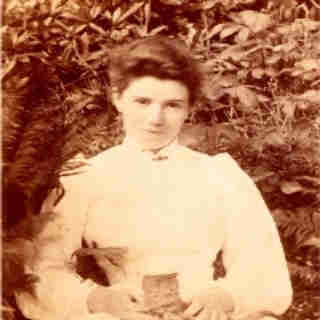 Born in Belfast Ireland, to a devout family of Scottish ancestry, Carmichael was educated at home and in England, where she lived with the familt of Robert Wilson after her father’s death. While never officially adopted, she used the hyphenated name Wilson-Carmichael as late as 1912. Her missionary call came through contacts with the Keswick movement. In 1892 she volunteered to the China Inland Mission but was refused on health grounds. However, in 1893 she sailed for Japan as the first Keswick missionary to join the Church Missionary Society (CMS) work led by Barclay Buxton. After less than two years in Japan and Ceylon, she was back in England before the end of 1894. The next year she volunteered to the Church of England Zenana Missionary Society, and in November 1895 she arrived in South India, never to leave. While still learning the difficult Tamil language, she commenced itinerant evangelism with a band of Indian Christian women, guided by the CMS missionary Thomas Walker. She soon found herself responsible for Indian women converts, and in 1901, she, the Walkers, and their Indian colleagues settled in Dohnavur. During her village itinerations, she had become increasingly aware of the fact that many Indian children were dedicated to the gods by their parents or guardians, became temple children, and lived in moral and spiritual danger. It became her mission to rescue and raise these children, and so the Dohnavur Fellowship came into being (registered 1927). Known at Dohnavur as Amma (Mother), Carmichael was the leader, and the work became well known through her writing. Workers volunteered and financial support was received, though money was never solicited. In 1931 she had a serious fall, and this, with arthritis, kept her an invalid for the rest of her life. She continued to write, and identified leaders, missionary and Indian, to take her place. The Dohnavur Fellowship still continues today.
Jocelyn Murray, “Carmichael, Amy Beatrice,” in Biographical Dictionary of Christian Missions, ed. Gerald H. Anderson (New York: Macmillan Reference USA, 1998), 116.
This article is reprinted from Biographical Dictionary of Christian Missions, Macmillan Reference USA, copyright © 1998 Gerald H. Anderson, by permission of Macmillan Reference USA, New York, NY. All rights reserved.
“Ammai” of orphans and holiness author
Amy Carmichael was born in Ireland in 1867, the oldest of seven children. As a teen, she attended a Wesleyan Methodist girls boarding school, until her father died when she was 18. Carmichael twice attended Keswick Conventions and experienced a holiness conversion which led her to work among the poor in Belfast. Through the Keswick Conventions, Carmichael met Robert Wilson. He developed a close relationship with the young woman, and invited her to live with his family. Carmichael soon felt a call to mission work and applied to the China Inland Mission as Amy Carmichael-Wilson. Although she did not go to China due to health reasons, Carmichael did go to Japan for a brief period of time. There she dressed in kimonos and began to learn Japanese. Her letters home from Japan became the basis for her first book, From Sunrise Land. Carmichael left Japan due to health reasons, eventually returning to England. She soon accepted a position with the Church of England’s Zenana Missionary Society, serving in India. From 1895 to 1925, her work with orphans in Tinnevelly (now Tirunelveli) was supported by the Church of England. After that time, Carmichael continued her work in the faith mission style, establishing an orphanage in Dohnavur. The orphanage first cared for girls who had been temple girls, who would eventually become temple prostitutes. Later the orphanage accepted boys as well.
Carmichael never returned to England after arriving in India. She wrote prolifically, publishing nearly 40 books. In her personal devotions, she relied on scripture and poetry. She wrote many of her own poems and songs. Carmichael had a bad fall in 1931, which restricted her movement. She stayed in her room, writing and studying. She often quoted Julian of Norwich when she wrote of suffering and patience. Many of Carmichael’s books have stories of Dohnavur children, interspersed with scripture, verses, and photographs of the children or nature. Carmichael never directly asked for funding, but the mission continued to be supported through donations. In 1951 Carmichael died at Dohnavur. Her headstone is inscribed “Ammai”, revered mother, which the children of Dohnavur called Carmichael.
Carmichael’s lengthy ministry at Dohnavur was sustained through her strong reliance upon scripture and prayer. Her early dedication to holiness practices and her roots in the Keswick tradition helped to guide her strong will and determination in her mission to the children of southern India.
by Rev. Lisa Beth White
Born in Belfast Ireland, to a devout family of Scottish ancestry, Carmichael was educated at home and in England, where she lived with the familt of Robert Wilson after her father’s death. While never officially adopted, she used the hyphenated name Wilson-Carmichael as late as 1912. Her missionary call came through contacts with the Keswick movement. In 1892 she volunteered to the China Inland Mission but was refused on health grounds. However, in 1893 she sailed for Japan as the first Keswick missionary to join the Church Missionary Society (CMS) work led by Barclay Buxton. After less than two years in Japan and Ceylon, she was back in England before the end of 1894. The next year she volunteered to the Church of England Zenana Missionary Society, and in November 1895 she arrived in South India, never to leave. While still learning the difficult Tamil language, she commenced itinerant evangelism with a band of Indian Christian women, guided by the CMS missionary Thomas Walker. She soon found herself responsible for Indian women converts, and in 1901, she, the Walkers, and their Indian colleagues settled in Dohnavur. During her village itinerations, she had become increasingly aware of the fact that many Indian children were dedicated to the gods by their parents or guardians, became temple children, and lived in moral and spiritual danger. It became her mission to rescue and raise these children, and so the Dohnavur Fellowship came into being (registered 1927). Known at Dohnavur as Amma (Mother), Carmichael was the leader, and the work became well known through her writing. Workers volunteered and financial support was received, though money was never solicited. In 1931 she had a serious fall, and this, with arthritis, kept her an invalid for the rest of her life. She continued to write, and identified leaders, missionary and Indian, to take her place. The Dohnavur Fellowship still continues today.
Jocelyn Murray, “Carmichael, Amy Beatrice,” in Biographical Dictionary of Christian Missions, ed. Gerald H. Anderson (New York: Macmillan Reference USA, 1998), 116.
This article is reprinted from Biographical Dictionary of Christian Missions, Macmillan Reference USA, copyright © 1998 Gerald H. Anderson, by permission of Macmillan Reference USA, New York, NY. All rights reserved.
“Ammai” of orphans and holiness author
Amy Carmichael was born in Ireland in 1867, the oldest of seven children. As a teen, she attended a Wesleyan Methodist girls boarding school, until her father died when she was 18. Carmichael twice attended Keswick Conventions and experienced a holiness conversion which led her to work among the poor in Belfast. Through the Keswick Conventions, Carmichael met Robert Wilson. He developed a close relationship with the young woman, and invited her to live with his family. Carmichael soon felt a call to mission work and applied to the China Inland Mission as Amy Carmichael-Wilson. Although she did not go to China due to health reasons, Carmichael did go to Japan for a brief period of time. There she dressed in kimonos and began to learn Japanese. Her letters home from Japan became the basis for her first book, From Sunrise Land. Carmichael left Japan due to health reasons, eventually returning to England. She soon accepted a position with the Church of England’s Zenana Missionary Society, serving in India. From 1895 to 1925, her work with orphans in Tinnevelly (now Tirunelveli) was supported by the Church of England. After that time, Carmichael continued her work in the faith mission style, establishing an orphanage in Dohnavur. The orphanage first cared for girls who had been temple girls, who would eventually become temple prostitutes. Later the orphanage accepted boys as well.
Carmichael never returned to England after arriving in India. She wrote prolifically, publishing nearly 40 books. In her personal devotions, she relied on scripture and poetry. She wrote many of her own poems and songs. Carmichael had a bad fall in 1931, which restricted her movement. She stayed in her room, writing and studying. She often quoted Julian of Norwich when she wrote of suffering and patience. Many of Carmichael’s books have stories of Dohnavur children, interspersed with scripture, verses, and photographs of the children or nature. Carmichael never directly asked for funding, but the mission continued to be supported through donations. In 1951 Carmichael died at Dohnavur. Her headstone is inscribed “Ammai”, revered mother, which the children of Dohnavur called Carmichael.
Carmichael’s lengthy ministry at Dohnavur was sustained through her strong reliance upon scripture and prayer. Her early dedication to holiness practices and her roots in the Keswick tradition helped to guide her strong will and determination in her mission to the children of southern India.
by Rev. Lisa Beth White
God, Make Us Bold About Jesus
It’s been said that the content of a prayer shapes the one who prays it, because we tend to pray what we love, and what we love makes us who we are. And this is not only true of individuals, but of churches too. Like when the early church once prayed, Now, Lord, look upon their threats and grant to your servants to continue to speak your word with all boldness, while you stretch out your hand to heal, and signs and wonders are performed through the name of your holy servant Jesus. (Acts 4:29–30) Of all the things they might have prayed — and of all things churches should pray at various times — the fledging church in the early pages of Acts wanted God to give them boldness: “Grant to your servants to continue to speak your word with all boldness.” We as twenty-first-century pastors and churches can learn from this first-century prayer, but to do so, we need to first go back one chapter. Words Filled with Jesus The apostles Peter and John were walking to the temple one afternoon when they encountered a lame man. He had been lame from birth. The man was doing what he was always doing: asking for money from people passing by. But on this particular day, something unexpected happened. The man passing by responded, “I have no silver and gold, but what I do have I give to you. In the name of Jesus Christ of Nazareth, rise up and walk!” (Acts 3:6). In an instant, the man was healed. He leapt up and began to walk. He entered the temple “walking, leaping, and praising God” (Acts 3:8). The scene drew a crowd, so Peter did what Peter was always doing. He preached. His sermon was full of crystal-clear witness to the person and purpose of Jesus. He is the Holy and Righteous One (verse 14), the Author of Life and the one whom God has raised from the dead (verse 15). Jesus is the reason, the only reason, why the lame man was healed (verse 17). Then Peter proceeds to show that the Hebrew Scriptures had long foretold Jesus, from Moses in Deuteronomy and God’s promise to Abraham in Genesis, to all the prophets “from Samuel and those who came after him” (Acts 3:24). It has always been about Jesus, and people’s response, now, must unequivocally be to repent (Acts 3:19, 26). New World Breaking In These Jewish leaders were “greatly annoyed because [Peter and John] were teaching the people and proclaiming in Jesus the resurrection from the dead” (Acts 4:2). The problem wasn’t only that Peter and John were witnessing to Jesus’s own resurrection, but that they were saying Jesus’s resurrection has led to the inbreaking of the resurrection age. As Alan Thompson writes, “In the context of Acts 3–4, Jesus’s resurrection anticipates the general resurrection at the end of the age and makes available now, for all those who place their faith in him, the blessings of the ‘last days’” (The Acts of the Risen Lord Jesus, 79). That, in fact, was what the healing of the lame man was declaring. The new creation had invaded the old. “Jesus is the climax of all of God’s saving purposes, and we cannot ignore this without eternal consequences.” In the resurrection of Jesus, everything has changed. He is the climax of all of God’s saving purposes, and we cannot ignore this without eternal consequences. This message ruffled the feathers of the Jewish leaders, and so they arrested Peter and John and put them on trial for all that happened that day. “By what power or by what name did you do this?” they demanded (Acts 4:7). Peter, filled with the Holy Spirit, and again with a crystal-clear witness, says the lame man was healed because of Jesus. Jesus is the Messiah who was crucified and raised, and who was foretold in the Hebrew Scriptures. Specifically, Peter says that Jesus is the stone mentioned in Psalm 118:22, the stone that would be rejected by the builders but then become the cornerstone. The stakes could not be higher. Only in Jesus could one be saved (Acts 4:12). Outdone by Fishermen The Jewish leaders were astonished. They could not reconcile Peter and John’s boldness with the fact that they were “uneducated, common men” (Acts 4:13). These were neither teachers nor even pupils, but fishermen. Fishermen. That agitated the Jewish leaders all the more. These unskilled regular Joes, as it were, had been teaching the people! And now they ventured to interpret the Hebrew Scriptures before these skilled Jewish interpreters, telling them who Jesus was, according to the Scriptures, and who they were, according to the Scriptures. These Jewish leaders saw their “boldness” (Acts 4:13), but this wasn’t merely a reference to their emotional tone. Peter and John’s boldness wasn’t mainly about their zeal or behavior — it was about what they had to say. This kind of boldness is repeatedly connected to speech in Acts, so much so that another way to render “boldness” in many passages would be “to speak freely or openly.” That’s what Peter and John had done. They had spoken clearly, freely, openly, boldly about Jesus from the Hebrew Scriptures — and they had done so under intense intimidation. As they watched this unfold, even the Jewish leaders began to connect some dots. “They recognized that they had been with Jesus” (Acts 4:13). So how did these untrained fishermen learn to interpret the Scriptures like that? How could they speak so confidently about the meaning of Scripture when they had never been taught? Well, because they had been taught — by Jesus himself. They had been with Jesus, and so they were unusually bold. They spoke of Jesus clearly, both of his person and work, on the grounds of what the Scriptures say, even when it might have cost them their lives. Voices Lifted Together This is the boldness the church pleads for in Acts 4:29–30. The Jewish leaders had warned and threatened Peter and John to stop talking about Jesus, but eventually they had to release the men from custody. Peter and John went straight to their friends to report what happened. These friends of Peter and John, the nascent church in Jerusalem, “lifted their voices together to God” (Acts 4:24). Their corporate prayer was as rich with the Old Testament’s witness to Jesus as Peter’s sermon was. They knew the person of Jesus. They knew why he had come. And they knew how unpopular this message would be. And what did they pray? They did not pray for articulate positions on the current cultural issues, nor for increased dialogue with those of other faiths, nor for the ability to refute this or that ism, nor for the development of a particularly Christian philosophy or culture (all things we might pray for at certain times in the church). None of these are part of the church’s prayer in Acts 4. Rather, they prayed for boldness to speak the word of God. They asked God to give them the kind of speech Peter and John had modeled — to testify clearly about who Jesus is from the word of God, no matter the cost, as the new creation continues to invade the old. Do our churches ever pray like this today? Do we lack a similar heart? A similar perspective? Or both? And yet our cities need our boldness every bit as much as Jerusalem did in Peter and John’s day. They need the crystal-clear witness of who Jesus is and what he has come to do. Praying for Revival What if the church of Jesus Christ, in all her local manifestations, was marked by a singular passion to know Jesus and make him known? This is the true priority of the church in every age and culture. “The best, most important thing we ever have to say is what we have to say about Jesus.” We are all about Jesus, and the best, most important thing we ever have to say is what we have to say about him. Our failures to live up to this calling are reminders of our need for revival — of our need to plead with God for boldness. Like the early church, may our heart continually beat to testify to Jesus’s glory and to what he demands of the world. Church, this is who we are. Recover it, as needed, and live it out — even though it’s the last thing our society wants to hear from us. Our society wants the church to be “helpful” on society’s terms — what J.I. Packer called the “new gospel,” a substitute for the biblical gospel, in his introduction to Owen’s The Death of Death in the Death of Christ. Whereas the chief aim of the biblical gospel is to teach people to worship God, Packer explains, the concern of the substitute only wants to make people feel better. The subject of the biblical gospel is God and his ways; the subject of the substitute is man and the help God offers him. The market demands the substitute, and those who refuse to cater to it are at the risk of being considered irrelevant or worse. Against that mounting pressure, we should pray that we would speak clearly, freely, openly, boldly about Jesus from the Bible, no matter the cost. Would this not be the sign of revival? Would God not answer our prayers like he did for that first church? When they had prayed, the place in which they were gathered together was shaken, and they were all filled with the Holy Spirit and continued to speak the word of God with boldness. (Acts 4:31) Article by Jonathan Parnell Pastor, Minneapolis, Minnesota