
GIP Library icon

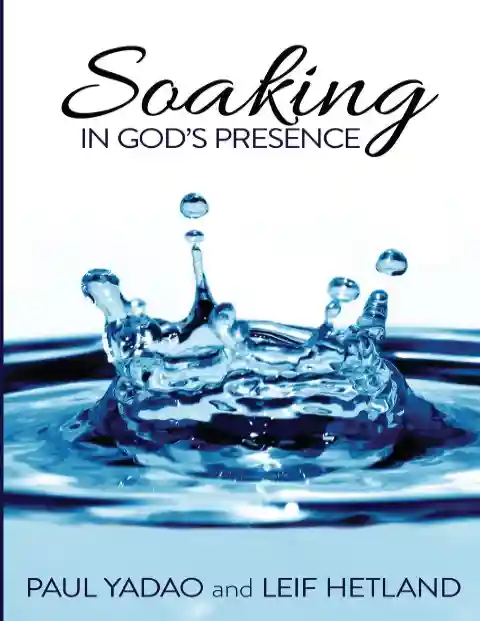
Soaking In God's Presence Soaking In God's Presence

Soaking In God's Presence Order Printed Copy

  • Author: Paul Yadao, Leif Hetland
  • Size: 1.18MB | 116 pages
  • |
Continue with
Google Twitter
LOG IN TO REVIEW
About the Book


"Soaking In God's Presence" by Paul Yadao and Leif Hetland is a practical guide that explores the benefits of spending extended time in God's presence through soaking prayer. The authors share personal experiences and offer insight on how to deepen your spiritual connection, receive healing, and encounter God's love in a transformative way. This book encourages readers to prioritize intimacy with God and develop a lifestyle of soaking in His presence for spiritual growth and renewal.

Emerson Andrews

Emerson Andrews His Early life Emerson Andrews was born in Mansfield, Bristol County, Massachusetts in 1806 to godly parents, James and Mercy Andrews. They were from English stock and were strict Puritans in faith and lifestyle. Although young Emerson was raised in the Congregational Church he was far from God in his teens and twenties. Nevertheless, periodically, he experienced intense conviction, usually through his parents’ counsels and prayers but particularly through two unforgettable sermons delivered by the eccentric revivalist, Lorenzo Dow. Soon after this he was converted under the ministry of another revival preacher, Asahel Nettleton. He was a very educated man formerly studying at Chesterfield Academy and, at the time of his conversion, at Plainfield Kimball Union Academy, in New Hampshire. In the spring of 1832 whilst studying further at Union College in Schenectady, New York, he was baptised by immersion in the Mohawk River. It was his convictions about the Bible’s teaching on water baptism that caused him to join the Baptist’s instead of the Congregationalists or Presbyterians. A Lover of Revival He wrote “Many revivals and protracted meetings of one, two, or more days, and some for weeks and months, have been held, in New England and elsewhere, within, my personal remembrance. These have sent out their hallowed influences, as the light of the world and salt of the earth. Just before and at the time of my second birth, many sweeping and glorious revivals, under the celebrated Dr. Netteton, John Leland, Jedediah Burchard, C. G. Finney, were hailed, enjoyed, and sounded all around and over the country. As soon as I was converted I cherished the good news of revivals; and I sought a place and portion with live Christians, that I might speak for Christ and win souls to salvation. I asked God for direction and help, and was answered. His first visit to a Revival He describes his first visit to a Revival “The first meeting that I attended after my regeneration was held in the town of Windsor, Vt. It was called a “four days’ meeting.” But many such were held in different places about that time. This came off in the summer of l830. I was much delighted, fed, and strengthened by such a sight, experience, exercise, and spiritual supper. It was a precious banquet, adapted to develop and enlarge the young convert’s soul. The four pastors of the town, with their respective churches and congregations, and some from neighboring towns, met with the Baptist church, of which Elder Leland Howard was the long-honored pastor. Some twenty other pastors also came in from adjacent towns, and a few Lawyers and teachers, who took leading parts in the services. Large congregations were constantly in attendance, and all the various exercises and meetings were interesting and profitable. Some of the sermons and prayers were most powerful, melting, and effective. Sinners often arose, requesting prayers, or sent up short petitions to be read. A lawyer by the name of Shepherd, from New York, was found to be very able, pointed, and specific in prayer, and so effective and precise in noting each different request more perfectly than the ministers, that he was often invited to lead in prayer — especially when there were some ten or twenty different, or some difficult requests presented. He seemed to be full of the Spirit, and was especially gifted and successful. Ministers learned something valuable from his wisdom and tact. I confess that his pointedness made a powerful and lasting impression on my mind and practice. The professors and ministers were much blessed, and many sinners were converted in the meetings. The gospel was preached and the Spirit poured out, prayer and sacrifices made. Novelty and wonder attracted many. Here God crowned the effort.” Mentored by Jacob Knapp He writes. ” ROCHESTER, N.Y. 1839. Here I assisted in a powerful meeting, under the preaching of the celebrated Elder Jacob Knapp, for three weeks. Marvellous things were done. The wicked raged, the Spirit worked, grace prevailed, and hundreds were converted — a glorious triumph over rum, gambling, and infidelity. Jesus reigned.” This exposure to revival power whetted his appetite for an evangelistic ministry. His first revival efforts “WHITE DEER, PENN. 1839. In this rich farming district I had a revival meeting of five weeks, with a feeble Baptist church. We began at the close of the Association; but, with all the eloquent pastoral preaching in it, the brethren were not aroused, nor sinners much convicted. Here my first sermon was from the text, “O Lord, revive thy work!” And he did so immediately. Some half a dozen persons were convicted and converted, and the church was revived by the power of God on that evening’s effort. The whole region, then, for seven miles around, was awakened, and some forty converts were immersed by Elder Spratt, D.D. Here, too, we experienced severe opposition and much persecution from outside professors and sinners, but God strengthened our hands for a triumphant work. This was a blessed era with the church, and it is fragrant still. “CLINTON, PENN. I had a revival meeting in this township. It was very great and powerful. Satan and sinners raged, at times, terribly, but the cross was triumphant. Many were immersed by the beloved pastor, Elder Spratt, D.D. Hugh Donelly, the postmaster, rum-selling merchant, and an avowed infidel, who had slandered me and ridiculed the meeting, crept in away back, then into the middle seats; then, after a few nights, fell on his knees groaning and crying for mercy. I soon aided him in coming forward. Then out came his wife and sister. We all prayed, and soon the three rejoiced in hope, and spoke boldly for Jesus. Brother Donelly has made a noble record in Pennsylvania and Indiana for Jesus and his cause
.. PARMA, N.Y. In this western village, in mid-winter, I preached night and day, for three weeks, to overflowing houses and attentive hearers. Christians renewed their “first love and vows,” and many sinners were converted and baptized. An infidel, hearing a few sermons, was struck under conviction, and fled away thirty miles for comfort; but, feeling worse and worse, returned like the prodigal, feeling wretched and lost. He came forward, prayer was offered, and he soon yielded and believed, giving glory to God. Then he told his experience, and exhorted his old Universalist and infidel friends to repent and be saved from hell. Emerson Andrews Preaching His preaching zeal and effectiveness were quickly recognised and he was soon licensed to preach and for a four year period served brief pastorates in New York State – Waterford, West Troy, Lansingburg and Rome (1834-1838) In 1838 began an itinerant evangelist for thirty-five years, mainly in America, but also in Europe, Africa, Asia and Canada. His estimates were that 40,000 were converted through his ministry.

We Need More Holy Fools

A man is trapped in a car, rushing down a hill toward a cliff. The doors are locked. The brakes are out. The steering barely works. Far ahead, he can see other cars hurtling into the abyss. How far they fall, he does not know. What they find at the bottom, he cannot imagine. But he does not seek to know; he does not try to imagine. Instead, he paints the windshield, climbs into the back seat, and puts in his headphones. This image, adapted from Peter Kreeft, captures my life in January 2008, as I walked down a college sidewalk in Colorado. The car was my body; the hill, time; the cliff, death. I was, as we all are, rushing toward the moment when my pulse would stop. And though unsure of what would come afterward, I found a thousand ways to look away. “The Lord looks down from heaven on the children of man, to see if there are any who understand, who seek after God” (Psalm 14:2). Like so many other children of men, I neither understood nor sought, I neither asked nor knocked, but let myself tumble through time without a thought of eternity. I was a “fool,” to put it bluntly (Psalm 14:1). And I desperately needed another kind of fool to wake me up. Puncturing the Daydream Few people, perhaps, would look at a normal Western life like mine — busy, successful, spiritually indifferent — and say, “folly.” But could it be because the folly is socially acceptable? Might we modern Western men and women have made a silent pact to ignore eternity? “Might we modern Western men and women have made a silent pact to ignore eternity?” Blaise Pascal, seventeenth-century Christian polymath, thought so. When Pascal looked round at his modern country, neighbors, and self, he saw a collective pathology, a shared insanity: “Man’s sensitivity to little things and insensitivity to the greatest things are marks of a strange disorder,” he said ( Christianity for Modern Pagans , 203). We cultivate hobbies, and follow celebrities, and read the news without knowing why we exist. We stumble through an unthinkably vast cosmos, circled round by unthinkably intricate wonders, too distracted to ask, “Who made this?” We develop firm opinions about politics, and care not whether souls live forever, and where. We look often into our mirrors and seldom into our deep and fallen hearts. A strange disorder indeed. And so, Pascal walked around with needles in hand, seeking to puncture the daydream of secular or religiously nominal apathy to eternity. His unfinished book  PensĂ©es  (abridged and explained in Kreeft’s masterful  Christianity for Modern Pagans ) may have been his sharpest needle. What Is a Life ‘Well-Lived’? Our lives here are hemmed in by mystery and uncertainty. We live on a small rock in an immense universe. We know little about where we came from or where we’re going. We struggle even to understand ourselves. But a few matters remain clear and unmistakable, including the great fact that, one day, we will die. Our car hurtles down the hill, lower today than yesterday. The abyss awaits. And what then? For secular or nominally religious countrymen like Pascal’s, and ours, the options are two: “the inescapable and appalling alternative of being annihilated or wretched throughout eternity” (191). Either Christianity is false, and our flickering candle goes out forever — or Christianity is true, and, awakening to life’s meaning too late, we fall “into the hands of a wrathful God” (193). A society like ours would lead us to believe that eighty years “well lived” (whatever that means) filled with “personal meaning” (whatever that means) makes for a good life; we need seek no more. To Pascal, those were the words of one who had painted the windshield black. Death, rightly reckoned with, functions like the final scene of a tragic play: it reaches its fingers back into all of life, disfiguring every moment, darkly witnessing that all is not well. “The last act is bloody, however fine the rest of the play,” Pascal writes. “They throw earth over your head and it is finished forever” (144). Stand above the hole in the ground, the dust from which we came and to which we’ll return (Genesis 3:19), and consider: “That is the end of the world’s most illustrious life” (191). “We ourselves are an enigma, wrapped in a world of mystery, headed inevitably for the grave.” We ourselves are an enigma, wrapped in a world of mystery, headed inevitably for the grave. Such a dire plight might send us searching for wisdom, if it weren’t for our insane “solution.” Insanity of Our ‘Solutions’ How do we — mortal men and women, nearing the cliff’s edge — typically respond to our plight? “We run heedlessly into the abyss after putting something in front of us to stop us seeing it” (145). We deny. We divert. We distract. Until one day we die. Of course, no one ever says, “I will distract myself because I don’t want to consider my death and what may come afterward.” We suppress the truth more subconsciously than that (Romans 1:18). Instinctively, we avoid the “house of mourning,” or else dress it with euphemisms, for fear of facing, terribly and unmistakably, that “this is the end of all mankind” — that this is  our  end (Ecclesiastes 7:2). Summarizing Pascal, Kreeft writes, If you are typically modern, your life is like a rich mansion with a terrifying hole right in the middle of the living-room floor. So you paper over the hole with a very busy wallpaper pattern to distract yourself. You find a rhinoceros in the middle of your house. The rhinoceros is wretchedness and death. How in the world can you hide a rhinoceros? Easy: cover it with a million mice. Multiply diversions. (169) Eighty years may seem like a long time to distract yourself from the most fundamental questions of life and death. But with hearts like ours, in a world like ours, it is not too long. Make a career. Raise a family. Build wealth. Plan vacations. Get promoted. Watch movies. Collect sports cards. Read the news. Play golf. Resist uncomfortable questions. We hang a curtain over the cliff’s edge that keeps us from seeing the abyss. But not from rushing into it. Sanest People in the World Our chosen “solution,” then, only aggravates our dire plight. Our distractions sedate us on the way to death rather than sending us searching for some escape. Which means the world has a desperate need for people like Pascal, men and women whom we might call (to use a phrase from church history)  holy fools . The term  holy fools  drips with the same irony Paul used when he spoke of “the foolishness of God” (1 Corinthians 1:25) and said, “We are fools for Christ” (1 Corinthians 4:10). In truth, holy fools are the world’s sanest people. They have felt the sting of sin and death. They have found deliverance in Jesus Christ. And now they are trying to tell the world. With Pascal, they see that “there are only two classes of people who can be called reasonable: those who serve God with all their heart because they know him and those who seek him with all their heart because they do not know him” (195). And so, holy fools call people into the “folly” that is our only sanity. They come to those caught in distraction, lost in diversion, and they serve, love, persuade, and prod. They risk reputation and comfort, willing to look foolish in the eyes of a wayward world. They bring eternity into everyday conversations with cashiers, neighbors, and other parents at the park. Boldly and patiently, courageously and graciously, they say, “See your death. See your sin. And seek him with all your heart.” To those bent on diversion, holy fools may seem imbalanced, extreme, awkward, pushy. But not to everyone. Some, as they hear of the Christ these fools preach, will catch a glimmer of “the power of God and the wisdom of God” (1 Corinthians 1:24). And they will become another fool for him. Give Us More Fools for Christ Pascal (and the apostle Paul) make me feel that I am not yet the fool I ought to be. Too often, I prefer social decorum to holy discomfort, this-worldly niceness to next-worldly boldness. But they also make me feel a keen gratitude for the holy fools among us, and a longing to be more like them. For I owe my life to one. In January 2008, as my little car rushed down the hill, and as I did what I could to cover my eyes, someone stopped me on the sidewalk. I would later learn that he belonged to a campus ministry widely known for sharing Jesus with students — widely known, but not widely loved. Their message was, to most, foolishness — and their way of stopping others on the sidewalk, a stumbling block. But to me that day, by grace, it looked like the wisdom of God. In time, I would realize that my various diversions could not deliver me from death. Nor could a life “well lived” forgive my sins or undig my grave. Only Jesus could. It took a holy fool to make me sane, and oh how the world needs more.

Feedback
Suggestionsuggestion box
x