
Others like secrets to imitating god Features >>
-160.webp)
Discovering God's Will For Your Life
-1-160.webp)
Shifting Shadows Of Supernatural Power: A Prophetic Manual For Those Wanting To Move In God's Supernatural Power

Recreating Your World
Seizing God Given Opportunities
Zeal Without Burnout

There's A Crack In Your Armor

Developing A Strong Spirit
Altars And Covenants

Angelic Visitations And Supernatural Encounters
Holiness
About the Book
"Secrets to Imitating God" by Bill Johnson explores how individuals can develop intimacy with God and emulate His character through their actions, words, and attitudes. The book delves into topics such as walking in love, faith, wisdom, and power, offering practical guidance on how to live a life that reflects the nature of God. Johnson emphasizes the importance of humility, vulnerability, and surrender in aligning oneself with God's will and purpose.
Kenneth E. Hagin
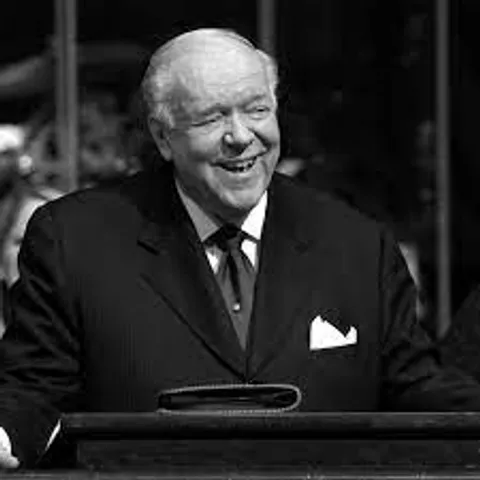 Rev. Kenneth Erwin Hagin was born on Aug. 20, 1917, in McKinney, Texas. Rev. Hagin was sickly as a child, suffering from a deformed heart and an incurable blood disease. He was not expected to live and became bedfast at age 15. In April 1933 during a dramatic conversion experience, he reported dying three times in 10 minutes, each time seeing the horrors of hell and then returning to life.
In August 1934, Rev. Hagin was miraculously healed, raised off a deathbed by the power of God and the revelation of faith in God’s Word. Jesus appeared to Rev. Hagin eight times over the next several years in visions that changed the course of his ministry. In 1967, he began a regular radio broadcast that continues today as Rhema for Today.
In 1968 Rev. Hagin published the first issues of The Word of Faith. That magazine, now produced nine times a year, has a circulation of over 200,000. The publishing outreach he founded, Faith Library Publications, has circulated worldwide more than 75 million copies of books by Rev. Hagin, Kenneth W. Hagin, Lynette Hagin, Craig W. Hagin, and several other authors. Faith Library Publications also has produced millions of audio and video teachings.
Other outreaches of Kenneth Hagin Ministries include Rhema Praise, a weekly television broadcast hosted by Revs. Kenneth and Lynette Hagin; Rhema Correspondence Bible School; Rhema Alumni Association; Rhema Ministerial Association International; the Rhema Prayer and Healing Center; and the Rhema prison ministry.
In 1974 Rev. Hagin founded what is now Rhema Bible Training College. The school has campuses all over the world and continues to expand.
Until shortly before his death, Rev. Hagin continued to travel and teach throughout the United States and into Canada conducting All Faiths’ Crusades and other special meetings.
Known as the “father of the modern faith movement,” Rev. Hagin was a dynamic preacher, teacher, and prophet. His teachings and books are filled with vivid stories that show God’s power and truth working in his life and the lives of others. He will be remembered not only as a great minister but as a great family man—for his family was his heart. He was there at every milestone ready to talk, to answer, to pray. He was a man whose belly laugh filled the room at the sight of one of his grandchildren or great-grandchildren.
Rev. Kenneth Erwin Hagin was born on Aug. 20, 1917, in McKinney, Texas. Rev. Hagin was sickly as a child, suffering from a deformed heart and an incurable blood disease. He was not expected to live and became bedfast at age 15. In April 1933 during a dramatic conversion experience, he reported dying three times in 10 minutes, each time seeing the horrors of hell and then returning to life.
In August 1934, Rev. Hagin was miraculously healed, raised off a deathbed by the power of God and the revelation of faith in God’s Word. Jesus appeared to Rev. Hagin eight times over the next several years in visions that changed the course of his ministry. In 1967, he began a regular radio broadcast that continues today as Rhema for Today.
In 1968 Rev. Hagin published the first issues of The Word of Faith. That magazine, now produced nine times a year, has a circulation of over 200,000. The publishing outreach he founded, Faith Library Publications, has circulated worldwide more than 75 million copies of books by Rev. Hagin, Kenneth W. Hagin, Lynette Hagin, Craig W. Hagin, and several other authors. Faith Library Publications also has produced millions of audio and video teachings.
Other outreaches of Kenneth Hagin Ministries include Rhema Praise, a weekly television broadcast hosted by Revs. Kenneth and Lynette Hagin; Rhema Correspondence Bible School; Rhema Alumni Association; Rhema Ministerial Association International; the Rhema Prayer and Healing Center; and the Rhema prison ministry.
In 1974 Rev. Hagin founded what is now Rhema Bible Training College. The school has campuses all over the world and continues to expand.
Until shortly before his death, Rev. Hagin continued to travel and teach throughout the United States and into Canada conducting All Faiths’ Crusades and other special meetings.
Known as the “father of the modern faith movement,” Rev. Hagin was a dynamic preacher, teacher, and prophet. His teachings and books are filled with vivid stories that show God’s power and truth working in his life and the lives of others. He will be remembered not only as a great minister but as a great family man—for his family was his heart. He was there at every milestone ready to talk, to answer, to pray. He was a man whose belly laugh filled the room at the sight of one of his grandchildren or great-grandchildren.
god’s correction lens
Clara’s sight was bright and sharp till she reached middle school. Then, at first, she had problems only with small prints. But she grew older, and began to squint and larger letters too. Upon a specialist’s advice, she obtained a pair of lens, which had a magical effect on usage. She saw the letters as clearly as she did when she was just a child, without straining a nerve. She felt happy and good for many days. However, after a while, she began to think about the little inconveniencies that come along. Her face feels clumsy, and sometimes, the lens accumulates sweat. Also, the endless searches in the mornings, looking into shelves and sides of the bed while the object sits silently on her face. Moreover, neither her mother, Loveth, a full-time housewife, nor her grandmother, Selena, a central-market women leader, use glasses. Nevertheless, for the sake of indispensability, Clara discarded the feelings and made peace with her new experience, and soon the glasses became an inseparable part of her attire. Once we were young and life was good with simple instructions. Guardians, tutors, all played a role. But we grow older, and the rules and regulations beg to be excused. Life gets more complex and challenging, and the old heroes part or become less relevant to our time and circumstance. One way to handle this is to go with the flow, or to follow basic instinct, but that is just as good as letting a ship drive itself at sea. The better way is to look at the blurry, clumsy world through God’s correction lens - the Scripture. Though good counsel can occasionally be of help, God’s word gives direction in every situation, and is the ultimate guide to a peaceful shore. Acquaintance with Scripture is however not a passport to an easy life, much as wearing lenses do not get assignments or researches done, the word of God gives instruction and reveals the path to a life without regrets. God’s word humbles us in times of great achievements, and gives hope in times of loss. It teaches the mind of God, and prepares us for an eternity of rest with Him. God calls you to spend time daily with His word, to make it an inseparable part of your schedule, and to not look to your friends who don’t, for it’s reward is far greater than the cost. “But whoso looketh into the perfect law of liberty, and continueth therein, he being not a forgetful hearer, but a doer of the work, this man shall be blessed in his deed” (James 1:25).