










About the Book
"Second Chances" by Max Lucado is a collection of stories and reflections that remind readers of the transformative power of forgiveness and the opportunity for redemption that is found in God's love. Through heartfelt anecdotes and inspiring messages, Lucado encourages readers to embrace second chances and seek healing and restoration in their lives.
William Carey
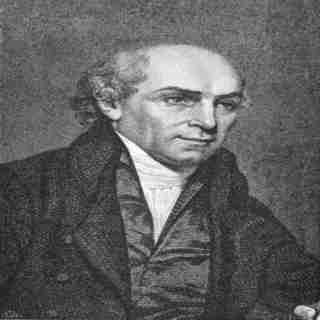 "Expect great things; attempt great things."
At a meeting of Baptist leaders in the late 1700s, a newly ordained minister stood to argue for the value of overseas missions. He was abruptly interrupted by an older minister who said, "Young man, sit down! You are an enthusiast. When God pleases to convert the heathen, he'll do it without consulting you or me."
That such an attitude is inconceivable today is largely due to the subsequent efforts of that young man, William Carey.
Plodder Carey was raised in the obscure, rural village of Paulerpury, in the middle of England. He apprenticed in a local cobbler's shop, where the nominal Anglican was converted. He enthusiastically took up the faith, and though little educated, the young convert borrowed a Greek grammar and proceeded to teach himself New Testament Greek.
When his master died, he took up shoemaking in nearby Hackleton, where he met and married Dorothy Plackett, who soon gave birth to a daughter. But the apprentice cobbler's life was hard—the child died at age 2—and his pay was insufficient. Carey's family sunk into poverty and stayed there even after he took over the business.
"I can plod," he wrote later, "I can persevere to any definite pursuit." All the while, he continued his language studies, adding Hebrew and Latin, and became a preacher with the Particular Baptists. He also continued pursuing his lifelong interest in international affairs, especially the religious life of other cultures.
Carey was impressed with early Moravian missionaries and was increasingly dismayed at his fellow Protestants' lack of missions interest. In response, he penned An Enquiry into the Obligations of Christians to Use Means for the Conversion of the Heathens. He argued that Jesus' Great Commission applied to all Christians of all times, and he castigated fellow believers of his day for ignoring it: "Multitudes sit at ease and give themselves no concern about the far greater part of their fellow sinners, who to this day, are lost in ignorance and idolatry."
Carey didn't stop there: in 1792 he organized a missionary society, and at its inaugural meeting preached a sermon with the call, "Expect great things from God; attempt great things for God!" Within a year, Carey, John Thomas (a former surgeon), and Carey's family (which now included three boys, and another child on the way) were on a ship headed for India.
Stranger in a strange land
Thomas and Carey had grossly underestimated what it would cost to live in India, and Carey's early years there were miserable. When Thomas deserted the enterprise, Carey was forced to move his family repeatedly as he sought employment that could sustain them. Illness racked the family, and loneliness and regret set it: "I am in a strange land," he wrote, "no Christian friend, a large family, and nothing to supply their wants." But he also retained hope: "Well, I have God, and his word is sure."
He learned Bengali with the help of a pundit, and in a few weeks began translating the Bible into Bengali and preaching to small gatherings.
When Carey himself contracted malaria, and then his 5-year-old Peter died of dysentery, it became too much for his wife, Dorothy, whose mental health deteriorated rapidly. She suffered delusions, accusing Carey of adultery and threatening him with a knife. She eventually had to be confined to a room and physically restrained.
"This is indeed the valley of the shadow of death to me," Carey wrote, though characteristically added, "But I rejoice that I am here notwithstanding; and God is here."
Gift of tongues
In October 1799, things finally turned. He was invited to locate in a Danish settlement in Serampore, near Calcutta. He was now under the protection of the Danes, who permitted him to preach legally (in the British-controlled areas of India, all of Carey's missionary work had been illegal).
Carey was joined by William Ward, a printer, and Joshua and Hanna Marshman, teachers. Mission finances increased considerably as Ward began securing government printing contracts, the Marshmans opened schools for children, and Carey began teaching at Fort William College in Calcutta.
In December 1800, after seven years of missionary labor, Carey baptized his first convert, Krishna Pal, and two months later, he published his first Bengali New Testament. With this and subsequent editions, Carey and his colleagues laid the foundation for the study of modern Bengali, which up to this time had been an "unsettled dialect."
Carey continued to expect great things; over the next 28 years, he and his pundits translated the entire Bible into India's major languages: Bengali, Oriya, Marathi, Hindi, Assamese, and Sanskrit and parts of 209 other languages and dialects.
He also sought social reform in India, including the abolition of infanticide, widow burning (sati), and assisted suicide. He and the Marshmans founded Serampore College in 1818, a divinity school for Indians, which today offers theological and liberal arts education for some 2,500 students.
By the time Carey died, he had spent 41 years in India without a furlough. His mission could count only some 700 converts in a nation of millions, but he had laid an impressive foundation of Bible translations, education, and social reform.
His greatest legacy was in the worldwide missionary movement of the nineteenth century that he inspired. Missionaries like Adoniram Judson, Hudson Taylor, and David Livingstone, among thousands of others, were impressed not only by Carey's example, but by his words "Expect great things; attempt great things." The history of nineteenth-century Protestant missions is in many ways an extended commentary on the phrase.
"Expect great things; attempt great things."
At a meeting of Baptist leaders in the late 1700s, a newly ordained minister stood to argue for the value of overseas missions. He was abruptly interrupted by an older minister who said, "Young man, sit down! You are an enthusiast. When God pleases to convert the heathen, he'll do it without consulting you or me."
That such an attitude is inconceivable today is largely due to the subsequent efforts of that young man, William Carey.
Plodder Carey was raised in the obscure, rural village of Paulerpury, in the middle of England. He apprenticed in a local cobbler's shop, where the nominal Anglican was converted. He enthusiastically took up the faith, and though little educated, the young convert borrowed a Greek grammar and proceeded to teach himself New Testament Greek.
When his master died, he took up shoemaking in nearby Hackleton, where he met and married Dorothy Plackett, who soon gave birth to a daughter. But the apprentice cobbler's life was hard—the child died at age 2—and his pay was insufficient. Carey's family sunk into poverty and stayed there even after he took over the business.
"I can plod," he wrote later, "I can persevere to any definite pursuit." All the while, he continued his language studies, adding Hebrew and Latin, and became a preacher with the Particular Baptists. He also continued pursuing his lifelong interest in international affairs, especially the religious life of other cultures.
Carey was impressed with early Moravian missionaries and was increasingly dismayed at his fellow Protestants' lack of missions interest. In response, he penned An Enquiry into the Obligations of Christians to Use Means for the Conversion of the Heathens. He argued that Jesus' Great Commission applied to all Christians of all times, and he castigated fellow believers of his day for ignoring it: "Multitudes sit at ease and give themselves no concern about the far greater part of their fellow sinners, who to this day, are lost in ignorance and idolatry."
Carey didn't stop there: in 1792 he organized a missionary society, and at its inaugural meeting preached a sermon with the call, "Expect great things from God; attempt great things for God!" Within a year, Carey, John Thomas (a former surgeon), and Carey's family (which now included three boys, and another child on the way) were on a ship headed for India.
Stranger in a strange land
Thomas and Carey had grossly underestimated what it would cost to live in India, and Carey's early years there were miserable. When Thomas deserted the enterprise, Carey was forced to move his family repeatedly as he sought employment that could sustain them. Illness racked the family, and loneliness and regret set it: "I am in a strange land," he wrote, "no Christian friend, a large family, and nothing to supply their wants." But he also retained hope: "Well, I have God, and his word is sure."
He learned Bengali with the help of a pundit, and in a few weeks began translating the Bible into Bengali and preaching to small gatherings.
When Carey himself contracted malaria, and then his 5-year-old Peter died of dysentery, it became too much for his wife, Dorothy, whose mental health deteriorated rapidly. She suffered delusions, accusing Carey of adultery and threatening him with a knife. She eventually had to be confined to a room and physically restrained.
"This is indeed the valley of the shadow of death to me," Carey wrote, though characteristically added, "But I rejoice that I am here notwithstanding; and God is here."
Gift of tongues
In October 1799, things finally turned. He was invited to locate in a Danish settlement in Serampore, near Calcutta. He was now under the protection of the Danes, who permitted him to preach legally (in the British-controlled areas of India, all of Carey's missionary work had been illegal).
Carey was joined by William Ward, a printer, and Joshua and Hanna Marshman, teachers. Mission finances increased considerably as Ward began securing government printing contracts, the Marshmans opened schools for children, and Carey began teaching at Fort William College in Calcutta.
In December 1800, after seven years of missionary labor, Carey baptized his first convert, Krishna Pal, and two months later, he published his first Bengali New Testament. With this and subsequent editions, Carey and his colleagues laid the foundation for the study of modern Bengali, which up to this time had been an "unsettled dialect."
Carey continued to expect great things; over the next 28 years, he and his pundits translated the entire Bible into India's major languages: Bengali, Oriya, Marathi, Hindi, Assamese, and Sanskrit and parts of 209 other languages and dialects.
He also sought social reform in India, including the abolition of infanticide, widow burning (sati), and assisted suicide. He and the Marshmans founded Serampore College in 1818, a divinity school for Indians, which today offers theological and liberal arts education for some 2,500 students.
By the time Carey died, he had spent 41 years in India without a furlough. His mission could count only some 700 converts in a nation of millions, but he had laid an impressive foundation of Bible translations, education, and social reform.
His greatest legacy was in the worldwide missionary movement of the nineteenth century that he inspired. Missionaries like Adoniram Judson, Hudson Taylor, and David Livingstone, among thousands of others, were impressed not only by Carey's example, but by his words "Expect great things; attempt great things." The history of nineteenth-century Protestant missions is in many ways an extended commentary on the phrase.
to all who feel empty - invitation to the bored and disappointed
It was a small, flesh-colored growth on my cheek. The doctor said it was mild skin cancer and should be removed. But after looking at the biopsy, the hospital’s tumor board recommended a second procedure to remove more skin, to be sure they got it all. That’s when my fear started. What if the cancer has already spread? What if this is more serious than everyone is saying? What if it’s too late? At times like this, it’s tempting to seek comfort in being positive (“It will be okay”), in percentages (“Most of these cancers are nothing”), or in self-pity (“Why is this happening to me?”). But God invites us to a far better comfort: Come, everyone who thirsts, come to the waters; and he who has no money, come, buy and eat! Come, buy wine and milk. without money and without price. Why do you spend your money for that which is not bread, and your labor for that which does not satisfy? Listen diligently to me, and eat what is good, and delight yourselves in rich food. Incline your ear, and come to me; hear, that your soul may live; and I will make with you an everlasting covenant, my steadfast, sure love for David. (Isaiah 55:1–3) This invitation is for everyone who is emotionally thirsty and hungry, longing for peace and joy. It’s for everyone who feels bored, insecure, jealous, frustrated, impatient, disappointed, fearful. Fearful . That described me. So, God’s invitation was for me . “God satisfies us fully and lastingly by giving us himself.” And what does this invitation promise? God promises to satisfy and delight our hearts (Isaiah 55:2) with wine and milk and rich food (Isaiah 55:1). How does he do this? Not by giving us earthly comforts, since at best those give temporary, partial satisfaction. No: God satisfies us fully and lastingly by giving us himself . We can see this by comparing the beginning of the passage, where God says, “Come to the waters ,” with the end, where he says, “Come to me .” What God gives us is himself . Sit and Eat The prophet Hosea puts it this way: “Let us know; let us press on to know the Lord; his going out is sure as the dawn; he will come to us as the showers, as the spring rains that water the earth” (Hosea 6:3). We are dry, parched land, in need of rain. And God promises that when we press on to know him, he himself will come to us with the refreshing rain of his presence. And he says this promise is as certain as the sun rising tomorrow. So, when we are emotionally hungry and thirsty, it’s like God is inviting us to a banquet table piled high with sizzling chicken fajitas and hot, cheesy lasagna and apple pie à la mode and fresh-baked chocolate chip cookies and water and wine and milk. All we need to do is come, sit down, and eat. But if that’s true, then why are we ever emotionally hungry and thirsty? Why do we get bored, or jealous, or bitter, or insecure? And why was I feeling such fear? Why Such Fear? We often blame our circumstances. We think we lack joy and peace because we didn’t get the promotion, or because our children aren’t behaving, or because we’re stuck in traffic, or in my case, because I have skin cancer. But God says there’s a deeper reason. It’s that we’ve ignored his invitation, and taken our hunger to what is not bread (Isaiah 55:2). We’ve turned from God’s table to the world’s table, which at best has an occasional rotten, mushy banana, a day-old bowl of half-eaten oatmeal, or a glass of murky water. That’s why I was fearful. I was ignoring God’s table, with its unshakable promises of everlasting joy, and was trusting the world’s table, whose promises were being threatened by skin cancer. And that’s why we are: Bored: We are ignoring God’s table and looking for something exciting at the world’s table. But nothing looks promising. Grumpy: We were hoping something on the world’s table would satisfy us, but when we sat down, it ended up being a dry, half-eaten cracker. Disappointed: We’ve been trusting that something on the world’s table will satisfy us, but either it was taken away, or it didn’t end up being what we hoped for. Jealous: We’re sitting at the world’s table but are not satisfied with what we’ve been served, and we think that what someone else was served would make us happier. Whenever we feel emotional hunger and thirst, we do well to ask if we’ve moved from God’s guaranteed, all-satisfying table to the world’s uncertain, disappointing table. Buy Without Money But turning from God’s table not only leaves us hungry and thirsty. It also makes us guilty before God, because eating from the world’s table is sin. And sin requires a payment of punishment, which is why God says his food must be bought (Isaiah 55:1). But God also says that we have no money (Isaiah 55:1), because we can’t make up for our sin by being good enough. “When we press on to know God, he himself will come to us with the refreshing rain of his presence.” So, if we are going to enjoy God’s table, someone else must make the payment. And two chapters earlier we read that this is what the Messiah would do: “He was pierced for our transgressions; he was crushed for our iniquities” (Isaiah 53:5). Though we have no money, we can buy this food by trusting Jesus, who pays the penalty of our punishment by dying on the cross. God has given us the invitation, and he has paid the price. So, how do we get up from the world’s table and enjoy God’s table? Come to the Table Here are the steps God used to help me. First, I confessed my sin to God — that I had turned from his table to the world’s table, and I was fearful because the world’s promise of earthly comforts and long life was threatened by my skin cancer (1 John 1:9). Second, I admitted to God that I could not pay for my sins, and I thanked and praised him that Jesus fully paid for them on the cross (1 Peter 3:18). Third, I asked God to help me taste and experience how superior his banquet is to the world’s table (Psalm 43:3–4). Fourth, I set my heart on a few Scriptures that describe God’s banquet (John 8:31–32): Pleasure in him now and forever (Psalm 16:11). Joy unspeakable and full of glory (1 Peter 1:8). Life in Christ now, and gain when I die (Philippians 1:21). A heavenly, eternal dwelling made by God himself (2 Corinthians 5:1–4). Fifth, I prayed over these Scriptures, asking God to help me feel their reality and glory, until I experienced the Spirit changing and satisfying my heart (John 6:35). And that’s what he did. Over the next twenty minutes, I felt my faith strengthen and my fear disappear, as God used his word to give me a taste of his all-satisfying glory, which nothing, not even death, can threaten. Are you sitting at the world’s table, hungry and disappointed? If so, God is inviting you to his piled-high banquet table. He’s paid for the ticket, and is holding a seat for you. Enjoy the feast.