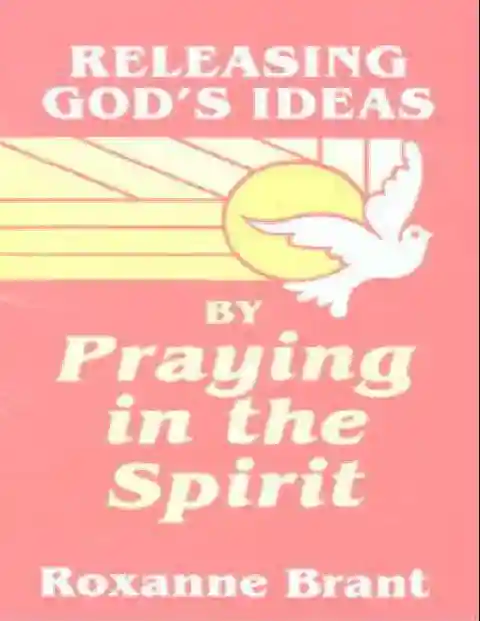

Releasing God's Ideas By Praying In The Spirit Order Printed Copy
- Author: Roxanne Brant
- Size: 212KB | 25 pages
- |
Others like releasing god's ideas by praying in the spirit Features >>
Provoking God's Visitation
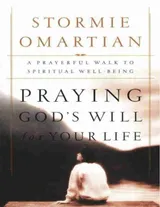
Praying God's Will For Your Life
Hearing God (Developing A Conversational Relationship With God)
The Power Of A Praying Woman
The Power Of A Praying Life
The Power Of A Praying Nation
The Life Of John Praying Hyde
Holy Spirit Power: Knowing The Voice, Guidance And Person Of The Holy Spirit
Hi God, It's Me Again (What To Pray When You Don't Know What To Say)
About the Book
"Releasing God's Ideas By Praying In The Spirit" by Roxanne Brant is a spiritual guide that explores the power of praying in tongues (speaking in the Holy Spirit). The author highlights how this practice can unlock divine inspiration, creativity, and guidance, allowing individuals to receive and implement God's ideas in their lives. Through personal anecdotes and biblical teachings, Brant encourages readers to embrace this spiritual gift and experience transformation in their relationship with God.
John Owen
John Owenâs life was incredibly difficult.
Born in 1616 and dying in 1683, Owen lived through the deaths of his first wife and all of his children, several of whom died in very early childhood. He supported his last surviving daughter when her marriage broke down. He contributed to a political revolution, watched it fail, saw the monarchy restored and wreak a terrible revenge on republicans, and lived in and around London during the persecution that followed. For twenty years he would have seen the decapitated heads of his friends on display around the city. He died fearing that the dissenting churches had largely abandoned the doctrine of the Trinity and justification by grace alone through faith alone in Christ alone; and, with Charles II about to be replaced by his openly Catholic brother James, believing that the English Reformation was almost over.
Owen was one of the most published writers in the seventeenth century.
He published around 8 million words. These writings included books on theology and spirituality, politics and economics, and ranged in length from the largest commentary ever published on the epistle to the Hebrews to a short Latin poem that has never been reprinted. For not all of Owenâs works have been kept in print. The most widely circulating nineteenth-century edition, most of which is published by the Banner of Truth, did not include Owenâs sermon manuscripts that are kept in various English libraries, nor the book for children that Owen published in 1652.
Owen was one of Englandâs earliest childrenâs authors.
The catechisms that Owen published (1645) outlined what he expected children in his congregation to know. These catechisms were published before the Westminster Assembly published its better-known examples. But Owenâs catechisms are in many ways simpler. The Primer (1652), which Owen prepared after the death of several of his children during the years of poor harvests and disease at the end of the 1640s, showed what Owen expected of an ideal Christian home. Its routine would be built around Bible reading and prayer, he believed, and his little book included sample prayers that children could learn to pray in mornings, evenings, and at meals. Owen argued that those who led church services should take account of the needs of children. Services that were too long, he believed, did no one any good. Adult believers should not need written prayers, he believed, and these should be banned from public worship. But children were different and needed all the help they could get.
Owen enjoyed many warm friendships.
His social network included many of the most famous writers in seventeenth-century England. Among his friends and rivals were John Milton, Andrew Marvell, John Bunyan, and Lucy Hutchinson. Owen fell out with Milton and became the subject of one of his sonnets. Owen helped Marvell publish one of his most controversial political pamphlets. He encouraged his publisher, Nathanial Ponder, to publish Bunyanâs Pilgrimâs Progress. And he appears to have supported Lucy Hutchinson during her move into London, when she attended and took notes upon his preaching and translated large parts of his Theologoumena Pantodapa (1661)âa translation of which has been published with the title Biblical Theology. Owenâs letters reveal his kindness and care as a pastor, especially to mothers grieving their childrenâs death.
Owen was deeply political.
He preached to Members of Parliament on the day after the execution of Charles I, and pinned his hopes for the reformation of church and society on their efforts to transform England into a protestant republic. During the 1650s, under the leadership of Oliver Cromwell, Owen served on important committees that sought to establish a religious foundation for the new regime. But he grew dismayed by the ways in which the Cromwell family, and the administration they led, seemed to turn away from godly values. In 1658, he worked with leading army officers to create a crisis that, he likely hoped, would call the regime back to its earlier ideals. It failed, and instead created the crisis that was resolved by the restoration of the monarchy, the return of Charles II, and the persecution of dissenters that followed. During the Restoration, Owen kept his head down, and, as persecution slackened in the later 1660s, published pamphlets that argued that dissenters were the economic lifeblood of the English nation. But he was chastened by his attempts at political intervention and came increasingly to realize that his focus should be on things eternal.
Owen often changed his mind.
As his developing attitudes to political intervention suggest, Owen committed himself to some beliefs and behaviors that he came to regret. In his early years, he changed his churchmanship from Presbyterianism to Congregationalism. He innovated as a Congregationalist, installing as a co-elder and preacher a man who would not be ordained for several years. He argued for the weekly celebration of the Lordâs Supper, though it is not clear that he ever persuaded any of his congregations to practice it. He thought carefully about the end times and came to believe that, in the latter days, a large number of Jewish people would be converted to Christianity and would return to live in the Promised Land. He dismissed a great deal of discussion about the millennium, but became convinced that the binding of Satan had yet to be achieved. Owen changed his mind because he kept on studying the Bible.
Owen was biblical, through and through, and depended just as much on the Holy Spirit.
He certainly believed in a learned ministryâafter all, he had taught theology at Oxford and done his best to promote godliness within the student body. But he also trusted the Holy Spirit to guide ordinary Christians in small group Bible studies that did not need to be policed by a formally trained expert. Aside from his own Bible study, which advanced on the serious scholarship represented by the three thousand titles that were included in the catalog of his library published soon after his death, Owen encouraged church members to meet together to study Scripture in private.
Owen trusted the Bible and the work of the Spirit after writing about both.
Owen was not a philosophically-driven, rationalist theologian. His writing abounds in biblical citations. It is molded and contoured by biblical revelation. But he warned that Christians could approach their study of the Bible with absolutely no spiritual advantage to themselves. Christians who approached the study of the Bible without absolute dependence upon the Spirit who inspired and preserved it would gain no more benefit than Jewish readers did from their Scriptures, he argued. Christians should never choose between entire dependence upon the Bible and the Spirit.
Owen believed that the goal of the Christian life was knowing God.
Before Owen, no one had ever shown clearly how Christians relate to each person of the Trinity. Owen described the goal of the gospel as revealing the love of the Father, who sent the Son as a redeemer of his people, who would be indwelt, provided with gifts, and united together by the Spirit. Owenâs Communion with God is among his most celebrated achievementsâand no wonder. It is the exhalation of his devotion to Father, Son, and Spirit, and the discovery of the limitless love of God.
Owen is much easier to read than many people imagine.
There is a mystique to Owenâa widespread feeling that his books are too difficult and best left to expert theologians. But Owenâs greatest books were written as sermons for an audience of teenagers. Publishers have begun to modernize Owenâs language in new editions of his works. Now more than ever, itâs time to pick up Owen and find his encouragement for the Christian life.
the lost giant among giants: lessons from harold john ockenga
In September of 1966, John Piper was a junior at Wheaton College, studying for a career in medicine. In those days, Wheaton began its fall semesters with âSpiritual Emphasis Week.â Piper could not attend the sessions in person because he was sick with mononucleosis and was quarantined in the health center. However, a local radio station carried the sermons, so he listened while in quarantine. The preacher that week was Harold John Ockenga. Listening to Ockengaâs sermons changed Piperâs trajectory. He has referred to his time in quarantine as some of the âmost crucialâ weeks of his life. Why? Because this is when he sensed a strong call and desire to the ministry of the word. Piper remembers Ockengaâs preaching as the primary instrument God used that week to birth a sense of âcallingâ to preach â a calling still undimmed. By the end of that week, Piperâs heart was exploding with a desire to âhandle the word of God the way [Ockenga] was handling it.â Soon after, Piper switched from pre-med. After graduating from Wheaton College, he went on to study at Fuller Theological Seminary, the school cofounded by Ockenga. Piper is not the only prominent evangelical leader to have been greatly influenced by Harold Ockengaâs ministry. The famous evangelist Billy Graham once said, âI never met a man among evangelicals who could compare to the mighty intellect and spiritual development of Harold John Ockengaâ ( Awakening the Evangelical Mind , 66). Ockenga pastored in Boston for more than thirty years. He wrote a dozen books and countless articles. He was the driving force behind the resurgence of evangelical scholarship in the mid-twentieth century, he cofounded two seminaries (Fuller and Gordon-Conwell), and he was a close friend and mentor to several prominent evangelical leaders, including Graham and theologian Carl F.H. Henry. Harold Ockenga may not be a household name today, but it would not be a stretch to put Ockenga among the most influential pastors of the twentieth century. Early Life and Formation Ockenga was born in 1905 in Chicago. From a young age, he demonstrated a sharp mind, great oratory, and natural leadership skills. He professed faith at age 11 but had a life-transforming moment toward the ministry at a conference at age 17. Ockenga had originally planned to attend the University of Chicago to pursue law, but this conference experience led him toward theological studies at Taylor University in Indiana. While at Taylor, he joined the traveling ministry team, which gave him the opportunity to preach more than four hundred times before graduating. It proved to be valuable experience. After graduating from Taylor in 1927, Ockenga attended Princeton Theological Seminary to study under great scholars such as R.D. Wilson, Cornelius Van Til, and J. Gresham Machen. When Ockenga enrolled at Princeton, the institution was in the middle of a controversy that had been going on for nearly a decade between Modernists and Fundamentalists. The Modernists embraced an ideology with roots in the Enlightenment and the liberal theologians of the 1800s. Many questioned the veracity of Scripture, claiming that Christians ought to revise doctrine in the light of modern science. The Fundamentalists, in contrast, were committed to Christian orthodoxy, the authority and infallibility of the Bible, the divinity of Christ, and the priority of evangelism. The battle raged at Princeton throughout the 1920s. Of all the older theological schools and seminaries, Princeton was the only one that still taught orthodoxy. Unfortunately, the Modernists eventually gained control. Ockenga had a front-row seat to a watershed moment in American Christian history. This crucible experience shaped him. In 1929, Machen and a group of scholars left Princeton to launch Westminster Theological Seminary in Philadelphia. Ockenga left Princeton to attend the upstart Westminster and became Machenâs foremost protĂ©gĂ©. After graduating from Westminster, Ockenga briefly pastored in New Jersey before moving to Pittsburgh to serve as an assistant pastor for several years. While there, he earned his PhD from the University of Pittsburgh and met his wife, Audrey. Preaching at Park Street Church Ockenga became the pastor of the historic Park Street Church in 1936. Dr. A.Z. Conrad, the former pastor at Park Street, had been a prominent preacher with a successful radio ministry. These were big shoes for Ockenga to fill, but he was up to the task. Biographer Harold Lindsell commented that, immediately upon arriving at Park Street Church, Ockenga established himself as a âpreacherâs preacherâ ( Park Street Prophet , 75). Ockenga continued, and even expanded, Conradâs radio programming. People from all over New England and even parts of Canada tuned in regularly to hear Ockengaâs powerful expository sermons. His popularity grew as Park Street Church grew â in both numbers and influence. By the mid-1940s, the church had more than two thousand members, supported a horde of missionaries, and had become the most influential church in the region. Ockengaâs ministry was dynamic. He was a faithful and brilliant Bible expositor who engaged in theology, cultural commentary, church history, philosophy, and pulpit evangelism. He was unafraid to publicly rebuke false doctrines and to denounce political ideologies that he believed would impede human flourishing. When describing Ockengaâs preaching, author Owen Strachan says Ockenga preached âthat old-style Calvinism; he expounded the glories of aesthetic culture; [and] he threw down the political gauntletâ ( Awakening the Evangelical Mind , 63). Ockenga was, as Lindsell stated, âone of the finest preachers and staunchest defenders of the faith this country has ever knownâ ( Park Street Prophet , 11). Birth of Neo-Evangelicalism By the time Ockenga had entered pastoral ministry in the 1930s, most denominational institutions, seminaries, and publishing houses across America were dominated by theological liberals â greatly impeding the propagation of genuine gospel work. Evangelicalism seemed under duress. But in the 1940s, a new brand of evangelicalism was born â a brand that would intentionally engage the academy, that would seek to influence the most influential institutions of culture, and that would cooperate across denominational lines for gospel work. This new brand of evangelicalism â later called âneo-evangelicalismâ â was first primarily promoted through the formation of the National Association of Evangelicals (NAE) in 1942. At the gathering where the NAE was formed, Ockenga lamented, âEvangelical Christianity has suffered nothing but a series of defeats for decades.â But Ockenga believed that they could âaffect the whole future course of evangelical Christianity in Americaâ if they were willing to rethink their approach to culture and ministry. Ockenga began the charge by serving as the NAEâs first president for three years. He was neo-evangelicalismâs most ardent proponent. He crisscrossed the country, promoting and facilitating dozens of initiatives. Strachan writes, âNo figure did more than Ockenga to run, establish, and invigorate the premier institutions of the movementâ ( Awakening the Evangelical Mind , 23) Theological Scholarship Matters What are some takeaways from Ockengaâs ministry for us today? One of the greatest lessons we learn from Ockenga is that evangelical intellectualism and quality theological training matter deeply. Theologian Al Mohler has written that Ockenga, along with fellow evangelical leader Carl Henry, diagnosed the âconservative Protestant intellectual withdrawalâ from the âintellectual life of the nationâ as being the primary reason for the collapse of conservative Protestantism in America ( Awakening the Evangelical Mind , 14). Evangelicals lost their influence as they retreated from the academic spheres. Ockengaâs first academic initiative was the creation of Boston School of the Bible, which offered classes for laypeople in church history, doctrine, evangelism, missions, and apologetics. The school drew hundreds of students from around the region, including many students from liberal churches. While this looked to many to be a success, it didnât quite accomplish what Ockenga really wanted â to train church leaders and would-be scholars to engage the institutions of cultural influence. Both Ockenga and Henry believed that Christianity was faltering culturally, not because of a âlack of evangelistic fervor,â as Mohler says, but because of âthe absence of intellectual vigor.â This inspired Ockenga to pioneer and host the Plymouth Scholarsâ Conferences. These conferences, held every other year, were designed as places where evangelicals could engage with trends and thoughts from the world of academia for the advancement of evangelical scholarship. These conferences were the forerunners of the Evangelical Theological Society, established in 1949. Ockenga also promoted evangelical scholarship by teaming up with radio evangelist Charles Fuller to launch Fuller Theological Seminary in California. Ockenga served as the schoolâs first president remotely while still pastoring in Boston. The final formal academic initiative of Ockengaâs life came after he retired from pastoring in 1969. Ockenga became the president of Gordon College and Divinity School. He led Gordonâs Divinity School to merge with Conwell School of Theology to form a new seminary. Ockenga spent a decade as the president of Gordon-Conwell. Friendships Matter Another lesson we learn from the life of Harold Ockenga is the importance of friendships in ministry. Whether itâs Calvin and Bucer, Whitefield and Edwards, or even Jonathan and David from the Old Testament, we realize that friendships matter. Ockengaâs friendships with Carl Henry and Billy Graham served as the foundation for many projects. In 1950, Ockenga invited Graham to speak at a youth rally. This event sparked a revival in Boston and a series of subsequent revivals in New England. This amplified Grahamâs influence throughout the region. It also solidified a friendship between Ockenga and Graham that would last a lifetime. Ockenga would later serve as one of the directors for the Billy Graham Evangelistic Association and was one of Grahamâs closest confidants. Over the course of their lives, Graham and Ockenga, along with Henry, worked together on various ministry initiatives. One of the most notable is Christianity Today . Ockenga served as a contributor, editor, and chairman of the board for the publication for 25 years. Another significant ministry that resulted from Ockenga and Grahamâs friendship was the formation of the World Evangelical Fellowship. Both men were passionate about missions. The World Evangelical Fellowship allowed indigenous groups in 21 countries around the globe to cooperate in missions in order to accomplish what Ockenga labeled the âtask that had too long been left undoneâ ( The Surprising Work of God , 217). Investing in the Next Generation Last, Ockenga modeled how to leave a lasting legacy. He believed a commitment to mentoring the next generation was essential. Pastor Larry Osborne has written about the importance of investing in âyoung eaglesâ â that is, the leaders of the next generation of the church. Ockenga modeled this beautifully. One author observed a time when Ockenga (in his mid-forties) was at an event with an entourage of young men in their twenties and early thirties. He was frequently flanked by young men he was guiding. Due to Ockengaâs presence in Boston, he was well-placed to befriend and mentor many brilliant young minds. Men like Edward Carnell, Wayne Grudem, Kenneth Kantzer, George Eldon Ladd, John Gerstner, Samuel Schultz, Merrill Tenney, Roger Nicole, Gleason Archer, and J. Harold Greenlee were all profoundly influenced by Ockenga while they lived in Boston. These men would go on to become respected evangelical scholars, theologians, and leaders. Giant Among Giants Ockengaâs preaching, leadership, scholarship, and entrepreneurship were outstanding. Few evangelical leaders in the twentieth century were influential as Ockenga. Yet in his final moments on earth, we observe this influential preacherâs humility. When Ockenga was dying of cancer, the elders from Park Street Church came to visit him. One of them said, âJust think of all the things that God has done through you. He allowed you to minister to millions of people, be president of Fuller Theological Seminary and Gordon-Conwell Theological Seminary, be one of the founders of the NAE and the whole evangelical movement, and be one of the people who helped give Billy Graham his startâ ( Surprising Work , 224). Ockenga didnât seem impressed with his own resume. Then another elder quietly said, âWell, Harold, I suggest that when you see the Master, just say, âGod, be merciful to me a sinner.ââ Tears flowed down Ockengaâs cheeks. Harold John Ockenga, the man some called the Park Street Prophet, died on February 8, 1985. At the funeral, Billy Graham honored him with these words: âHe was a giant among giants. Nobody outside of my family influenced me more than he did. I never made a major decision without first calling and asking his advice and counsel.â