
Others like reasons to stay alive Features >>


About the Book
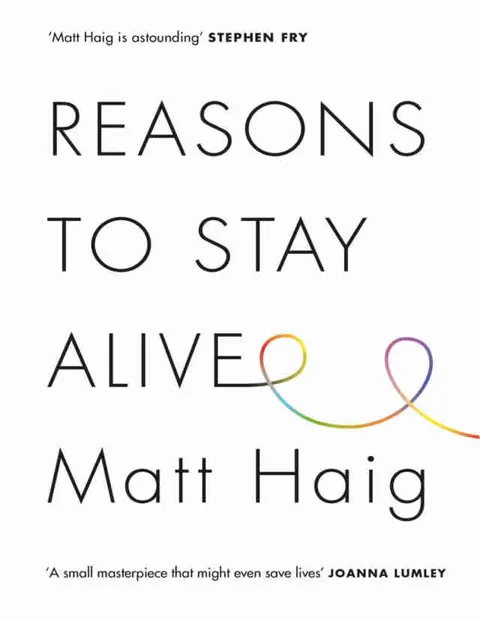
"Reasons to Stay Alive" by Matt Haig is a memoir that explores the author's struggles with depression and anxiety. Through personal anecdotes and reflections, Haig shares his experiences with mental illness and offers insights on how to cope with and overcome these challenges. The book emphasizes the importance of finding joy in the small things, seeking help, and holding on to hope during difficult times. Ultimately, "Reasons to Stay Alive" is a powerful reminder that life is worth living, no matter how dark it may seem.
Jack Coe
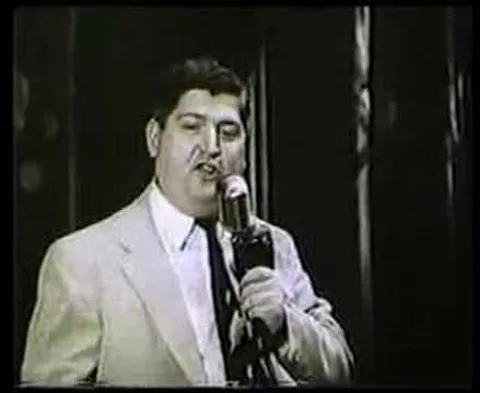 Jack G. Coe was born on March 11, 1918 in Oklahoma City, Oklahoma. His father, George, was a gambler and an alcoholic. His parents, although having been Christians, did not attend church. His grandparents, on his father's side were Christians but they were not able to influence their son's behavior. The couple had seven children in all. When Jack was five his father gambled away all their furniture and their house, leaving his mother Blanche destitute with seven children. They were devastated. His mother tried to make a new life by moving to Pennsylvania, but it was too hard. When Coe's father came to her house promising to change she agreed to reunite. The change did not last, however, and George went back to gambling.
Blanche left George for good, but only took her daughter with her this time. The boys were left with their father, which meant they were essentially left on their own. Often they did not have food to eat. Blanche did return to claim them, but could not care for them on her own. When Jack was nine he and his twelve year old brother was turned over to an orphanage. His older brother ran away, but was hit by a car and died. Jack struggled with rejection and abandonment. At seventeen he left the orphanage and began to drink, becoming an alcoholic like his father. He drank so much he had ulcers and his heart became enlarged. The doctor told him that if he didn't quit drinking he was going to die. Not knowing where else to go he moved to California to be near his mother. When he thought he was near death he promised God he would turn his life around and he was healed for a while. The family moved to Texas and he was drinking again. This time he heard God's voice "This is your last chance". The following Sunday he went to a Nazarene church and accepted Christ. He was radically changed. He went to church meetings almost every night, prayed, and read the Word constantly. After a year and a half he went to a Pentecostal meeting and was filled with the Holy Spirit and had a vision of Jesus.
Jack felt called to the ministry and went to and Assembly of God school called Southwestern Bible Institute, led by P.C. Nelson. He left in 1941 to join the army after the bombing of Pearl Harbor. He was so committed to God's purposes that he went to church every night. His sergeant sent him for psychiatric evaluation This happened several times while he was in the army. One day he was reading a book by P.C. Nelson on Healing when he fell asleep. He had a dream where he saw his sister close to death in a hospital but he saw a bright light come into her room and she was healed. He left immediately to see her and everything was as he'd seen it in a dream. She was healed and he was changed forever.
In 1944 Coe became ill with malaria. He was sent home because the doctors felt they could not help him. He sought the Lord who told him "preach the gospel". God healed him. He went out to preach and three people were saved. That year he was ordained as an Assembly of God minister. His healing experiences caused him to seek God about the gifts of healing. In 1945 he felt God called him to have a healing meeting. He went to Texas and announced in a church that God was going to heal the sick, cause the blind to see, and the deaf to hear. Those were bold words indeed! A woman received her sight that night. His ministry was launched. He began traveling over the country.
In 1946 God spoke to Coe and his wife Juanita to sell their house and start an itinerant ministry. They purchased a beat up truck and a ministry tent and began to live on the road. In 1948 God spoke to Coe to go to Redding, California. A woman, whose leg was about to be amputated, was healed and the news spread throughout the city. God blessed the couple and for the first time had enough money to be ahead on their finances. Healings and miracles regularly occurred in his meetings.
There were some very controversial things about Jack Coe. He believed that he should have a larger tent than other evangelists and went and measured Oral Roberts tent, then he ordered one larger. His style was dramatic and he often hit, slapped, or jerked people. He also would pull people out of wheelchairs. His speaking style was aggressive as he challenged people to believe God. He suggested that people who stood against him would be "struck dead by God". He was anti-medicine and told people not to go to doctors. He also encouraged interracial meetings.
In 1950 Coe began publishing the Herald of Healing magazine. Within six years it was being sent to over 350,000 people. God began to speak to Coe about opening an orphanage. He collected money for the project at every meeting. He sold his own home and began to build the children's home. His own family moved into the partially finished building so they would have a place to live. Coe eventually bought 200 acres outside of Dallas and built four dormitories and established a home farm. They could support 200 abandoned children.
In 1952 Coe began a radio ministry, which eventually was carried on over 100 radio stations. He also began having trouble with the Assembly of God organization. Although initially responsive to suggestions, he felt their goal was to limit the ministry. He suggested that the Assembly of God leadership had lost the belief in the miraculous and felt that they should be replaced. Needless to say this aggravated the situation. In 1953 Coe was expelled from the Assembly of God church. They felt that he was independent, extreme, prone to exaggeration, and they weren't sure about his ministry style. Coe felt that it was an attack against his success. He told people that "one of the officials made the remark to me that he would not rest until every man that was preaching divine healing in a deliverance ministry, separated from the General Council of the Assembly of God."
In 1953 Coe started his own church in Dallas. It was called the Dallas Revival Center. God spoke to him that it was important for those not getting healed to receive teaching about healing from the Word. In 1954 Coe opened a faith home, where people could stay for extended periods of time to receive prayer for healing. Teaching and prayer were given daily. 1956 was a pivotal year. While Coe was preaching in Miami he was arrested for practicing medicine without a license. This brought national attention to him and the ministry, both positive and negative. He was acquitted of practicing medicine without a license when the trial went to court.
At the end of 1956 Coe became ill. He had pushed himself night and day for years. He had poor eating habits and was overweight. He thought it was exhaustion but it was bulbar polio, a form of polio that affects the nerves. He became paralyzed, developed pneumonia, and died December 16, 1956.
Jack G. Coe was born on March 11, 1918 in Oklahoma City, Oklahoma. His father, George, was a gambler and an alcoholic. His parents, although having been Christians, did not attend church. His grandparents, on his father's side were Christians but they were not able to influence their son's behavior. The couple had seven children in all. When Jack was five his father gambled away all their furniture and their house, leaving his mother Blanche destitute with seven children. They were devastated. His mother tried to make a new life by moving to Pennsylvania, but it was too hard. When Coe's father came to her house promising to change she agreed to reunite. The change did not last, however, and George went back to gambling.
Blanche left George for good, but only took her daughter with her this time. The boys were left with their father, which meant they were essentially left on their own. Often they did not have food to eat. Blanche did return to claim them, but could not care for them on her own. When Jack was nine he and his twelve year old brother was turned over to an orphanage. His older brother ran away, but was hit by a car and died. Jack struggled with rejection and abandonment. At seventeen he left the orphanage and began to drink, becoming an alcoholic like his father. He drank so much he had ulcers and his heart became enlarged. The doctor told him that if he didn't quit drinking he was going to die. Not knowing where else to go he moved to California to be near his mother. When he thought he was near death he promised God he would turn his life around and he was healed for a while. The family moved to Texas and he was drinking again. This time he heard God's voice "This is your last chance". The following Sunday he went to a Nazarene church and accepted Christ. He was radically changed. He went to church meetings almost every night, prayed, and read the Word constantly. After a year and a half he went to a Pentecostal meeting and was filled with the Holy Spirit and had a vision of Jesus.
Jack felt called to the ministry and went to and Assembly of God school called Southwestern Bible Institute, led by P.C. Nelson. He left in 1941 to join the army after the bombing of Pearl Harbor. He was so committed to God's purposes that he went to church every night. His sergeant sent him for psychiatric evaluation This happened several times while he was in the army. One day he was reading a book by P.C. Nelson on Healing when he fell asleep. He had a dream where he saw his sister close to death in a hospital but he saw a bright light come into her room and she was healed. He left immediately to see her and everything was as he'd seen it in a dream. She was healed and he was changed forever.
In 1944 Coe became ill with malaria. He was sent home because the doctors felt they could not help him. He sought the Lord who told him "preach the gospel". God healed him. He went out to preach and three people were saved. That year he was ordained as an Assembly of God minister. His healing experiences caused him to seek God about the gifts of healing. In 1945 he felt God called him to have a healing meeting. He went to Texas and announced in a church that God was going to heal the sick, cause the blind to see, and the deaf to hear. Those were bold words indeed! A woman received her sight that night. His ministry was launched. He began traveling over the country.
In 1946 God spoke to Coe and his wife Juanita to sell their house and start an itinerant ministry. They purchased a beat up truck and a ministry tent and began to live on the road. In 1948 God spoke to Coe to go to Redding, California. A woman, whose leg was about to be amputated, was healed and the news spread throughout the city. God blessed the couple and for the first time had enough money to be ahead on their finances. Healings and miracles regularly occurred in his meetings.
There were some very controversial things about Jack Coe. He believed that he should have a larger tent than other evangelists and went and measured Oral Roberts tent, then he ordered one larger. His style was dramatic and he often hit, slapped, or jerked people. He also would pull people out of wheelchairs. His speaking style was aggressive as he challenged people to believe God. He suggested that people who stood against him would be "struck dead by God". He was anti-medicine and told people not to go to doctors. He also encouraged interracial meetings.
In 1950 Coe began publishing the Herald of Healing magazine. Within six years it was being sent to over 350,000 people. God began to speak to Coe about opening an orphanage. He collected money for the project at every meeting. He sold his own home and began to build the children's home. His own family moved into the partially finished building so they would have a place to live. Coe eventually bought 200 acres outside of Dallas and built four dormitories and established a home farm. They could support 200 abandoned children.
In 1952 Coe began a radio ministry, which eventually was carried on over 100 radio stations. He also began having trouble with the Assembly of God organization. Although initially responsive to suggestions, he felt their goal was to limit the ministry. He suggested that the Assembly of God leadership had lost the belief in the miraculous and felt that they should be replaced. Needless to say this aggravated the situation. In 1953 Coe was expelled from the Assembly of God church. They felt that he was independent, extreme, prone to exaggeration, and they weren't sure about his ministry style. Coe felt that it was an attack against his success. He told people that "one of the officials made the remark to me that he would not rest until every man that was preaching divine healing in a deliverance ministry, separated from the General Council of the Assembly of God."
In 1953 Coe started his own church in Dallas. It was called the Dallas Revival Center. God spoke to him that it was important for those not getting healed to receive teaching about healing from the Word. In 1954 Coe opened a faith home, where people could stay for extended periods of time to receive prayer for healing. Teaching and prayer were given daily. 1956 was a pivotal year. While Coe was preaching in Miami he was arrested for practicing medicine without a license. This brought national attention to him and the ministry, both positive and negative. He was acquitted of practicing medicine without a license when the trial went to court.
At the end of 1956 Coe became ill. He had pushed himself night and day for years. He had poor eating habits and was overweight. He thought it was exhaustion but it was bulbar polio, a form of polio that affects the nerves. He became paralyzed, developed pneumonia, and died December 16, 1956.
the dating games - an online war against true love
A war is being waged against true love. As we celebrate another Valentine’s Day, I wonder if you will be another civilian casualty. If the current trends continue, what will the pursuit of marriage be like in twenty years? One new study reports, “Apps are the new norm in dating. . . . By 2040, 70% of people are expected to meet through dating apps.” Why does that cause any concern? Well, because despite all the new and innovative ways to find love, “People are lonelier than ever. . . . One study found that over half of dating app users reported feeling lonely after swiping.” They have called it “the gamification of courtship.” The fierce irony is that the “game” wounds and devastates so many. Dating websites and apps have ridden in on digital horseback, bearing a dozen roses and declaring their fidelity, but their first love is in your pocket — and they’re jealous lovers. They play the sympathetic matchmaker up front, but they’re more like the Gamemaker in Hunger Games — pulling whatever levers necessary, at whatever cost to you, to get what they really want. Online dating may have wed its thousands, but it’s wounded its tens of thousands. If you’re wandering out into the crossfire in your own search for marriage, are you awake to the pitfalls? Who Will Deliver Us? For all its many weaknesses and perils, old-fashioned courtship did prevent the pursuit of marriage from becoming a playground for digital likes, swipes, and winks. Real-world structure and boundaries meant, for the most part, that pursuing a woman required intentionality, clear communication, patience, and risk. It felt more like buying your first home than renting a movie on iTunes. Wi-Fi, one of the greatest achievements in communications technology, should have made romance so much easier — more people, less driving, more access. Instead, it seems to have blurred the lines we needed, leaving us even more lonely and less likely to find wedded bliss. The websites and apps have manifestly facilitated random sex and superficial flirtation, but they seem to have done far less to help us find love. Far from solving our problems, they have often multiplied and complicated them, leaving many feeling like we’re driving blindfolded — until the inevitable crash into greater heartache and deeper loneliness. Who will deliver us from the gamification of our hearts — from this dating scene of death? “Thanks be to God through Jesus Christ our Lord!” (Romans 7:25). Because of him, in the midst of all of the confusion and heartache, we have an anchor and a refuge. We’re no longer condemned by the sins we’ve committed in relationships in the past — by the ways we have wittingly or unwittingly followed the course of this world (Ephesians 2:2) — and we’re not captive to the broken and prevailing dating trends of our day. Five Reasons to Quit Playing While the world plays games with sex, romance, and “commitment,” Christ frees us to quit playing and start dating differently — with selflessness and humility, with clarity and intentionality, with patience and sobriety, even if we choose to meet someone online. If you have been wounded by the romantic carelessness of others, or you’re tired of suffering from all the ambiguity, or you simply want to avoid the dangers of dating today, here are five big reasons to beware online. 1. Humility, not vanity, prepares us to love a spouse. The overwhelmingly popular swipe feature, which allows you to impulsively like or reject people based on their appearance, can poison anyone with pride. The flick of a thumb, so seemingly harmless, threatens to cheapen the image of God. What does God feel when we flippantly swipe a real man or woman, someone he himself wove together, into the trash bin of our phones? When there were no apps between us, the dynamic was more palpable. You had to reject people to their face (or at least with your voice over the phone), where you were confronted with them as a person, not just as pixels. We don’t have to like or date every man or woman who likes us; we do need to treat them as eternally valuable made ones. Online dating has made it so much easier to treat them as virtually nothing. The yay-or-nay culture in online dating not only diminishes the value of a person; it also fortifies our walls of pride. The apps and profiles pretend to give us the power to decide what is better or worse, ugly or beautiful in a human being. Instead of leading us to marital bliss, that kind of vanity ruins us for marriage, for the kind of the crucified love that requires Christlike humility at every single turn. Fill your phone and life with habits that expose vanity and cultivate humility. If you want to love a woman (or man) well, you will need to be relentlessly vulnerable about your own faults and tenaciously patient and compassionate toward hers (or his). 2. Money, not wisdom, fuels online dating. If you seriously want to be informed, you won’t have to read long to realize that money, not love, drives these companies. They don’t go to sleep at night dreaming about how to get you married. They go to sleep, wake up in the morning, and work extremely hard to make money — from you or anyone else. It’s not personal, but it is incredibly professional. People have undoubtedly always made money from people who want to marry, but never at this scale and never this pervasively. By some reports, $2.5 billion every year (and growing). After food, shelter, and water, there is no demand higher than love, and Silicon Valley has quickly learned how to turn the demand into millions and millions of dollars. Even if you don’t pay, they’re selling your “free” clicks and likes and connections for advertising. This does not mean that dating websites or apps are inherently bad, or that godly people may not find their godly spouse through them, but it does mean dating online is inherently dangerous. The apostle Paul warns, “The love of money is a root of all kinds of evils” (1 Timothy 6:10). If your priorities and desires are shaped by Christ, then I’m sure dating websites and apps can be one good way to meet your future spouse — like a pirate ship in the hands of a just captain. I fear, however, that too many Christians have instead reluctantly climbed aboard with Jack Sparrow, expecting to find a stowaway among the crew to marry, while blindly riding into whatever trouble the ship takes them. 3. Perfection is an illusion, not an expectation. The apps allow you to create the illusion of perfection — and to buy that same illusion from others. No one creates a profile looking for opportunities to highlight their weaknesses and expose their flaws. The whole system is built to make us look (and feel) too good about ourselves — to indulge in (and entice others with) an illusion of ourselves. Paul says, “By the grace given to me I say to everyone among you not to think of himself more highly than he ought to think, but to think with sober judgment, each according to the measure of faith that God has assigned” (Romans 12:3). Can we really think honestly and soberly about ourselves while we’re busy making ourselves look as good as possible? Many of us need to be reminded that God’s perfect person for us isn’t all that perfect. Every person who marries is a sinner, so the search for a spouse isn’t a pursuit of perfection, but a mutually flawed pursuit of Jesus. We are not only looking for an almost-perfect husband or wife; we are looking for a man or woman secure enough in Christ to boast in their weaknesses (2 Corinthians 12:9). Regardless of the believer you marry (and how well their profile scored), you will likely find out soon that you do not feel as “compatible” as you once did, but hopefully you will marvel more at God’s love for you in Jesus and the amazing privilege it is to live out that love together, especially in light of the ways you consistently disappoint and fail each other. 4. Romance has the power to ruin lives and souls. Gamification . I wrote this article because of that word — because the word was so grossly (and personally) familiar, and because it was so deeply offensive. I have seen the destruction careless dating can cause because I have been the naïve, reckless, and selfish destroyer. I flirted without any serious intention of pursuing. I let girls wonder if I was leading them on. I played hide-and-seek with the blood-bought hearts of my sisters in Christ. I treated physical intimacy like a hobby. Game may describe how some of us have treated love, but what we leave behind often looks and feels more like a house leveled by a tornado. We all want to pretend dating is fun and harmless until we’re the ones harmed while someone else has their fun. But even before we get hurt, we know how much is at stake. We know the springs of life flow from the heart (Proverbs 4:23). We know she was formed by God in her mother’s womb (Psalm 139:13), and given a soul that will last forever. We know the passions of the flesh wage war against us (1 Peter 2:11). We know that we are lured and enticed by our desires into sin, which leads to death (James 1:14). Romance has as much power as anything to ruin lives and betray souls. When you’re tempted to treat it more like Candy Crush, remember the eternities that are affected by romantic intimacy. 5. Jesus demands (and offers) more. You cannot avoid this war altogether. Even if you left all the websites and traded in your smartphone, pursuing love will mean being vulnerable to potential heartbreak. The world of online dating simply makes it easier to get hurt. I want you to be wide awake to Satan’s schemes against you. I want you to be prepared for the fiery arrows that will fall on your path to marriage. I also want you to know how people are wounded so that you can love them well in dating, even if you never marry them. Jesus will demand more of you. Dating how he wants us to will not be convenient, easy, or cheap. It will require extraordinary patience, self-control, and sacrifice — far more than most expect from us online, and far more than we can muster without his moment-by-moment help. The love he demands won’t have the thrill of flirtation, or the mystique of ambiguity, or the adrenaline rush of sexual immorality, but for the first time, it will feel real. Because it will be real. Because it will be filled with him.