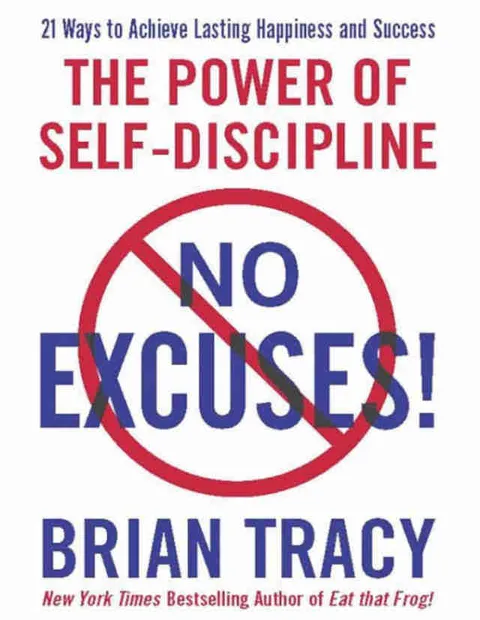

No Excuses - The Power Of Self Discipline Order Printed Copy
- Author: Brian Tracy
- Size: 2.73MB | 379 pages
- |
Others like no excuses - the power of self discipline Features >>
The Power Of Self-Confidence
The Power Of Servant-Leadership
Leadership, The Power Of A Creative Life
The Power Of Vision

The Power Of The Mind

The Power Of Positive Thinking

Outliers - The Story Of Success

Sign Posts On The Road Of Success
-160.webp)
Grit (The Power Of Passion And Perseverance)

The Power Of Thought And Visualization
About the Book
"No Excuses - The Power of Self Discipline" by Brian Tracy is a motivational book that emphasizes the importance of self-discipline in achieving success. Tracy outlines practical strategies for developing self-discipline, overcoming procrastination, and achieving personal and professional goals. The book also highlights the benefits of self-discipline in various areas of life, including improving productivity, health, and overall happiness. Overall, Tracy's book serves as a guide for individuals looking to take control of their lives and reach their full potential through self-discipline.
Oral Roberts
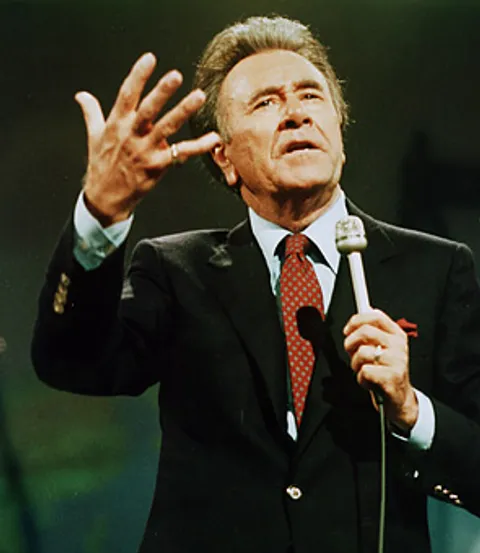 Granville Oral Roberts was born January 24, 1918 in Pontotoc County, near Ada, in Oklahoma. His parents were deeply religious. His father was a farmer who also preached the gospel and established Pentecostal Holiness churches. His mother regularly prayed for the sick and led people to Christ. While she was still pregnant, Robert's mother committed Oral to God's service. Even though Oral had a very strong stutter his mother would tell him that one day God would heal his tongue and he would speak to multitudes.
The Roberts family was desperately poor. When Roberts was 16 he moved away from home, hoping for a better life. He rejected God and his upbringing. He started living a wild life and his health collapsed. Roberts had contracted tuberculosis. He returned home and eventually dropped to 120 pounds. He was a walking skeleton. God spoke to his older sister, Jewel, and told her that He was going to heal Oral. During this same time Oral turned his heart back to God and gave his life to Christ. A traveling healing evangelist named George Moncey came to Ada and held meetings in a tent. Oral's elder brother was touched when he saw friends of his healed in the meeting. He decided that he should get Oral and bring him to be healed. On the way to the meeting God spoke to Oral and said "Son, I'm going to heal you and you are to take my healing power to your generation. You are to build me a University and build it on My authority and the Holy Spirit." Once at the meeting Oral waited until the very end. He was too sick to get up and receive prayer, and so had to wait for Moncey to come to him. At 11:00 at night his parents lifted him so he could stand. When Moncey prayed for him the power of God hit him and he was instantly healed. Not only that but every bit of his stutter was gone!
After Roberts was healed he began to travel the evangelistic circuit. He met and married Evelyn Lutman, a school teacher from the same Holiness Pentecostal background as Roberts. They had their first child Rebecca and then the entire family began traveling as ministers. In 1942 they left the evangelistic field for a while and Roberts became a pastor. He also returned to college to further his education. While a pastor he prayed for a church member whose foot was crushed. The foot was instantly healed. God continued to speak to Roberts about his call to the multitudes. God called him to an unusual fast. Roberts was to read the four gospels and the book of Acts three times consecutively, while on his knees, for thirty days. God began to reveal Jesus as the healer in a new way. God also began to give Roberts dreams where he would see people's needs as God saw them. God called him to hold a healing meeting in his town. A woman was dramatically healed, several people were saved and Roberts' ministry changed overnight.
Roberts resigned his church in 1947 and began an itinerant ministry. Notable healings began to occur. One man tried to shoot Roberts. God used the story to bring him media attention, which expanded his ministry very quickly. Roberts felt called to purchase a tent and take his evangelistic ministry to larger cities. His first tent held 3,000 but he quickly exchanged it for a tent that held 12,000. In July 1948 The Oral Roberts Evangelistic Association was established. Oral began traveling continuously throughout the United States. Like many of his Pentecostal brethren Roberts held inter-racial meetings. This brought him a lot of negative attention from groups who didn't like his stand. He even received death threats for not holding segregated meetings. In 1956 Roberts was invited to Australia. He held meetings in Sydney and Melbourne. In Melbourne there were outright physical attacks and destructive gangs. He was literally driven out of the city for praying for the sick. Often when people discuss the healing revival of the 1950s Oral Roberts and William Branham are listed as the most widely recognized leaders of the movement. Others came along side and many emulated them, but they were the most widely recognized personalities.
Roberts was a man who understood and used the media for his benefit. Roberts began publishing a magazine almost immediately upon starting his ministry. He grasped the power of radio and television. In 1954 Roberts began filming his crusades. He began playing his sermons on radio and then airing the crusade tapes during evening television prime time. Unfortunately there is some evidence that healing meetings were scripted ahead of time, and not all healings were genuine. People began writing to the Ministry headquarters by the thousands. They were accepting Christ as their savior after seeing a person healed on TV. By 1957 the ministry was receiving 1,000 letters a day and he was getting thousands of phone calls. He established a round the clock prayer team to answer calls and pray for people who contacted the ministry. In 1957 Roberts claimed 1,000,000 salvations. Between 1947 and 1968 Roberts conducted over 300 major Crusades. Money was flowing into the organization at an unprecedented rate.
In the late 1950s the healing movement was waning and ministries were under attack for their lack of financial accountability. Roberts began to move on the vision God gave him to build a University. It was chartered in 1963 and became open to students in 1965. Roberts was having a significant national impact in the late 1950s and early 1960s. For several years his named appeared in the Top 100 list of the nation's most respected people. Although Roberts continued to hold healing meetings his focus shifted to the University and the television programs.
The 1970s and 80s brought many crises to the Roberts family. Their daughter Rebecca and son-in-law Marshall were killed in a plane crash. Their son Ronnie struggled with depression after serving in Vietnam and also declaring himself gay. He grew despondent after losing his job and committed suicide. Richard Roberts got a divorce. After Richard remarried he and his wife lost a new born son within two days. Roberts began teaching a doctrine of "seed faith" where he claimed that if you gave to his ministry then God would pay you back in multiplied ways. The television ministry received heavy criticism for the constant requests for money. The Roberts were living an extravagance lifestyle while many of their supporters were not wealthy. Financial questions were raised in how Roberts used University endowment funds to purchase personal homes and cars.
In 1977 Roberts had a vision to build a hospital where people not only received care but received healing prayer. It was to be called City of Faith. Roberts put his heart and soul into the project, believing that God would build it as He had the University. The hospital struggled along and Roberts called his followers to give to the project, believing he had a vision from God to raise the money. Roberts even claimed twice that if money didn't come in that Jesus would "take him home." The hospital was built, but never succeeded financially, and finally closed in 1989. Financial giving was plummeting for both the Oral Roberts Evangelistic Association and Oral Roberts University.
Roberts retired in 1993, at the age of 75. Roberts, with his wife Evelyn, moved to California to live near the coast. Evelyn died in May 2005. Although Roberts influence waned after the problems of the 1970s and 1980s, he was still recognized for his pioneering work on the "sawdust trail", television evangelism, and building a Christian University. He often appeared on religious broadcasting networks as a recognized leader in the healing movement of the last half century. He died December 15, 2009 at the age of 91.
Oral Roberts' legacy is a mixed one. Roberts brought the truth of God's healing to the public in a way that few others accomplished in his lifetime. His financial and personal issues and increasingly extravagant claims eventually brought his ministry into disrepute. The University he established continued to have financial crises under the leadership of his son Richard Roberts. It was only after Richard stepped down in 2009 and new leadership took over the University that it stabilized financially. The University is no longer connected to the Oral Roberts Evangelistic Association.
Granville Oral Roberts was born January 24, 1918 in Pontotoc County, near Ada, in Oklahoma. His parents were deeply religious. His father was a farmer who also preached the gospel and established Pentecostal Holiness churches. His mother regularly prayed for the sick and led people to Christ. While she was still pregnant, Robert's mother committed Oral to God's service. Even though Oral had a very strong stutter his mother would tell him that one day God would heal his tongue and he would speak to multitudes.
The Roberts family was desperately poor. When Roberts was 16 he moved away from home, hoping for a better life. He rejected God and his upbringing. He started living a wild life and his health collapsed. Roberts had contracted tuberculosis. He returned home and eventually dropped to 120 pounds. He was a walking skeleton. God spoke to his older sister, Jewel, and told her that He was going to heal Oral. During this same time Oral turned his heart back to God and gave his life to Christ. A traveling healing evangelist named George Moncey came to Ada and held meetings in a tent. Oral's elder brother was touched when he saw friends of his healed in the meeting. He decided that he should get Oral and bring him to be healed. On the way to the meeting God spoke to Oral and said "Son, I'm going to heal you and you are to take my healing power to your generation. You are to build me a University and build it on My authority and the Holy Spirit." Once at the meeting Oral waited until the very end. He was too sick to get up and receive prayer, and so had to wait for Moncey to come to him. At 11:00 at night his parents lifted him so he could stand. When Moncey prayed for him the power of God hit him and he was instantly healed. Not only that but every bit of his stutter was gone!
After Roberts was healed he began to travel the evangelistic circuit. He met and married Evelyn Lutman, a school teacher from the same Holiness Pentecostal background as Roberts. They had their first child Rebecca and then the entire family began traveling as ministers. In 1942 they left the evangelistic field for a while and Roberts became a pastor. He also returned to college to further his education. While a pastor he prayed for a church member whose foot was crushed. The foot was instantly healed. God continued to speak to Roberts about his call to the multitudes. God called him to an unusual fast. Roberts was to read the four gospels and the book of Acts three times consecutively, while on his knees, for thirty days. God began to reveal Jesus as the healer in a new way. God also began to give Roberts dreams where he would see people's needs as God saw them. God called him to hold a healing meeting in his town. A woman was dramatically healed, several people were saved and Roberts' ministry changed overnight.
Roberts resigned his church in 1947 and began an itinerant ministry. Notable healings began to occur. One man tried to shoot Roberts. God used the story to bring him media attention, which expanded his ministry very quickly. Roberts felt called to purchase a tent and take his evangelistic ministry to larger cities. His first tent held 3,000 but he quickly exchanged it for a tent that held 12,000. In July 1948 The Oral Roberts Evangelistic Association was established. Oral began traveling continuously throughout the United States. Like many of his Pentecostal brethren Roberts held inter-racial meetings. This brought him a lot of negative attention from groups who didn't like his stand. He even received death threats for not holding segregated meetings. In 1956 Roberts was invited to Australia. He held meetings in Sydney and Melbourne. In Melbourne there were outright physical attacks and destructive gangs. He was literally driven out of the city for praying for the sick. Often when people discuss the healing revival of the 1950s Oral Roberts and William Branham are listed as the most widely recognized leaders of the movement. Others came along side and many emulated them, but they were the most widely recognized personalities.
Roberts was a man who understood and used the media for his benefit. Roberts began publishing a magazine almost immediately upon starting his ministry. He grasped the power of radio and television. In 1954 Roberts began filming his crusades. He began playing his sermons on radio and then airing the crusade tapes during evening television prime time. Unfortunately there is some evidence that healing meetings were scripted ahead of time, and not all healings were genuine. People began writing to the Ministry headquarters by the thousands. They were accepting Christ as their savior after seeing a person healed on TV. By 1957 the ministry was receiving 1,000 letters a day and he was getting thousands of phone calls. He established a round the clock prayer team to answer calls and pray for people who contacted the ministry. In 1957 Roberts claimed 1,000,000 salvations. Between 1947 and 1968 Roberts conducted over 300 major Crusades. Money was flowing into the organization at an unprecedented rate.
In the late 1950s the healing movement was waning and ministries were under attack for their lack of financial accountability. Roberts began to move on the vision God gave him to build a University. It was chartered in 1963 and became open to students in 1965. Roberts was having a significant national impact in the late 1950s and early 1960s. For several years his named appeared in the Top 100 list of the nation's most respected people. Although Roberts continued to hold healing meetings his focus shifted to the University and the television programs.
The 1970s and 80s brought many crises to the Roberts family. Their daughter Rebecca and son-in-law Marshall were killed in a plane crash. Their son Ronnie struggled with depression after serving in Vietnam and also declaring himself gay. He grew despondent after losing his job and committed suicide. Richard Roberts got a divorce. After Richard remarried he and his wife lost a new born son within two days. Roberts began teaching a doctrine of "seed faith" where he claimed that if you gave to his ministry then God would pay you back in multiplied ways. The television ministry received heavy criticism for the constant requests for money. The Roberts were living an extravagance lifestyle while many of their supporters were not wealthy. Financial questions were raised in how Roberts used University endowment funds to purchase personal homes and cars.
In 1977 Roberts had a vision to build a hospital where people not only received care but received healing prayer. It was to be called City of Faith. Roberts put his heart and soul into the project, believing that God would build it as He had the University. The hospital struggled along and Roberts called his followers to give to the project, believing he had a vision from God to raise the money. Roberts even claimed twice that if money didn't come in that Jesus would "take him home." The hospital was built, but never succeeded financially, and finally closed in 1989. Financial giving was plummeting for both the Oral Roberts Evangelistic Association and Oral Roberts University.
Roberts retired in 1993, at the age of 75. Roberts, with his wife Evelyn, moved to California to live near the coast. Evelyn died in May 2005. Although Roberts influence waned after the problems of the 1970s and 1980s, he was still recognized for his pioneering work on the "sawdust trail", television evangelism, and building a Christian University. He often appeared on religious broadcasting networks as a recognized leader in the healing movement of the last half century. He died December 15, 2009 at the age of 91.
Oral Roberts' legacy is a mixed one. Roberts brought the truth of God's healing to the public in a way that few others accomplished in his lifetime. His financial and personal issues and increasingly extravagant claims eventually brought his ministry into disrepute. The University he established continued to have financial crises under the leadership of his son Richard Roberts. It was only after Richard stepped down in 2009 and new leadership took over the University that it stabilized financially. The University is no longer connected to the Oral Roberts Evangelistic Association.
The Soundtrack of Heaven
The book of Revelation confuses many Christians. Filled with beasts, angels, living creatures, wars, lightning, thunder, prophecies, and visions, its story can be a bit overwhelming for any of us. Something like a Marvel movie on steroids. Not surprisingly, scholars differ widely on what it all means. Some try to tie it to actual people and events in history. Others assign most of Revelation to the future. Still others believe God is giving us repeated descriptions of what is taking place now in the church age. Wherever we land on the bigger picture, Revelation gives us a series of windows into reality that are both hard to miss and easier to understand: its songs. Woven into the fabric of the book are around a dozen choruses, both spoken and sung. That shouldn’t surprise us given how often in Scripture drawing near to God is expressed and encouraged through singing. But these songs of heaven are unique. They’re written by God himself, and they show us what singing in God’s presence will really be like. And we may be singing some form of these particular choruses forever. Even now, though, they have much to teach us. Songs of Exuberance Let’s admit it. The descriptions of the singing of heaven put the sound of any rock concert or sports stadium to shame, not to mention most churches. Myriads of myriads and thousands of thousands, saying with a loud voice . . . (Revelation 5:11–12) And I heard every creature in heaven and on earth and under the earth and in the sea . . . (Revelation 5:13) And all the angels . . . fell on their faces before the throne. (Revelation 7:11) Then I heard what seemed to be the voice of a great multitude, like the roar of many waters and like the sound of mighty peals of thunder . . . (Revelation 19:6) “The example of heaven challenges the assumption that congregational worship should be reserved and subdued.” Both audibly and visually, we’re confronted with the fact that those who truly grasp God’s nature and what he’s accomplished will be moved to sing. As Dennis Johnson writes, Revelation shows us that “those who dwell with God in heaven constantly break forth in song, overwhelmed with joy and adoration by his perfections in himself and by his awesome achievements in creation and redemption” (Triumph of the Lamb, 330). The example of heaven challenges the assumption that congregational worship should be reserved and subdued. While we cite proof texts, claim to honor tradition, and avoid looking too fanatical, might it be that we’re actually just failing to see how great God’s glory in Christ really is? Songs of Explanation Heaven’s songs give us insight into the character of God, the works of his hands, and why he does what he does. We don’t hear any of the simple, repetitious 7-11 songs (7 words repeated 11 times — or more!) that are so popular today. Rather, the lyrics shed real light on what’s happening in the world and in the heavenly throne room. ILLUMINATING HOLINESS For instance, at the beginning of Revelation 4, John is shown an open door in heaven. He paints a moving picture of what he sees and hears. A throne. An emerald-like rainbow. Flashes of lightning. Peals of thunder. But what does it all mean? Revelation 4:8 tells us: Holy, holy, holy, is the Lord God Almighty, who was and is and is to come! God is thrice holy — righteous, omnipotent, eternal, set apart. The song of verse 11 further explains that God created all things and sustains all things for his pleasure: Worthy are you, our Lord and God, to receive glory and honor and power, for you created all things, and by your will they existed and were created. (Revelation 4:11) UNFOLDING REDEMPTION At the beginning of chapter 5, John hears a new song, sung to the Lamb: Worthy are you to take the scroll and to open its seals, for you were slain, and by your blood you ransomed people for God from every tribe and language and people and nation, and you have made them a kingdom and priests to our God, and they shall reign on the earth. (Revelation 5:9–10) The Lamb could open the scroll because he was slain, a reference to his substitutionary death on the cross. His death ransomed people for God from every tribe, language, people, and nation, a reference to the international scope of the gospel invitation. The ransomed will be a kingdom and priests to God who will reign forever on earth, a statement showing that God’s promise to make Israel “a kingdom of priests and a holy nation” (Exodus 19:6) was fulfilled in the church, made up of both Jews and Gentiles. In short, despite the turmoil and tests of the present age, God will surely have a diverse people for his glory with whom he will live forever. After an outpouring of praise for the Lamb’s attributes (Revelation 5:12), we hear another song, declaring Jesus’s divinity as clearly as any passage in Scripture: “To him who sits on the throne and to the Lamb be blessing and honor and glory and might forever and ever!” (Revelation 5:13). In a similar way, our songs should be filled with the character, nature, purposes, actions, and heart of God. Words don’t get in the way of worship. They give substance and meaning to it. Songs of Encouragement When God gave John the prophecy of Revelation, Christians were already facing varying degrees of persecution, and it was expected to increase. Pressures to conform to a pagan culture, and even to participate in the idolatry of emperor worship, came at Christians from every direction. What would give John’s readers faith to endure and courage to stand against opposition? What would strengthen their resolve as they saw friends and family members taken from their homes and martyred for their allegiance to King Jesus? The knowledge that God’s throne is immovable, sovereign, and eternal. The saints needed to be reminded that, in the heavenly realms, God’s authority and rule are not only affirmed, but celebrated: The kingdom of the world has become the kingdom of our Lord and of his Christ. (Revelation 11:15) We give thanks to you, Lord God Almighty, who is and who was, for you have taken your great power and begun to reign. (Revelation 11:17) Hallelujah! Salvation and glory and power belong to our God, for his judgments are true and just; for he has judged the great prostitute who corrupted the earth with her immorality, and has avenged on her the blood of his servants. (Revelation 19:1–2) How often do our songs both detail the forces of evil arrayed against us and point us clearly to the God who has triumphed over them in Christ? David Peterson asks, Do our hymns and acclamations . . . challenge us to take a firm stand against every manifestation of Satan’s power and to bear faithful witness to the truth of the gospel in our society? It is not good enough to sing certain items merely because they make the congregation feel good! (Engaging with God, 278) “Words don’t get in the way of worship. They give substance and meaning to it.” When we sing together, our strength comes not from aiming to feel and emote, but to see and hear. We want to see God reigning on his throne with absolute justice, wisdom, and power over every terrorist, virus, dictator, and manifestation of evil in our day. And we want to hear and join in the cries of jubilation that are already ascending to the God who can do all things and whose purposes cannot be thwarted (Job 42:2). Songs of Expectation Endurance is one thing. Expectation is another. It’s possible to sing through dark seasons, discouraging outcomes, heart-wrenching losses, relentless opposition, and dwindling resources with grit, resolve, and stoicism. But that doesn’t describe the songs of heaven. Not even close. They’re marked by joy. And that joy stems from a confident expectation that God will accomplish everything he has promised. The final songs of Revelation describe God overcoming all evil, the nations bowing down in worship, and the bride of Christ finally beholding her groom, King Jesus, at a never-ending royal celebration of grace. All nations will come and worship you, for your righteous acts have been revealed. (Revelation 15:4) Hallelujah! For the Lord our God the Almighty reigns. Let us rejoice and exult and give him the glory, for the marriage of the Lamb has come, and his Bride has made herself ready; it was granted her to clothe herself with fine linen, bright and pure. (Revelation 19:6–8) Do our songs help people clearly understand that what’s yet to come is not only certain but worth celebrating now? Do we fill them with anticipation for our glorious future in Christ, when “all the waiting will be over, every sorrow will be healed, all the dreams it seemed could never be will all be real”? Our songs help bring into sharper focus the things hoped for and unseen that God has promised to us. Transformed Through Singing Will our earthly songs look and sound exactly like the songs of heaven? No. But can the songs of heaven motivate us to sing with greater passion, understanding, confidence, and anticipation now? Absolutely. G.K. Beale writes, Is it possible . . . that, as we declared the same truths about God as the heavenly beings do, the same Holy Spirit who is pictured as being before the throne would deepen and transform our understanding of God and his glory in a way that touches our whole being, in its spiritual, intellectual, emotional, and even physical components? (Revelation: A Shorter Commentary, 108) It’s not only possible. It’s God’s intention. So, may we joyfully model our singing after the songs of heaven until, by the grace of God, they are no longer just a worthy goal, but the sound of present reality. Article by Bob Kauflin