Love Language - Minute For Couples (100 Days To A Closer Relationship) Order Printed Copy
- Author: Gary Chapman
- Size: 3.71MB | 220 pages
- |
Others like love language - minute for couples (100 days to a closer relationship) Features >>
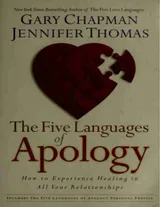
The Five Languages Of Apology
How To Hug A Porcupine (101 Ways To Love The Most Difficulty People In Your Life)

Single, Married, Separated And Life After Divorce

52 Things Daughters Need From Their Dad

No Matter What
Couple Skills: Making Your Relationship Work
Forever
The Covenant Connector
52 Things Wives Need From Their Husbands

Choose Love
About the Book
"Love Language Minute for Couples" by Gary Chapman is a guide designed to help couples improve their relationships in just 100 days. Through daily readings, couples can learn how to communicate effectively, understand each other's love languages, and build a stronger connection with their partner. Chapman's practical advice and insights provide a roadmap for couples to cultivate a deeper and more meaningful relationship.
Richard Sibbes
Richard Sibbes was born in Tostock, Suffolk, four miles from Bury St. Edmunds, in 1577.[1] He is the eldest son of Paul Sibbes and Joane. His father was a wheelwright who hoped Sibbes would be in the same field of occupation. Instead of following the footsteps of his father, young Sibbes, out of love for reading, would choose books over wooden wheels.[2] Truly enough, throughout his lifetime, books were part of Sibbes’ life.[3] Proof of this interest to books is his accomplishments as a lecturer [pastor], fellow tutor, vicar, and for obtaining various degrees in his academic education.
Sibbes’ legacy of his seven-volume work was collected by A. B. Grosart which was published from 1862 to 1864.[4] Sibbes’ ministries and his works spread throughout England even after his death. However, he was never married.
Sibbes died on July 5, 1635, in his chambers at Gray’s Inn.[5] J. I. Packer noted that Sibbes’ left more than two million words on paper after his death.[6]
Educational Background
Sibbes’ started studying at St. John’s College, Cambridge when he was eighteen, in 1595. He then proceeded to finish a Bachelor of Arts in 1599. He received a fellowship grant in 1601. Sibbes continued studying, finishing a Master of Arts degree by 1602.
Sibbes became a prominent preacher in Cambridge and got the endorsement to apply for a Bachelor of Divinity. After his defense and fulfilling the requirements, he earned this degree in 1610.[7] Furthermore, in almost two decades, Sibbes received his Doctor of Divinity in 1627 after returning from London for his mastership at St. Katherine.[8]
Ministerial Experience and Vocation
Sibbes’ conversion happened after hearing Paul Bayne’s sermon in 1603. Bayne succeeded William Perkins at St. Andrews, Cambridge.[9] During Sibbes’ stay in Cambridge, as a fellow, he handled and supervised five to six students for a tutorial.[10] Sibbes held various vocations such as being chaplain, lecturer, and got a promotion from mere fellow to senior fellowship. After being a senior dean at St. John, Sibbes became the master of St. Katherine’s College in 1626.[11]
As a preacher, Sibbes received his ordination in Norwich, in 1607. He became the minister of Thurston in 1608. Later, in 1610, Sibbes accepted the offer as a lecturer of Holy Trinity Church, Cambridge until he was called to be a lecturer at Gray’s Inn, London, in 1617.[12] This lectureship lasts until his death.
Even during Sibbes’ mastership at St. Katherine, he remained a lecturer at Gray’s Inn. In 1633, through the appointment of King Charles I, Sibbes became the vicar of Holy Trinity Church, Cambridge. The positions held by Sibbes were mastership at St. Katherine, a lecturer at Gray’s Inn, and vicar of Holy Trinity Church.
Influence of the Heavenly Doctor
Throughout Sibbes ministries, prominence followed as he influenced many Puritan ministers. Sibbes, as an influencer, is known to be the “pastor of pastors,” not just in the Church of England but even to Presbyterians and Independent Congregationalists.[13] Sibbes was responsible for John Cotton’s conversion in 1612.[14]
Moreover, he persuaded John Preston’s style in preaching, transforming from witty sermons to more plain but spiritual preaching.[15] Sibbes’ book, The Bruised Reed, encouraged Richard Baxter to gain settled-conviction on his conversion.[16] Likewise, Sibbes helped Thomas Goodwin, the chief editor of most of his works, to keep away from Arminianism.[17]
Sibbes’ ministry extends even to common people. Humphrey Mills, a layman, shared his testimony about Sibbes’ ministry. Mills was spiritually refreshed and brought to peace and joy after hearing Sibbes’ “sweet soul-melting Gospel-sermons.”[18] Sibbes’ encouragement did not end in the days of Puritans. Martyn Lloyd-Jones, one of the greatest preachers in the twentieth century, was grateful for Sibbes’ works. Lloyd-Jones, in his spiritual dryness, said that Sibbes’ books “quietened, soothed, comforted, encouraged, and healed [him].”[19]
Sibbes was a renowned Puritan throughout Cambridge, London, and even to Amsterdam. Mainly because of his various offices plus broad networks outside the church. He remained a moderate Puritan perceiving the Church of England as the true church. Sibbes encouraged other Separatists to return and warned the moderates not to dissent.
Yet many historians and scholars misinterpreted Sibbes in his theology and ministry. Thankfully, Mark Dever, in his recent work, argues contrary to many historians that Sibbes was dismissed in his ministry. Dever also concludes that Sibbes did not drift away from Calvinism, claiming that he was a thoroughly Reformed preacher and never became non-conformist, rather a moderate puritan.[20]
Sibbes, through his works, are still penetrating churches and seminaries up to this day. Recently, his seven-volume set was published by The Banner of Truth Trust in 2001. The best introduction for Sibbes’ works, personally, is his The Bruised Reed and the Smoking Flax. For Michael Reeves’ opinion, Sibbes is “the best introduction to the Puritans…. Reading him is like sitting in the sunshine: he gets into your heart and warms it to Christ.”[21]
References
[1] Alexander B. Grosart, “Memoir of Richard Sibbes, D.D.,” in Richard Sibbes, The Works of Richard Sibbes, ed. Alexander Grosart, 7 vols. (1862-1864; reprint, Carlisle, Pennsylvania: The Banner of Truth Trust, 2001), 1:xxvii.
[2] Joel Beeke, “Richard Sibbes on Entertaining the Holy Spirit,” in The Beauty and Glory of the Holy Spirit, ed. Joel Beeke and Joseph Pipa Jr. (Grand Rapids, Michigan: Reformation Heritage Books, 2012), 228. Cf. Joel Beeke and Mark Jones, A Puritan Theology: Doctrine for Life (Grand Rapids, MI: Reformation Heritage Books, 2012), chap. 36, Kindle.
[3] Joel Beeke and Randall Pederson, Meet the Puritans (Grand Rapids, MI: Reformation Heritage Books, 2006), 534-5.
[4] Mark Dever, “The Works of Richard Sibbes,” in You Must Read: Books that Have Shaped Our Lives (Carlisle, PA: The Banner of Truth Trust, 2015), 154.
[5] Grosart, “Memoir,” in Sibbes, Works, 1:cxxxi.
[6] J. I. Packer, foreword to Richard Sibbes: Puritanism and Calvinism in Late Elizabethan and Early Stuart England, by Mark E. Dever (Macon, Georgia: Mercer University Press, 2000), ix.
[7] Dever, Richard Sibbes, 37-38. Bachelor of Divinity, according to Dr. Shawn Wright is equivalent with Master of Divinity today, “Lectures in English Puritanism” (The Southern Baptist Theological Seminary, Louisville, KY, Spring 2020), but the process is different. Dever noted in his work that Sibbes undergone two public preaching, one in English and another in Latin, and two defense topics chosen by the panelists.
[8] Grosart, “Memoir,” in Sibbes, Works, 1:cxi.
[9] Beeke and Pederson, Meet the Puritans, 534-5.
[10] Dever, Richard Sibbes, 30-31.
[11] Dever, 31-34, 46.
[12] Beeke and Pederson, Meet the Puritans, 534-6.
[13] Beeke, “Richard Sibbes on Entertaining the Holy Spirit,” 230.
[14] Dever, Richard Sibbes, 40.
[15] Beeke and Pederson, Meet the Puritans, 535-7.
[16] Richard Baxter, The Autobiography of Richard Baxter (Bedford St., London: J.M. Dent & Sons Ltd., 1931), 7. Baxter’s father bought Sibbes’ book from a peddler and gave it to Richard Baxter. Cf. Timothy K. Beougher, Richard Baxter and Conversion: A Study of the Puritan Concept of Becoming a Christian (Scotland, UK: Christian Focus Publications, 2007), 21.
[17] Dever, Richard Sibbes, 41.
[18] Ronald Frost, “The Bruised Reed by Richard Sibbes (1577-1635)” in Kelly M. Kapic and Randal C. Gleason, The Devoted Life: An Invitation to the Puritan Classics (Downers Grove, IL: Intervarsity Press, 2004), 80-81. Quoting from a collection of Puritan testimonials by John Rogers, Ohel or Bethshemesh, A Tarbernacle for the Sun (London, n.p., 1653), 410.
[19] D. Martyn Lloyd-Jones, Preaching and Preachers (Grand Rapids, Michigan: Zondervan Publishing House, 1972), 175. Cf. Publisher’s Foreword to The Bruised Reed, by Richard Sibbes, x.
[20] Dever, Richard Sibbes, 211-8.
[21] Michael Reeves, “A Short Biography of Richard Sibbes,” in Richard Sibbes, Christ it Best; or, St. Paul’s Strait (Carlisle, PA: Banner of Truth Trust, 2012), 66.
every day’s a bad day - how ecclesiastes taught me to enjoy life
After decades of ministry, what is one piece of advice I wish I had received as a young woman? Study the book of Ecclesiastes. Ecclesiastes has shown me the secret of enjoying life, even in the midst of trouble. It has rescued me from disillusionment when labors I thought were fruitful appeared to be for naught. When friends have turned their backs, Ecclesiastes has helped me guard against bitterness. It has cured me of setting my hope on a particular outcome, and protected me from becoming bewildered and disheartened by bad news. In short, Ecclesiastes made me a realist, and yet I’m happier than ever before. This collection of wisdom has become (as it is for J.I. Packer, whose writings introduced me to Ecclesiastes) my favorite book of the Bible, and one I regret not studying sooner. If you get the wisdom here while you are still young, it will prepare you for real life. It clears away false assumptions with which we sometimes read the rest of Scripture. Even if you find Ecclesiastes when you are older, it sure explains a lot. You learn that life didn’t go sideways; it was already crooked (Ecclesiastes 1:15). Ecclesiastes paints an unvarnished picture of real life, but its heavy shadows help you see the light of real joy. Bad Days Are Normal To begin with, Ecclesiastes tells us what life is really like.  “It is an unhappy business that God has given to the children of man to be busy with” (Ecclesiastes 1:13). This is the way life really is, for all of us. Because of that first fatal sin, God cursed the ground and imposed hardship on Adam’s offspring (Genesis 3:16–19). The curse has affected all of us who live “under the sun” (Ecclesiastes 1:3). Christians are not exempt. The curse has also infected all of man’s work, “the toil at which he toils” (Ecclesiastes 1:3). Life is a burdensome task, a frustrating occupation, a grueling grind. It is an unhappy business. And God made it this way. Our problem is that we don’t really  believe life is an unhappy business. We think if we work hard, we’ll eventually succeed. We imagine suffering is short-term, pain is the exception to the rule, and failure merely the prelude to victory. These illusions leave us blindsided by setbacks, devastated by failure and loss, bewildered by trials, confused by pain. This isn’t the way things were supposed to go!  We talk about having “a bad day” as if it should be one in a thousand, but Ecclesiastes (and really the rest of Scripture, when you read it right side up) tells us that they are all bad. Daily work under the sun is an unhappy business. The sooner we face the fact that we live and work in a sin-cursed world, the more realistic and stable we will be. We will stop expecting things to always get better. We won’t be so surprised when they sometimes get worse. We no longer fear bad news: not because we hope it’s not coming, but because we know it is coming  (Psalm 112:7; Ecclesiastes 12:1). Get Ecclesiastes, and we can learn to meet life’s unhappy business with pluck and humor. We won’t be so quick to doubt God, and we will finally have a settled peace in our heart. As my family reminds each other (with a smile) when faced with some new unhappy business, “That’s Ecclesiastes!” In other words, God can be trusted; he told us this was going to happen. Blessings You Cannot Count Ecclesiastes teaches us how to enjoy life , in the midst of our unhappy business. For while all humankind labors under the effects of the fall, to those God has called according to his purpose, he gives joy . “There is nothing better for a person than that he should eat and drink and find enjoyment in his toil. This also, I saw, is from the hand of God. . . . For to the one who pleases him God has given wisdom and knowledge and joy” (Ecclesiastes 2:24, 26). God’s gifts of enjoyment aren’t random; they are from his hand . As it says in James, “Every good gift and every perfect gift is from above, coming down from the Father of lights” (James 1:17). God blesses the Christian’s toil with enjoyment. Every feeling of satisfaction in a made bed, a mopped floor, and an organized closet is from the hand of God . Happiness in a deadline met, a budget balanced, or a report filed comes down from the Father of lights . Pleasure in a delicious meal, and in the dishes all cleaned and put away? You guessed it: from the hand of God . How about the relief of solving a problem, the delight of reading a book to your children, the blessing of easing your husband’s troubles? The fresh breeze through the open windows on carpool morning, the delightful lunch with friends, the sweet feeling of a comfortable bed at night — all of these moments of enjoyment in our work are gifts from the gracious hand of God . When you start to look for God’s gifts of joy, the ratio of troubles to joys becomes astonishingly unbalanced, leaning heavily in favor of joy. As my husband likes to say, good gifts are raining down upon us from the hand of God, every day, all day long. We can find enjoyment in our toil if only we would take the time to see, and give thanks to God. Consider: what is one way you can remind yourself to enjoy the gifts from God’s hand today? You will find that it is a happy  unhappy business that God has given to those who please him. The Final Commendation Finally, Ecclesiastes helps us to see beyond our unhappy business . Even if your friends walk away, your business fails, or you are forced to move to a smaller home, you can persevere, because the final value of your work is not found in this life. “For God will bring every deed into judgment, with every secret thing, whether good or evil” (Ecclesiastes 12:14). In other words, it is not left to us, here and now, to determine the ultimate value of our work. As Jeremiah Burroughs says, we are simply called to “perform the duties of [our] present circumstances,” trusting God who will ultimately judge the fruitfulness of our work and give us our heavenly reward. This means that no matter how much heart you poured into a failed friendship, how much creativity you invested in a business you have to close, or how much effort you put into the home you have to leave, your work for the Lord  is never a net loss. Which is why Paul can exhort us to “Be steadfast, immovable, always abounding in the work of the Lord, knowing  that in the Lord your labor is not in vain” (1 Corinthians 15:58). Life under the sun is brutal, and it shows no signs of getting any easier. Our work is cursed and will often, more likely than not, fail on some human level. But the godly woman can face the future with peace and confidence; she even “laughs at the time to come” (Proverbs 31:25). For the same God who told us that life is hard has told us that he is near (Psalm 34:18). Through faith in Christ we can enjoy God’s fatherly gifts, abound in the work he has called us to, and look forward to the day when — oh, amazing grace! — we receive our commendation from God (1 Corinthians 4:5).