
Others like life of the beloved Features >>









About the Book
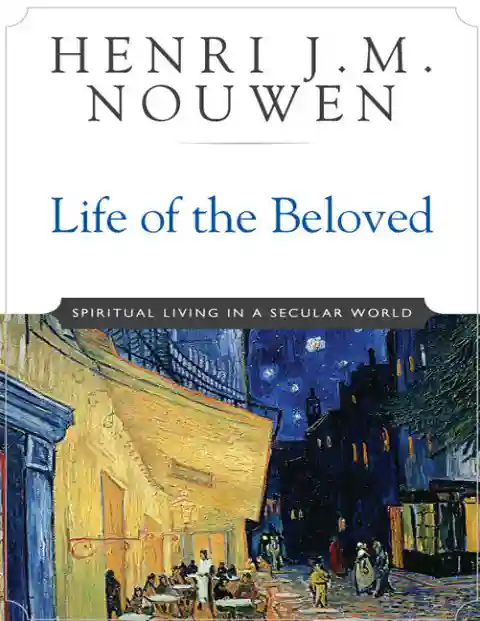
"Life of the Beloved" by Henri J.M. Nouwen is a spiritual guide that encourages readers to embrace their identity as beloved children of God. Nouwen explores themes of love, community, and spirituality, offering practical advice for living a fulfilling and meaningful life. Through personal anecdotes and profound reflections, he invites readers to discover the deep sense of peace and joy that comes from truly accepting their belovedness in God's eyes.
Kathryn Kuhlman
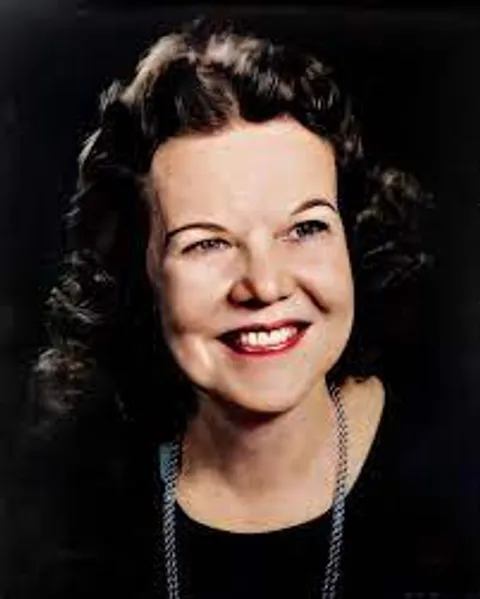 Kathryn Johanna Kuhlman was born on May 9, 1907, in Concordia, Missouri. Her parents were German and she was one of four children. Her mother was a harsh disciplinarian, who showed little love or affection. On the other hand, she had an extremely close and loving relationship with her father. She would describe, as a small child how, her father would come home from work and she would hang on his leg and cling to him. She often said that her relationship with God the Father was extremely real because of her relationship with her own father.
Kuhlman was converted, when she was 14, at an evangelistic meeting held in a small Methodist church. When she was 16 she graduated from high school, which only went to tenth grade in their town. He older sister Myrtle had married an itinerant evangelist, Everett B. Parrott. They spent their time traveling and asked that Kathryn could join them for the summer. Her parents agreed and she went to Oregon to help out. She worked with them, and often gave her testimony. When the summer was over she wanted to stay, and the couple agreed. She ended up working with them for five years.
The evangelistic team was made up of four people, Everette, Myrtle, Kathryn, and pianists named Helen Gulliford. In 1928 Everette missed a meeting in Boise, Idaho. Myrtle and Kathryn preached to cover for Everette. The pastor of the church encouraged Kathryn to step out on her own. Helen agreed to join her. Her first sermon was in a run-down pool hall in Boise, Idaho. The team covered Idaho, Utah, and Colorado for the following five years. In 1933 they moved into Pueblo, Colorado. They set up in an abandoned Montgomery Ward warehouse. They stayed there for six months.
Denver, being a much bigger city, was the next stop. They moved several times but ended up in a paper company's warehouse, which they named the Kuhlman Revival Tabernacle. Then in 1935 they moved once more to an abandoned truck garage they named the Denver Revival Tabernacle. Kathryn was seeing a lot of success in Denver. The church grew to about 2000 members. She began a radio show called "Smiling Through" and invited speakers from all over the country. One of them was Phil Kerr who taught on divine healing. In 1935 another invited evangelist was Burroughs Waltrip.
Waltrip was bad news for Kuhlman. He was a charismatic, handsome man several years older than she was. There was an immediate attraction, and one family claims to have seen the couple embracing in 1935, but he was married and had two children. Waltrip left Denver and went home to Austin, Texas, but the relationship simmered between Kuhlman and Waltrip. In 1937 he was invited back to Denver to take the pulpit for two months. Shortly after he divorced his wife and abandoned his two sons. He then spread the story that his wife had left him. He moved to Mason City, Iowa, where he told everyone he was single, and started a new ministry. Waltrip raised pledges of $70,000 to build a ministry building called Radio Chapel. It was state of the art with a disappearing pulpit and an art deco style. He appeared to be a successful and dynamic preacher.
There was an ongoing relationship between Kuhlman and Waltrip, and they married in September 1938. Kuhlman was naive about the consequences of her choices and the marriage was a disaster. She announced to her church that she and Waltrip were married and they would go between Denver and Mason City preaching at their two churches. Most of the people in her congregation left due to her relationship with Waltrip. She gave up her church in Denver, lost some of her closest associates, and moved to Mason City. Waltrip's success turned out to be a pipe dream as well. The Radio Chapel was completed in June of 1938. By October 1938 Waltrip could not meet his debts. In December Waltrip was demanding a higher salary, even with the shortfall in income. His Board of Directors quit and left him to deal with the finances. His solution was not to pay the mortgage or debts on the Chapel. Radio Chapel went into bankruptcy. Waltrip's last sermon was in May 1939. The Waltrips were on their own. Kathryn's happy vision of she and her husband flying back and forth between Denver and Mason City with a successful preaching careers was utterly demolished.
The next few years were very hard for the couple. They embarked on the road as traveling evangelists, primarily staying in the Midwest. They were not accepted in many places due to their marriage history. Initial advertisements listed Waltrip as the primary evangelist. Then occasionally Mrs. Waltrip was also mentioned. By the early 1940s Kathryn Kuhlman Waltrip was given equal billing. Finally by the mid-1940s Kathryn was using only Kathryn Kuhlman in meetings where she was the primary speaker. In 1944 Kuhlman went on an evangelistic tour on the east coast without Waltrip. It may have been a conscious decision to leave him, or she may also have taken the opportunity to reassess her life. It appears to have been more gradual as Waltrip wrote about them as a couple as late as 1946. Kuhlman never returned to Waltrip and they eventually divorced in 1947. She left her marriage behind and from then on acted as if it never existed in the first place.
In 1946 Kuhlman was asked to speak in Franklin, Pennsylvania. She was well received and decided to stay in the area. Kuhlman began preaching on radio broadcasts in Oil City, Pennsylvania. These became so popular they were picked up in Pittsburgh, and she was preaching throughout the area. She began to preach about the healing power of God. In 1947 a woman was healed of a tumor while listening to Kuhlman preach. Several Sundays later a man was also healed while she was teaching on the Holy Spirit. She was now convinced of God's healing work. One important thing to note is the context and timing of this breakout period in Kuhlman's life. 1947 was the beginning of the Healing Revival (sometimes referred to as the Latter Rain Revival) that would last for the next 10 years. What was happening in Kuhlman's meetings was breaking out across the United States. It was in this time frame that the Voice of Healing Ministry was established and men like William Branham, Oral Roberts, A.A. Allen and many others were propelled onto the public stage. Kuhlman was not associated with those groups, but stepped into the flow of what God's Spirit was doing across the nation and the world.
In 1948 Kuhlman held a series of meetings at Carnegie Hall in Pittsburgh. She eventually moved to Pittsburgh in 1950, and continued to hold meetings at Carnegie Hall until 1971. She was used by God to bring the charismatic message to many denominational churches, including the Catholic Church. (She received a lot of criticism over this and was accused of being a closet Catholic.) These were her best known years. Her style was flamboyant. She would hold her famous miracle services and the auditorium was filled to capacity every time. She was on radio and television shows. She was ordained in 1968 by the Evangelical Church Alliance. Hundreds of people were healed in her meetings, and even while listening to her on the radio or television. People she prayed for would often be hit with the power of God and be "slain in the Spirit." Kuhlman never claimed that she was the healer. She always pointed people to Jesus as their healer.
Kuhlman had been diagnosed with a heart problem in 1955. She kept a very busy schedule and overworked herself, especially in the 1970's. She traveled back and forth from Pittsburgh to Los Angeles frequently, as well as taking trips around the world. Her heart was enlarged and Kuhlman died on February 20, 1976, in Tulsa, following open-heart surgery. Videos of some of her services are still available and continue to be popular today.
Kathryn Johanna Kuhlman was born on May 9, 1907, in Concordia, Missouri. Her parents were German and she was one of four children. Her mother was a harsh disciplinarian, who showed little love or affection. On the other hand, she had an extremely close and loving relationship with her father. She would describe, as a small child how, her father would come home from work and she would hang on his leg and cling to him. She often said that her relationship with God the Father was extremely real because of her relationship with her own father.
Kuhlman was converted, when she was 14, at an evangelistic meeting held in a small Methodist church. When she was 16 she graduated from high school, which only went to tenth grade in their town. He older sister Myrtle had married an itinerant evangelist, Everett B. Parrott. They spent their time traveling and asked that Kathryn could join them for the summer. Her parents agreed and she went to Oregon to help out. She worked with them, and often gave her testimony. When the summer was over she wanted to stay, and the couple agreed. She ended up working with them for five years.
The evangelistic team was made up of four people, Everette, Myrtle, Kathryn, and pianists named Helen Gulliford. In 1928 Everette missed a meeting in Boise, Idaho. Myrtle and Kathryn preached to cover for Everette. The pastor of the church encouraged Kathryn to step out on her own. Helen agreed to join her. Her first sermon was in a run-down pool hall in Boise, Idaho. The team covered Idaho, Utah, and Colorado for the following five years. In 1933 they moved into Pueblo, Colorado. They set up in an abandoned Montgomery Ward warehouse. They stayed there for six months.
Denver, being a much bigger city, was the next stop. They moved several times but ended up in a paper company's warehouse, which they named the Kuhlman Revival Tabernacle. Then in 1935 they moved once more to an abandoned truck garage they named the Denver Revival Tabernacle. Kathryn was seeing a lot of success in Denver. The church grew to about 2000 members. She began a radio show called "Smiling Through" and invited speakers from all over the country. One of them was Phil Kerr who taught on divine healing. In 1935 another invited evangelist was Burroughs Waltrip.
Waltrip was bad news for Kuhlman. He was a charismatic, handsome man several years older than she was. There was an immediate attraction, and one family claims to have seen the couple embracing in 1935, but he was married and had two children. Waltrip left Denver and went home to Austin, Texas, but the relationship simmered between Kuhlman and Waltrip. In 1937 he was invited back to Denver to take the pulpit for two months. Shortly after he divorced his wife and abandoned his two sons. He then spread the story that his wife had left him. He moved to Mason City, Iowa, where he told everyone he was single, and started a new ministry. Waltrip raised pledges of $70,000 to build a ministry building called Radio Chapel. It was state of the art with a disappearing pulpit and an art deco style. He appeared to be a successful and dynamic preacher.
There was an ongoing relationship between Kuhlman and Waltrip, and they married in September 1938. Kuhlman was naive about the consequences of her choices and the marriage was a disaster. She announced to her church that she and Waltrip were married and they would go between Denver and Mason City preaching at their two churches. Most of the people in her congregation left due to her relationship with Waltrip. She gave up her church in Denver, lost some of her closest associates, and moved to Mason City. Waltrip's success turned out to be a pipe dream as well. The Radio Chapel was completed in June of 1938. By October 1938 Waltrip could not meet his debts. In December Waltrip was demanding a higher salary, even with the shortfall in income. His Board of Directors quit and left him to deal with the finances. His solution was not to pay the mortgage or debts on the Chapel. Radio Chapel went into bankruptcy. Waltrip's last sermon was in May 1939. The Waltrips were on their own. Kathryn's happy vision of she and her husband flying back and forth between Denver and Mason City with a successful preaching careers was utterly demolished.
The next few years were very hard for the couple. They embarked on the road as traveling evangelists, primarily staying in the Midwest. They were not accepted in many places due to their marriage history. Initial advertisements listed Waltrip as the primary evangelist. Then occasionally Mrs. Waltrip was also mentioned. By the early 1940s Kathryn Kuhlman Waltrip was given equal billing. Finally by the mid-1940s Kathryn was using only Kathryn Kuhlman in meetings where she was the primary speaker. In 1944 Kuhlman went on an evangelistic tour on the east coast without Waltrip. It may have been a conscious decision to leave him, or she may also have taken the opportunity to reassess her life. It appears to have been more gradual as Waltrip wrote about them as a couple as late as 1946. Kuhlman never returned to Waltrip and they eventually divorced in 1947. She left her marriage behind and from then on acted as if it never existed in the first place.
In 1946 Kuhlman was asked to speak in Franklin, Pennsylvania. She was well received and decided to stay in the area. Kuhlman began preaching on radio broadcasts in Oil City, Pennsylvania. These became so popular they were picked up in Pittsburgh, and she was preaching throughout the area. She began to preach about the healing power of God. In 1947 a woman was healed of a tumor while listening to Kuhlman preach. Several Sundays later a man was also healed while she was teaching on the Holy Spirit. She was now convinced of God's healing work. One important thing to note is the context and timing of this breakout period in Kuhlman's life. 1947 was the beginning of the Healing Revival (sometimes referred to as the Latter Rain Revival) that would last for the next 10 years. What was happening in Kuhlman's meetings was breaking out across the United States. It was in this time frame that the Voice of Healing Ministry was established and men like William Branham, Oral Roberts, A.A. Allen and many others were propelled onto the public stage. Kuhlman was not associated with those groups, but stepped into the flow of what God's Spirit was doing across the nation and the world.
In 1948 Kuhlman held a series of meetings at Carnegie Hall in Pittsburgh. She eventually moved to Pittsburgh in 1950, and continued to hold meetings at Carnegie Hall until 1971. She was used by God to bring the charismatic message to many denominational churches, including the Catholic Church. (She received a lot of criticism over this and was accused of being a closet Catholic.) These were her best known years. Her style was flamboyant. She would hold her famous miracle services and the auditorium was filled to capacity every time. She was on radio and television shows. She was ordained in 1968 by the Evangelical Church Alliance. Hundreds of people were healed in her meetings, and even while listening to her on the radio or television. People she prayed for would often be hit with the power of God and be "slain in the Spirit." Kuhlman never claimed that she was the healer. She always pointed people to Jesus as their healer.
Kuhlman had been diagnosed with a heart problem in 1955. She kept a very busy schedule and overworked herself, especially in the 1970's. She traveled back and forth from Pittsburgh to Los Angeles frequently, as well as taking trips around the world. Her heart was enlarged and Kuhlman died on February 20, 1976, in Tulsa, following open-heart surgery. Videos of some of her services are still available and continue to be popular today.
The Sweet Grief of Repentance
The sacrifices of God are a broken spirit; a broken and contrite heart, O God, you will not despise. (Psalm 51:17) I can still see the moment clearly in my mind. At a Christian conference, a friend whom I had been studying the Bible with that semester shared with our group that he was ready to follow Jesus. He broke down in tears. We were football players. We didn’t cry. I honestly couldn’t believe it. He not only accepted my invitation to attend the conference, but he even repented of sin and believed upon Christ for the forgiveness of sins. I sat watching it unfold in absolute awe. Afterward, I talked with the campus minister about how amazing my friend’s conversion had been. The minister, an older man, shared that he had witnessed many such conversions — and that not all had lasted. I didn’t have categories at the time for what the minister said. Had the minister not been there? My friend spoke, “I want to follow Jesus,” so clearly; no doubt he felt some truths deeply; he soon sung hymns so sweetly, as the crowd sang with him. But time proved that repentance was not his truest praise. The talk, the tears, the newfound happiness soon led to a crossroad. A sinful relationship with a girl proved harder to give up, for him, than Jesus. Fruit of Lifelong Repentance If someone’s conversion to God is true, lifelong repentance will follow. The mouth of one not born again can say true things for a time. Unchanged eyes can cry. A dead tongue can sincerely sing worship songs for a season. And turning away from Christ, repenting of him, can prove it all was false. “Christians sin, and at times sin grievously. But they do not make a lifestyle of sinning.” This is what the minister had seen time and time again. He witnessed seed fall on rocky soil — someone who received the word “with joy,” yet because they had no root, they fell away eventually (Matthew 13:20–21). Though they seemed to experience the Spirit’s transformation and fellowship with other believers, they finally “were not of us; for if they had been of us, they would have continued with us” (1 John 2:19). And the pain of watching them leave us can be unbearable. True repentance, then, is lifelong. Martin Luther, in the first of his ninety-five theses, began, “When our Lord and Master Jesus Christ said, ‘Repent,’ he willed the entire life of believers to be one of repentance.” Luther is capturing what Scripture attests to, for example, when John the Baptist instructs, “Bear fruit in keeping with repentance” (Matthew 3:8). The wringing of our hearts over our sins, the sighs and groans of remaining corruption, our turning away from sin and looking to Christ will follow us to the grave — if we’re true. Saints Still Sin Now, do not misunderstand: Christians sin, and at times sin grievously. But they do not make a lifestyle of sinning. It is impossible to do so. “No one born of God makes a practice of sinning, for God’s seed abides in him; and he cannot keep on sinning, because he has been born of God” (1 John 3:9). Those with the Spirit repent of sin and turn away from it, encouraged by the discipline of a loving Father. Repentance, we learn in Scripture, is not figuring out the secret passwords to get into heaven. We do not begin an immoral relationship, get confronted in our sin, and continue on in that immoral relationship. We confess our wrongness before God, understand how we’ve conspired against him, and prayerfully cast the sin into the fire, like Paul cast away the poisonous viper fastened to his hand on the island of Patmos (Acts 28:3). Have you continued in a life of repentance? Have you continued in true contrition over sin, accompanied with a true impulse to renounce that sin? Have you continued to wonder how you could so offend your dearest Friend, grieve his indwelling Spirit, and dishonor your heavenly Father? Have you asked, How could I indulge the sin that Christ died to redeem me from? Contrition Draws God Near If you have persisted in repentance, do not forget that your God does not despise this brokenness: “The sacrifices of God are a broken spirit; a broken and contrite heart, O God, you will not despise” (Psalm 51:17). He does not stand in heaven cross-armed, scowling. Contrition draws him near. As with the Prodigal Son, we do not need to bring our mere promises to do better next time; we bring bended knees and lowly hearts. We ask him to cover our disgrace and lavish us with fresh mercy flowing from the cross of his beloved Son who died to take away our sins. This is an immovable part of our praise to God: agreeing with him that our sin is horrible, that we deserve punishment for it, but that Christ died for our forgiveness, and gave us his Spirit to put it to death. We vow to turn from it, yes, but only in the strength, forgiveness, and acceptance that he provides through grace alone. Having seen more men walk away after sin, having witnessed the painful sights the minister has seen, I plead with you: Continue to offer God this truest, deepest, and sweetest of praises to God. “Repent therefore, and turn back, that your sins may be blotted out, that times of refreshing may come from the presence of the Lord” (Acts 3:19–20). Article by Greg Morse