
GIP Library icon

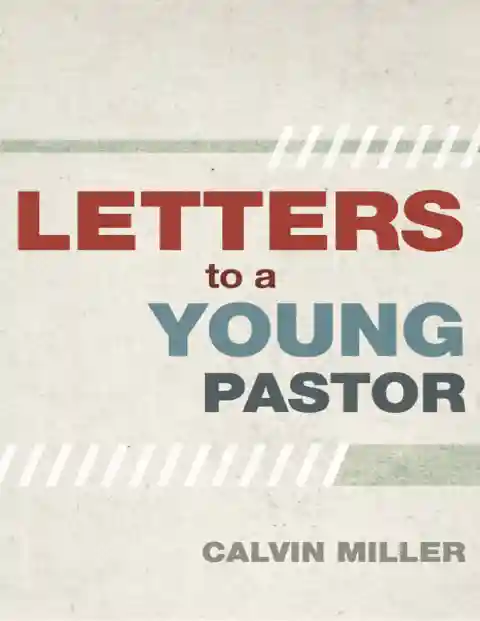
Letters To A Young Pastor Letters To A Young Pastor

Letters To A Young Pastor Order Printed Copy

  • Author: Calvin Miller
  • Size: 1.47MB | 199 pages
  • |
Continue with
Google Twitter
LOG IN TO REVIEW
About the Book


"Letters To A Young Pastor" by Calvin Miller offers practical and insightful advice for aspiring and current pastors. Through a series of letters, Miller addresses various aspects of pastoral ministry such as preaching, leadership, and personal growth. He shares wisdom and encouragement to help young pastors navigate the challenges and joys of serving in the church.

Billy Graham

Billy Graham Billy Graham (born November 7, 1918, Charlotte, North Carolina, U.S.—died February 21, 2018, Montreat, North Carolina), American evangelist whose large-scale preaching missions, known as crusades, and friendship with numerous U.S. presidents brought him to international prominence. Conversion and early career The son of a prosperous dairy farmer, Billy Graham grew up in rural North Carolina. In 1934, while attending a revival meeting led by the evangelist Mordecai Ham, he underwent a religious experience and professed his “decision for Christ.” In 1936 he left his father’s dairy farm to attend Bob Jones College (now Bob Jones University), then located in Cleveland, Tennessee, but stayed for only a semester because of the extreme fundamentalism of the institution. He transferred to Florida Bible Institute (now Trinity College), near Tampa, graduated in 1940, and was ordained a minister by the Southern Baptist Convention. Convinced that his education was deficient, however, Graham enrolled at Wheaton College in Illinois. While at Wheaton, he met and married (1943) Ruth Bell, daughter of L. Nelson Bell, a missionary to China. By the time Graham graduated from Wheaton in 1943, he had developed the preaching style for which he would become famous—a simple, direct message of sin and salvation that he delivered energetically and without condescension. “Sincerity,” he observed many years later, “is the biggest part of selling anything, including the Christian plan of salvation.” After a brief and undistinguished stint as pastor of Western Springs Baptist Church in the western suburbs of Chicago, Graham decided to become an itinerant evangelist. He joined the staff of a new organization called Youth for Christ in 1945 and in 1947 served as president of Northwestern Bible College in Minneapolis, Minnesota. Evangelism Graham’s emergence as an evangelist came at a propitious moment for 20th-century Protestants. Protestantism in the United States was deeply divided as a result of controversies in the 1920s between fundamentalism and modernism (a movement that applied scholarly methods of textual and historical criticism to the study of the Bible). The public image of fundamentalists was damaged by the Scopes Trial of 1925, which concerned the teaching of Charles Darwin’s theory of evolution in public schools in Tennessee; in his writings about the trial, the journalist and social critic H.L. Mencken successfully portrayed all fundamentalists as uneducated country bumpkins. In response to these controversies, most fundamentalists withdrew from the established Protestant denominations, which they regarded as hopelessly liberal, and retreated from the larger society, which they viewed as both corrupt and corrupting. Although Graham remained theologically conservative, he refused to be sectarian like other fundamentalists. Seeking to dissociate himself from the image of the stodgy fundamentalist preacher, he seized on the opportunity presented by new media technologies, especially radio and television, to spread the message of the gospel. In the late 1940s Graham’s fellow evangelist in Youth for Christ, Charles Templeton, challenged Graham to attend seminary with him so that both preachers could shore up their theological knowledge. Graham considered the possibility at length, but in 1949, while on a spiritual retreat in the San Bernardino Mountains of southern California, he decided to set aside his intellectual doubts about Christianity and simply “preach the gospel.” After his retreat, Graham began preaching in Los Angeles, where his crusade brought him national attention. He acquired this new fame in no small measure because newspaper magnate William Randolph Hearst, impressed with the young evangelist’s preaching and anticommunist rhetoric, instructed his papers to “puff Graham.” The huge circus tent in which Graham preached, as well as his own self-promotion, lured thousands of curious visitors—including Hollywood movie stars and gangsters—to what the press dubbed the “canvas cathedral” at the corner of Washington and Hill streets. From Los Angeles, Graham undertook evangelistic crusades around the country and the world, eventually earning international renown. Despite his successes, Graham faced criticism from both liberals and conservatives. In New York City in 1954 he was received warmly by students at Union Theological Seminary, a bastion of liberal Protestantism; nevertheless, the theologian Reinhold Niebuhr, a professor at Union and one of the leading Protestant thinkers of the 20th century, had little patience for Graham’s simplistic preaching. On the other end of the theological spectrum, fundamentalists such as Bob Jones, Jr., Carl McIntire, and Jack Wyrtzen never forgave Graham for cooperating with the Ministerial Alliance, which included mainline Protestant clergy, in the planning and execution of Graham’s storied 16-week crusade at Madison Square Garden in New York in 1957. Such cooperation, however, was part of Graham’s deliberate strategy to distance himself from the starchy conservatism and separatism of American fundamentalists. His entire career, in fact, was marked by an irenic spirit. Graham, by his own account, enjoyed close relationships with several American presidents, from Dwight Eisenhower to George W. Bush. (Although Graham met with Harry Truman in the Oval Office, the president was not impressed with him.) Despite claiming to be apolitical, Graham became politically close to Richard Nixon, whom he had befriended when Nixon was Eisenhower’s vice president. During the 1960 presidential campaign, in which Nixon was the Republican nominee, Graham met in Montreaux, Switzerland, with Norman Vincent Peale and other Protestant leaders to devise a strategy to derail the campaign of John F. Kennedy, the Democratic nominee, in order to secure Nixon’s election and prevent a Roman Catholic from becoming president. Although Graham later mended relations with Kennedy, Nixon remained his favourite politician; indeed, Graham all but endorsed Nixon’s reelection effort in 1972 against George McGovern. As Nixon’s presidency unraveled amid charges of criminal misconduct in the Watergate scandal, Graham reviewed transcripts of Oval Office tape recordings subpoenaed by Watergate investigators and professed to be physically sickened by his friend’s use of foul language. Legacy of Billy Graham Graham’s popular appeal was the result of his extraordinary charisma, his forceful preaching, and his simple, homespun message: anyone who repents of sins and accepts Jesus Christ will be saved. Behind that message, however, stood a sophisticated organization, the Billy Graham Evangelistic Association, incorporated in 1950, which performed extensive advance work in the form of favourable media coverage, cooperation with political leaders, and coordination with local churches and provided a follow-up program for new converts. The organization also distributed a radio program, Hour of Decision, a syndicated newspaper column, “My Answer,” and a magazine, Decision. Although Graham pioneered the use of television for religious purposes, he always shied away from the label “televangelist.” During the 1980s, when other television preachers were embroiled in sensational scandals, Graham remained above the fray, and throughout a career that spanned more than half a century few people questioned his integrity. In 1996 Graham and his wife received the Congressional Gold Medal of Honor, the highest civilian award bestowed by the United States, and in 2001 he was made an Honorary Knight Commander of the Order of the British Empire (KBE). Graham concluded his public career with a crusade in Queens, New York, in June 2005. Graham claimed to have preached in person to more people than anyone else in history, an assertion that few would challenge. His evangelical crusades around the world, his television appearances and radio broadcasts, his friendships with presidents, and his unofficial role as spokesman for America’s evangelicals made him one of the most recognized religious figures of the 20th century.

How to Start a Conversation About Jesus

A friend of mine likes to say, “The best gospel presentation is the one given.” That’s true. And convicting. Many good books, sermons, and seminars can help us prepare to share our faith. But none of these resources can do for us what we often find the hardest thing to do: just start the conversation. We often feel helpless when it comes to our friends and their eternities. We justify the self-centeredness that ignores our neighbors. We subtly, maybe even subconsciously, question the truths that would loose our tongues and break other peoples’ chains — all in favor of maintaining a more comfortable silence. If we’re brutally honest with ourselves, we’re content to avoid our fears, accept our obstacles, and nurture our self-centeredness. So, we tell ourselves that someone else will share the gospel; or that the potential awkwardness, rejection, or persecution are not worth it; or that God is not likely to save those people anyway. God help us. “When we focus on what’s really real, then evangelism becomes utterly exciting.” Thankfully, he does help us! We need God’s help to lift our eyes and see we are surrounded by dead people who desperately need us to preach the gospel and live out the life of Christ in their midst. When we focus on what’s really real — the facts that God exists, his wrath against sin is coming, his gospel is the only way to eternal joy, souls are precious and perishing, and the lost sheep will hear their Shepherd’s voice — then evangelism becomes utterly exciting. Your Forever Neighbor Evangelism will not happen forever. It is a means to one great end. Human beings — every single one of us in history — are created in God’s image for eternal purposes and one immense goal: to bring glory to God. When we read C.S. Lewis’s words about the eternal significance and destiny of our neighbors, we get a sense of the weightiness and joy that come from sharing the gospel: It is a serious thing to live in a society of possible gods and goddesses, to remember that the dullest and most uninteresting person you talk to may one day be a creature which, if you saw it now, you would be strongly tempted to worship, or else a horror and a corruption such as you now meet, if at all, only in a nightmare. (The Weight of Glory, 45–46) History, and everyone in it, is going somewhere. That means that, while no two conversations, no two train rides, no two lunch breaks, and no two walks at the park are the same, they are all filled with infinite potential. And time is literally running out. Like the wind, we do not know where the Spirit might blow on our ordinary days (John 3:8) — and that is exciting. Vertically-challenged Zacchaeus climbed a tree because he felt he needed to see Jesus for some reason (Luke 19:1–8); the Ethiopian eunuch was “randomly” pondering Isaiah 53 during his commute (Acts 8:26–40); Sergius Paulus, a highly educated official, asked Paul to bring him God’s word (Acts 13:7–8); and a Roman jailer was set free after he begged Paul to tell him what he must do to be saved (Acts 16:25–34). How would these people call on him in whom they have not believed unless someone tells them (Romans 10:14)? Could it be that the Spirit is already at work in the lives of the people around us in ways we haven’t noticed yet? Embrace the Awkwardness If we want to take advantage of opportunities to share our faith, we have to learn to embrace the so-called awkwardness. In some cultures, it is deemed awkward to raise the issue of spiritual matters in conversation. But take heart: in whatever culture you live, God has already raised the issue. If he has raised your soul from the dead, the conversation has begun. “No two conversations are the same, but they are all filled with infinite potential.” You sit next to your coworker as the aroma of Christ to God among those who are being saved and among those who are perishing. You stand among other travelers in the queue as a sojourner whose citizenship is in heaven. You interact with people in this age of intolerance and virtue signaling as one who is humble and contrite in spirit, and who trembles at God’s word alone. You supervise children at the park as one who has been born again to a living hope. You drink water with your hiking club as one whose heart overflows with rivers of living water. You lay on a bed in the hospital as the recipient of a spiritual heart transplant — your stony, dead heart for a living heart of flesh. Your family members watch you live out a thousand deaths to self (and eventually death itself) as a new creation in Christ. If our chief concerns are about avoiding awkwardness, it would be more awkward not to talk about eternal things. You and I never know those who have been, who are, and who will soon be wrestling with these weighty spiritual issues, waiting for someone to bring them God’s word. Believe that God is both willing and able to give you what you need in order that you might joyfully spread the word about his Son in any and every cultural scenario — however seemingly awkward it may feel at first. Everyday Examples God governs the cosmos in such a way that your everyday life shines the light of the gospel in all the strategic places and relationships in which he places you. “The earth is the Lord’s” (Psalm 24:1), and Jesus is with you as you go and make disciples in his world (Matthew 28:18–20). A coworker of mine has a practice of sharing what she read that morning in her Bible with the people she encounters as she goes about her day. This is intentional on her part, but I also think she can’t help herself — she simply overflows. Another coworker pays for her lattes and chocolate croissants at the cafe she frequents, sits down at a table, and then, when the server brings out her order, explains that she is about to pray for her meal and asks, “What can I pray for you?” “How was your weekend?” is a question that another friend asks at work every week. And when the person returns the question, they talk about the sermon they heard at church. Another friend asks people to listen to her Scripture memory recitation for the day to help double-check her memory (and spread the word!). Talking about the word that is our very lives (Deuteronomy 32:47) is, naturally, something the Spirit leads word-dependent, word-filled people to do. The Most Effective Place to Start Perhaps you are praying that God would open for you a door for the word, so that you can “declare the mystery of Christ” (Colossians 4:3). And you unashamedly believe the gospel is indeed God’s power for salvation to everyone who believes (Romans 1:16). But you’re still not sure where to start when God puts someone in your path. “‘Hello’ is a small word, but it says to someone, ‘I see you.’” My friend led a training session about how to share the Christian faith. In one especially valuable lesson, the group has some volunteers don a traditional outfit of someone from a different cultural background. They acknowledge how it might feel intimidating to talk with people who look different, eat different foods, speak different languages, and believe different things. But beyond all of the potential hurdles, there is one thing you could say to start a conversation (and friendship) with anyone from anywhere. Across the globe, this is the most effective thing you can say in order to start a conversation: Hello. In whatever language you speak, your hello could initiate the first conversation among many that God uses to draw someone to himself. Maybe the first conversation becomes the conversation. “Hello” is a small word, but it says to someone, “I see you.” And that means something to everyone, no matter where they’re from in the world. For hello to pass over your vocal cords, it requires only a mustard seed of faith in our great God. In addition to your faithful prayers that God would open a door for his word, the gospel, also ask him to give you everything you need to greet people in his name and be a blessing to whomever he puts in your path. Article by Gloria Furman

Feedback
Suggestionsuggestion box
x