


About the Book
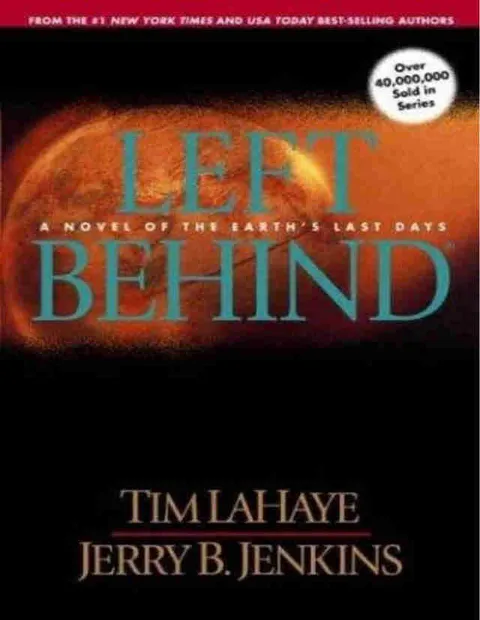
"Left Behind" is a Christian fiction novel that follows the events of the biblical prophecy of the Rapture, where true believers are taken to heaven and non-believers are left behind to face the chaos of the End Times. The book focuses on the experiences of a group of people who must navigate a world in turmoil as they come to terms with the sudden disappearance of millions of people. Through their struggles and search for faith, they must confront the ultimate battle between good and evil.
Hannah More
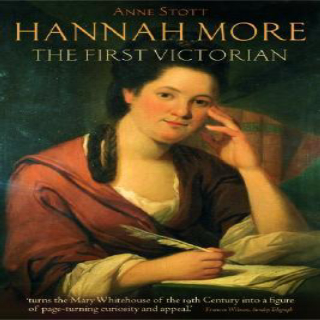 Beyond any doubt, Hannah More was the most influential female member of the Society for Effecting the Abolition of the African Slave Trade. She was educated at Bristol, an important slave-trading town, and began to publish her writing in the 1760s, while she was still a teenager. Her first play, The Inflexible Captive, was staged at Bath in 1775. Later in the 1770s, and for much of the 1780s, she spent time in London and made the acquaintance of many important political and society figures, including Samuel Johnson, Edmund Burke, and Elizabeth Montagu. Her play Percy was produced by David Garrick in 1777, and Fatal Falsehood was staged in 1779, but she came to regard the theatre as morally wrong, especially after the death of her mentors; Garrick and Johnson. She turned to religious writing, beginning with her Sacred Dramas in 1782. In 1784-5, she 'discovered' Ann Yearsley, the so-called 'poetical milkmaid of Bristol', whose poems More helped to publish, although the two later fell out.
In the 1780s, More widened her circle to include religious and philanthropic figures, including John Newton, Beilby Porteus and William Wilberforce. In the summer of 1786, she spent time with Sir Charles and Lady Margaret Middleton at the their home in Teston in Kent. Among their guests were the local vicar James Ramsay and a young Thomas Clarkson, both of whom were central to the early abolition campaign. More and Clarkson met again in Bristol in 1787, while he was on his fact-finding mission to the city, but they did not become close. However, in the same year More met Wilberforce, and their friendship was to become a deep and lasting one. More contributed much to the running of the newly-founded Abolition Society including, in February 1788, her publication of Slavery, a Poem which has been recognised as one of the more important slavery poems of the abolition period. Her relationship with members of the society, especially Wilberforce, was close. For example, she spent the summer of 1789 holidaying with Wilberforce in the Peak District - planning for the abolition campaign, at that time at its height, formed a great deal of their conversation.
By the mid-1790s, More had become closely involved with the 'Clapham Sect' of evangelical Christians, many of whom were involved in the abolition campaign. The group centred on Henry Thornton's home in Clapham and included Wilberforce, James Stephen, and Zachary Macaulay, among others. Throughout the 1790s, she wrote a number of religious tracts, known as the Cheap Repository Tracts, that eventually led to the formation of the Religious Tracts Society. Several of the Tracts oppose slavery and the slave trade, in particular, the poem The Sorrows of Yamba; or, The Negro Woman's Lamentation, which appeared in November 1795 and which was co-authored with Eaglesfield Smith. However, the tracts have also been noted for their encouragement of social quietism in an age of revolution. She continued to oppose slavery throughout her life, but at the time of the Abolition Bill of 1807, her health did not permit her to take as active a role in the movement as she had done in the late 1780s, although she maintained a correspondence with Wilberforce and others. In her later life, she dedicated much time to religious writing. Nevertheless, her most popular work was a novel, Coelebs in Search of a Wife, which appeared in two volumes in 1809 (and which ran to nine editions in 1809 alone). In the 1820s she grew gradually less well, and decreased - but did not entirely halt - the amount of writing she produced. On her death in 1833, she left more than £30,000 to charities and religious societies (equivalent to about £2,000,000 or $3,000,000 in 2004).
© Brycchan Carey 2004
Beyond any doubt, Hannah More was the most influential female member of the Society for Effecting the Abolition of the African Slave Trade. She was educated at Bristol, an important slave-trading town, and began to publish her writing in the 1760s, while she was still a teenager. Her first play, The Inflexible Captive, was staged at Bath in 1775. Later in the 1770s, and for much of the 1780s, she spent time in London and made the acquaintance of many important political and society figures, including Samuel Johnson, Edmund Burke, and Elizabeth Montagu. Her play Percy was produced by David Garrick in 1777, and Fatal Falsehood was staged in 1779, but she came to regard the theatre as morally wrong, especially after the death of her mentors; Garrick and Johnson. She turned to religious writing, beginning with her Sacred Dramas in 1782. In 1784-5, she 'discovered' Ann Yearsley, the so-called 'poetical milkmaid of Bristol', whose poems More helped to publish, although the two later fell out.
In the 1780s, More widened her circle to include religious and philanthropic figures, including John Newton, Beilby Porteus and William Wilberforce. In the summer of 1786, she spent time with Sir Charles and Lady Margaret Middleton at the their home in Teston in Kent. Among their guests were the local vicar James Ramsay and a young Thomas Clarkson, both of whom were central to the early abolition campaign. More and Clarkson met again in Bristol in 1787, while he was on his fact-finding mission to the city, but they did not become close. However, in the same year More met Wilberforce, and their friendship was to become a deep and lasting one. More contributed much to the running of the newly-founded Abolition Society including, in February 1788, her publication of Slavery, a Poem which has been recognised as one of the more important slavery poems of the abolition period. Her relationship with members of the society, especially Wilberforce, was close. For example, she spent the summer of 1789 holidaying with Wilberforce in the Peak District - planning for the abolition campaign, at that time at its height, formed a great deal of their conversation.
By the mid-1790s, More had become closely involved with the 'Clapham Sect' of evangelical Christians, many of whom were involved in the abolition campaign. The group centred on Henry Thornton's home in Clapham and included Wilberforce, James Stephen, and Zachary Macaulay, among others. Throughout the 1790s, she wrote a number of religious tracts, known as the Cheap Repository Tracts, that eventually led to the formation of the Religious Tracts Society. Several of the Tracts oppose slavery and the slave trade, in particular, the poem The Sorrows of Yamba; or, The Negro Woman's Lamentation, which appeared in November 1795 and which was co-authored with Eaglesfield Smith. However, the tracts have also been noted for their encouragement of social quietism in an age of revolution. She continued to oppose slavery throughout her life, but at the time of the Abolition Bill of 1807, her health did not permit her to take as active a role in the movement as she had done in the late 1780s, although she maintained a correspondence with Wilberforce and others. In her later life, she dedicated much time to religious writing. Nevertheless, her most popular work was a novel, Coelebs in Search of a Wife, which appeared in two volumes in 1809 (and which ran to nine editions in 1809 alone). In the 1820s she grew gradually less well, and decreased - but did not entirely halt - the amount of writing she produced. On her death in 1833, she left more than £30,000 to charities and religious societies (equivalent to about £2,000,000 or $3,000,000 in 2004).
© Brycchan Carey 2004
what happens when you turn 65
Turning 65 in January has me all fired up to get busy. I am close enough to the finish line that the face of Jesus is coming into sharper focus. This is very exciting and makes me want to pick up the pace. Of course, he is not the least impressed with frenzy. Nor is he pleased with Boomer indolence. What his face says to me is: “I am your rest every day, and there is good work to do every day till you’re home.” One Great Thing God has called me to this one great thing, and his face affirms it every day: “With full courage, now (after 65) as always, let Christ be magnified in your body, whether by life or by death” (Philippians 1:20). Live now to make much of Christ. Measure everything by this: Will it help more people admire Jesus more intensely and treasure Jesus more deeply? The Bible says, “The years of our life are seventy, or even by reason of strength eighty” (Psalms 90:10). But of course, “My times are in your hand” (Psalms 31:15). The Lord gives and the Lord takes away. We don’t live one day longer or shorter than God appoints. So at 65, I am still gagging at the pictures of leathery old sunbathers on white shores and green links. For fifteen years, I have thrown hundreds of senior mailings in the recycle bag unopened. Not that I am opposed to saving $0.79 on lunch at Perkins. Just don’t try to sell me heaven before I get there. There is too much hell left to fight. Old Versus Retired Turning 65 has set me to pondering what people have done in their later years. For example, I just received a copy of the first major biography of Charles Hodge in over a century: Paul C. Gutjahr, Charles Hodge: Guardian of American Orthodoxy (Oxford, 2011). On the first page, I read, When people reach their seventies, they often think their work is done. Not so with Hodge. His last years were among this most productive as he sat ensconced in his study, wielding his favorite pen to compose literally thousands of manuscript pages, which would eventually become his monumental Systematic Theology and his incisive What is Darwinism ? (vii) So I started poking around on the Internet. Here’s some of what I found (for example, at www.museumofconceptualart.com/accomplished): At 65 Winston Churchill became Prime Minister of England, and for the next five years led the Western world to freedom. At 69 English writer and lexicographer Samuel Johnson began his last major work, The Lives of the English Poets. At 69 Ronald Reagan became the oldest man ever sworn in as President of the United States. He was reelected at 73. At 70 Benjamin Franklin helped draft the Declaration of Independence. At 77 John Glenn became the oldest person to go into space. At 77 Grandma Moses started painting. At 82 Johann Wolfgang von Goethe finished writing his famous Faust . At 82 Winston Churchill wrote A History of the English-Speaking Peoples . At 88 Michelangelo created the architectural plans for the Church of Santa Maria degli Angeli. At 89 Albert Schweitzer ran a hospital in Africa. At 89 Arthur Rubinstein performed one of his greatest recitals in Carnegie Hall. At 93 Strom Thurmond, the longest-serving senator in U.S. history, won reelection after promising not to run again at age 99. At 93 P.G. Wodehouse worked on his 97th novel, got knighted, and died. Dependant Till the End And don’t forget, if you are running this marathon with Jesus, you have a great advantage. God has promised you: “Even to your old age I am he, and to gray hairs I will carry you. I have made, and I will bear; I will carry and will save” (Isaiah 46:4). Nothing to be ashamed of here. We’ve been dangling in the yoke of Jesus ever since he called us. At out peak, we were totally dependent. So it will be to the end. So, all you Boomers just breaking into Medicare, gird up your loins, pick up your cane, head for the gym, and get fit for the last lap. Fix your eyes on the Face at the finish line. There will plenty of time for R and R in the Resurrection. For now, there is happy work to be done.